Mexican Independence – Grito de Dolores

September 16

Before dawn, on the morning of September 16, 1810, townspeople of Dolores, Mexico, heard the church bells ring violently. They approached to find the parish priest, 57 year-old Father Miguel Hidalgo y Costilla. But the speech the criollo Father shouted was far from the sermon they had in mind.

Father Hidalgo had just learned that a plan to overthrow the Spanish rulers had been betrayed. Soon the Spanish would arrest all those involved and quash the independence movement. The exact words of the priest’s plea to the townspeople to bring an end to hundreds of years of European rule over the mestizo inhabitants, were not written down. It is said he raised the image of the dark-skinned Virgin of Guadalupe and concluded with a shout: Mexicanos, viva Mexico!

Mexico was still called “New Spain” at that point. Just addressing the crowd as Mexicanos, and willing into existence a land of “Mexico” was revolutionary. Father Hidalgo’s plea is called the Grito de Dolores, the “Cry of Dolores”, after the village in which it was made. But, as Dolores also means ‘sorrows’, it can also be interpreted as the Cry of Sorrows.

Just after dawn, the infant rebel army marched to San Miguel. By the time the rag-tag force reached Guanajuanto at the end of the month, it had swelled to 20,000 men. Though the men were poorly armed and insufficiently trained, their sheer numbers overpowered the small force of Spanish soldiers holed up at the Alhóndiga (public granary). Rebels stormed the Alhóndiga and most of the Spanish, as well as wealthy criollos, were massacred.
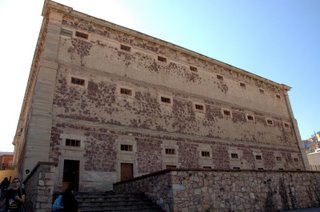
Alhóndiga de Guanajunato

Hidalgo and three other Mexican leaders were captured the following year on March 21, near the U.S.-Mexican border. They were convicted of treason, executed, and decapitated. Their heads were placed atop the four corners of the Alhóndiga in Guanajuanto as a message to the Mexican insurgents. There the heads remained for ten years.

On February 24, 1821, Mexican leaders signed the Plan de Iguala, which put forth the principles on which the country would be based, if the independence movement succeeded. Partly inspired by the Plan, conflicting Mexican forces joined together and defeated the Spanish army. The Treaty of Corboda assured the country’s long sought independence.

Father Hidalgo’s body was reburied in the country’s capital.
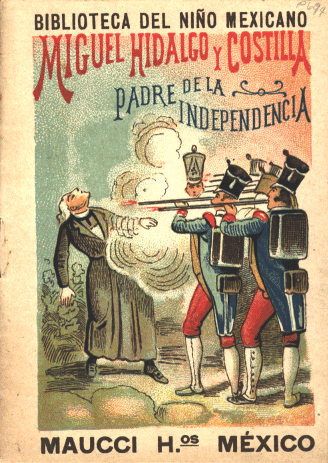
Today Mexicans celebrate their independence on the day of Father Hidalgo’s fateful shout for the autonomy, freedom, and equality for the Mexican people.

Independence Day – Central America

September 15

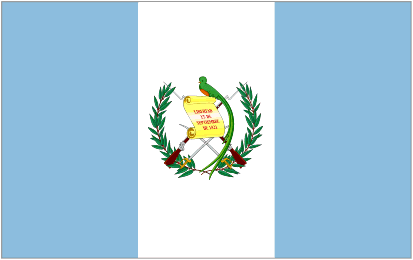
After 300 years of Spanish rule, the Captaincy General of Guatemala cut ties with the Old World in a declaration of Independence on September 15, 1821. The Spanish colony consisted of what is now Guatemala, El Salvador, Honduras, Nicaragua and Costa Rica. The proclamation was made in the capital, Guatemala City, in the northwestern corner of the isthmus. But Costa Rica, in the southeast, didn’t learn of its independence until a month later.

Today the five nations celebrate their collective independence. One relatively new tradition is the Torch of Independence relay across hundreds of miles of the Pan-American highway. The relay follows the symbolic path by which word of independence was spread from Guatemala to Costa Rica.  Across Central America, schoolchildren in towns and cities take part in parades and processions, dressed in traditional attire and performing regional dances.

The 5

Guatemala is the Heart of the Mayan Empire. The country’s large indigenous population speaks 23 Mayan-based languages. Guatemala Antigua was once the capital of the entire region, stretching from the southern border of Mexico down to the tip of South America. It was founded in 1542 after a mudflow from the Agua Volcano flooded the previous capital, now called “Ciudad Vieja” (Old City). In 1773, Guatemala Antigua was mostly destroyed by earthquakes, and the current city of Guatemala was built nearby.

El Salvador is the home of the late Archbishop Oscar Romero. Romero was assassinated in 1979 and though not yet a saint, is sometimes called the patron saint of the Americas. The brutal 12-year civil war that erupted following his death took the lives of an estimated 75,000 El Salvadorians.

Honduras is the only volcano-less country of the five and is the only one that is totally self-sufficient in terms of electricity. Though spared the bloodshed and violence of the civil wars that rocked its neighbors, Honduras and El Salvador clashed in the 100-hour “Soccer War” of 1969, and Honduras was used as a base and training ground for U.S.-backed forces against Nicaragua in the 1980s. In 1998 Hurricane Mitch killed 5000 Hondurans and wiped out 70% of the country’s crops.

Of the five, Nicaragua has arguably been most effected by U.S. interests, beginning in 1855—when Tennessee entrepreneur William Walker hired an army of mercenaries, overthrew the Nicaraguan government and set himself up as President—all the way up to the Iran-Contra affair of the 1980s, and the CIA mining of three Nicaraguan ports in 1984. According to the World Bank, as of 1995, Nicaragua’s per capita GDP was the same as in 1945.

Costa Rica is the only country in the Americas not to have a military, and is one of the most eco-friendly countries in the world. Covering only .03% of the earth’s land surface, Costa Rica contains 5% of the world’s biodiversity.

Timeline of U.S. Intervention in Central America

Enkutatash – Ethiopian New Year

September 11 (September 12 prior to leap years)

flag_ethiopia

Happy New Year!

September 11th (or 12th) is New Year’s Day in Ethiopia, following the Coptic calendar and observed in the Rastafarian tradition. It marks the end of the rainy season in Ethiopia.

2000 years ago, the Ethiopian calendar fell on the equivalent of August 8 or 9. However, because of disparities between different calendars, the day now falls in September.

“The name Enkutatash was given when the famous Queen of Sheba returned from her expensive jaunt to visit King Salomon in Jerusalem. Her chiefs welcomed her back by replenishing her treasury with “Fuku,” or jewels.”

— Ethiopia, by Pascal Belda

2009’s celebration marks the year 2002 AM in the Ethiopian Calendar. The festival is also the saint day of John the Baptist.

Enkutatash is celebrated with bonfires on New Year’s Eve, dancing, singing and prayers. On September 11, 2001, Ethiopians in the homeland and around the world were celebrating Enkutatash when planes flew into the World Trade Center.

“People who passed by and did not know what we were here for thought we were celebrating the attack, but we would never do anything like that,” said Ras Delbert Christie of the Montego Bay Ethiopian World Federation. (“Rastafarians Celebrate Ethiopian New Year in Jamaica”, World Wide Religious News, 2002)

Two weeks after Enkutatash, Ethiopians celebrate the finding of the true cross, or Meskel.

Mid-Autumn Festival

September 12, 2011

The Mid-Autumn Festival is known as Eighth Moon because it falls of the full moon of the eighth month. It’s also known as Mooncake Day, because billions of mooncakes are prepared for this holiday. (Though billions aren’t necessarily eaten. It’s more like the Chinese holiday fruitcake.)

For generations, moon cakes have been made with sweet fillings of nuts, mashed red beans, lotus-seed paste or Chinese dates, wrapped in a pastry. Sometimes a cooked egg yolk can be found in the middle of the rich tasting dessert.

www.chinavoc.com – Mid-Autumn Festival

One story of the popularity of mooncakes dates from the 1300’s AD. China was ruled by the Mongolian Yuan Dynasty, that overthrew the Chinese Sung Dynasty. To coordinate a secret attack on the ruling power, Han Chinese rebels hid secret messages inside mooncakes, which were then distributed throughout the kingdom. The revolution was a success.

Joyce Hor-Chung theorizes that had mooncakes been more tasty, there would have been no revolution, and the Yuan might still be in power today.

The importance of Eighth Moon in China goes back to the third millennium B.C. The traditional origin story of the holiday revolves around a beautiful young woman of unsurpassed beauty, and a rabbit.

Okay, not what I had in mind.
Getting colder.

No, the woman in question was Ch’ang-O, wife of Hou Yi. Hou Yi, you’ll remember from your textbooks, was the greatest archer in the land, famous for shooting down nine of the ten suns that scorched the earth, back in the Great Deci-Solar Debacle of 2170 BC.

Hou Yi had an elixir, a pill for attaining immortality, but he was told he would have to pray and fast for a year before taking it. His wife Ch’ang-O was as curious as she was beautiful. Finding the pill hidden in the rafters, she swallowed it and immediately began floating toward the moon. She landed on the great white orb, where she’s been stranded ever since. Instead of a “Man in the Moon”, the Chinese refer to Ch’ang-O, the Woman on the Moon.

There on the moon lives the immortal Ch’ang-O, with only a Jade Rabbit to keep her company (and, we can assume, an occasional astronaut). The Jade Rabbit on the moon is an important character in Chinese folklore. His sworn duty is to continually make the elixir of immortality for the Gods.

Origin stories vary, but they say Hou Yi eventually built a house on the sun, (Yang) and visits Ch’ang-O on the moon (Yin) once a year on the full moon of the eighth month, which is why the moon is so full and bright on this night.

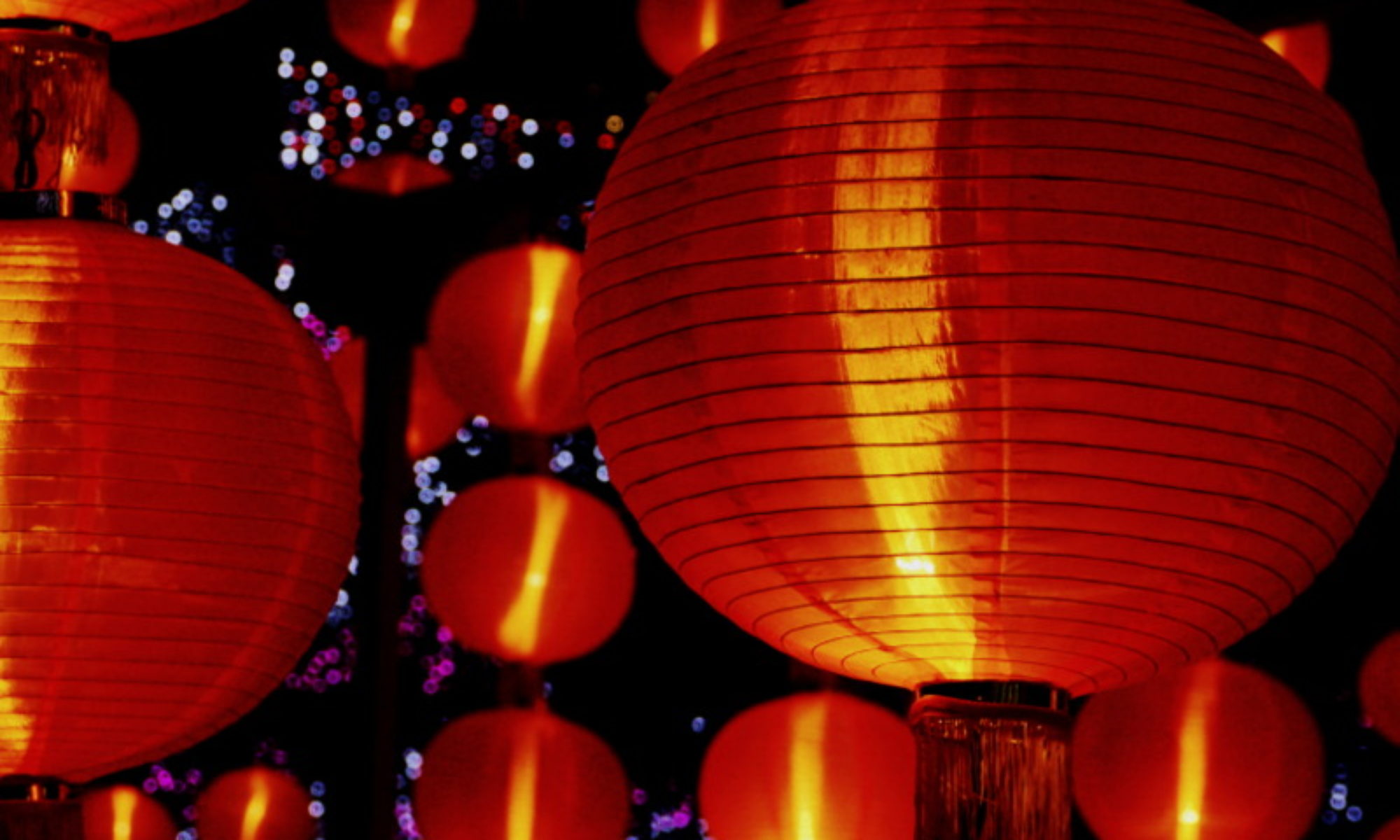
Today families and friends gather to share mooncakes, pomelo, stories, and good times. Lanterns are lit, Mid-Autumn trees are planted, dandelions are plucked, and incense is burned in honor of the goddess on the moon, Ch’ang-O, who will increasingly watch over the earth as temperatures drop and summer makes way for fall.

Google Moon

Mid-Autumn Festival

Mid-Autumn Festival

Enjoying the Wind and Moon Together

Teachers’ Day – China

September 10

Teacher: I thought I told you to stand at the back of the line!
Pupil: I tried, someone was already there.

Mother: What did you learn in school today?
Student: Not enough, I have to go back tomorrow.

(from http://china-corner.com)

Created by a group of China’s most esteemed professors, Teachers’ Day was celebrated in June in the 1930s. The Manifesto on Teachers’ Day explained the professors’ hope that the holiday would inspire the nation to:

  • create better living conditions for teachers
  • safeguard teacher’s work
  • improve teacher’s qualities. (Chinese Festivals, 2005)

In 1939, the Ministry of Education moved the holiday to August 27, the birthday’s of China’s great teacher Confucius. (Taiwan still celebrates Teachers’ Day on Confucius’s birthday, which is now observed September 28.)

In 1951 the new Communist Chinese government bumped Teachers’ Day to May 1, Labor Day, but as you can imagine, the event was overshadowed by one of China’s biggest holidays.

In December of 1984 the Beijing Evening Paper published an article citing a suggestion by Professor Wang Zikun who proposed that teachers be given their own day once again. The idea quickly gained support and a September 10th Teachers’ Day was put into law the following year. Why September 10th?

According to travelchinaguide.com:

The reason to choose this day is because when the fall semester begins, a fine studious atmosphere will be created if activities of respecting teachers and valuing education are held.

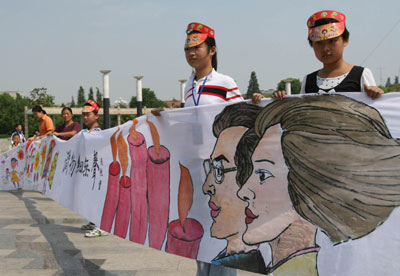
Students unfurl a 100-meter banner on Teachers Day (Now, class, how many inches is that?)

China has two other holidays dedicated to specific professions: Nurses (May 12) and Journalists (November 8).

Just for fun:

Say and write “Happy Teachers’ Day” in Chinese at goodcharacters.com

http://china-corner.com/topics/teacherday.asp

Independence Day – North Korea

September 9

Each Fall over 100,000 participants perform and compete in the Mass Games, one of the few public events in the otherwise tight-lipped nation of North Korea. The Games coincide with North Korea’s Independence Day on 9-9.

Korea was ruled by the Joseon Dynasty from the 14th century on. In 1897, the king thought it would be a good idea to make Korea an empire, and became Korea’s first–and last–Emperor.  The Empire that succeeded the 500 year-old Dynasty lasted only 13 years.

Aiding its demise was the Taft-Katsura Agreement between the U.S. and Japan. Japan recognized the U.S.’s sphere of influence in the Philippines in return for recognition of Japan’s sphere of influence in the Korean peninsula. At the end of the Russo-Japanese War, in which Russia and Japan vied for territory, Japan came out on top, and pressed Korean Ministers to sign the Eulsa Treaty. (The Korean Emperor and Prime Minister never signed the treaty, and in fact implored other governments not to recognize its validity.) Over the next five years, Korea fell increasingly under the thumb of Japan.

Two million Koreans participated in the independence demonstrations of 1919 and 1920; 46,000 were arrested and 7000 were killed.

During World War II, Korea faced brutal conditions under Japanese occupation. Millions were conscripted into wartime labor. Tens of thousands of women, known as “comfort women”, were forced into sexual slavery for the military.

After Japan’s defeat, Korea was split along the 38th parallel, to be administered by the Soviet Union in the north and the U.S. in the south. The 38th parallel would form the front line of the Cold War in the 1950s, as well as an ideological border between capitalism and communism into the 21st century.

In May of 1948, elections held in South Korea led to the independence of the Republic of Korea on August 15.

In the North, the Democratic People’s Republic of Korea was proclaimed on September 9 of that year.

“Dear Leader” Kim Jong-Il normally attends the annual Mass Games on the country’s independence, but foreign observers speculate he may be ill, citing doctors’ visits and Jong-Il’s absense from the spotlight.

One Japanese professor theorizes that the North Korean big cheese has actually been dead for 5 years. That one of his ‘stand-ins’, who were used as decoys when he was alive to ensure his safety, has been playing the part since 2003.

[published 2008]

Brazil – Independence Day

September 7

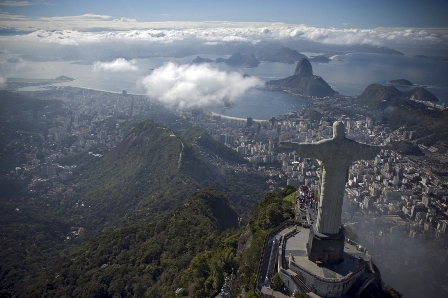
Had the Pope’s arm slipped just an inch that day in 1494, the people of Brazil might be speaking Spanish right now. But the vertical line in the Treaty of Tordesillas that split the world outside Europe between Spain and Portugal held steady. The Pope alloted the easternmost chip of the Americas to Portugal, while Spain got the rest.

The history of Brazil would unfurl quite differently from the rest of its neighbors, and indeed from all of the Americas.

As Portuguese explorers pushed eastward that chip of South America soon became the largest colony on the continent. A land that contained vast jungles, endless rivers, and bountiful resources unimaginable to the Europeans back home in Portugal.

At the beginning of the 19th century, Napoleon of France invaded Portugal.

The King of Portugal, João VI, fled to Brazil and declared Rio de Janeiro the new capital of Portugal and its possessions. (Imagine King George III coming to America and declaring New York the capital of Great Britain.)

Napoleon then did an about face and turned his troops on Spain. (This wasn’t hard to do, since the French army was already in Spain. Spain had given Napoleon permission to cross through to attack Portugal.)

As a result, South America was a scene of pandemonium for the next two decades. The Spanish colonies refused to answer to the French and declared their autonomy one at a time. Even when Spain kicked the French out of their homeland, the people of South America maintained their independence, leading to several lengthy wars between Spain and its colonies. From Buenos Aires to Santiago to Lima and beyond, the wars were hard fought and costly, both in terms of resources and human lives.

Rio de Janeiro
Rio de Janeiro

The situation in Brazil was different. João VI fell in love with Brazil, and when the French were booted out of Portugal in 1815, he refused to come home. João made Brazil its own kingdom, an equal partner with Portugal. But the folks back home were not so thrilled about this. They demanded that the royal family return to Portugal and that Brazil be made a colony again.

Eventually the king was forced to return home to maintain order in Portugal; his 23 year-old son Pedro stayed behind and became regent of the Kingdom of Brazil.

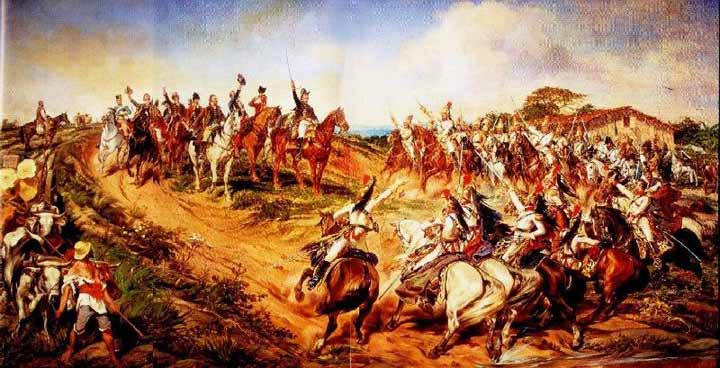
Pedro defied orders to return to Lisbon. The Portuguese Parliament limited his powers, and attempted to make Brazil a subservient colony once again. Upon hearing this news at the bank of the Ipiranga River, Pedro famously declared: “Independência ou Morte!” (Independence or Death!) The Grito do Ipiranga (Shout of Ipiranga) took place on September 7, 1822.

Grito de Iparanga
Grito de Iparanga

Pedro was proclaimed Emperor of Brazil on October 12, his 24th birthday.

In 1831, Pedro abdicated the throne to his 5 year-old son, Pedro II and returned to Portugal. Pedro II ruled as Emperor for nearly 50 years. In 1889 the Emperorship was abolished and Brazil became a republic.

Young Pedro II
Young Pedro II

http://gosouthamerica.about.com/od/brahistory/qt/IndependenceDay.htm

Bulgarian Unification Day

September 6

flag_bulgaria

Bulgaria and Eastern Rumelia declared their unification on September 6, 1885. Unfortunately, no one outside of Bulgaria—neither the Western Powers nor the Ottoman Empire, of which Rumelia had been a part—recognized the union.

The declaration precipitated the Serbo-Bulgarian War in which Bulgaria defended its borders, and Bulgarians still celebrate September 6 as the anniversary of its unification.

This year (2009) most events celebrating Unification Day have been canceled, due to a tragic boating accident on Saturday which killed 15 Bulgarians. The boat Ilinden sank in Lake Ohrid, Macedonia. An investigation as the cause of the sinking is currently underway.

Instead, the President has declared Monday, September 7 a National Day of Mourning.

Memorial services for the victims were held at Plovdiv Cathedral, and were attended by the President and Speaker of Parliament.

During the mass, the Plovdiv Metropolitan, Nikolay, hinted that God had punished Bulgarians over their many sins including celebrating and partying too much on August 29 (the day of the concert of pop diva Madonna in Sofia) instead of mourning for St. John the Baptist.

Bulgaria Bishop: God’s Wrath over Madonna Concert Caused Ohrid Tragedy

Bulgarians will still lay a wreath at the Unification Monument in Plovdiv, though there will be no fireworks.