click a past date for that day’s holidays

February 2010
S M T W T F S
« Jan    
 123456
78910111213
14151617181920
21222324252627
28  

Holiday coming up? Try last year’s post

free counters

globetrackr

Preseren Day – Slovenia

February 8

When all the nations stand before the judgment seat and are asked to explain how they used their basic talents…the small Slovenian nation will dare without fear to present a thin book with title Prešeren’s Poems alongside the others.

– Josip Stritar

Don’t mess with the Slovenes when it comes to their national poet, France Prešeren. He gets, not one, but two days in his honor on the Slovenian calendar. Today, the anniversary of his death in 1849, is a national holiday known as Culture Day; many Slovenes celebrate his birthday as well.

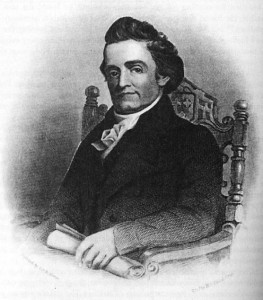
Preseren's statue

Preseren's statue is the most prominent in Lubljana, though its likeness is disputed. It was sculpted fifty years after his death, and no known portrait was made of Preseren when he lived.

France Prešeren was the son of a farmer, studied law, and spent most of his life as a lawyer and civil servant. He “led no revolutions, proposed no political programs, and died of tuberculosis, impoverished and almost alone, at the age of 49.”

Yet his popularity is unrivaled. Why? It wasn’t simply because his poems came to symbolize the Slovenes and their culture. According to many, Preseren’s poetry helped to save Slovenian culture:

“To understand Preseren’s importance we must appreciate that tiny Slovenia had no history of national statehood and no possibility of achieving political independence in the mid-nineteenth century. Simultaneously, there was a real chance that the Slovenian language would disappear…Through his creation—in response to the dual threat of Germanization or Croato-Serbinization—of a body of world-class poetry in his native language, Prešeren is seen to have ensured the very existence of the Slovenian nation.”

—Andrew Baruch Wachtel, Remaining Relevant After Communism: The Role of the Writer in Eastern Europe

His poetry mirrored the fortitude and resistance of the Slovenes, it represented a new form of literature and national identity for a group that had never coalesced as such. Appreciation of Preseren continued to grow through the 20th century, despite—or perhaps because of—the Yugoslavian regime of Tito, who sought to repress symbols of regional patriotism.

In the early 1990s Slovenes chose Preseren’s poem Zdravlijica (A Toast) as the young country’s national anthem:

God’s blessings on all nations
Who long and work for that bright day
When o’er earth’s habitations
No war, no strife shall hold its sway;
Who long to see
That all men free,
No more shall foes, but neighbors be…

–from “A Toast”

Unlike “A Toast,” most of Preseren’s works convey a bleak pessimism that followed the poet all his life.

The piece that put Slovenian literature on the map, and ensured Preseren’s immortality,was Preseren’s only epic poem Krst pri Savici (The Baptism by the Savica) about the clash in Slovenia between the pagans and early Christian converts.

Excerpt from The Baptism by the Savica translated by Alasdair Mackinnon read by Katrin Cartlidge

…The clash of arms has ceased
throughout the land,
Yet in your breast the storms of war still roll.
If aught of life’s dire ills I understand
The eternal worm takes yet more deadly toll,
Battens on lifeblood in its inner lair
And reawakes the harpies of despair.

Super Bowl

February 7, 2010
February 1, 2009

roman_coliseum

It may not be an official holiday, but today is one of the most spiritual days in American culture. For today, over 100 million Americans gather together and pray…that their team will win the Super Bowl.

The Super Bowl is of paramount importance to Americans, and one can tell, not only because of the vast media attention and commercialism that surround it, but because they apply Roman numerals to it., e.g., Super Bowl XLIII.

The location of the Super Bowl changes each year and is determined three to five years in advance. Unlike championships for basketball and baseball, the location has nothing to do with the teams involved. Though 2009’s contenders hail from Pittsburgh and Arizona, Super Bowl XLIII takes place in Tampa Bay, which is expected to see a $300 million boost to its economy because of the festivities. No team has ever played in the Super Bowl on its own turf.

Those spectators who aren’t among the 100,000 or so to attend the live festivities gather in small communal groups, usually in the home of whichever friend has the largest TV. [In previous years Super Bowl week has seen the purchase of 1.5 million TV sets, although that number may have gone down this year.]

Almost as important as the game itself are the commercials during the Super Bowl, which have become a phenomenon in themselves. A 30-second spot during the Super Bowl will cost about $3 million, enough to feed a family of four for four centuries.

There’s a reason they’re so expensive.  According to tampabaysuperbowl.com approximately 140 million Americans watched Super Bowl XLI, more than the number that went out to celebrate New Year’s Eve. The exact number is unknown, since many viewers watch in groups, but Neilson estimates that of the top ten primetime network telecasts since 2000, the Super Bowl has accounted for nine of them.

Super Bowl is also the U.S.’s second-highest food-consumption day of the year, right behind Thanksgiving.

Speaking of which, Reverend Matthew Lawrence, Rector of the Church of the Incarnation in Santa Rosa, has written a Super Bowl Confessional Prayer, in which he points out the similarities between the Super Bowl of today and the bloody “games” of the Roman Coliseum, where unruly pagan crowds once rooted for the slaughter of early Christians:

Most merciful God,
Forgive us for what we are about to do;

For our blood-curdling cries,
Lord, have mercy;
For our lust for violence,
Lord, have mercy;
For our emulation of military conquest,
Lord, have mercy;
For our favor to the strong,
Lord, have mercy;
For our scorn upon the weak,
Lord, have mercy;
For the vengeance which we seek
upon enemies whom we oppose for the most arbitrary of reasons,
Lord, have mercy.

We acknowledge and bewail our mortal sins and weaknesses;
We are troubled by these dark comparisons:
the football stadium and the coliseum;
the fans and the pagan mobs;
the star athletes and the demigods;
the linebackers and the gladiators;
the cheerleaders and the furies;
the commentators and the chorus;
the corporations and the slave owners.

We can only hope that you see, as we do,
that this is only a game;
and that you haven’t lost your sense of humor.
Despite appearances to the contrary, our heart remains faithful to you.
Even as we glory in the spectacle of our football enemies
being pounded into the dust, we will strive to remember you.

God, be with those who will taste dirt this day.
Heal those who will be injured;
Console the losers with gratitude for the privilege of having played;
Ennoble the victors with gentle reminders of their mortality;
And show your favor toward all contestants
Who this day will shed their blood and break their bones
for our trivial sakes…

AMEN.

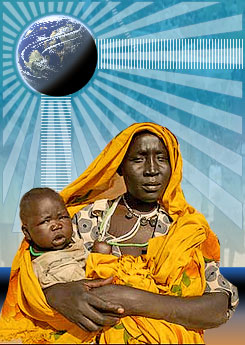
National Black HIV/AIDS Awareness Day

February 7

unaids

My senior year of high school: As my uncle lay dying of AIDS in the hospital, a classmate of mine explained to our AP psychology class that God had created AIDS to punish gay people.

I didn’t say anything. My uncle was gay, and I was afraid that would only cement his point.

It’s 17 years later. Apparently, God didn’t know when to quit.

He punished homosexuals and heterosexuals, Blacks and Whites, Latinos, Asians, Native Americans and First Nations, men and women, the poor, and of course sub-Saharan Africa, perhaps because he felt he hadn’t given that continent enough to contend with already.

HIV/AIDS is neither racist nor sexist. It is an equal-opportunity infector, with only one preference: that its host live long enough to infect others.

Still, in 2004, men accounted for nearly three-quarters of all new HIV/AIDS cases in the United States, and African-Americans—who make only 12% of the general population—accounted for half of all new cases.

The spread of HIV/AIDS in Africa and among African-Americans led to other rumors about AIDS: not that it was sent by God to punish gays, but that it was invented by the government to use against Blacks.

The persistence (or truth-resistance) of rumors like these underlies a mystery that medical doctors and scientists haven’t explained. Ever since its youth in the early 1980’s, HIV/AIDS has displayed an uncanny ability to play upon the fears and prejudices of America with the expertise of a 1930’s dictator rising to power.

By taking root in the ‘Out’ caste in America (The mysterious killer was once called ‘Gay Cancer’), it ensured that serious government effort to stop or study the virus would be postponed for years, that millions of future hosts would be stigmatized, and that open dialogue about the disease would be nearly impossible.

The problem worsened as AIDS took hold in minority communities, where negative feelings about homosexuality ran even deeper than in society at large:

“Today, while there are black men who are openly gay, it seems that the majority of those having sex with men still lead secret lives, products of a black culture that deems masculinity and fatherhood as a black man’s primary responsibility — and homosexuality as a white man’s perversion.”

Double Lives on the Down Low – New York Times, 2003

Men in heterosexual relationships who secretly have sex with other men are said to be on the “down low”. According to Ruth Houston:

“Record numbers of Black women are contracting HIV/AIDS through heterosexual contact – mainly  from husbands and boyfriends on the down low…Many of us have been mistakenly led to believe we can tell a “down low brother” by his outward appearance or mannerisms – the way he walks, talks, dresses, or acts.  As a result, many innocent Black men have been falsely accused.”

Black AIDS Day: A Wake-up Call for Black Women About the Down Low

But Keith Boykin, a former White House aide, believes the role of Down Low men has been overplayed:

“The down low…provided a sexy new vehicle to drive home a more predictable message about AIDS in the black community. With hints of closeted sexuality and talk of double lives, it played right into our stereotypical image of black men, and it conjured up the secrecy of a mysterious underground lifestyle.”

Beyond the Down Low, 2005

The same year that I was told that God had sent AIDS to punish gays, another classmate, an African-American bound for Princeton, argued in class that homosexuality was a Western phenomenon that didn’t exist in Africa. Even more confusing was my teacher’s response in evidence that it did: “What are you talking about? AIDS is rampant in Africa!

If God did create AIDS, perhaps he did so, not to punish the marginalized, but to test the rest of us. We didn’t fail the test completely, but we haven’t passed with marks to write home about.

We have invested billions in AIDS research, developed miracle medicines that were unimaginable only a decade ago. But even this has shined a gloomy light on another human flaw.

Because of miracle technology, some of the uninfected continue to live their lives as if HIV/AIDS is no longer a fatal disease, ["If we change our lifestyles, the Viruses have won!"?] expecting that, worst case scenario, science will be there to bail them out.

A Peace Corps volunteer tells the story of how, at the end of her two years, the water pump broke in her small rural village. The villagers expected her to fix it. When she told them she thought they should fix it, that it would benefit the whole village to do so, they “laughed and said they would just wait for the next volunteer to come” and ask them. These formerly self-sufficient villagers had grown, not just to expect foreign aid, but to rely upon it.

Have we become a culture of dependency, confident that science will bail us out of the next mess?

AIDS has a remarkable power to adapt and reinvent itself, both chemically and politically. There is still no cure for the disease, and the drugs that now allow some Westerners to live with HIV are still wildly unaffordable for millions dying in Africa and the Third World.

Working in the field of drug and alcohol addiction in Los Angeles, I found that the “War on HIV/AIDS” is not so much a war as an endless series of battles that are fought through guerrilla tactics, by ordinary men and women on every street and in every house in cities across the continent.

And that miracle drugs are not the shields of the soldiers. They are band-aids for the wounded. The weapon is responsibility.

Every 10 seconds, someone on the planet dies of AIDS. More than 8,000 people will die today from this disease.

Make no mistake about it, the cavalry will not come to save us…

You see, we are the cavalry.

Keith Boykin, An Exhortation To a Weary Army