Birthday of His Highness the Aga Khan

December 13

His Highness the Aga Khan has been the Imam of the Shia Ismaili for over fifty years. The Ismaili are the second largest group of Shia in the world. At age 20 he was chosen by his grandfather to succeed him rather than his father or uncle. Wrote his grandfather, Sultan Muhammed Shah Aga Khan:

“In view of the fundamentally altered conditions in the world in very recent years due to the great changes that have taken place, including the discoveries of atomic science, I am convinced that it is in the best interests of the Shia Muslim Ismaili community that I should be succeeded by a young man who has been brought up and developed during recent years and in the midst of the new age, and who brings a new outlook on life to his office.”

Five years before 9/11 the Aga Khan gave a foretelling speech to a group of young people, mostly Americans, about to enter “the real world.” Excerpts are below.

“Today in the occident, the Muslim world is deeply misunderstood by most.

“The Muslim world is noted in the West, North America and Europe, more for the violence of certain minorities than for the peacefulness of its faith and the vast majority of its people…And the Muslim world has, consequently, become something that the West may not want to think about, does not understand, and will associate with only when it is inevitable…

“…the historical process of secularisation which occurred in the West, never took place in Muslim societies. What we are witnessing today, in certain Islamic countries, is exactly the opposite evolution…

“The news-capturing power of this trend contributes to the Western tendency to perceive all Muslims or their societies as a homogeneous mass of people living in some undefined theocratic space, a single “other” evolving elsewhere. And yet with a Muslim majority in some 44 countries and nearly a quarter of the globe’s population, it should be evident that our world cannot be made up of identical people, sharing identical goals, motivations, or interpretations of the faith…

“…Concepts such as meritocracy, free-world economics, or multi-party democracy, honed and tested in the West may generally have proven their worth. But valid though they may be, responsible leadership in the Islamic world must ask if they can be adapted to their cultures which may not have the traditions or infra-structure to assimilate them: There is a real risk that political pluralism could harden latent ethnic or religious divisions into existing or new political structures…

“Although the modern page of human history was written in the West, you should not expect or desire for that page to be photocopied by the Muslim world.”

Full speech at http://www.brown.edu/Administration/News_Bureau/195-96/95-147t.html

I was in the large church room when the Aga Khan delivered this address. Like others of my young age I did not understand the importance of his words, every one of which came true in the years that followed.

More words of the Aga Khan at:http://spiritandlife.wordpress.com/2008/01/16/quotes-of-aga-khan/
Aga Khan’s 70th Birthday Today

Lucia Day

December 13

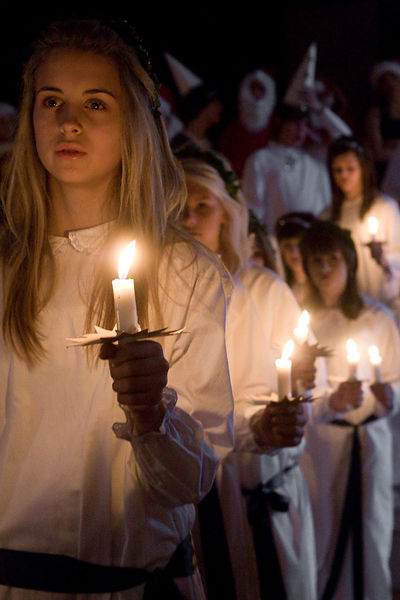
You know you’ve been in Sweden too long when seeing a young woman with lit candles stuck to her head no longer disturbs you. — You Know You’ve Been In Sweden Too Long When…

In Sweden and in Swedish communities in North America, thousands of girls will don the traditional white dress and red sash to take part in Lucia Day. Atop the heads of many girls will burn candles in a special crown worn for the holiday–although in Sweden most candles used these days are the battery-powered kind, due to–as the Swedes have discovered–the highly flammable nature of girls’ hair.

The crown of candles shines a light of hope during the darkest nights of the year, which in Sweden can be about 23 hours long.

(c) 2007 Fredrik Magnusson

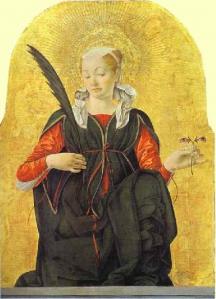
Saint Lucia was a young Christian who lived in Syracuse, Italy during the time of Diocletian–the infamous persecutor of early Christians–in the late 3rd century. When her mother became ill, Lucia prayed for her. Upon her mother’s recovery Lucia took a vow of chastity and gave her dowry to the poor, thus earning the rancor of a particularly vindictive suitor.

Some stories say the angry suitor outed her as a Christian in court, which then ordered her execution. Other stories say the suitor tried to kill her himself. Either way, they tried to kill her by fire, but she would not burn. Her eyes were poked out (some say she poked out her own eyes and gave them to the suitor) but new eyes grew back in their place. Men and oxen tried to drag her from the town, but she could not be budged.

Finally, on December 13, 304 A.D., the angry suitor stabbed Lucia with a sword in the neck and killed her. She was 20 years old.

Another legend tells of St. Lucia helping the ancient Christians in the catacombs, where torches were needed to navigate the dark tunnels. To keep her hands free to bring more food and drink, Lucia attached candles to a wreath she wore on her head.

Saint Lucy (Those ain't flowers)

So how did this Catholic saint from Italy become the heroine of a Protestant country in Scandinavia?

It may have to do with the date. Back when Sweden was Catholic and used the Julian calendar, Lucia’s feast day, December 13, was the longest night of the year. In pagan times the winter solstice was considered an ominous night to be out, when trolls and supernatural spirits wandered the earth. Lucia, whose name means light, became a symbol of the victory of light over darkness. Today, Swedish towns hold pageants to pick the “Lucia Bride”. Rituals similar to Luciatagen have taken place in Sweden in one form or another for over a thousand years, but it wasn’t until the 1927 Lucia procession in Stockholm, organized by a local newspaper, that the tradition as we know it spread throughout Sweden and Swedish-speaking Finland.

Lussekatter, or saffron buns, are a staple of the holiday. Made with one of the world’s most expensive spices, saffron dough is filled with cinnamon, sugar, raisins and chopped nuts. The oldest (or youngest) girl in the family serves these goodies.

A more recent Lucia Day tradition is to wake up unsuspecting Nobel Prize winners sleeping at the Grand Hotel in Stockholm. The Nobel Prize is awarded three days earlier on December 10.

Story of Saint Lucy of Syracuse

“You Know You’ve Been in the U.S. When…” and “You Know You’ve Been in Sweden Too Long When…”

Linnea in Lund

Anna’s Day

December 9

Today is Anna’s Day in Sweden, during which Scandinavians honor all those born with that name, which is about a third of the population.

What’s the reason behind or the purpose of Anna’s Day, we have no idea, but right now in Scandinavia it’s dark 20 hours a day, so who would blame them for throwing in as many December holidays as possible?

Today’s the day Scandinavians begin preparing the Swedish delicacy lutefisk, to be consumed on Christmas Eve.

Any fish that take 15 days to make better be darn-tootin’ good.

Lutefisk however is the exact opposite.

According to Swedishologist Rich Tosches, lutefisk means, literally, “cod soaked in plutonium.”

More on How (but not why) Lutefisk became a delicacy – by Rich Tosches

But, as writer Dave Fox points out, the Scandinavian tradition of soaking fish in lye–that’s right, toilet cleaner–developed not because…

they thought it was tasty. A long time ago, in the pre-refrigeration epoch, salting and drying fish was an efficient way to preserve it…A century ago, lutefisk really was a staple in the Norwegian diet. Also a century ago, a lot of Norwegians fled the country.”

— Make Love, Not Lutefisk – by Dave Fox

If you have any more info on Anna’s Day please let us know.

In the meantime, here’s today’s poem for the Anna’s of the world:

Anna, Anna
Bobanna
Banana Fana Fo Fana
Me, My, Mo Mana
Anna

Students Day – Iran

December 7 (Azar 16)

flag_iran

December 7 – A date that lives in infamy.

You may know that today is the anniversary of the bombing of Pearl Harbor, the event that killed over 2400 Americans in 1941 and brought the United States into World War II.

But December 7 is also a memorial in other parts of the world.

In Iran, December 7 is Students Day. It marks the day in 1953 that three students were killed by Iranian police while protesting the arrival of U.S. Vice President Richard Nixon.

Four months earlier a U.S.-backed coup overthrew Iranian Prime Minister Mohammad Mossadegh. Mossadegh had nationalized Iran’s oil industry, much to the dismay of the Anglo-Iranian Oil Company (now British Petroleum). The coup is believed to have been led by the CIA and MI6, and it gave power to General Zahedi and Mohammad Reza Pahlavi, aka the Shah, who would rule Iran until 1979.

In December of 1953…

“Iran and the United Kingdom agreed to resume diplomatic relations. The British prevailed on the Americans and the Americans on the shah and Zahedi to move forward on the resumption. The announcement made on 5 December caused a protest at Tehran University…prompting martial law forces to intervene. Ordered to contain the demonstrators, the soldiers fired on the crowd on 7 December (16 Azar), leaving three students dead and several wounded.”

The Shah was deposed in the Iranian Revolution of 1979.

Each year students remember those killed and wounded in the student protests of 1953.

What goes around comes around… In 2009, students in Tehran gathered on Students Day to protest the leadership under President Ahmadinejad and the Ayatollah. (Iran Student Protests Bring Out Tens of Thousands)

+  +  +

Today is also a holiday in Côte d’Ivoire. December 7 marks the anniversary of the death of Côte d’Ivoire’s first President, Félix Houphouët-Boigny in 1993. Houphouët-Boigny was president of the small West African nation from 1960 until his death in December 1993. Houphouët-Boigny was instrumental in the fight for independence from France in the late 1950’s.

Rosa Parks Day

December 1

rosaparks
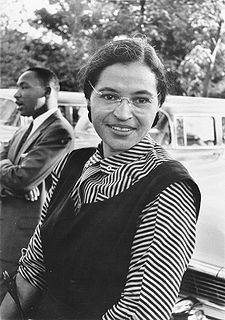
Rosa Parks, 1913-2005

On this day in 1955 a 42 year-old woman in Montgomery, Alabama, made history for something she didn’tdo.

Stand up.

When bus driver James Blake told 4 African-Americans to give their seats to white patrons, 3 of them did so. Rosa Parks, a department store employee on her way home, refused to move. Blake threatened to have her arrested. She replied, “You may do that.”

Rosa Parks wasn’t the first African-American woman to defy Montgomery’s segregated bus system, but hers was the case that captured America’s attention.

Long ago I set my mind to be a free person and not to give in to fear…When I sat down on the bus the day I was arrested, I was thinking of going home…After so many years of oppression and being a victim of the mistreatment that my people had suffered, not giving up my seat–and what I had to face after not giving it up–was not important. I did not feel any fear sitting in the seat I was sitting in. All I felt was tired. Tired of being pushed around. Tired of seeing the bad treatment and disrespect of children, women, and men just because of the color of their skin.

Rosa Parks, Quiet Strength

After Parks’ arrest, Civil Rights activists Edgar Nixon and Jo Ann Robinson organized a one-day boycott practically overnight. What started as a one-day boycott of Montgomery’s bus system lasted 381 days. A young minister from Atlanta named Dr. Martin Luther King Jr. was elected to head the boycott. Tens of thousands of African-Americans, who comprised the vast majority of Montgomery bus patrons, walked the long road to work or school rather than ride the bus.

The following year the Supreme Court deemed Montgomery’s bus segregation unconstitutional in Browder v. Gayle.

Parks died on October 24, 2005, just a month before the 50th anniversary of her famous stand–or sit rather.

In 2008, during Barack Obama’s historic election campaign, a short poem traveled across the web and radio:

Rosa sat

So Martin could walk

So Barack could run

So our children can fly.

World Toilet Day – Why you should give a s***

November 19

Privy at Goat Peak, Curt Smith

November 19 is World Toilet Day.

You should be in for a funny post.

Unfortunately you are not.

Poor sanitation kills more people each year than AIDS, but you won’t see any celebrities sporting brown ribbons at this year’s Oscars, and discussions of toilets still emit a response from educated adults akin to the uncomfortable, strained snickering of 7th graders during a sex ed lesson.

“As we passed along the reeking banks of the sewer, the sun shone upon a narrow slip of the water…more like watery mud than muddy water…we saw drains and sewers emptying their filthy contents into it…we heard bucket after bucket of filth splash into it; and the limbs of the vagrant boys bathing in it…we saw a little child…lower a tin can with a rope to fill a large bucket that stood beside her…As the little thing dangled her tin cup as gently as possible into the stream, a bucket of night-soil was poured down from the next gallery.”

India? Bangladesh? Nope, the above description is from the London Morning Chronicle, circa 1849, during a devastating cholera epidemic that few understood. Today we know about the importance of separating feces from drinking water. Yet toilets are not considered a top priority for many inhabitants of developing countries, even for those residents who chat on their new cell phones in public, but do their business in the stream. And even in countries like the U.S. it was only recently that public outcry over restaurant sanitation led to that industry’s standardized ratings system.

web-banner-1-your-gift

World Toilet Day was created by the World Toilet Organization not only to spread awareness of sanitation issues, but to lend ‘speakability’ to one of the most important and overlooked inventions of the past 200 years.

A lot of people asked why we use the word ‘toilet‘,” says Naureen Nayyar, a representative of the WTO…

“It’s because…if we tell people we want to change the role and the way people view toilets we can’t go about it in a bashful manner. Every change that’s come about in society…has come from making people uncomfortable at first.”

The World Toilet Organization has taken on the extremely uphill battle of making the toilet ‘sexy’ and hence desirable to residents of countries seeking to emulate Western lifestyles. While cell phones are the rage, you won’t find toilets of the rich and famous on film or TV. In fact, the ubiquitous porcelain bowl didn’t make its big screen debut until the 1960 Alfred Hitchcock thriller Psycho.

With the trendiness of the green movement and environmentalism, sanitation has finally come to the forefront of world attention, but for some reason the concept of the toilet has remained behind (no pun intended).

On the World Toilet Organization’s website, you can sponsor a household toilet for $140. I asked Nayyar why on earth toilets are so expensive in the 3rd World. She explained that part of the money goes toward education, teaching the public about the importance of a safe, separate place for defecation.

“Toilets are not a great topic, they are not loved, they are not appreciated, but they are a huge necessity that could help reduce the increase of diseases as populations grow, and the sanitation business is a vital part of keeping our waters and world clean.”

The river runs stinking, and all its brink
Is a fringe of every detectable stink:
Bone-boilers and gas-workers and gut-makers there
Are poisoning earth and polluting air.
But touch them who dares; prevent them who can;
What is the Health to the Wealth of man?

Punch, Sept. 2, 1854

The Ghost Map – Steven Johnson – The Story of London’s Most Terrifying Epidemic and How It Changed Science, Cities, and the Modern World

Ode to the Commode – LA Times

International Students Day

November 17

“It is interesting that the press and the politicians are beginning to refer to the student body of our nation as one of those “aggressor enemies” that we have become all too familiar with in the past: the “Huns,” the Nazis, the Commies; and now it is our kids, virtually the entire generation of them…For make no mistake; a generation is speaking.”

–Murray N. Rothbard, The Student Revolution, 1969

The kids are alright.

–The Who, 1965

logo_uk

They say the pen is mightier than the sword, and at times the student body is as powerful as an army.

On the average day students are more interested in unlocking the secrets of their universe, or in securing that elusive A than in prompting massive social change. But at pivotal moments throughout history–from Jesus’ Disciples (Disciple come from the Latin discipulus, meaning ‘pupil’) to the demonstration at Tiananmen Square–students have been the first to vocally question and defy ruling paradigms, and the university has become the battleground for society’s deepest rifts.

Holidays we’ve documented this year that stem from student protests include:

Hungary’s Republic Day – October 23, 1956

South Africa’s Youth Day – June 16, 1976

International Mother Language Day – February 21, 1952

Panama’s Martyrs Day – January 9, 1964

But in the 20th century, perhaps no campus symbolized the havoc that ravaged the Western world than than that of Prague’s 760 year-old Charles University (Universitas Carolinas).

Charles University has never shied away from conflict. One of its first rectors, Jan Hus, translated the heretical writings of John Wycliffe into Czech and was rewarded by being burned at the stake by the Church in 1415, a full century before Martin Luther’s ’95 Theses’.

Five centuries later Charles University became a battleground of a different kind.

In 1938, British Prime Minister Neville Chamberlain ensured his subjects “Peace for our time” by trading Czechoslovakia’s heavily fortified Sudetenland for the German Chancellor’s signature. The following year Hitler annexed the remainder of now-defenseless Czechoslovakia anyway, splitting it into the Slovak State and the Nazi-occupied Protectorate of Bohemia and Moravia.

Jan Opletal
Jan Opletal

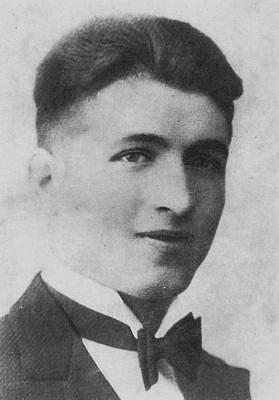
On October 28, 1939, the anniversary of Czechoslovakia’s foundation, anti-Nazi demonstrations broke out in Prague, during which a medical student named Jan Opletal was shot and killed by German police. After Opletal’s funeral on November 15, thousands of his follow students marched to protest the Nazi occupation. The Nazis responded on November 17, 1939 by arresting and executing 9 student leaders without trial and by deporting 1200 students to Saschenhausen concentration camp.

Today, November 17 is remembered as International Students Day.

Prague demonstration, 1939

But the story of Charles University’s students doesn’t stop there.

Following World War II, Czechoslovakia was absorbed into the Communist Soviet Bloc. On the 50th anniversary of the student executions and deportations, 15,000 Prague students and citizens led a non-violent protest against Communist rule, taunting riot police (not much older than the average demonstrator) with songs and placing flowers in their helmets. The demonstrators demanded passage to Wenceslas Square, where Czechs annually paid homage to the unofficial shrine of Jan Opletal, but riot police put down the demonstration with violence.

The police response sparked public outcry across the nation. By the end of the month approximately 800,000 people participated in anti-government rallies in Prague. Media outlets such as Federal Television and radio supported a growing national strike, and the Ministry of Culture agreed to uncensored anti-Communist literature. On December 29, just 6 weeks after the student march, the Federal Assembly elected anti-Communist writer Václav Havel as President of Czechoslovakia.

The events of November and December 1989 are referred to as the Velvet Revolution.

Youtube – Nežná revolúcia

Sadie Hawkins Day

November 13, 15, 16, or the Saturday after November 9

sadie_hawkins

“For 15 years, Sadie Hawkins, homely daughter of Dogpatch’s earliest settler, had failed to catch a husband. Her Pappy in desperation one day called together all the eligible bachelors of Dogpatch…”

Thus spoke Sadie’s father:

“‘Boys! Since none o’ yo’ has been man enough t’ marry mah dotter, ah gotta take firm measures!! Ah declares t’day “Sadie Hawkins Day” — When ah fires all o’ yo kin start a-runnin’! When ah fires agin—after givin’ yo’ a fair start—Sadie starts a-runnin’. Th’ one she ketches’ll be her husband!'”

With the boom of Pappy Hawkins’ gun, artist and writer Al Capp started a sexual revolution.

The year was 1937. Al Capp, creator of the comic strip Li’l Abner, needed a plot point to move the story along in his November strip. Li’l Abner starred Abner Yokum, a small-town simpleton whose life revolved around fishin’ and not gettin’ hooked to his long-suffering girlfriend Daisy Mae. The Sadie Hawkins Day tradition fell into place. Al Capp invented a race wherein, if a woman could catch a man, she could wed him. Capp explained the reasoning behind the race in a three-panel historical flashback of the original Sadie Hawkins.

According to panel 3:

“Well, Sadie did catch one of the boys. The other spinsters of Dogpatch reckoned it were such a good idea that Sadie Hawkins Day was made an annual affair.”

Al Capp’s idea struck a cord, not just with the fictional residents of Dogpatch, but all around America. Keep in mind Al Capp came up with this back when it was frowned upon for a woman to even ask a guy out on a date or to a dance. Yet within two years of Sadie Hawkins’ original appearance, “Sadie Hawkins Day” was being celebrated at over 200 schools in 188 towns across the United States! (Life Magazine, Dec. 11, 1939.) Granted, at most of these institutions the girls didn’t marry the guys they caught. Instead, the schools held Sadie Hawkins Dances, in which girls would ask boys to the dance instead of the typical other way around.

“Costumes derive from characters in Li’l Abner. Girls generally dress as pretty Daisy Mae rather than as homely Sadie Hawkins. At Texas Wesleyan, where Bible study is a required course, a slogan for Sadie Hawkins Day was found in Daniel, XII, 4: “Many shall run to and fro, and knowledge shall be increased.” (Life Magazine, 12/11/39)

There is no set date for Sadie Hawkins Day. Lil-abner.com cites November 15 and November 16, 1937 as the first appearances of Sadie Hawkins. Other sources say November 13. Regardless of its first appearance, Sadie Hawkins Day is generally celebrated on November 13, 15, 16, or the first Saturday after November 9. A few sites insist that Sadie Hawkins Day is February 29, a date that would no doubt please Abner himself. (Others disagree.)

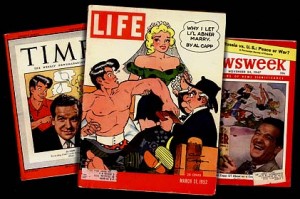
As it turns out, Daisy did not catch Abner that first Sadie Hawkins Day in 1937. In fact, it wasn’t until 1952 that Al Capp bowed to public pressure and allowed Daisy and Abner to tie the knot, an event that made the cover of Life Magazine.

lil_abner_cover

Incidentally, Capp himself would not have fared well in any Sadie Hawkins Day race. As a nine-year old boy in New Haven, the future comic writer was run over by a trolley and lost his left leg.

“All comedy is based on man’s delight in man’s inhumanity to man…I have made 40 million people laugh more or less every day for 16 years (on that formula)…”

“…We didn’t laugh because we were heartless wretches. We laughed because we are normal human beings, full of self-doubt, full of vague feelings of inferiority, full of a desperate need to be reassured.” Al Capp, Atlantic Monthly, February 1950

+++

“It is the ambition of every newspaper cartoonist to get published in something that won’t be used to wrap fish in the next morning.” Al Capp, Atlantic Monthly

My Well-Balanced Life on a Wooden Leg, by Al Capp, Review by Bobby Matherne

Al Capp, Time Magazine: Inhuman Man

The Comic Book Makers, by Joe Simon