Bangladesh Victory Day

December 16

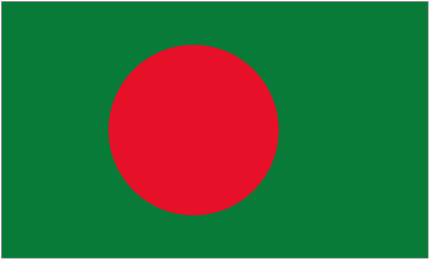
In Bangladesh, December 16 marks the anniversary of the victory of Indian and Bangladesh forces over what was then West Pakistan.

Between 1955 and 1971, Bangladesh was known as East Pakistan. On the other side of India, the country we know as Pakistan was West Pakistan.

Although more people lived in East Pakistan than in West Pakistan, the West controlled the country both politically and economically. Since representation was by “unit” rather than by population, East Pakistan’s potential for equal government participation was eliminated.

In the face of rising Bengali dissatisfaction, the President rescinded the “One Unit” rule in 1969, allowing East Pakistan equal representation in government based on population. However by this time many in the East considered the change “too little too late,” and the nationalist Bengali movement continued to gain steam. Tensions increased during the campaign of 1970 in anticipation of the country’s first truly democratic election.

In the midst of this political storm, a real storm struck.

1970 Bhola Cyclone

The Bhola Cyclone of November 1970 was the deadliest hurricane ever recorded. The people of East Pakistan had just recovered from an October cyclone that destroyed 200 villages, when Bhola touched down on November 12.

Even deadlier than the 2004 Tsunami that swept through Indonesia and Thailand, the Bhola Cyclone killed between 300,000 and 500,000 people, mostly in what is now Bangladesh (then East Pakistan). The storm struck during high tide. Tazumuddin, a community of over 160,000 people, lost nearly half its population. Islands were entirely wiped out, and millions of survivors were left homeless. West Pakistan’s underestimation of the disaster and their perceived slow response to send aid ignited the East.

In the December 7, 1970 election, East Pakistan’s Awami party won a landslide victory, taking all but two of East Pakistan’s alloted 169 seats in the National Assembly, and gaining for the first time a majority in the Assembly.

Rather than allow the Awami party to form a new government, the sitting government refused to acknowledge the election results and suggested a compromise: two Prime Ministers.

The suggestion outraged the East, which had been effectively ruled by West Pakistan for decades. When peace talks failed, violence broke out in East Pakistan. On March 26, 1971, the East declared independence as the People’s Republic of Bangladesh.

Millions of refugees fled from Bangladesh to India during the 8-month war. In December, India entered the war on the side of Bangladesh; within two weeks Indian and Bangladesh forces surrounded the Pakistani army. The Pakistan army surrendered on December 16, 1971, a day still celebrated in Bangladesh as Victory Day.

Zamenhof Tago!

December 15

Originally celebrated as Zamenhof Day, Esperanto Day is the birthday of Esperanto founder L.L. Zamenhof. He would be 149 today.

The son of a German teacher, Zamenhof was born in Bialystok, Russia, in what is now Poland. He spoke all three of those languages as a child, and studied Greek, Latin, Hebrew and French. He grew up to be a doctor, but had an incredible ability to pick up languages. During his formative years in Poland, conflicts in Eastern Europe led Zamenhof to believe that much of the world’s violence could be stemmed by a common language. Zamenhof set out to create an international language, easy to learn, simple to use, that could unite the world’s speakers for the first time since the Tower of Babel.

In 1887 he published a booklet of the rules of “An International Language” using the pseudonym Dr. Esperanto (one who hopes).

Ludoviki Lazaro "Dr. Esperanto" Zamenhof

The pseudonym became synonymous with the language, and Esperanto was born. It was an uphill battle promoting his language. At the first Esperanto congress in 1905 in Boulogne-sur-Mer, France, Zamenhof stated:

And now for the first time the dream of thousands of years begins to be realized. In this small French seaside town I have met men from the most varied countries and nations, and they meet each other not as deaf-mutes, but they understand one another and speak to one another as brothers, as members of one nation.

One common criticism of Esperanto is that English has become the default “international language”. However, we forget how many languages have attained that position during the peak of their mother country, only to ebb away. The Romans, the Spanish and Portuguese, and the French empires once could say the same.

After the First World War delegates from Europe, South America, Africa, and Asia submitted a proposal that the League of Nations: to make Esperanto the working language of the league. Ten voted for the proposal, one against…

The French delegate, Gabriel Hanotaux, argued that French was and should continue to be the language of international affairs. It didn’t work out that way. Because of Hanotaux’s objection, the League of Nations failed, and the world plunged into the Second World War.

Okay, maybe the chain of cause-and-effect wasn’t that drastic, but the twentieth century proved that the ability to communicate was of paramount importance to international peace and stability.

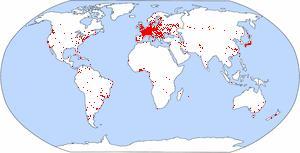
Today France is the leading host country of Esperanto’s Pasporta Servo, where Esperanto speakers can travel the globe practically for free, lodging at the homes of Esperanto hosts in 92 countries. The Pasporta Servo is actually a major incentive for young people to learn Esperanto, which can be learned in a fraction of the time of other languages.

Pasporta Servo host map
Pasporta Servo hosts

Of course with the growing popularity of sites like Babelfish, and increasingly accurate voice-recognition software, it may be that one day everything we say will be instantly translated into whatever language the listener desires.

But until that day…mi provas lerni Esperanton.

Esperanto FAQs

Birthday of His Highness the Aga Khan

December 13

His Highness the Aga Khan has been the Imam of the Shia Ismaili for over fifty years. The Ismaili are the second largest group of Shia in the world. At age 20 he was chosen by his grandfather to succeed him rather than his father or uncle. Wrote his grandfather, Sultan Muhammed Shah Aga Khan:

“In view of the fundamentally altered conditions in the world in very recent years due to the great changes that have taken place, including the discoveries of atomic science, I am convinced that it is in the best interests of the Shia Muslim Ismaili community that I should be succeeded by a young man who has been brought up and developed during recent years and in the midst of the new age, and who brings a new outlook on life to his office.”

Five years before 9/11 the Aga Khan gave a foretelling speech to a group of young people, mostly Americans, about to enter “the real world.” Excerpts are below.

“Today in the occident, the Muslim world is deeply misunderstood by most.

“The Muslim world is noted in the West, North America and Europe, more for the violence of certain minorities than for the peacefulness of its faith and the vast majority of its people…And the Muslim world has, consequently, become something that the West may not want to think about, does not understand, and will associate with only when it is inevitable…

“…the historical process of secularisation which occurred in the West, never took place in Muslim societies. What we are witnessing today, in certain Islamic countries, is exactly the opposite evolution…

“The news-capturing power of this trend contributes to the Western tendency to perceive all Muslims or their societies as a homogeneous mass of people living in some undefined theocratic space, a single “other” evolving elsewhere. And yet with a Muslim majority in some 44 countries and nearly a quarter of the globe’s population, it should be evident that our world cannot be made up of identical people, sharing identical goals, motivations, or interpretations of the faith…

“…Concepts such as meritocracy, free-world economics, or multi-party democracy, honed and tested in the West may generally have proven their worth. But valid though they may be, responsible leadership in the Islamic world must ask if they can be adapted to their cultures which may not have the traditions or infra-structure to assimilate them: There is a real risk that political pluralism could harden latent ethnic or religious divisions into existing or new political structures…

“Although the modern page of human history was written in the West, you should not expect or desire for that page to be photocopied by the Muslim world.”

Full speech at http://www.brown.edu/Administration/News_Bureau/195-96/95-147t.html

I was in the large church room when the Aga Khan delivered this address. Like others of my young age I did not understand the importance of his words, every one of which came true in the years that followed.

More words of the Aga Khan at:http://spiritandlife.wordpress.com/2008/01/16/quotes-of-aga-khan/

Aga Khan’s 70th Birthday Today

Lucia Day

December 13

You know you’ve been in Sweden too long when seeing a young woman with lit candles stuck to her head no longer disturbs you. — You Know You’ve Been In Sweden Too Long When…

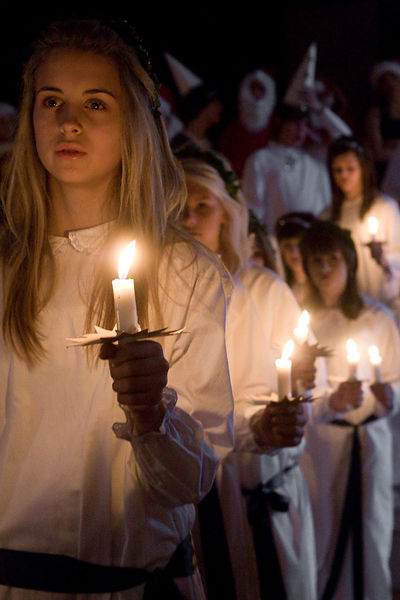
In Sweden and in Swedish communities in North America, thousands of girls will don the traditional white dress and red sash to take part in Lucia Day. Atop the heads of many girls will burn candles in a special crown worn for the holiday–although in Sweden most candles used these days are the battery-powered kind, due to–as the Swedes have discovered–the highly flammable nature of girls’ hair.

The crown of candles shines a light of hope during the darkest nights of the year, which in Sweden can be about 23 hours long.

(c) 2007 Fredrik Magnusson

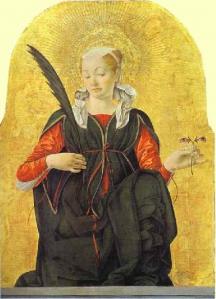
Saint Lucia was a young Christian who lived in Syracuse, Italy during the time of Diocletian–the infamous persecutor of early Christians–in the late 3rd century. When her mother became ill, Lucia prayed for her. Upon her mother’s recovery Lucia took a vow of chastity and gave her dowry to the poor, thus earning the rancor of a particularly vindictive suitor.

Some stories say the angry suitor outed her as a Christian in court, which then ordered her execution. Other stories say the suitor tried to kill her himself. Either way, they tried to kill her by fire, but she would not burn. Her eyes were poked out (some say she poked out her own eyes and gave them to the suitor) but new eyes grew back in their place. Men and oxen tried to drag her from the town, but she could not be budged.

Finally, on December 13, 304 A.D., the angry suitor stabbed Lucia with a sword in the neck and killed her. She was 20 years old.

Another legend tells of St. Lucia helping the ancient Christians in the catacombs, where torches were needed to navigate the dark tunnels. To keep her hands free to bring more food and drink, Lucia attached candles to a wreath she wore on her head.

Saint Lucy (Those ain't flowers)

So how did this Catholic saint from Italy become the heroine of a Protestant country in Scandinavia?

It may have to do with the date. Back when Sweden was Catholic and used the Julian calendar, Lucia’s feast day, December 13, was the longest night of the year. In pagan times the winter solstice was considered an ominous night to be out, when trolls and supernatural spirits wandered the earth. Lucia, whose name means light, became a symbol of the victory of light over darkness. Today, Swedish towns hold pageants to pick the “Lucia Bride”. Rituals similar to Luciatagen have taken place in Sweden in one form or another for over a thousand years, but it wasn’t until the 1927 Lucia procession in Stockholm, organized by a local newspaper, that the tradition as we know it spread throughout Sweden and Swedish-speaking Finland.

Lussekatter, or saffron buns, are a staple of the holiday. Made with one of the world’s most expensive spices, saffron dough is filled with cinnamon, sugar, raisins and chopped nuts. The oldest (or youngest) girl in the family serves these goodies.

A more recent Lucia Day tradition is to wake up unsuspecting Nobel Prize winners sleeping at the Grand Hotel in Stockholm. The Nobel Prize is awarded three days earlier on December 10.

Story of Saint Lucy of Syracuse

“You Know You’ve Been in the U.S. When…” and “You Know You’ve Been in Sweden Too Long When…”

Linnea in Lund

Feast of the Virgin of Guadalupe

December 12

“…one may no longer consider himself a Christian, but you cannot truly be considered a Mexican unless you believe in the Virgin of Guadalupe.”

— Carlos Fuentes

It’s been said that Mexico came into being not in 1821–the year Spain recognized its independence–but nearly 300 years earlier, in 1531, when a recently widowed peasant-farmer named Juan Diego Cuauhtlatoatzin, beheld the most spectacular vision in Mexican history.

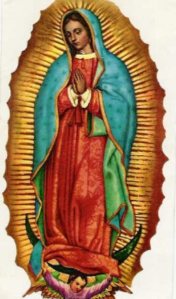
Guadalupe

On December 9, he was out walking near the ruins of Tepeyac Hill, where Aztecs once worshipped the mother goddess Tonatzin, when a young incarnation of the Virgin Mary appeared before him encompassed in a halo of light. She spoke to Juan Diego in his native tongue of Nahuatl, and asked him to deliver a message to the Mexican bishop: to build a church on the ground where she stood.

Upon hearing Juan Diego’s story, the bishop had his doubts. So the next time Juan Diego saw the Virgin, he confessed to her his failure to convince the bishop. She told him to pick some flowers at the top of the hill–even though it was December and no flowers should have been blooming. There he found Castilian roses, native to the bishop’s hometown in Spain. The Virgin arranged them in his tilma (apron), but when Juan Diego opened his tilma to the bishop, it held not flowers but the lifelike image of the Virgin of Guadalupe upon it.

Word spread of the miraculous vision and the image on the cloth. What the event suggested to the descendants of the Aztecs, many of whom had been made to feel unworthy by the strange pushers of this new faith due to the color of their skin, was that the Virgin revealed herself not to a Spanish bishop, but to a common, dark-skinned peasant. And Guadalupe herself was not the pale icon that had been forced upon the people by Europeans, but a mestizo, a mixture of races that would come to represent Mexico.

Old Basilica of the Virgin of Guadalupe, Mexico City

During the Mexican War of Independence in the 1810’s, the Lady of Guadalupe became the symbol of the new-born nation and the country’s patron saint.

In 2002, Pope John Paul II canonized Juan Diego as well. His feast day is December 9, the anniversary of the day he first saw Our Lady of Guadalupe. The Feast of Our Lady of Guadalupe is December 12, the last day she appeared to him.

Today Mexico is still overwhelmingly Catholic, but as Gustavo Arellano points out:

You don’t have to be Mexican or even Catholic to celebrate Guadalupe. Heck, you don’t even have to believe in God. All you need is a belief in the equality of people that’s in the core of Guadalupe’s message and you will surely feel her redeeming love.

On December 12, Mexicans and Mexican-Americans gather in churches and communities throughout North America and celebrate the symbol of the people of Mexico and patron saint of the Americas.

Human Rights Day

December 10

“Everyone is entitled to all the rights and freedoms set forth in this Declaration, without distinction of any kind, such as race, colour, sex, language, religion, political or other opinion…”

— from the Universal Declaration of Human Rights

December 10 is Human Rights Day…

The date was chosen to honor the United Nations General Assembly’s adoption and proclamation, in 1948, of the Universal Declaration of Human Rights. It was the first global enunciation of human rights.

Voice of America – Human Rights Day 2009 – Discrimination

The Declaration, signed in Paris, France, goes beyond “life, liberty, and security of person” (Article III) to demand 30 specific rights, many of which even the most developed nations still struggle to provide six decades later…

“Technical and professional education shall be made generally available and higher education shall be equally accessible to all on the basis of merit.”  — Article XXVI

Each year on Human Rights Day, groups organize demonstrations around the globe to bring attention to issues and areas where the rights are in question. Also on or around this day, the United Nations awards individuals its UN Human Rights Prizes.

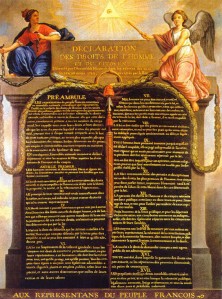
Declaration of the Rights of Man, French forerunner of the Universal Declaration of Human Rights

International Human Rights Day Marks Progress & Setbacks – Voice of America

Anna’s Day

December 9

Today is Anna’s Day in Sweden, during which Scandinavians honor all those born with that name, which is about a third of the population.

What’s the reason behind or the purpose of Anna’s Day, we have no idea, but right now in Scandinavia it’s dark 20 hours a day, so who would blame them for throwing in as many December holidays as possible?

Today’s the day Scandinavians begin preparing the Swedish delicacy lutefisk, to be consumed on Christmas Eve.

Any fish that take 15 days to make better be darn-tootin’ good.

Lutefisk however is the exact opposite.

According to Swedishologist Rich Tosches, lutefisk means, literally, “cod soaked in plutonium.”

More on How (but not why) Lutefisk became a delicacy – by Rich Tosches

But, as writer Dave Fox points out, the Scandinavian tradition of soaking fish in lye–that’s right, toilet cleaner–developed not because…

they thought it was tasty. A long time ago, in the pre-refrigeration epoch, salting and drying fish was an efficient way to preserve it…A century ago, lutefisk really was a staple in the Norwegian diet. Also a century ago, a lot of Norwegians fled the country.”

— Make Love, Not Lutefisk – by Dave Fox

If you have any more info on Anna’s Day please let us know.

In the meantime, here’s today’s poem for the Anna’s of the world:

Anna, Anna
Bobanna
Banana Fana Fo Fana
Me, My, Mo Mana
Anna

Students Day – Iran

December 7 (Azar 16)

flag_iran

December 7 – A date that lives in infamy.

You may know that today is the anniversary of the bombing of Pearl Harbor, the event that killed over 2400 Americans in 1941 and brought the United States into World War II.

But December 7 is also a memorial in other parts of the world.

In Iran, December 7 is Students Day. It marks the day in 1953 that three students were killed by Iranian police while protesting the arrival of U.S. Vice President Richard Nixon.

Four months earlier a U.S.-backed coup overthrew Iranian Prime Minister Mohammad Mossadegh. Mossadegh had nationalized Iran’s oil industry, much to the dismay of the Anglo-Iranian Oil Company (now British Petroleum). The coup is believed to have been led by the CIA and MI6, and it gave power to General Zahedi and Mohammad Reza Pahlavi, aka the Shah, who would rule Iran until 1979.

In December of 1953…

“Iran and the United Kingdom agreed to resume diplomatic relations. The British prevailed on the Americans and the Americans on the shah and Zahedi to move forward on the resumption. The announcement made on 5 December caused a protest at Tehran University…prompting martial law forces to intervene. Ordered to contain the demonstrators, the soldiers fired on the crowd on 7 December (16 Azar), leaving three students dead and several wounded.”

The Shah was deposed in the Iranian Revolution of 1979.

Each year students remember those killed and wounded in the student protests of 1953.

What goes around comes around… In 2009, students in Tehran gathered on Students Day to protest the leadership under President Ahmadinejad and the Ayatollah. (Iran Student Protests Bring Out Tens of Thousands)

+  +  +

Today is also a holiday in Côte d’Ivoire. December 7 marks the anniversary of the death of Côte d’Ivoire’s first President, Félix Houphouët-Boigny in 1993. Houphouët-Boigny was president of the small West African nation from 1960 until his death in December 1993. Houphouët-Boigny was instrumental in the fight for independence from France in the late 1950’s.