Confederate Memorial Day

April 26

“Spring comes early in the Gulf States, and April 26 has been made Confederate Memorial Day by Alabama, Mississippi, Florida, and Georgia.

North and South Carolina have selected May 10.

“In Tennessee, the second Friday in May has been made Confederate Day.

Virginia keeps Confederate Memorial Day on May 30.

“So that as the spring advances, there are several observances of memorial day, beginning with the lower South, and following on, in the later spring, of States to the North, until Virginia and at the national capital both sides honor their departed heroes upon the same day.”

The South’s Care for her Confederate Veterans – William H. Glasson, American Monthly Review of Reviews, 1907

Confederate Memorial Day remembers the Confederate soldiers of the American Civil War, and is the predecessor of the national Memorial Day holiday. It’s observed on different dates throughout the South. In some states it’s a statutory holiday; it others it’s a holiday by proclamation.

Georgia law, for example, obliges the governor to proclaim a holiday on either January 19, April 26, or June 3 (Confederate Memorial Day in Georgia). Meanwhile, Mississippi observes Confederate-related holidays on the Mondays closest to all three of those dates.

Why January 19, April 26, and June 3?

January 19: the birthday of Confederate General Robert E. Lee. From 1983 to 2000, Virginia combined Lee’s birthday and General “Stonewall” Jackson’s birthday with, ironically enough, the national holiday of Martin Luther King Jr. Birthday (January 15) to form Lee-Jackson-King Day.)

June 3: the birthday of Confederate President Jefferson Davis.

April 26: the anniversary of the single largest surrender of Confederate troops in 1865…General Johnson’s surrender to General Sherman at Durham Station, North Carolina.

The End of the Civil War

Johnson’s surrender on April 26 was neither the first nor the last surrender of the Civil War.

General Lee had already surrendered at Appomattox Court House, Virginia, on April 9, 1865.

Jefferson Davis, meanwhile, wasn’t captured until May 10. (Also the anniversary of the 1863 death of “Stonewall” Jackson.

And technically, the last surrender wasn’t until November 6, when the crew of the CSS Shenandoah (who didn’t receive word of the war’s end until August) arrived in Liverpool, England. (They didn’t want to surrender to the Yanks.)

But General Johnson’s surrender entailed the Army of Tennessee as well as all active forces in Georgia, Florida, and the Carolinas. Nearly 90,000 soldiers in all.

+  +  +

The impetus for Confederate Memorial Day, and Memorial Day in general, came from Ladies Memorial Associations, which grew out of women’s groups that supported the troops and cared for the wounded during the war.

According to the Encyclopedia of the American Civil War:

“The first LMAs assumed the grisly task of overseeing the reinterment of Southern soldiers from mass graves to individual graves in newly designated Confederate cemeteries… These same same women originated Confederate Memorial Day, an annual observance held each spring that paid homage to the soldiers who had died for the Southern cause.”

By 1865, it had become a tradition to decorate the graves of the fallen soldiers with flowers.

As early as 1867 a song entitled Kneel Where Our Loves are Sleeping” was dedicated to “The Ladies of the South Who are Decorating the Graves of the Confederate Dead.”

Kneel where our loves are sleeping
They lost but still were good and true
Our fathers, brothers fell still fighting
We weep, ’tis all that we can do

Several towns claims to have held the first Decoration Day ceremonies, on or around the first anniversary of Johnson’s surrender, including two towns named Columbus.

In Columbus, Mississippi, a group of women who were decorating the graves of Confederate soldiers also stopped to place flowers on the neglected graves of Union soldiers. The event made national news.

In Columbus, Georgia, meanwhile…

“The ladies are now and have been for several days engaged in the sad, but pleasant duty of ornamenting and improving that portion of the City Cemetery sacred to the memory of our gallant Confederate dead, but we feel it is an unfinished work unless a day be set apart annually for its especial attention…

“Therefore, we beg the assistance of the press and the ladies throughout the South to aid us in the efforts to set apart a certain day to be observed, from the Potomac to the Rio Grande, and be handed down through time as a religious custom of the South, to wreathe the graves of our martyred dead with flowers; and we propose the 26th day of April as the day…

“…the veriest radical that ever traced his genealogy back to the deck of the Mayflower, could not refuse us the simple privilege of paying honor to those who died defending the life, honor and happiness of the Southern Women.”

Mrs. Charles Williams, Ladies Memorial Association, March 12, 1866 (History of the Confederate Memorial Associations of the South)

To this day, in accordance with Georgia law stated above, Georgian state workers get this day off, although not all are of one mind. Writes one blogger:

“Who knew the honor of Southern women was at stake during the Civil War?

“As a black woman,  I don’t really subscribe to celebrating the Confederacy in any way, shape, or form.  So I thought about showing up for work in protest, but then… I decided instead that I am going to celebrate my FREEDOM and reflect on my ancestors who endured the Middle Passage, slavery, and the Civil Rights Movement.”

Either way, the song rings true.

Here we find our noble dead
Their spirits soar’d to him above
Rest they now about his throne
For God is mercy, God is love
Then let us pray that we may live
As pure and good as they have been
That dying we may ask of Him
To ope the gate and let us in

— “Kneel Where Our Loves are Sleeping”, 1867

Origin of Confederate Decoration Day – from the files of Alan Doyle
The Deadliest Creature on Earth

April 25

Statistically, you’re more likely to be struck by lightning, crushed by a vending machine, or flattened by falling airplane parts than to be killed by a shark.

In terms of deadliest animals, sharks barely make the top ten and are superseded by the vicious jellyfish (100 human deaths per year) and hippopotami (200 DPY).

Clocking in at #7 are lions (250)
#6 Bees (400)
#5 Elephants (600)
#4 Crocodiles (2000)
#3 Scorpians (5000)
#2 Snakes (100,000)

But the death toll of all these murderers together wouldn’t be a tenth of Public Health Enemy #1:

Weighing in at 2.5 milligrams and half an inch in length, the Mosquito kills 2 to 5 million people each year, from one disease alone: Malaria.

Today on World Malaria Day (formerly Africa Malaria Day) organizations such as WHO are getting the word out about the leading cause of premature mortality in the world. In sub-Saharan Africa, malaria consumes four out of every ten public health dollars, and one out of every five children in sub-Saharan countries will die of malaria before their fifth birthday. 3000 every day.

A Harvard study in the year 2000 found that, had Malaria been eliminated 35 years earlier, the GDPs of Central and Southern African nations would be 30% higher today.

The vast majority of the infected are children in Africa, but the disease also effects South and Central America, the Indian subcontinent, and Southern Asia.

What can we do about it?

From 1992 to 2006, despite medical advances with other diseases, malaria infection and mortality rates actually increased, as strains of malaria became resistant to drugs such as chloroquine. Once cheap and readily-available, chloroquine is now ineffective in half of Africa’s malaria cases.

There are no vaccines proven effective against malaria. And though prophylactic drugs are available, the best forms of prevention today are still the simplest. Mosquito netting around beds and mosquito repellant are two.

It’s estimated that it would take $3 billion a year to eradicate Malaria. Not a chunk of change anyone wants to part with, but still less than the amount spent each week on the war in Iraq.

On the other hand, in the past two years the President’s Malaria Initiative, a $1 billion+ initiative focusing on preventive treatment in children under 5 and pregnant mothers, has helped to reduce new cases of malaria across 15 African nations.

A recent shark attack in San Diego made national headlines yesterday. The attack was horrifying and tragic, no doubt.

But imagine if the same attention were paid to each of the million+ fatal animal attacks each year by the common mosquito…

Or if we could see the devastation of a 9/11-size catastrophe, 3000 people dead from malaria, every single day

The resources devoted to solving such a crisis would be bottomless. But we don’t hear about it in the news precisely because it happens every day.

Malaria once terrorized Europe and America as it now does Africa. On April 25th we imagine a day when Malaria Day memorializes those millions killed from the eradicated disease, rather than the 3000 who will die today.

President Talks About Malaria in Hartford, Conn.

UN Launches World Malaria Day

Drive Against Malaria

Malaria Free Future

ANZAC Day

April 25

Last month the nation of Turkey remembered Victory of Canakkale, the World War I campaign that unified the Turkish spirt and brought together disparate elements that would form the Turkish nation.

But for every victor there’s the vanquished.

The Allies of World War I, including the French, British, Indian, Australian and New Zealanders, suffered a quarter million casualties in the Dardanelles (Canakkale) campaign. At the forefront of the battle, the soldiers of Australia and New Zealand took a disproportional brunt of the death and disease that characterized the fight.

ANZAC stands for Australia and New Zealand Army Corps. ANZAC Day falls on the anniversary of the landing of the first Australian and New Zealand troops on April 25, 1915 on the Gallipoli Peninsula on Turkey’s Aegean coast. The assault was ill-planned and inadequately supplied.

The Turks entrenched themselves on the high ground pouring artillery and machine gun fire down upon the hapless Australian, New Zealand, Irish, French and British troops below.The battleground soon resembled that of the Western Front – both sides peering at each other from fortified trenches, forced to spill their precious blood in futile frontal attacks on well defended positions. — eyewitnesstohistory.com/gallipoli.htm

In the aftermath of Gallipoli a rift widened between the two southern hemisphere countries and the British Empire they had been proud to be a part of. Resentment grew against Allied commanders for the ill-conceived attack that led Australians and New Zealanders like lambs to the slaughter, and for the motives involved in using Australian and New Zealand troops to invade the far-off lands.

About 40 per cent of all Australian males aged between 18 and 45 voluntarily enlisted to serve in the Australian Imperial Forces (AIF), that is about 417,000 men, of whom about 60 000 died in all campaigns and another 160,000 were wounded or maimed. — Geoffrey Partington, Gallipoli – the Facts Behind the Myths

[Still, Partington clarifies, “the British, French and Indian causalities were far greater than those of the Anzacs,” and “the British bore the brunt of the fighting – and the losses.”]

ANZAC Day is one of the most important holidays in both Australia and New Zealand, observed as Memorial Day and Veterans’ Day.

“On Anzac Day, we remember not only the original Anzacs who died on April 25, 1915, but every one of our service men and women who have served and died in all wars, conflicts, peacekeeping, disaster relief and humanitarian assistance missions,” — Australia Air Chief Marshal Angus Houston

For the record, Victory of Canakkale is no celebration in Turkey. It’s also known as “Martyrs’ Day”. The Turks suffered even more casualties than the Allies, around 300,000, in the brutal Dardanelles campaign alone. Today, the monuments and memorials of Gallipoli serve as a grim reminder that in war even the winners pay the price.

ANZAC Memorial, Sydney. Photo by Matthew Lammers


Armenian Genocide

April 24


“If a man is killed in Paris, it is a murder; fifty thousand throats are cut in the East and it is a question.” –Victor Hugo

Hugo died 30 years before the Armenian Genocide of 1915, but his quote could be applied to it—just multiply by thirty.

The Armenian Genocide has been called the first genocide of the twentieth century.

In November 1914, the Ottoman Empire entered World War I, and immediately met crushing defeats against the Russians to the north. Blaming the losses on Armenian traitors, the government conscripted mass numbers of Armenian men, removed them of their weapons, and forced them into labor camps.

The reason April 24 is chosen to memorialize the dead, is because on April 24 over 200 of the most prominent Armenian leaders and intellectuals were rounded up and arrested. Up until then Armenian arrests and executions had not been widely reported.

The following month the government announced the Temporary Deportation Law which allowed for the temporary relocation of anyone deemed a threat to national security. In September the Temporary Law of Expropriation and Confiscation expanded their authority: land, livestock, homes, and belongings of Armenians was to become government property.

The Armenians were taken to deserts, concentration camps, and other remote locations by the hundreds of thousands. Men, women, and children were either left to starve or executed.

The Turkish government today disputes the numbers of those killed, and the extent of government involvement, claiming for example, that many of the deaths were the result of poor farming weather that coincided with the relocation.

News of the atrocities were reported in the West at the time, and even the Ottoman’s allies during WWI, Germany and the Austro-Hungarian Empire, expressed concern over the mass deportations and executions of the Ottoman Empire’s Christians.

Years later a German statesman would ask, “Who after all, speaks today of the annihilation of the Armenians?”

But he didn’t say it out of pity. It was Adolf Hitler, speaking to his generals, using it as a justification for the future invasion of Poland and the Jewish Holocaust.

April 24

Armenians Are Sent to Perish in Desert – Turks Accused of Plan to Exterminate Whole Population – People of Karahissar Massacred – NY Times – Aug. 18, 1915

Nothing Personal / Among the Deniers

Obama Avoids G-word, Brands Armenian Killings a “Great Atrocity”– 2009

Shakespeare and World Book Day

April 23

Hamlet, Don Quixote and Lolita walk into a book…

Ok, so when your oh-so-sophisticated city friends are hobnobbing at tonight’s World Book Day soiree, you—you who fell asleep watching Pride & Prejudice because you were too lazy to read the book in English class—can wow them with this little-known literary anomaly.

It is one of the literary world’s most bizarre coincidences that Miguel de Cervantes and William Shakespeare, each perhaps the greatest writer is his respective language, died on the exact same date: April 23, 1616.

Strange as that is, it gets much stranger. Despite dying on exact the same date, the two legendary scribes died over 200 hours apart.

Question:

Who died first?

Answer:

Of course Cervantes died first. And you know this because you’ve been reading about the evolution of the European calendar on everydaysaholiday.org.

Or because you had a 50-50 chance and guessed right.

Either way, the real question is, how is this possible?

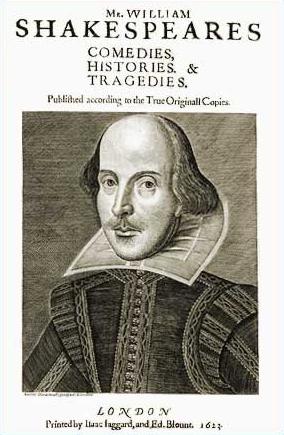
William Shakespeare Miguel de Cervantes

So how could Cervantes and Shakespeare die ten days apart if they died on the same date?

Though Spain and English were using a similar calendar back in the 17th century, Spain had already converted to the Gregorian Calendar. Back in the 1500s, astronomers noticed that over the course of 1500 years the Julian Calendar had veered from the solar year by approximately ten days. To fix this they added a new rule — no leap days in years that end in 00*. And to offset the ten days they’d swayed, the Gregorian Calendar simply “skipped” 10 days. (ie., one day in 1582, Italians and Iberians went to bed on October 4 and woke up on October 15.)

England, ever the traditionalist, didn’t switch to the Gregorian calendar until 1752, over a century after the Bard’s death.

This anomaly made April 23 an ideal date for the United Nations to create an international holiday celebrating literature. It also helps that not only did Shakespeare die on April 23, he was probably born on April 23 as well. Though no records exist to confirm Shakespeare’s birthday, it is assumed to be April 23, 1564, three days before his recorded baptism.

So today World Book Day is celebrated on April 23.

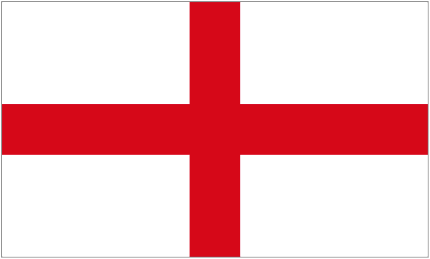
…Except in England, the Bard’s homeland, where it’s celebrated in March, because that’s the way they roll. And April 23 was already taken. It’s dedicated to England’s patron St. George.

(April 23 is also the birthday of famed Russian scribe Vladimir Nabokov—author of fun-for-the-whole-family classics like Lolita.)

*(except years divisible by 400. ie., 1700, 1800, 1900 = regular year; 1600, 2000 = leap year)

St George’s Day

April 23

The legend of St. George has been heralded around the world ever since the publication of The Golden Legend, a compilation of the lives of saints, which took for fact the mythic tale of St. George and the Dragon.

All that we really know for sure about St. George is that he was a soldier in the Roman army at the end of the third century AD, he was apparently of noble birth, of Christian parentage, and he was executed on the orders of Diocletian on April 23 in the year 303 in Palestine.

It is believed the reason for his execution was his protestation of the persecution of Christians. Fifth century documents indicate that he was imprisoned, tortured–in an effort to force a renunciation of Christianity–and beheaded when torture proved ineffective.

Much that we previously thought to be fact about George may have been the result of confusing him with other Georges. His birth in Turkey in 270 may have actually been that of George, Bishop of Cappadocia who lived around the same time.

Before he was the patron saint of England, George was already the patron saint of soldiers, rumored to have been seen fighting alongside Crusader forces in the Battle of Antioch in 1098. Richard I later declared his Crusading army to be under the protection of St. George’s watchful eye.

As for the dragon, the legend was spread by the 13th century’s The Golden Legend, which set the scene between George and the Dragon in Lybia. There a town is terrorized by a dragon who demands sheep to devour, and occasionally children, who are selected by lottery. (Note: April 23 is also Children’s Day)

George slays the dragon, frees the townsfolk, and wins the girl. The story may have been the result of the retelling of George’s defiance of Diocletian, symbolized as a satanic demon or dragon.

About the time of Golden Legend, St. George became the Patron of the Knights of the Garter, and later of all England.

Shakespeare coincidentally died on St. George’s Day, April 23, 1616. He reflected England’s faith in their patron hero when he scribed one of the most quoted speeches of his works, Henry V’s rallying cry to his soldiers before the Battle of Agincourt. The one that begins “Once more unto the breach” and climaxes with:

“…there is none of you so mean and base,
That hath not noble lustre in your eyes.
I see you stand like greyhounds in the slips,
Straining upon the start. The game’s afoot:
Follow your spirit, and upon this charge cry
‘God for Harry, England, and Saint George!”

Earth Day

April 22

“It’s April 21st
Everybody knows today is Earth Day…
Happy Birthday
To whoever’s being born.”

Well, Dramarama was just one day off.

Today, April 22, is the unofficial birthday of Earth. She won’t say exactly how old she is this year, but rumor has it, it would take about 4.5 billion candles to light her cake. (Although flattering Creationists insist she doesn’t look a day over 6,014.)

Earth Day as we know it–as celebrated on April 22–began in 1970. It was a grass-roots campaign, suggested by the unfortunately-named Gaylord Nelson (1916-2005), a senator and former governor from the state of Wisconsin, who had been instrumental in requiring pharmaceutical companies to disclose medicinal side-effects. In 1963, he changed his focus to environmental issues and organized a “Conservation Tour” under President Kennedy. With Kennedy’s assassination later that year, the national agenda changed. By the end of the decade the idea of environmentalism wasn’t even a blip on the political radar in Washington, yet Nelson found that students on college campuses were focusing on the environment with new intensity.

The timing was ripe for a holiday without borders to raise awareness of the environment. 20 million participated in the first Earth Day. Nelson later admitted neither he nor anyone in D.C. could have organized that many people. It was a true grass-roots holiday. “That was the remarkable thing about Earth Day,” he said, “It organized itself.”

Earth Day reminds us of the one thing we all have in common, no matter our country, language, religion or race. We all (okay, all but 483 of us, to be exact) have spent every day of our lives on this planet.

The furthest any of us have ever gotten from Earth–without exception—is 401,056 kilometers. That record belongs to the three astronauts of Apollo 13, the fated craft that splashed down to Earth on April 17, 1970—just 5 days before the first Earth Day—as if to emphasize our own fragility and dependence on our home base. Note, we haven’t gone one inch further in 40 years.

Flashback:

May, 1961. To an address Kennedy made to a joint session of Congress, and to the nation, that put forth a previously unimaginable initiative:

“…I believe that this nation should commit itself to achieving the goal, before the decade is out, of landing a man on the moon and returning him safely to earth.”

At the time, landing on the moon–let alone bringing someone back–was the stuff of science-fiction. The U.S. space program, Kennedy even admitted, was lagging behind the Soviets, and they weren’t about to declare such an outlandish dream.

But on July 21, 1969, the feat was accomplished. With 5 months to spare, Neil Armstrong became the first person to walk on a celestial sphere other than Earth, the planet on which every other living organism we know of has lived and died.

Flash-forward:

January 2003.

In his State of the Union, President Bush sets forth another initiative, with a new deadline:

“A single chemical reaction between hydrogen and oxygen generates energy, which can be used to power a car–producing only water, not exhaust fumes. With a new national commitment, our scientists and engineers will overcome obstacles to taking these cars from laboratory to showroom, so that the first car driven by a child born today could be powered by hydrogen and pollution-free.”

Environmentalists had waited a long time to hear something, anything in this direction. Not that hydrogen is the end-all earth-loving fuel of the future that politicians think it is, but still, it’s progress, right?

Take another look at the differences between the addresses:

Kennedy proposed a deadline of 8 and a half years to do what was widely believed to be impossible, what was far beyond our technical, practical, financial, and scientific ability. To go to the moon and back.

Bush, forty years later, called for a timeline of roughly twice Kennedy’s—16 years (“the first car driven by a child born today”)—to implement the use of technology we already have today.

We assume that technology moves much faster in today’s world than it did forty or fifty years ago, but it depends on which direction you’re looking. Our computers are faster, our radios smaller, but when it comes to using our technology to save our planet, we are nowhere near harnessing the momentum and energy of the technological dreams to reach the moon in the 1960s.

The missing element?

One thing the 2003 speech lacked, that Kennedy understood, was the necessary element of sacrifice. He understood that people working together toward a common goal will make that sacrifice. Today it’s very unpopular for a politician today to tell us to change our lifestyle–I mean, unless you’re gay–but if you’re not gay, they can’t tell you to change. And they especially can’t tell you to adapt your way of living to (prepare yourself):

CONSUME LESS.

The idea is almost considered unAmerican. Just by using the two words together in a single sentence this post is already on a CIA watchlist.

But it’s also a real solution, that, though unuttered by most politicians, is a real action that anyone can take that can help, starting today, not 16 years from now.

You don’t hear the rest of Kennedy’s 1961 speech these days—the not-so-sexy part. He’s talking about the space race, but he could just as easily be talking about the sacrifice necessary in the 21st century mission to protect and sustain life on our own planet Earth:

I believe we should go to the Moon. But I think every citizen of this country as well as the Members of the Congress should consider the matter carefully in making their judgment, to which we have given attention over many weeks and months, because it is a heavy burden, and there is no sense in agreeing or desiring that the United States take an affirmative position in outer space, unless we are prepared to do the work and bear the burdens to make it successful. If we are not, we should decide today and this year.


This decision demands a major national commitment of scientific and technical manpower, material and facilities, and the possibility of their diversion from other important activities where they are already thinly spread. It means a degree of dedication, organization and discipline which have not always characterized our research and development efforts. It means we cannot afford undue work stoppages, inflated costs of material or talent, wasteful interagency rivalries, or a high turnover of key personnel.


New objectives and new money cannot solve these problems. They could in fact, aggravate them further–unless every scientist, every engineer, every serviceman, every technician, contractor, and civil servant gives his personal pledge that this nation will move forward, with the full speed of freedom, in the exciting adventure of space.

Or in the equally exciting adventure of Earth.


Happy Birthday.

Bookmark and Share

Cannabis Day

April 20

Yeah, this is supposed to be a school-friendly blog, but the holiday gods don’t have much to offer on April 20, and the most famous birthday today is Adolf Hitler, so Cannabis Day it is.

April 20 has not been declared Cannabis Day, Weed Day, or Marijuana Day by any official government entity—it’s just that 4/20 has become the de facto numerical code for marijuana, though there’s debate as to how this came about.

Investigative reporting by the Huffington Post reveals that the most likely source is a group of teenage friends from Northern California in the 1970’s. The gang would meet after school by a statue of Louis Pasteur at 4:20, not just to partake in the drug of choice, but to engage on an unlikely quest: to find a rumored-about marijuana field supposedly in the Point Reyes region. The rumor was that the grower who had cultivated the field had been called off to the Coast Guard. The field was left unmanned, but no one knew its exact whereabouts.

The teenagers used the code “4:20 – Louis” to designate when and where they wanted to meet up to search for the field. Eventually it was shortened to just 4:20, and long after the search was forgotten, the number became code for smoking herb.

The spread of 4:20 across California and the universe was aided by members and followers of the Grateful Dead who eventually got wind of the code. As early as 1990, flyers passed by Bay Area Deadheads before a concert read:

“We are going to meet at 4:20 on 4/20 for 420-ing in Marin County at the Bolinas Ridge sunset spot on Mt. Tamalpais…”

The boys never found the elusive marijuana patch (or if they did, they’re not sharing).