Thus, in Japan the Sundays prior to the spring equinox (shuubun no hi) and the fall equinox (shunbun no hi) are known as O-higan. Days on which families visit and honor the graves of the departed. Ancestors are said to watch over the family like tutelary, guardian deities. That’s why we give thanks to our ancestors whenever we encounter success or prosperity . (But of course if we fail, it’s our own damn fault.)
Favorite foods are prepared for the departed, such as Ohagi (soft rice balls covered in sweetened bean jam), sushi, and vinegar rice & veggies. On the last day of the week, rice flour dumplings, special fruits and sweets are offered.
In Buddhism, O-higan is a time to focus on the 6 Perfections, or Pāramitā:
1. Dana – generosity
2. Sila – virtue
3. Ksanti – patience
4. Virya – effort
5. Dhyana – meditation (also ‘zen’)
6. Prajna – wisdom
O-higan
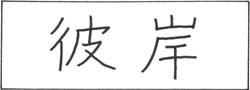
The O-higan days have been celebrated in Japan since the 8th century. The name Higan literally means, “the other shore” and is short for Tohigan—to arrive at the other shore. The 6 Pāramitā are the bridge that will enable us to cross over to the other shore of Nirvana.
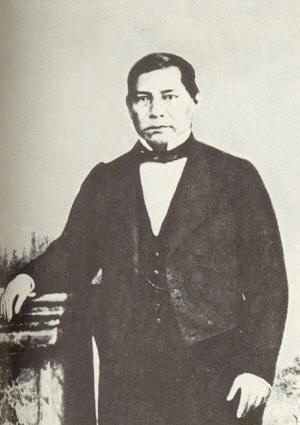
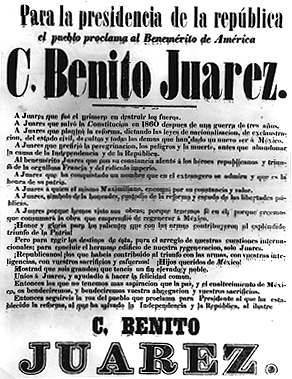
March 21, the birth of spring, is also the birth of Mexico’s greatest leader, Benito Juarez.
On this day in 1806 Benito was born to poor Amerindian peasants in the mountains of Oaxaca. His parents died when he was three and Benito spent his youth working the corn fields and shepherding local flocks.
At age 12 he left the mountain village for the city of Oaxaca to live with a sister and work as a servant. There he learned Spanish (he spoke only Zapotec, and was illiterate) and thanks to the help of a Franciscan monk he befriended, gained entrance to a seminary school. He chose to go to law school rather than become a priest.
He worked as a lawyer from 1834 to 1842, as a judge for the next five years, and by 1847 he was Governor of Oaxaxa. However, in 1853 he spoke up against the corrupt government of dictator Santa Anna, and was forced to go into exile in the United States. There the former lawyer, judge and governor worked at a cigar factory in New Orleans.
When General Santa Anna finally resigned in 1855, Juarez was welcomed back to Mexico. The new government sought to abolish the military government and create a new federalist constitution. Juarez, who had helped to draft a plan for a liberal Mexican democracy during his exile, was selected as the country’s Chief Justice under the new liberal President Comonfort.
The honeymoon was short. Conservatives angered by the country’s new democratic direction launched a coup with the support of the military and the clergy. The Mexican War of the Reform was a time of schismatic rule. At first Comonfort tried to negotiate with conservatives, led by General Zuloaga. He agreed to dissolve the Congress and place Juarez and other liberal leaders in jail. However, when it became clear the conservatives were not going to stop short of anything but complete militaristic control of the country, Comonfort reinstated Congress, freed Juarez and other political prisoners, and resigned. Juarez became, by default, the interim president of Mexico. Since Zuloaga’s forces controlled Mexico City, Juarez moved his government to the state of Guanajuato (meaning “place of frogs”).
Juarez’s legitimacy was aided by the power struggle between Zuloaga and two other generals, each of whom took turns arresting and deposing one another and assuming military control. When the dust cleared, liberal forces marched back into Mexico City and regained the capital. Juarez became undisputed President in 1861.
Faced with a bankrupt economy, Juarez declared a moratorium on European debts. Spain, England and France responded by seizing the port of Veracruz. Juarez struck an agreement with Spain and England to repay Mexico’s loans, but France had other plans. They intended to establish a puppet dictatorship under Maximilian I.
Again Juarez took his government into exile, this time to the state of Chihuahua. Juarez could not get support from the United States, which was in the middle of its own Civil War.
Juarez sought, and got, support from Mexican-Americans in California (recently Mexico) and after the U.S. Civil War, Lincoln and other generals unofficially supported the Juarez government with weapons and men.
Maximilian was overthrown and executed in 1867, at which time Juarez became undisputed president for his fifth and last term. He would die while in office at the age of 66.
“It is given to men, sometimes, to attack the rights of others, to seize their goods, to threaten the lives of those who defend their nation, to make the highest virtues seem crimes, and to give their own vices the luster of true virtue. But there is one thing that cannot be influenced either by falsification or betrayal, namely the tremendous verdict of history. It is she who will judge us.”
March 20 or 21. Falls precisely on spring equinox.
Spring is here, friends. Let’s stay in the garden, and be guests to the strangers of the green…
— Rumi
Norooz is known by dozens of names across the many countries where it’s celebrated. Nowruz, Norouz, Noruz, Noroz, Nowroz, Nauryz, Navruz, Novroze, and more.
Now comes from the same root as “new”, and ruz means both “day” and “time”.
But however you spell it, the Persian New Year is one of the oldest holidays in the world. It dates back to the Zoroastrian religion, and the almost universal practice in the ancient world of welcoming the New Year with the beginning of spring. It’s celebrated on the spring equinox, usually March 21 in the Gregorian calendar, plus or minus a day.
During Esfand, the last month of the Persian calendar, houses are cleaned top to bottom. This original “spring cleaning” is called khane tekani, and stems from the Zoroastrian preoccupation for cleanliness, a virtue further emphasized in Islam and in Persian culture. [Note: You won’t find “cleanliness is next to godliness” in the Bible, but it’s imperative in the Qur’an.] Khane tekani includes house painting, washing the carpets and rugs, clearing out the attic, and cleaning the yard.
Family members are also measured for new clothes.
An essential feature of Nowruz is the “Sofreh-e Haft Sin”—Sofreh is a special table cloth which is spread out a few days prior to the New Year on the family table to hold the Haft Sin.
Haft means 7. But no, it’s not the Seven Sins (although one of the ‘Sin’s is an apple). In the Persian alphabet the letter S is called Sin, and the Haft Sin are items that begin with S and are placed on the table:
Sabzeh (sabza): wheat, barley or lentil sprouts grown in a dish, to symbolize rebirth
Seeb (sib): apples, for health and beauty
Seer (sir): garlic cloves, symbolizing medicine
Serkeh (serka): vinegar, representing both age and patience
Samanu: a sweet reddish pudding made from wheat germ, specially prepared according to tradition by the women of the household, symbolizing affluence.
Senjed: dried fruit of the oleaster, or lotus tree, symbolizing love. Rumor has it that the fragrant blossoms of the lotus tree make people fall in love.
Somaq: sumac berries, symbolizing the color of sunrise, and the victory of good over evil
Sometimes additional S’s are added to the table, or used in place of one of the above.
Sekka: newly minted coins, for prosperity and wealth
Sepand: seeds of wild rue, which are burned in a small incense burner after the New Year to ward off evil spirits
Sonbol: a fragrant hyacinth or narcissus flower, symbolizing the coming of spring.
Other common sights on the Nowruz table are:
decorated eggs, symbolizing fertility. Easter eggs come from the Persian tradition, not the other way around.
rose water, representing purification
a bowl of water with an orange, symbolizing the earth floating in space
candlesticks, one for each child in the family
a mirror, to reflect creation, which is believed to have occurred on the first day of spring.
and goldfish—in a fishbowl, not the little crackers. The goldfish symbolize life, as well as the constellation of Pisces, which the sun leaves as it enters the new year.
Nowruz is a cultural celebration rather than a religious one, but many families include the Qur’an on their Haft Sin table.
Chaharshanbe Suri (fire-jumping), from a Kurdish Newrooz celebration in Istanbul
♦ ♦ ♦
Come to the orchard in spring.
There is light and wine and sweethearts
in the pomegranate field.
If you do not come,
these do not matter.
If you do come,
these do not matter.
Rumi
♦ ♦ ♦
This year President Obama made an unprecedented video message to people observing Nowruz in Iran and elsewhere:
“Today I want to extend my very best wishes to all who are celebrating Nowruz around the world. This holiday is both an ancient ritual and a moment of renewal, and I hope that you enjoy this special time of year with friends and family.”
What’s that? Not unprecedented? Nope, it turns out President Bush issued a similar greeting on March 20, 2003, though it was aimed at Iranians within the United States:
“During Nowruz, people of Iranian descent celebrate the arrival of spring, a season of rebirth. This joyous occasion provides an opportunity for Persians to cherish their rich heritage and enjoy the company of family and friends in anticipation of happiness and blessings in the year ahead.”
The March 20, 2003 announcement received far less play than Obama’s. A sign of bias in the liberal media? Perhaps. Or possibly because Bush’s Nowruz message fell on the exact same day as the invasion of Iraq.
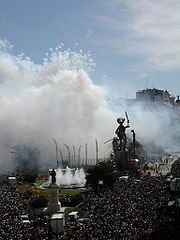
Las Fallas has been described as a “pyromaniac’s dream” and a cross between “a bawdy Disneyland, the Fourth of July and the end of the world.”
Mascleta, March 2004
So how did the next-best-thing to the Apocalypse come to be celebrated on the feast day of Saint Joseph, adoptive father of Jesus?
Well, though St. Joseph’s Day is celebrated as Father’s Day across Italy, Spain, and Portugal, the Valencians chose to celebrate another calling of Joseph.
Joseph is also the patron saint of carpenters, an occupation that made up a good segment of the urban population in the Middle Ages. According to “Valencia en la epoca de los Corrogidores“, each Autumn, carpenters carved special planks of wood to serve as candle holders, either free-standing or hanging on the wall. Called estai, parot, or pelmodo, these medieval lamps provided light for carpenters to work by during the long winter nights.
Apparently the Valencian carpenters weren’t big fans of recycling. Each year on St. Joseph’s Day they would celebrate both their patron saint and the coming of spring by burning these special wooden candle holders along with any leftover wood.
The pagan tradition of burning effigies on or near the spring equinox had long been a ritual in pre-Christian Europe. The Valencia carpenters had the idea of killing two birds with one stone. The dressed up the wooden lamps as unpopular local authorities—perhaps an unscrupulous sheriff or maniacal mayor—before burning them.
Over the centuries the pelmodos became more and more intricate. Today they are not candle holders at all, but are sculptures as big as houses, large float-like creations that portray anything from reviled politicians to hot-topic social issues, such as “globalization swallowing the world.”
After five days of festivals and celebration these miraculous, almost supernatural creations go up in smoke, just as in days of yore. Called “La Crema”, the bonfires take place on the evening of Saint Joseph’s Day, March 19, and for one long night the conflagration makes Valencia look like —well, let’s just say Nero’s Rome couldn’t hold a candle.
The long and brutal battle for the Dardanelles is one of the most commemorated campaigns of the 20th century.
Australia and New Zealand remember the Battle of Gallipoli each year on April 25, the anniversary of the first engagement of ANZAC (Australia and New Zealand Army Corps) in World War I.
Turkey, meanwhile, remembers the nine-month campaign each year on March 18—the anniversary of the 1915 naval battle of Canakkale which, had the Allies succeeded, would have paved the way for the capture of Istanbul. Turkey calls March 18th the “Victory of Canakkale”, or the more sobering title Martyrs’ Day.
The Allies’ plan was to combine their naval strength to blast their way through the Dardanelles, a stretch of water connecting the Aegean Sea to the Black Sea. The Dardanelles are 60 km long and a maximum of 7 km wide. At its narrowest point (appropriately named “the Narrows”) overlooked by the city of Canakkale, the shores are separated by a mere 1600 feet.
Dardanelles
By taking the Dardanelles, the Allies, led by France and Britain, would have a route from the Mediterranean to their Russian Allies, while cutting off the Germans from their ally the Ottomans (Turkey was part of the Ottoman Empire at the time), effectively removing the Ottoman Empire from the war.
However, on March 18, after a month of French and British naval bombardment, the Allied attempt to breach the Dardanelles met a disastrous failure. The fleet failed to clear the minefields strategically placed by the Ottomans and several key British and French warships were destroyed.
It became clear to the Allies that Turkish resistance was too strong for a purely naval victory. They sent in ground troops, including tens of thousands of eager Australian and New Zealand recruits.
Against the armed might of four nations, including two of the most powerful navies in the Western world, Turkish armed forces held their ground for a full nine months. The long campaign and victory in January 1916—like the initial victory on March 18, 1915—fueled national pride and cohesiveness across the land that would be Turkey.
Much of the success of the defense of Canakkale is attributed to the strategic foresight of a young commander by the name of Mustafa Kemal.
After World War I, Mustafa Kemal went on to lead forces in the Turkish War for Independence, and became the founder and leader of the new nation of Turkey. He is probably the most significant figure in the creation of of Turkey as we know it today, and because of the significance of Canakkale, many view 1915—not 1923—as the true birth year of the Turkish state.
Mustafa Kemal at Gallipoli, 1915
One side won, one side lost. But statistics tell another story.
The Turks and the Allies suffered nearly a quarter million casualties each—that’s over half of all men on both sides who fought in the nine-month battle.
“Those heroes that shed their blood, and lost their lives …
You are now lying in the soil of a friendly country
Therefore, rest in peace.
There is no difference between the Johnnies
And the Mehmets to us where they lie side by side,
Here in this country of ours.
You, the mothers, who sent their sons from far away countries…
Wipe away your tears.
Your sons are now lying in our bosom and are in peace.
After having lost their lives on this land, they have
Become our sons as well.”
I’m tired of these @#$%! snakes
on these #$%@$! Irish plains!
— St. Patrick, 433 AD
When the going gets tough, the tough go green. And the hard times haven’t dimmed the green glow (or watered down the green beer) of St. Patrick’s Day from the Emerald Isle to North America.
For a run-down of the slave-turned-priest who we celebrate today, check out last year’s St. Patrick’s Day post: Green is Good.
This year we travel around the world to see how St. Patrick’s Day is celebrated in different cities.
American Servicemen and women in Baghdad held their first (and possibly last) St. Patrick’s Day Parades. It was considerably smaller than, say, New York’s festivities, but the tiny procession drew a respectable amount of confused looks from curious Iraqis. AFP
In New Orleans, the St. Patrick’s parades are second only to Carnival/Mardi Gras. Instead of throwing beads, float-riders threw food: full heads of cabbage, carrots, and potatoes. “Everything you need to make an Irish stew, minus the meat,” says New Orleans native Odin (yes, that’s his real name). And that’s exactly what participants do with it. “And if you’re a mother with kids, forget it.You’ll go home with more food than you could eat in a month.”
But watch out for large flying edible projectiles!
The St. Patrick’s Day parade in Toronto is relatively young, but gaining in popularity. The Irish have a long tradition in Canada’s largest city. According to toronto.ctv.ca:
In 1847, when the city of Toronto was only 13 years old and had only 20,000 residents, more than 38,000 Irish refugees of the Great Famine — which lasted from 1845 to 1851 — arrived in the city.
In the U.S. the two most famous celebrations are the parades in Boston and New York.
John “Wacko” Hurley has helped organize the Boston St. Patrick’s Day parade for a half-century and has been its lead organizer for the past two decades.
The New York parade dates back to 1766 and is one of the city’s oldest annual traditions. It was originally organized by military units before falling upon the shoulders of Irish fraternal clubs in 1811.
A few years back the New York St. Patrick’s Day parade counted 150,000 participants. That’s marchers alone, not spectators. The people lining the parade route and watching on TV numbered in the millions.
And of course there’s Ireland. Surprisingly Ireland held a disappointing, lackluster St. Patrick’s Day celebration until recently. It wasn’t until 1996 that Dublin, inspired by the success of fanfare overseas, held it’s first major St. Patrick’s Day festival. Amazingly, that first crowd numbered over 400,000. Today the festival has grown to six full days of activities, and visitors to the festival number over a million.
Wherever you celebrate today, there’s a good chance you’re a stone’s throw away from an Irish pub.
And if not, you can always go throw cabbage at someone.
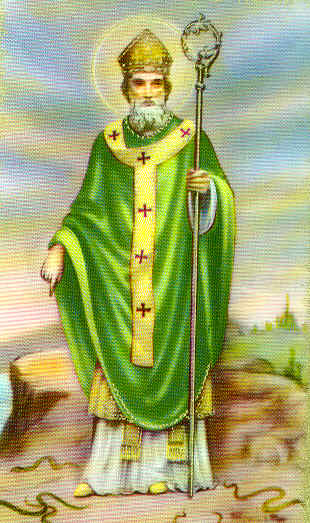
Everyone knows where the world-famous Saint Patrick is from. Scotland.
That’s right. Patrick was a wee lad by the name of Succat living in Scotland when he was kidnapped by Irish pirates at the age of 16 [“Kidnapped by pirates is good!” – Fred Savage, The Princess Bride] and sold as a slave.
In Ireland he herded a Celtic chieftain’s sheep for six years, until one day he ran away and traveled 200 miles across Ireland to escaped to France on a ship.
In France, he studied under the Bishop Germanus at the Auxerre monastery in Gaul. Patrick returned to Britain a priest, but heard the land of his captivity calling, and returned to Ireland in 430 A.D.
St. Patrick and snakes
Patrick’s experience living in Eire gave him an advantage over previous missionaries.
During the Druidic festival of Beltraine, which celebrated the coming of spring, the King Laoghaire lit the annual bonfires. The law of the land said no other fires could be lit that night under penalty of death. Patrick defied the law by lighting a flame in clear view of the capital, to remember the resurrection we know as Easter.
Patrick was ordered before the King to explain himself. Legend says this was the first of many times Patrick picked up three-leaf clover and used it to illustrate the Holy Trinity. The number 3 was particularly revered by the Gaelic people, so Patrick often emphasized the Trinity in his teachings. King Laoghaire was surprisingly receptive to Patrick, the former slave, and later asked him to codify Irish law.
King Laoghaire (left) and Saint Patrick (dramatization)
Saint Patrick feat is remarkable in that he converted an entire people to Christianity without bloodshed. He didn’t have to die a martyr’s death for his beliefs, nor did he execute or threaten to execute anyone who did not share them.
But his most famous conquest was as the “Samuel L. Jackson” of the Emerald Isle. According to legend, Saint Patrick cured the Irish plains of their snake infestation. And to this day there are no snakes in Ireland, iron-clad proof of the great Saint’s miracle!
“I have had it with these @#$%&! snakes on these @#$%&! Irish plains!“
St. Patrick is world-famous for driving the snakes out of Ireland, but the day before St. Patrick’s Day we celebrate an oft-overlooked saint named Urho, who is said to have performed the equally admirable feat of ridding his Finnish homeland of hungry grasshoppers, thus saving Finland’s all-important grape crop, and the Finns themselves, from devastation.
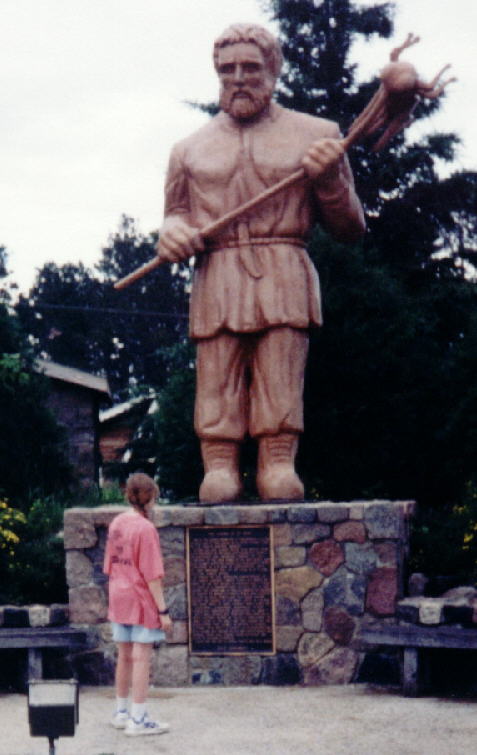
Plaques proclaim St. Urho’s glory, including one in Minnesota that describes the annual ceremony in his honor:
At sunrise on March 16, Finnish women and children dressed in royal purple and nile green gather around the shores of the many lakes in Finland and chant what St. Urho chanted many years ago: “Heinäsirkka, heinäsirkka, mene täältä hiiteen” (Grasshopper, grasshopper, go away!”
Urho’s deeds are recalled in poems like The Legend of Saint Urho, by Linda Johnson. Statues have been erected in his honor. His feast day is celebrated with relish by Finnish communities throughout Minnesota.
But before you go impressing your Finnish friends with all your knowledge about their culture, you should know that, while St. Urho is a symbol of pride for many Finnish-Americans, sadly the Finns themselves are all but ignorant of their great national hero. (Or of the notion that grapes grew there.)
This is because St. Urho is a completely made-up saint. He was conjured up and popularized by Finnish-Americans (most-likely intoxicated) in Minnesota in the mid-1950’s.
Envious of the attention paid to Ireland’s patron saint on May 17, Finnish Minnesotans, created their own hero, possibly inspired by the name of then Finnish Prime Minister Urho Kekkonen. There is some debate over who is to blame—I mean, who is responsible for inventing the now world-famous saint.
Richard Mattson, a department store manager in Virginia, Minnesota, explained,
“[Gene] McCavic, a co-worker at Ketola’s Department Store, chided me in 1953 that the Finns did not have saints like St. Patrick. I told her the Irish aren’t the only ones with great saints. She asked me to name one for the Finns. So I fabricated a story and thought of St. Eero (Eric), St. Jussi (John), and St. Urho. Urho, a common Finnish name, had a more commanding sound.”
Mattson’s original St. Urho rid Finland of its frogs, not grasshoppers, a tradition that changed over time.
Soon, the employees of Ketola’s came to respect the Finnish saint, or at least their manager’s Finnish dry humor, and began throwing “St. Urho’s Day” parties as an inside joke for their beloved manager.
The story of St. Urho was reported in the Mesabi Daily News in 1956. That may be where Sulo Havumaki, a school district psychologist in Benmidji, Minnesota got wind of it.
“Sulo was a devout Catholic and, feeling left out because there weren’t any Finnish saints, made one up with tongue in cheek: St. Urho (Maybe he adopted Mattson’s…)” — William Reid
Sulo’s devotion to the obscure saint was well-known in the town. One story goes that when a neighbor’s family took a trip to Finland, they played a rather unusual practical joke on Sulo. They took some very old bones and wood with them and arriving in Finland, found a recent obituary in a Finnish newspaper. From Finland they shipped the wood and bones to Sulo along with a fictitious letter, in the name of the recently deceased…
“Sulo received the letter, which said something like “Dear Prof. Havumaki: I am the keeper of the last relics of St. Urho. News of your faith and dedication to St. Urho have reached me across the ocean. I am dying, and commend to you those last relics because I know you will protect and revere them, and pass them to the next custodian when the time is right…”