St. Ignatius of Loyola

July 31

ALMOST 500 years ago in the Basque country in the north of Spain, a young man sat in bed recovering from a long and brutal operation. Inigo, an officer in the Spanish army, had been struck during a French siege by a small cannonball which had shattered one leg and severely wounded the other.

After 15 days, doctors…

decided that the leg ought to be broken again and the bones reset because they had been badly set the first time or had been broken on the road…This butchery was done again; during it…he never spoke a word nor showed any sign or pain other than to clench his fists… — Culture and Belief in Society, David Englander & Rosemary O’Day

But as he healed, one of the bones remained on top of the other, shortening his leg. A self-admittedly vain Inigo didn’t want to live life deformed. He opted to to undergo a third operation to fix it, even though it would be the longest and most painful, as the bone had already healed.

Having cut into the flesh and sawed off the projecting bone, the surgeons set themselves to the task of reducing the shortness of the leg…and continually stretching it by means of mechanical devices, which for several days on end cause him great torture. — Saint Ignatius Loyola: the Pilgrim Years, James Brodrick

In recovery Inigo asked for some books to occupy him. All they had to read were two books, De Vita Christi (Life of Christ) by Ludolph of Saxony and a book on the lives of the Saints, both in Castilian.
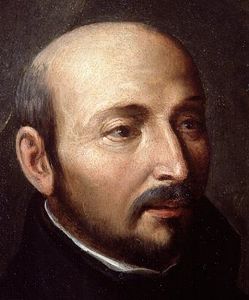
St. Ignatius of Loyola

(On a personal note, I was once stuck in a laundromat for three hours where the only book I could find was “The Valley of the Dolls.” We are glad that was not the case with Inigo, because) After reading these tomes and healing from his operation, he tossed aside three decades of vanity and materialism, to found the Society of Jesus, the Jesuits.

It didn’t happen overnight. It began with a competitive pursuit of “besting” the saints, to be more ascetic than this one or to fast more stringently than another. But each exercise and pilgrimage slowly transformed his faith. He spent several months living in a cave. He begged his way across Europe to Jerusalem. He preached on the streets of Barcelona. He was interrogated during the Inquisition, and briefly incarcerated in Salamanca.

About what do you preach?” Loyola was once asked.

He replied, “We do not preach, we speak to a few in a friendly manner about the things of God, just as one does after dinner with those who invite us.

He left his troubles (and his name) in Spain to study at the University of Paris. There ‘Ignatius’ of Loyola met six other like-minded men who formed Societas Iesu–the Society of Jesus. In August 1534 the men made a vow–to live in poverty and chastity, to devote themselves to missionary work and other good deeds, and to serve the Pope.

St. Ignatius de Loyola

By the time of Ignatius’s (Inigo’s) death, on this day in 1556, the Society of Jesus (Jesuits) had spread to three continents, where they operated dozens of schools. They made enemies among colonial powers while defending the the rights and lives of indigenous inhabitants of North and South America.

With over 18,000 members in 112 nations, the Jesuits are the largest male religious order of the Roman Catholic Church. Millions more have been educated at Jesuit schools and universities.

Prayer of Saint Ignatius Loyola
Teach us, Good Lord,
To Serve Thee as Thou deservest;
To give and not to count the cost;
To fight and not to heed the wounds;
To labor and not to ask for any reward,
save that of knowing that we do Thy will.
Through Jesus Christ Our Lord, Amen.

http://www.pray-as-you-go.or

St. Olav’s Day

July 29

Almost a thousand years after he sailed the fjords of Norway, King Olaf is remembered with Olavsfestdagen (Olaf’s Feast Day) — a week of music, entertainment, and partying.

Legends abound of King Olaf’s heroic deeds. According to “Scandanavian Folk-lore – Illustrations of the Tradition Beliefs of the Northern Peoples

When St. Olaf came to the farm of Sten, where his mother is said to have lived, he resolved to build a church there. A giantess, who at the time lived in the mountain…was not at all satisfied with this plan…and challenged him to a contest. “Before you are finished with your church,” said she, “I shall have built a stone bridge over Stensfirth.” Olaf accepted the challenge, and before she was half finished with the bridge, the glorious peal of the bells was heard from St. Olaf’s Church.

In a rage the troll seized the stones with which she had intended to complete the bridge, and hurled them…over the firth at the church, but as none of them struck it, she became so angry that she cut off one of her legs and let that fly at the steeple… [T]he leg landed in a bog behind the church, where to this day it causes a bad smell.

Despite the stories, Olav was not always the saintliest of saints. So scribed Sigvald the skald:

The youthful king stain red the hair
Of Angeln men, and dyed his spear
At Newport in their hearts’ dark blood;
And where the Danes the thickest stood–
Where the shrill storm round Olaf’s head
Of spear and arrow thickest fled,
There thickest lay the Thing-men dead!
Nine battles now of Olaf bold,
Battle by battle, I have told

King Olaf
King Olaf

Yes, Olaf had a tendency to convert Scandanavia’s pagan remnants, not with scripture and Bibles but with sword, fire, and battle-axe.

He was slain in battle in 1030, his body buried near the field, to be later disinterred and moved to Trondheim…

where it was deposited in the magnificent cathedral which rose upon the ruins of the temple of Thor. The recollection of his cruelties was forgotten, and such was the reverence paid to him as a hero and martyr that he might almost be said to have filled the place of the ancient idols in the affections of the nation.

In death the former king became more powerful than in life. Having uprooted centuries of pagan myth and tradition, Olaf himself replaced the Norse god Thor in some ways. He inherited the god’s red hair and beard, and the weapon of choice was changed from hammer to Olaf’s battle-axe.

Thor
Thor

In death, Olaf’s powers had no bounds. His shrines were said to heal the sick, make strong the weak, and even to heal crippled and severed limbs–though whether this is related to his encounter with the angry giantess at Stensfirth, and the smell emanating from the bog behind his church, the sagas do not say.

Independence Day – Peru

July 28

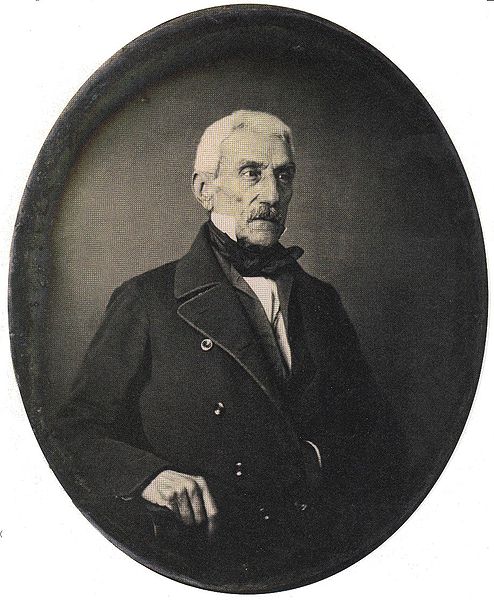
Jose de San Martín had liberated the Rio de la Plata (Argentina), marched his army across the Andes, and defeated the Spanish in Chile before turning his attention to the north, to Peru—Spain’s most tenacious stronghold on the continent. In Chile he created a navy from scratch in order to attack Peru by sea.

At that moment, San Martín’s newly independent homeland of Argentina was emerged in civil war; yet he felt if he used his army to intervene in Argentina it would only lead to more destruction. Before debarking from Valpasairo, Chile, he issued his proclamation to his countrymen in Argentina on his reasons for continuing to Peru, rather than returning to his homeland to support one warring faction over another:

Provinces of the Rio de la Plata: This proclamation will be my last response to my calumniators: I can do no more than to risk my life and my honor for the sake of my native land. Whatever may be my lot in the campaign of Peru, I shall demonstrate that ever since I returned to my native land, her independence has been my constant thought, and that never had I entertained any ambition other than to merit the hatred of the ungrateful and the esteem of the virtuous.

Upon reaching Peru, he was interviewed by an Englishman, Captain Basil Hall, who paraphrased the General as saying that the war in Peru was “not a war of conquest or glory, but entirely of opinion; it was a war of new and liberal principles against prejudice, bigotry, and tyranny.

San Martin crosses the Andes
San Martin Crosses the Andes

San Martín said he had no territorial ambitions in Peru, or even to wish them independence if the people were not for it.

All that I wish is, that this country should be managed by itself, and by itself alone. As to the manner in which it is to be governed, that belongs not at all to me. I propose simply to give the people the means of declaring themselves independent, and of establishing a suitable form of government; after which I shall consider that I have done enough, and leave them.

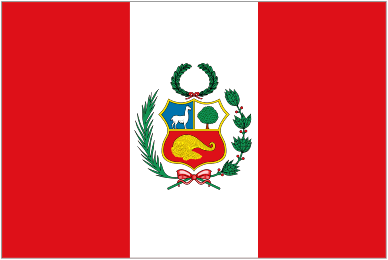
A year later, on this day in 1821, the General stood in the great square in Lima, unfurled the new flag of independent Peru, and announced:

From this moment, Peru is free and independent, by the general wish of the people, and by the justice of her cause, which may God defend. Viva la patria! Viva la libertad! Viva la independencia!

The General was made Protector of Peru, but Spanish forces continued to battle San Martín’s troops, and Peruvian independence was far from assured. General Simón Bolívar, who had defeated the Spanish in Gran Colombia (today’s Venezuela, Colombia, Panama and Ecuador), entered Peru from the north. The two great Liberators of South America met in Guayaquil, Ecuador, on July 26, 1822, to discuss the fate of the continent.

Much has been written about, and hardly anything is known about, what happened between Simón Bolívar and José de San Martín at their only meeting. There were no witnesses other than the two men themselves. But after the interview, San Martín–true to his word–resigned his position as Protector and returned to Argentina, leaving Bolívar to defeat the Spanish in Peru.

San Martin and Simon Bolivar

San Martín’s wife died the following year. Distraught by her death and the civil wars wreaking havoc in Argentina, José de San Martín took his daughter Mercedes and moved to France, where he lived until his death in 1850.

Jose de San Martin
Jose de San Martin

Bolívar was deigned Dictator of Peru in 1824, the same year he drove out the Spanish for good. The southern part of Peru became Bolivia in his honor.

Spain officially recognized Peru’s independence in 1879.

Emancipation of South America – William Pilling

Rise of the Spanish-American Republics as told in the Lives of their Liberators – William Spence Robertson

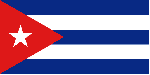
Day of National Rebelliousness – Cuba

July 26

Today’s holiday—National Rebelliousness Day—is interwoven with yesterday’s holiday, Día de Santiago, or the Feast Day of St. James, though the inciting incidents took place in separate hemispheres nearly two millennia apart.

In the wee hours of July 26, 1953, as the town of Santiago de Cuba recovered from the previous day’s Santiago (St. James) festivities, Fidel and Raul Castro led about 120 rebels in an attack on the Cuban military’s second largest barracks.

The attack failed almost before it began. The Moncada Barracks soldiers sounded the alarm before Castro’s men could gain access to the compound, losing any hope of surprise. Castro’s rebels were heavily outnumbered (sources say between 4:1 and 10:1) but fought on.

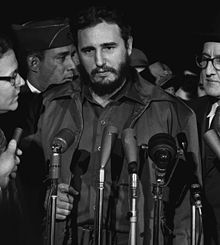
Fidel Castro in Washington DC, 1959

The rebels suffered over 60 casualties, though Castro later stated that only a handful died in the battle, and that the others were executed by the Batista regime after the battle ended.

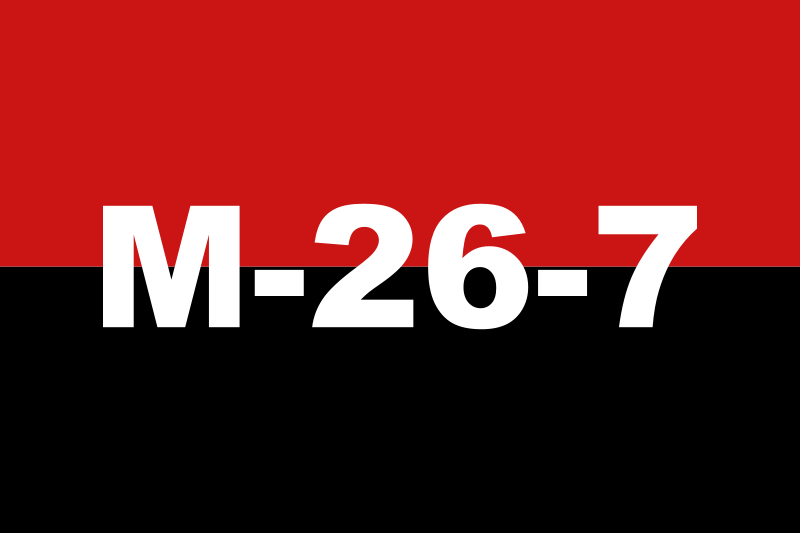
Castro was imprisoned with several of the other survivors, but a popular support movement successfully lobbied for their release. The attack on the Moncada Barracks marked the beginning of the Cuban Revolution, and henceforth, Castro’s coalition against the Fulgencio Batista regime was known as the 26th of July Movement.

Flag of the July 26th movement

Today, Cubans celebrate El Día de la Rebeldía Nacional with three days of fiestas, music, dancing and parades.

The Way of Saint James – Spain

July 25

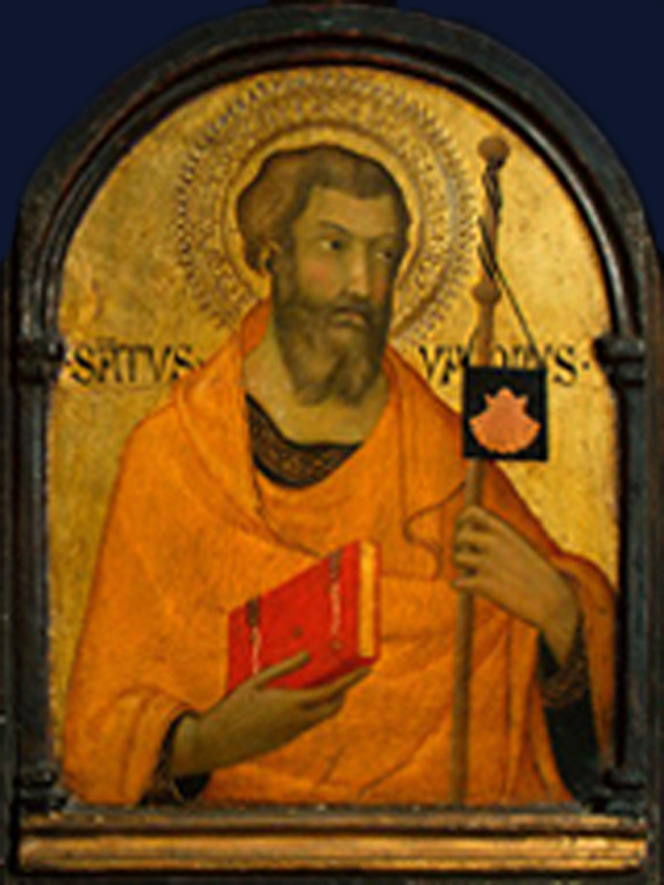
Saint James

July 25th is the feast day of St. James.

James and his brother John, sons of Zebedee, were two of Jesus’s twelve Apostles. After Jesus’s crucifixion, James took the Gospel westward to unchartered territories—Iberia—and never looked back. Oh wait, he did look back, unfortunately. After receiving a vision of the Virgin Mary, James returned to Judea where he was beheaded by King Herod Agrippa I in 44 AD.

But that’s not the end of James’s story. No, James’s hagiographers tells how James’s followers risked their lives to bring James’s body back to Iberia. They witnessed several miracles on the way, eventually laying his relics to rest at the edge of the western world: Santiago de Compostela in Northern Spain.

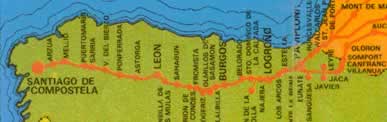
Santiago de Compostela is the destination for thousands of pilgrims who make the journey to St. James’s resting place each year. The route is known as Camino de Santiago, or the Way of Saint James.

El Camino Frances, Spain

The most commonly traveled route is the Camino Frances. It starts somewhere north of the border in the French Pyrenees near St Jean Pied de Port. The trail winds 780 kilometers westward across Northern Spain to Santiago de Compostela, though many pilgrims continue a little further west to Cape Finisterre on the Atlantic. Finisterre comes from the Latin for “land’s end”.

The cape was once believed to be the end of the world.

On foot the pilgrimage takes about a month of walking. Peripatetic veterans recommend walking from 6am to 1pm. There are plenty of towns to stop in along the way, and such a schedule figures in nicely with the Spanish siesta, falling around 2pm each day.

The numbers of pilgrims have skyrocketed since the 1980s, when only a few thousand travelers would make the journey each year. These days that number is in the hundreds of thousands. Religious devotion varies among trekkers.

“Modern Pilgrimages seems to be a lot less about religion and more about peace, finding something in their life, a time to think, and for some a challenge…

“I did not set out on a Spiritual or religious journey – but it ended being that way…”

http://www.caminodesantiago.me.uk/camino-frances/

All about El Camino de Santiago

Birthday of Simón Bolivar

July 24

Today citizens of Venezuela, Colombia and Bolivia celebrate the birth of the Libertador of northern South America: Simón Bolivar. He was born on this day in 1783 in Caracas, Venezuela.

Simón Bolivar

Bolivar is one of the few people to have a country permanently named after him, and is the only person born in the New World to have been so honored.

Countries named directly after individuals

Belize – possibly from the Spanish pronunciation of “Wallace”. Captain Peter Wallace was a pirate commissioned by King James I to pillage Spanish ships in the region. He built his base at the mouth of what is now the Belize River. May also be from the Mayan “belix” meaning “muddy water”.

Bermuda – after explorer Juan de Bermudez, who arrived there in 1503.

Colombia – Christopher Columbus

Dominican Republic – after St. Domingo de Guzman, founder of the Dominican Order.

El Salvador – literally, “the Savior”, after Jesus of Nazareth.

Kiribati – from the Gilbert Islands, for Captain Thomas Gilbert.

Mozambique – possibly from sheik Mussa Ben Mbiki.

Philippines – King Philip II of Spain

San Marino – from St Marinus, an ancient stonemason who fled to the area to escape Roman persecution

Sao Tome and Principe – from St. Thomas. Portuguese explorers encountered the land on St. Thomas’s Day. (December 21)

Seychelles – for Jean Moreau de Sechelles, King Louis XV’s Finance Minister.

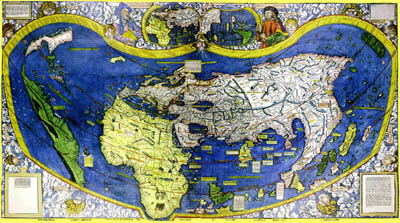
Amerigo Vespucci is the only person to have a continent named after him, and he got two! The explorer helped prove that the lands Christopher Columbus encountered were not in Asia, but were entirely new continents. In 1507 cartographer Martin Waldseemuller labeled the new continents after the Italian explorer when he printed 1000 copies of his famous globe of the world.

Waldseemuller's Wall Map of the World

Waldseemuller’s 1507 Globe Map

Waldseemuller’s 1507 Wall Map

Egypt’s Revolution Day

July 23

Before the revolution we were a poor people living in a very miserable situation and suffering from imperialism and the occupation by British forces…Everything changed in Egypt after the revolution.

— Ahmed Hamroush, a former leader of the Free Officers Movement

The British government recognized Egypt’s autonomy back in the late 19th century, but only on paper. Even after World War II, Egypt was occupied by British forces, eager to keep a hold of one of the most strategically valuable lands on the planet. Egyptians saw their king as a puppet monarch of the West, and the government as corrupt.

In 1952 Lieutenant Colonel Gamal Abd Al-Nasser and General General Mohammad Neguib organized a group of “Free Officers” from the army corps with the intent to free the country from European control.

The revolution took place literally overnight. On the morning of July 23 the Free Officers took over vital government offices, utilities, and media stations, and announced the change of government to the Egyptian people. The coup was extremely well-orchestrated and highly successful thanks largely to Colonel al-Nasser’s planning. He and General Neguib forced King Farouk I to abdicate on July 26.

General Neguib became the first President, and Nasser became the Minister of the Interior, taking over the presidency in 1954.

The July Revolution inspired nations and colonies across Africa and the Arab world to fight for and demand independence from Western powers.

To this day, July 23 is Egypt’s National Holiday.

al-Nasser (left) and Naguib (center) after July Revolution

The July Revolution shall remain till the end of time one of the greatest events in the history of Egypt, which we celebrate its glorious memory every year. We will always renew our honour and pride in a unique national revolution that changed the face of life in Egypt, becoming among the greatest revolutions in the history of mankind. — President Mubarak, 1993

Apathy in Egypt on coup’s Anniversary

2011: Of course, since this entry was written, Egypt has undergone quite a different revolution, making former President Mubarak’s quote above all the more ironic. It remains to seen whether the the Arab Spring of 2011 will inspire  new or additional annual commemorations in the years ahead.


Belgium’s National Holiday

July 21


Belgium’s National Holiday on July 21st isn’t celebrated with quite the pomp and circumstance as other July National Days, such as Bastille Day or American Independence, but the celebration is growing.

The country’s still essentially split in two, with the Flemish community in the northern part and the French community in the South. In fact each group has its own holiday–the Flemish celebrate their holiday on July 11th, the French on September 27th.

Belgium was once the southern province of the United Kingdom of the Netherlands. The French-Catholic community wasn’t too happy with the Dutch Protestant government up in Holland, particularly with the king, William I. Also, the French region was undergoing difficult economic times, while the civil service and parliamentary system favored the Dutch.

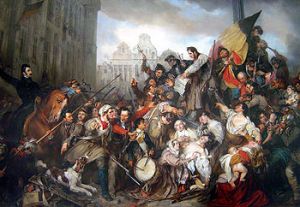
On August 25, 1830, a riot broke out in Brussels after (I’m not making this up) a particularly rousing performance of the opera La Muette de Portici. Yes, and they say today’s movies & music incite violence. Well, at least they don’t lead to full scale revolution. Few could have anticipated the riot would have created an independent Belgium, but the king failed to quell the rebellion, or to reach any sort of agreement with the people.

Episode of the Belgian Revolution, 1834, Egide Charles Gustave Wappers

The United Kingdom of the Netherlands was dissolved in December at the London Conference, in February the Belgians drew up a new constitution, and in June they chose Prince Leopold of Saxe-Coburg to be their new king.

Belgium’s National Holiday marks the anniversary of Leopold I taking the oath in 1831 to become the country’s first monarch, the moment seen as the true inception of Belgium’s independence.

Belgians Mark National Holiday