Earth Overshoot Day

August 21, 2010

September 25, 2009

earth

This has nothing to do with giant killer asteroids nearly demolishing the planet. (That’s Near Miss Day, celebrated on March 23, the anniversary of the the day in 1989 that a 1000-foot asteroid passed the spot Earth had been six hours earlier.) No, Earth Overshoot Day is a symbolic measure of humanity’s energy consumption, and it falls on a different day each year.

Put simply, Earth Overshoot Day estimates the amount of days it takes humanity to use a year’s worth of the Earth’s renewable energy resources. Ideally, Earth Overshoot Day would occur on December 31, or better yet, there would be no Earth Overshoot Day, because we would consume less energy in a year than the Earth naturally regenerates, and create less pollution than the planet can reabsorb, but that hasn’t happened since 1986.

“…before that time [1986] the global community consumed resources and produced carbon dioxide at a rate consistent with what the planet could produce and reabsorb. By 1996, however, humanity was using 15 percent more resources in a year than the planet could supply, with Earth Overshoot Day falling in November.”

http://www.planet2025news.net/

According to Top Scientists, we now use approximately 40% more energy than the Earth is capable of sustaining. That means this year (2009) Earth Overshoot Day falls on September 25.

The good news is that Earth Overshoot Day was September 23 in 2008. So maybe we’re headed it the right direction. Of course, 2008 was also a Leap Year, so don’t go celebrating just yet. And if you do go celebrating, don’t start a tire bonfire.

2010 Update: This year Earth Overshoot Day fell over a month before last year’s. Definitely not a good sign. The good news is, now that we’re past Overshoot Day, we can consume all the energy we want since it won’t count toward next year. Right? At this rate, we’ll be celebrating Overshoot Day in January by the end of the next decade.

2011 Update: The good news: Even as we reach 7 billion people, this year’s Earth Overshoot Day is over a month later than last year’s. Is the world getting more efficient? Time Magazine says no. “Amid Paeans to Energy Efficiency, World is Getting Less Efficient

Global Footprint Network – Earth Overshoot Day


Heritage/Braai Day – South Africa

September 24

We have 11 different official languages but only one word for the wonderful institution of braai. It’s braai in Xhosa, it’s braai in English, it’s braai Afrikaans…All it calls for is come with your friends and family, have a little fire, and braai…That should make you proudly South African.

Nobel Peace Prize laureate Archbishop Desmond Tutu

The 24th of September was once known as Shaka Day, in honor of the Zulu king, but these days it’s celebrated throughout South Africa on as Heritage Day, or Braai Day. Today the “Rainbow Nation’s” near 50 million people come together to partake in the country’s national past time.

http://www.youtube.com/watch?v=2q9MxdAS1YE

According to braai4heritage.co.za

“Cooking food on an open fire is an international phenomenon, but to braai is a truly unique South African past time that penetrates racial, cultural, religious and social boundaries.”

Heritage Day–or Braai Day as it’s been called the last few years–is one of several holidays that came into being with the fall of the Apartheid government in the 1990s. These new holidays sought to remember dates that resonate with all South Africans.

Braai Day Video – 2009

Other national holidays include:

March 21: Human Rights Day

In memory of the sacrifice of 69 protesters killed by police on this day in 1960. The demonstrators were protesting the infamous pass laws. In the wake of the Sharpeville Massacre, the government outlawed black political organizations.

April 27: Freedom Day

The anniversary of the first truly free election in South Africa in 1994.

June 16: Youth Day

Dedicated to those his lost their lives in the protests and riots of 1976, fighting for equal education.

August 9: National Women’s Day

When 20,000 women marched to Pretoria’s government buildings in 1956 to protest the pass laws.

Women’s ‘Repeal the Pass Laws’ flyer

December 16: Day of Reconciliation

Both the anniversary of the beginning of the armed anti-Apartheid movement in 1961 and of the defeat of the Zulu army at Battle of Blood River in 1838. That South Africans have their different reasons for remembering the date underscores its true purpose: to come to terms with the country’s often brutal past of racism, violence, and injustice.

Shuubun no hi

…when the night and day are equally divided, Buddha appears on earth for a week to save stray souls and lead them to Nirvana.”

http://mothra.rerf.or.jp/ENG/Hiroshima/Festivals/35.html

…Thus, in Japan, the spring equinox (shunbun no hi) and the fall equinox (shuubun no hi) are known as O-higan. Days on which families visit and honor the graves of the departed. Ancestors are said to watch over the family like tutelary, guardian deities. That’s why the Japanese give thanks to their ancestors whenever they encounter success or prosperity. (But of course if you fail, it’s your own damn fault.)

Favorite foods are prepared for the departed, such as Ohagi (soft rice balls covered in sweetened bean jam), sushi, and vinegar rice & veggies. On the last day of the week, rice flour dumplings, special fruits and sweets are offered.

In Buddhism, O-higan is a time to focus on the 6 Perfections, or Pāramitā:

1. Dana – generosity

2. Sila – virtue

3. Ksanti – patience

4. Virya – effort

5. Dhyana – meditation (also ‘zen’)

6. Prajna – wisdom

The O-higan days have been celebrated in Japan since the 8th century. The name Higan literally means, “the other shore” and is short for Tohigan—to arrive at the other shore. Buddhists believe that the Pāramitā form the bridge that enable humans to cross over to the other shore, to Nirvana.

Grape Day – Vendémiaire 1st – French New Year

September 22

flag_france

Happy New Year!

Today is the first day of the first month (Vendémiaire, or “grape harvest”) of the French Republican Calendar, which was used between 1792 and 1806.

The French Republican Calendar divided the year into twelve months of 30 days each. Each month was further divided into 3 “decades”—weeks of 10 days each.

But that wasn’t enough to signify the end of the old era. The French went one step further, naming every single day of the year for a crop or plant. (Except for every fifth day, which was named for an animal or tool.)

For example, today, the 1st day of Vendémiaire, is Raisin, which in French means—you guessed it—“grape”.

Vendémiaire 9th is Panais (parsnip), the 18th is Sarrazin (buckwheat), and the 21st is Chanvre (hemp).

Horse, Donkey, and Cattle are also honored in Vendémiaire on the 5th, 15th, and 25th respectively.

Three agricultural tools are honored on the 10th, 20th, and 30th: the Tub, the Wine-Press, and the Barrel. We’re assuming this tub is for wine, not bathing. (Or both?)

There was debate as to whether the new epoch delineated by the calendar would begin in 1789, the year of the revolution, or 1792, the year of the formation of the Republic. The government settled upon the latter, marking the autumnal equinox (September 22) as Year I of the new era.

Vendémiaire 1st occasionally began on September 23, and once on September 24 (in 1804).

Around the time of the creation of the calendar, those wacky French were also establishing new-fangled standards of measurement like the metre (distance), gram (weight) and the litre (volume). Over the next 200 years the Metric System would be adopted by all present nations except Burma, Liberia, and the United States. The Republican Calendar however did not fare so well. It was abolished by Napoleon in 1806.

Nevertheless, today we urge you to imbibe the fruits of the raisin, as we toast to the New Year and to days of Auld Lang Syne. Or as the French would say, “Aux jours du bon vieux temps.

Les vieux amis du temps passé,
Se sont-ils oubliés ?
Alors que nos coeurs ont gardé
L’amour du temps passé ?

Old friends from long ago
Are they forgotten?
While our hearts have kept
Love from long ago?

Choral des Adieux

Talk Like a Pirate Day

September 19

When I tell people what I do—write about holidays every day—they inevitably ask, “So, like real holidays? Or, like Talk Like a Pirate Day?

The implication being that the latter is a “made up” holiday.

Which it is.

First of all, all holidays are “made up”. It’s just the ones we take for granted were made up before you were born.

Second, if the age be the sole determiner of legitimacy, Talk Like a Pirate Day is older than other, several nations’ independence days, including Serbia, Kosovo, Montenegro, and East Timor.

Talk Like a Pirate Day was made up by these guys.

Capn Slappy & Ol Chumbucket
Cap'n Slappy & Ol' Chumbucket

So the legend goes…In the mid-1990s, one of the two salty sea-dogs pictured above had a bizarre sports injury that briefly caused him to talk like a pirate. Every year thereafter (except for when they forgot to) they spoke ‘pirate’ for a day–though not on the anniversary of the injury, which was on June 6 (D-Day).

They chose September 19, because it was Cap’n Slappy’s wench’s birthday at the time. Also no doubt because—as I too have discovered—September 19 holiday pickings are slimmer than Panama at high-tide. No offense to St. Kitts and Nevis, which celebrates Independence Day today. But as we’ve covered the Independence Days of 7 other American nations this week (Mexico, Chile, Guatemala, El Salvador, Honduras, Costa Rica and Nicaragua) I’ve opted to let my hair down, hoist the jib, walk the plank, and do whatever it is that pirates do these days when they’re not illegally downloading software.

But, ahoy, if ye yellow-bellied sapsuckers harbor a tight lip, for fear of soundin’ land-locked, this video surely’ll be fixin’ ta loosen yer tongue.

Me hearty.

How to Talk Pirate

What is a pirate’s favorite sock?

Aaarr-gyle!

Ludi Romani – Roman Games

September 13

toga

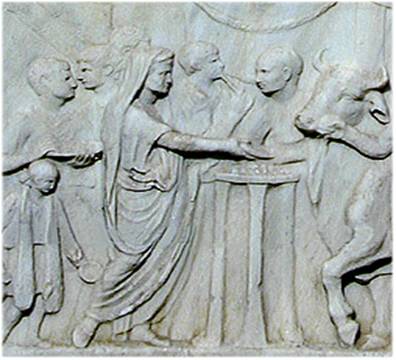
The Romans knew how to party. So much so that their toga ensemble has become the symbol of a decadent good time, especially in the “Greek” system in colleges across North America. Of course the Greeks didn’t wear togas—the Romans got it from the Etruscans—but we’ll let that slide.

Thanks to writers like Ovid and Cicero, we know that every month of the Roman calendar was flooded with festivals and sacred days for the pantheon of gods and goddesses. With one exception:

September.

There were only two notable holidays in the seventh month. (September didn’t become the 9th month until the second century BC.)

On September 13th, Romans observed the Ides, the day honoring the Roman king of the gods, Jupiter.

But the Romans honored Jupiter every month on the Ides. The 15th of March, May, July, October, and December; the 13th of all other months.

The other September event was known as Ludi Romani, or the “Roman Games“.

Ludi Romani was one of the most anticipated and biggest events of the year, and in its heyday stretched for over two full weeks, from September 4 to September 19.

According to tradition, the first games were instituted by King Tarquinius Pricscus (Tarquin the Elder) in the 6th century BC, after a Roman military conquest. He created the Circus Maximus to hold such an event.

recreation of Circus Maximus
How the Circus Maximus would have looked

The Circus Maximus was constructed between two of Rome’s seven hills, Aventine Hill and Palatine Hill. At over 2,000 feet long, the Circus could seat upwards of 150,000 spectators, and more could view the Games from the surrounding hillsides.

The main event of the Games was chariot racing, or ludi circenses. These races could be far bloodier than any Ben Hur movie. Other attractions included boxing, battles with wild animals, and gladiator bouts, though these were all later moved to other venues designed for such events. (The lack of a barrier between the stands and the track didn’t protect spectators too well from wild animals.)

Originally the Games were only one day, then two: September 12th and 14th.

The Games were celebrated intermittently until 366 BC when they became “the first set of Ludi to receive annual sponsorship by the Roman state…” (The Roman Games: a Sourcebook, by Alison Futrell)

Three years later, ludi scaenici, or theater plays inspired by the Greek, premiered at the Games.

By the time of Julius Caesar the Games lasted two full weeks. After his assassination, Rome honored him…by adding another day.

Mid-Autumn Festival

September 12, 2011

The Mid-Autumn Festival is known as Eighth Moon because it falls of the full moon of the eighth month. It’s also known as Mooncake Day, because billions of mooncakes are prepared for this holiday. (Though billions aren’t necessarily eaten. It’s more like the Chinese holiday fruitcake.)

For generations, moon cakes have been made with sweet fillings of nuts, mashed red beans, lotus-seed paste or Chinese dates, wrapped in a pastry. Sometimes a cooked egg yolk can be found in the middle of the rich tasting dessert.

www.chinavoc.com – Mid-Autumn Festival

One story of the popularity of mooncakes dates from the 1300’s AD. China was ruled by the Mongolian Yuan Dynasty, that overthrew the Chinese Sung Dynasty. To coordinate a secret attack on the ruling power, Han Chinese rebels hid secret messages inside mooncakes, which were then distributed throughout the kingdom. The revolution was a success.

Joyce Hor-Chung theorizes that had mooncakes been more tasty, there would have been no revolution, and the Yuan might still be in power today.

The importance of Eighth Moon in China goes back to the third millennium B.C. The traditional origin story of the holiday revolves around a beautiful young woman of unsurpassed beauty, and a rabbit.

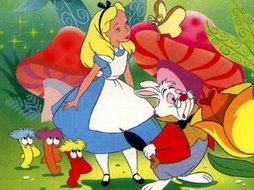
Okay, not what I had in mind.

Getting colder.

No, the woman in question was Ch’ang-O, wife of Hou Yi. Hou Yi, you’ll remember from your textbooks, was the greatest archer in the land, famous for shooting down nine of the ten suns that scorched the earth, back in the Great Deci-Solar Debacle of 2170 BC.

Hou Yi had an elixir, a pill for attaining immortality, but he was told he would have to pray and fast for a year before taking it. His wife Ch’ang-O was as curious as she was beautiful. Finding the pill hidden in the rafters, she swallowed it and immediately began floating toward the moon. She landed on the great white orb, where she’s been stranded ever since. Instead of a “Man in the Moon”, the Chinese refer to Ch’ang-O, the Woman on the Moon.

There on the moon lives the immortal Ch’ang-O, with only a Jade Rabbit to keep her company (and, we can assume, an occasional astronaut). The Jade Rabbit on the moon is an important character in Chinese folklore. His sworn duty is to continually make the elixir of immortality for the Gods.

Origin stories vary, but they say Hou Yi eventually built a house on the sun, (Yang) and visits Ch’ang-O on the moon (Yin) once a year on the full moon of the eighth month, which is why the moon is so full and bright on this night.

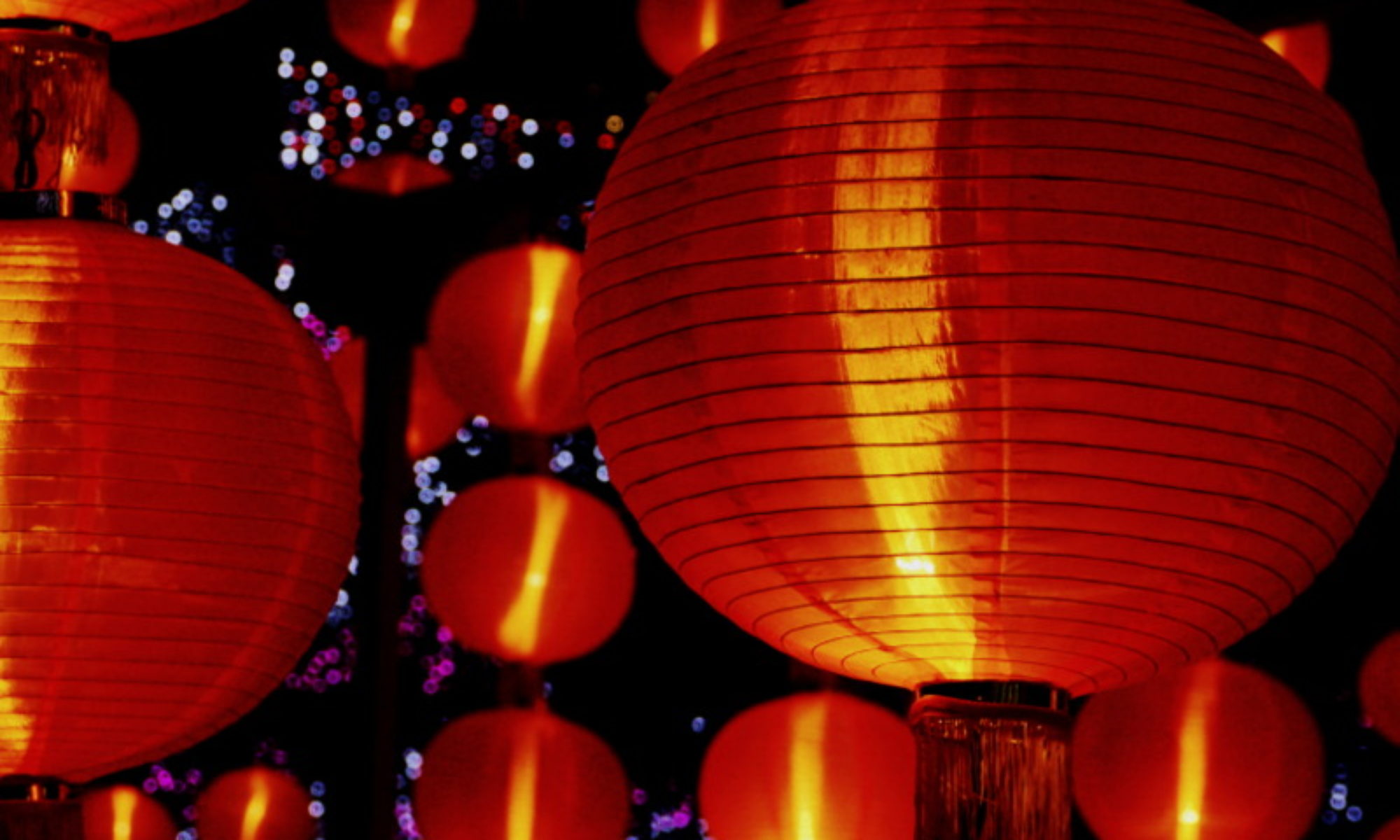
Today families and friends gather to share mooncakes, pomelo, stories, and good times. Lanterns are lit, Mid-Autumn trees are planted, dandelions are plucked, and incense is burned in honor of the goddess on the moon, Ch’ang-O, who will increasingly watch over the earth as temperatures drop and summer makes way for fall.

Google Moon

Mid-Autumn Festival

Mid-Autumn Festival

Enjoying the Wind and Moon Together

The St. Patrick’s Battalion

September 12

Today the Irish are as inseparable from the American identity as the stars on the red, white, and blue. But at one time the Irish were as discriminated against as any ethnic group. Immigrants who had crossed the Atlantic, fleeing the Emerald Isle’s deadly potato famine in the 1840s soon learned what N.I.N.A. stood for–No Irish Need Apply.

The wave of German and Irish-Catholic immigration in the mid 19th century was met with an equal wave of xenophobia called Nativism, an anti-Catholic, anti-foreigner movement sweeping through the mostly-Protestant states. This patriotic sentiment was compounded with a territorial war with our neighbor to the south, Mexico, in the 1840s.

John Riley, a native of Clifden, County Galway, was a young veteran of the British Army when he entered the U.S. through Canada. He joined the army in Michigan, and served in the 5th U.S. Infantry Regiment. But the animosity he experience against his religion and his countrymen caused him to desert the army prior to the Mexican-American War.

All told around 1000 Irish deserted the army before and during the war. They were not the first soldiers to do so, but 200 of them did the unforgivable. They banded together and enlisted with their fellow Catholics in the Mexican Army.

The St. Patrick’s Battalion, or San Patricios, fought in all five major battles of the Mexican-American War. General Santa Anna once said, had he a hundred more troops like Riley’s men, he would have won the war.

At the Battle of Churubusco in 1847, the San Patricios met their end. Of approximately 200 men, 35 were killed and 85 were taken prisoner. Nearly 50 prisoners were sentenced to death by hanging. Riley escaped execution because he had deserted prior to the declaration of war. He was merely given 50 lashes on the back, branded with the letter “D” (for deserter), and forced to wear an iron yoke around his neck for the duration of the war.

The prisoners were hanged between September 10 and September 13, by order of General Winfield Scott, in full view of both armies at the battle of Chapultepec, and were forced to watch from the gallows as the U.S. flag replaced the Mexican flag above the town. The victims included one soldier who had had both legs amputated the day before.

The U.S. Army denied the existence of the St. Patrick’s Battalion until a Congressional investigation in 1915.

In Mexico, the Irish martyrs are remembered during two holidays: St. Patrick’s Day on March 17, and the Commemoracion de los San Patricios on September 12, the anniversary of most of the executions.

And on this one day, Riley’s hometown of Clifden, Ireland, flies the Mexican flag in honor of the men of St. Patrick’s Battalion.

Deserters or Unsung Heroes?

St. Patrick Battalion

Rogue’s March

No Irish Need Apply – Fact or Fiction?