Saints Cyril & Methodius – Slovakia

July 5

St. Cyril and St. Methodius, the two missionary brothers who gave birth to the written Slovak language, are celebrated by the Eastern Catholic Church in May. (The exploits of the Brothers are detailed here.) But in the early 20th century the Roman Catholic feast day for the saints, held on July 5, took on a new importance.

After the formation of Czechoslovakia in 1918, Slovaks around the world struggled to defend their national identity. When the Czechs declared July 6 a public holiday, in honor of 15th century Protestant forerunner Jan Hus, Slovaks pushed for the feast day of Sts. Cyril and Methodius, July 5, as a national celebration as well as religious one. Today it’s celebrated in both Slovakia and the Czech Republic.

Gettin’ Glagolitic with Cyril & Methodius

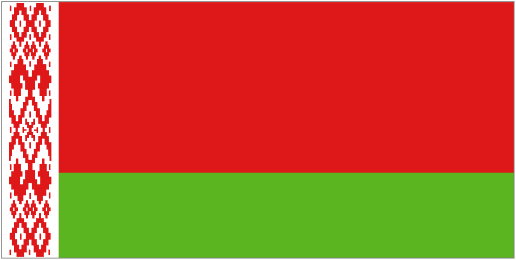
Belarus – Independence Day

July 3

“After 60 years of peaceful life, Chernobyl, dismantling of the USSR, 14 years of sovereignty, still WWII remains a major emotional rift in the Belarusian soul.”
http://www.belarusguide.com/history1/WWII_partisan_resistance_in_Belarus.htm
“We want the peaceful sky not to know the fire of war” — My Dear Motherland, station designator of Belarusian Radio
Belarus as we know it today declared its independence from the Soviet Union on July 27, 1990, and became the Republic of Belarus the following year.
But the country celebrates Independence Day on July 3, in memory of the liberation of its capital city Minsk from Nazi forces in 1944.
We know all about D-Day on June 6th and the liberation of Paris on August 25th that year, but at that same time, the Soviet Union was conducting an equally pivotal advance against German forces.
The Belorussian Strategic Offensive Operation (Operation Bagration, named for a 19th century Georgian general) was “the most calamitous defeat of all the German armed forces in World War II” according to Bagration 1944 author Steven Zaloga. (http://books.google.com/books?id=1DAYmRrJTDAC&dq=operation+bagration&as_brr=3&client=safari&source=gbs_navlinks_s)
Operation Bagration began on June 22, 1944, exactly three years after the Nazi invasion of the Soviet Union. The Soviets successfully used a bevy of ploys to confuse the Germans about their plan of attack, and borrowed a page from the Nazi military playbook…
“A Soviet force of one and quarter million men punched a two-hundred-mile hole in the German front between Ostrov and Kovel…ironically having mastered enveloping tactics once used by the Germans themselves.”
In just over a week, the Red Army crossed the Berezina River. Three days later, on July 3, 1944, they liberated the Belorussian capitol of Minsk.
“…as the Russians crossed Belorussia, they encountered a ‘desert zone’ with a million houses burned, crops deliberately ploughed under, and no evidence of livestock.”
According to Pravda…
Every fourth citizen of Belarus was killed in the war.
http://english.pravda.ru/world/ussr/03-07-2009/107933-belarus-0

Our Bloody History –

belarusguide.com

http://www.belarusguide.com/as/history/history.htmJuly 3


“After 60 years of peaceful life, Chernobyl, dismantling of the USSR, 14 years of sovereignty, still WWII remains a major emotional rift in the Belarusian soul.”

— Partisan Resistance in Belarus During World War II

Belarus declared its independence from Russia on March 25, 1918 (an independence which lasted about 10 months) and again from the Soviet Union on July 27, 1990. But Belarus celebrates neither of those dates as its official independence day. Instead, the festivities of July 3rd commemorate the liberation of Belarus’s capital city of Minsk from Nazi forces in 1944.

+  +  +

We know all about D-Day on June 6th, 1944 and the liberation of Paris that summer, but simultaneously the Soviet Union’s Red Army conducted an equally pivotal advance against German forces.

The Belorussian Strategic Offensive Operation (Operation Bagration, named for a 19th century Georgian general) was “the most calamitous defeat of all the German armed forces in World War II” according to Bagration 1944 author Steven Zaloga.

Operation Bagration began on June 22, 1944, exactly three years after the Nazi invasion of the Soviet Union. The Soviets successfully used a bevy of ploys to confuse the Germans about their plan of attack, and borrowed a page from the Nazi military playbook…

“A Soviet force of one and quarter million men punched a two-hundred-mile hole in the German front between Ostrov and Kovel…ironically having mastered enveloping tactics once used by the Germans themselves.” — Michael Burleigh, The Third Reich

In just over a week, the Red Army crossed the Berezina River. Three days later, on July 3, 1944, they liberated the Belorussian capitol of Minsk.

“…as the Russians crossed Belorussia, they encountered a ‘desert zone’ with a million houses burned, crops deliberately ploughed under, and no evidence of livestock.” (Burleigh)

According to Pravda, “Every fourth citizen of Belarus was killed in the war.”

The division among Belorussians referred to in the opening quote stems from the notion that World War II was merely one occupation replaced by another. Prior to the Nazi invasion in 1941, the Soviet Union under Joseph Stalin conducted mass executions in Belarus—the mass graves from which were uncovered in the 1980s. In 1986 the Chernobyl Disaster and the Soviet Union’s initial denial of the nuclear accident fueled the flame of nationalism and independence once more.

Our Bloody History – belarusguide.com
World UFO Day

July 2

No, July 2 is not Uterus Falling Out Day (occurs up to twelve times yearly depending on one’s menstrual cycle). It’s Unidentified Flying Object Day.

Ovni

Some celebrate UFO Day on June 24, recalling the day in 1947 that pilot Ken Arnold witnessed several UFOs hovering over Mt. Rainier, Washington. But most aficionados observe UFO Day on July 2, the accepted date of the 1947 discovery by ranch foreman Mac Brazel of the wreckage of an unusual aircraft on Foster ranch, just outside Roswell, New Mexico. Brazel later heard reports of “flying discs” and put 2 and 2 together. After Brazel reported his findings to the Roswell Daily Record, the U.S. Army tried to cover up the find with claims of a “weather balloon” experiment gone wrong.

But we know better.

The public didn’t buy it either. Or maybe they did, but only for like 30 years. Since the 1970s a slew of books, articles, and tv specials have come out detailing the Roswell incident and the holes in the army’s stories, and have turned Roswell into the holy grail of UFO lore.

Brazel’s disc plays a vital role in the motion picture Independence Day, in which the heroes learn that alien corpses from said vessels have been kept in storage since 1947. In homage to Brazel’s discovery, the movie begins on July 2.

Roswell_article

Stonewall

June 28

June 1969. Two months before Woodstock, another New York event changed America in a profound way.

There’s no one moment that “started” the gay rights movement, but many say it began around 1:20 in the morning on June 28, 1969 at the Stonewall Inn in New York City.

The Stonewall Inn was a gay bar on Christopher Street in Greenwich Village. When a handful of officers raided Stonewall in the wee hours of June 28th, they were well within their rights. The bar was owned by the mafia, and it didn’t have a proper liquor license. But the gay clubs were raided with uncharacteristic frequency, and the police would go the extra step of arresting customers en masse for “disorderly conduct.”

The half dozen police officers expected that the gay clientele would comply and line up docilely, which may have accounted for the lack of backup. The last thing they imagined was that their safety would be in danger from drag queens and other gays and lesbians who had been harassed one time too many.

Back in 1969 homosexual sex was outlawed in virtually every state. Even New York City, vigilante crews had formed to rid the city of the gay menace. Expressing a homosexual orientation in public could mean not just being ostracized, but beaten or even killed.

Stonewall’s windows were painted black. To get in patrons knocked on the club door and were peered at through a peephole. By raiding Stonewall, the police brought homosexuality into the outside world, but not in the “shameful” way they anticipated. Instead, as word spread quickly of the raid, homosexuals converged from all parts of the Village, to join in the Boston Tea Party of modern times. Essentially, ‘gayness’, normally confined to the interiors of clubs, exploded onto the streets, loud and wild and raucous. Rioters shook buses, blocked traffic, and shouted “Christopher Street belongs to the queens!”

Stonewall Jackson ('cause there are no public domain pics of the Stonewall riots.)

“…as the patrons trapped inside were released one by one, a crowd started to gather on the street. It was initially a festive gathering, composed mostly of Stonewall boys who were waiting around for friends still inside. Cheers went up as favorites emerged from the door, striking a pose and swishing by the detective with a “Hello there, fella.”… Suddenly a paddywagon arrived and the mood of the crowd changed. Three of the more blatant queens—in full drag—were loaded inside, along with the bartender and doorman, to a chorus of catcall and boos from the crowd…The next person to come out was a dyke, and she put up a struggle. At that moment, the scene became explosive.” (Village Voice, June 19, 1989, Lucian K. Truscott IV)

The following evening the rioting grew fiercer. Supporters, both gay and straight, gathered along Christopher Street, and the Tactical Patrol Force couldn’t bring order back to the streets.

Meanwhile the owners of the club changed Stonewall overnight to seize onto the symbolic value their club had suddenly attained. By Saturday night they served only sodas and were giving them away for free.

Before June 28, 1969, “the Stonewall Inn attracted larged crowds of chino-clad gay men in their late teens and early twenties because the Mafia-owned bar allowed men to dance with each other as long as they were willing to pay exorbitant prices for watered down drinks.” (From Perverts to Fab Fave, Bigner & Streitmatter) After June 28, 1969, it brought gay rights to the public consciousness and became the rallying cry for a new nation-wide civil rights movement.

Four years later homosexuality was reclassified in the DSM (Diagnostic & Statistical Manual of Mental Disorders) from a mental disorder to a “sexual orientation disturbance.”

Police departments also learned from the mistakes at Stonewall. First and foremost, never raid a gay bar right after Judy Garland’s funeral. Judy Garland died in London the week before of an overdose of sleeping pills. Her body was transported to New York, and Wednesday through Friday, thousands of her fans, many of them gay, passed by her coffin to pay their respects. The raid was that night. Recalled Seymour Pine, the officer who planned and led the raid, “If I had known that Judy had died at that point, I wouldn’t have had the raid.” (The Villager, June 2004)

Judy Garland, 1957

Dia dos Namorados – Day of the Enamored

June 12

St. Valentine gets all the credit for bringing lovers together in the Northern Hemisphere, but in Brazil, that honor goes to Saint Anthony.

St. Anthony is the patron saint of Lisbon, Portugal, as well as of lovers and newlyweds. He died on June 13, 1231 in Padua, Italy, at the age of 36. The eve before his feast day in early June is the perfect time for Brazilians to celebrate with their special someone. Especially since in Brazil, February 14 falls smack dab in the middle of Carnival season and people have enough holidays to worry about without getting in a passive-aggressive fight with their girlfriend because they forgot to get a gift.

So next time your sweetheart is upset that you totally flaked on Valentine’s Day, surprise her on June 12th by explaining how you were waiting for the real lovers’ day: Dia dos Namorados.

And if that doesn’t fly (and it won’t), break out Bardanza.

Open your hands,
Give me the roses
You brought just for me.

Open your heart,
Write me a poem,
Read me the best part
Of our story.
I am still here,
Contemplating your sweetness,
Expecting your caress.

Open all the doors,
Here is the key…
Open the windows too,
Touch my soul again,
Say “I love you”…

Open up yourself to me
Forgive my mistakes,my madness,
I couldn’t stand your silence.
I couldn’t stand your coldness…

from “Forgive Me” by Karla Bardanza (Brazil)

St. Anthony
St. Anthony

King Kamehameha Day

June 11

Today is one of the few American holidays to honor royalty. (Don’t forget January 8th’s Birthday of the King!) June 11th is King Kamehameha Day, honoring King Kamehameha the Great, who united and ruled the Hawaiian island chain in the late 18th and early 19th centuries.

Kamehameha was a grandson of a chief who ruled much of the big island of Hawaii, but Kamehameha’s succession was not forthcoming. Instead Kamehameha was appointed the guardian of Kuaka`ilimoku, the local god of war, in 1782.

In the 1880’s, Kamehameha battled against his cousin Kiwala’o for control of the big island, and eventually emerged victorious. In 1795 he had captured the islands of Oahu and Maui as well. Attempts to capture Kauai and Ni’ihau eluded the great king for years, due to epidemics and rebellions at home. In 1810 Kamehameha negotiated control of the last two islands, uniting the chain with himself as ruler. For his military expertise, Kamehameha is sometimes called the “Napoleon of the Pacific.”

King Kamehameha statue, photo by J. Messerly

As ruler, Kamehameha codified the legal system and set in place a legacy of stability that would prevent foreign occupation up until the end of the 19th century.

King Kamehameha died on May 8, 1819. Kamehameha Day was proclaimed in his honor by his great grandson, also King Kamehameha, in 1871. It’s been a Hawaiian holiday for nearly 140 years.

Day of Portugal

June 10

The feats of Arms, and famed heroic Host
from occidental Lusitanian strand,
who over the waters never by seaman crossed
fared beyond the Taprobane-land (Ceylon)
forceful in perils and in battle-post,
with more than promised force of mortal hand…

Os Luíadas

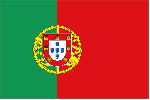
June 10 is Portugal’s National Day, aptly known as “Portugal Day” or Dia de Portugal. Actually it’s longer, but few go around saying, “Happy Day of Portugal, Camões, and the Portuguese Community!”

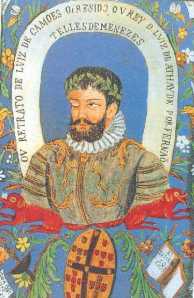
Portugal Day marks the death of writer, historian and adventurer Luís de Camões in 1580.

Camões wrote the Portuguese national epic Os Lusíadas , a history in verse of the Iberian nation and the era of discovery.

Compared to his writings, little is known of Camões’ real life. He was banished from Lisbon in 1546, supposedly because of an affair with a lady of the court. He served in the military for two years in Morocco, where he lost his right eye. He returned to Lisbon where the king (John III) pardoned him for injuring an officer in a street brawl; then spent 17 years in exile from his homeland, living in Goa, India and Macau, China. During these years he conceived of and wrote much of Os Lusíadas. Legend tells us he survived a shipwreck in the Mekong Delta in Vietnam, keeping his manuscript dry by swimming with one arm and holding it above the water with the other.

Luis de Camões - he ain't winking

(The word “Lusiadas” stems from the tribe that occupied Portugal in ancient times, and refers to the Portuguese.)

Camões presented his masterpiece to King Sebastian in 1572 and won a small royal pension. However, he spent the end of his life in in a Lisbon poorhouse.

The year of Camões’ death, King Philip of Spain claimed the throne of Portugal after the disappearance of King Sebastian at the Battle of Alcácer Quibir. Portugal remained under Spanish control for sixty years.

Today, citizens of Portugal get the day off, the President addresses the nation, and Portuguese around the world gather to celebrate their homeland and their heritage.