Martyrdom of Gandhi

January 30

flag_india

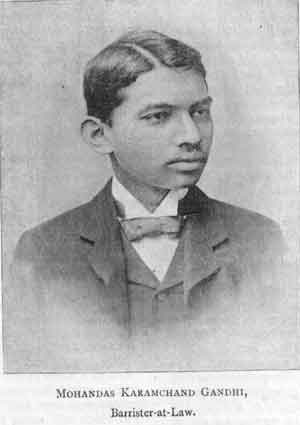
Today Indians recall one of the darkest days in their country’s history, while schoolchildren in Spain learn about Dia Escolar de la No-violencia y la Paz, (School Day of Non-Violence and Peace). The holiday marks the tragic assassination of Indian leader Mahatma Gandhi, whose non-violent methods helped India gain independence from Great Britain, and inspired leaders from Martin Luther King Jr. to Nelson Mandela.
I believe that Gandhi’s views were the most enlightened of all the political men in our time…We should strive to do things in his spirit: not to use violence in fighting for our cause, but by non-participation in anything you believe is evil.

Albert Einstein

If humanity is to progress, Gandhi is inescapable. He lived, thought, and acted, inspired by the vision of humanity evolving toward a world of peace and harmony…Gandhi resisted evil with as much vigor and power as the violent resister, but he resisted with love instead of hate. True pacifism is not unrealistic submission to evil power. It is rather a courageous confirmation of evil by the power of love.

Dr. Martin Luther King, Jr.

His life has inspired me ever since I was a small boy. Ahimsa or nonviolence is the powerful idea that Mahatma Gandhi made familiar throughout the world. But nonviolence does not mean the absence of violence. It is something more positive, more meaningful than that, for it depends wholly on the power of truth.

The Dalai Lama

Mahatma Gandhi came and stood at the door of India’s destitute millions, clad as one of themselves, speaking to them in their own language…who else has so unreservedly accepted the vast masses of the Indian people as his flesh and blood…Truth awakened Truth.

Rabindranath Tagore

Mahatma Gandhi will always be remembered as long as free men and those who love freedom and justice live.

Haile Selassie I

There is no religion higher than Truth and Right-eousness.

If all men realized the obligation of service (as an eternal moral law), they would regard it as a sin to amass wealth; and then, there would be no inequalities of wealth and consequently no famine or starvation.

There is an indefinable mysterious power that pervades everything. I feel it though I do not see it. It is this unseen power which makes itself felt and yet defies all proof because it is so unlike all that I perceive through my senses. But it is possible to reason of the existence of god to a limited extent. Even in ordinary affairs we know that people who do not know who rules or why and how He rules and yet they know that there is a power that certainly rules. In my tour last year in Mysore I met many poor villagers and I found upon inquiry that they did not know who ruled Mysore. They simply said some God ruled it. If the knowledge of these poor people was so limited about their ruler I who am infinitely lesser in respect to God than they to their ruler need not be surprised if I do not realize the presence of God – the King of Kings. Nevertheless I do feel as the poor villagers felt about Mysore that there is orderliness in the universe, there is an unalterable law governing everything and every being that exists or lives.

Mahatma Gandhi

The Spanish observance of the Indian civil rights leader’s death was established by Spain’s Education Secretary Lorenzo Vidal in 1964.
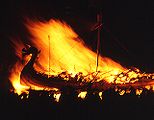
Up Helly Aa!

last Tuesday in January

If you thought the Vikings were a thing of the past, hold on to your helmet.

On the last Tuesday in January, hundreds of Vikings invade the otherwise sleepy archipelago known as Shetland.

Shetland lies between Scotland and Norway, making it the perfect pillaging point in the heyday of the Vikings. Around 1000 AD, the Vikings began settling on the islands. A thousand years later their descendants are still proud of their heritage.

Up Helly Aa by day

At no time is that more apparent than the morning of Up Helly Aa, when hundreds of men dressed as Vikings (women are not allowed) take to the streets of Lerwick to recreate events from the great Norse sagas. Now, if you’ve ever read the great Norse sagas, you would think this would be compelling reason to stay away. On the contrary, Up Helly Aa is one of Shetland’s biggest tourist draws, as travelers come from all over the globe to witness the motley crews and be a part of the drunken revelry.

Up Helly Aa by night

It’s at night that the Shetlanders really heat things up. Up Helly Aa is one of Europe’s greatest and most famous fire festivals. The bonfires and torchlit processions replaced the tar-barreling activities which were banned.

Enormous galleys are built for the celebration. The highlight of the evening is the torching of the amazing galleys, which light up the Lerwick night.

© Anne Burgess
© Anne Burgess, Creative Commons license

Nepal Martyrs Day

January 29

nepal_fewataal
The small kingdom of Nepal, nestled between two giants, India and China, has miraculously managed to maintain its sovereignty through internal struggles and bloody power plays lasting over 200 years. The latest of which, in 2001, resulted in the violent deaths of the entire Nepalese Royal Family.

+  +  +

Today the Nepalese remember four martyrs who protested the rule of the Rana dictatorship in 1951: Dharma Bhakta Mathema, Dashrath Chand, Gangalal Shrestha, and Shukraraj Shastri.

The Rana came to power in 1846, when the Queen attempted to assert control over a powerful military leader named Jung Bahadur and his six brothers. Bahadur won the battle against the Queen’s forces and forced the King to hand the throne over to the Crown Prince.

Badahur placed the royal family under house arrest and ensured his progeny’s place by marrying off his daughter to the king’s son. Badahur was known as the first of the “Rana.”

Jung Bahadur, 1877
Jung Bahadur, 1877

Bahadur traveled to England to strengthen British-Nepalese relations and commissioned the codification of Nepal’s civil and criminal law, limiting corporal punishment and banning torture.

But he also killed many aristocratic opponents, and filled the Assembly of Lords with his own family and followers, effectively making himself dictator.

The power system that Bahadur established would haunt Nepal for a century as leadership passed between Bahadur’s feuding brothers and nephews. (After his death, Bahadur’s own sons were all killed or forced into exile by his nephew.)

Rani Royal Family, ca. 1920

The Rana dictatorship maintained the puppet monarchy. Tensions reached a peak in 1950 when the pro-democratic King Tribhuvan sneaked out of Nepal with his family to India. In his absence the Rana replaced the King with Tribhuvan’s three year-old grandson Gyranendra, the only male heir left in the kingdom.

The British refused to recognize the new king, and a successful public revolt forced the last Rana prime minister to resign in 1951. The four martyrs who are remembered today were killed during this time period. King Tribhuvan reassumed the throne as a constitutional monarch.

Fifty years later (June 1, 2001) Nepal’s King Birendra had an argument with his son, Crown Prince Dipendra, during a dinner event at the Nepalese Royal Palace. According to witnesses Dipendra was drunk and “misbehaving,” and was escorted to his room by his brothers.

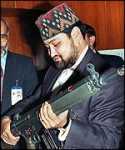
Later that evening the 29 year-old Eton-educated Crown Prince reappeared, this time with an assault rifle. He went on a horrific shooting rampage, killing his father the King, his mother the Queen, his brother, sister, uncle, aunts, cousin, and brother-in-law, as well as wounding five other members of the royal family, before turning the gun on himself.

Crown Prince Dipendra

With the royal family gone, Birendra’s brother Gynendra, who had been crowned at age three, reassumed the throne after 50 years of absence. He was out of town during the dinner; his wife, sister, and cousin had all been shot at the massacre, but survived.

King Gyanendra dissolved parliament, dismissed Prime Minister Sher Bahadur Deuba, then proceeded to appoint and dismiss two more Prime Ministers before taking over the country as absolute monarch in 2005. According to one Nepalese citizen:

“When the king took over all the power, the situation got worse because there were three parties fighting against each other – the King, the political parties and the so-called Maoists.

“Maoists had already been declared as domestic terrorists, so they were killing people, looting them, and even attacking the police offices and the army barracks all over the country.

“Right now the situation is getting worse and worse everyday. People are dying everyday in demonstrations. Last week there was a news that some local people were demonstrating in front of a police officer residence, and the officer started firing randomly which killed like 5 people and injured about 100. In the rural parts of the country, the Maoists are killing people everywhere.”

originally at http://www.fbtz.com/forum/archive/index.php/t-50830.html (link no longer valid)

After massive unrest and international protest, King Gyanendra reinstated the parliament, which wasted no time stripping him of power. The Maoist Party won the largest number of seats in the April 2008 election. The following month the Assembly abolished the monarchy.

Gyanendra was the last king of Nepal, a dynasty that dated back to 1769 when King Prithvi Narayan Shah united the Kingdom.

Though originally remembered for the deaths of the Four Martyrs of 1951, the flow of Martyrs in Nepal has never stopped. Over 13,000 Nepalese were killed in the fighting between 1996 and 2006.


Nepal Mourns Slain King

Massacre Witness Blames Crown Prince

Hundreds Pay Respect to Martyers

Martyrs Day Observed

Saraswati: Original Supermom

5th day of the month of Magh

January 28, 2012

“India was the motherland of our race, and Sanskrit the mother of Europe’s languages: she was the mother of our philosophy; mother, through the Arabs, of much of our mathematics; mother, through the Buddha, of the ideals embodied in Christianity; mother, through the village community, of self-government and democracy. Mother India is in many ways the mother of us all”.

Will Durant, The Case For India

In many religions throughout history women have been associated with wisdom and knowledge, which doesn’t explain why men have generally run the place, but may explain the state into which they’re run it.

The Greek goddess of wisdom was Athena. In the Gnostic tradition that honor belonged to Sophia, Mother of Creation, who is the root of our word sophistication. In Judaism it was Eve, not Adam, who ate first from the Tree of Knowledge of Good and Evil. And in Christianity all the virtues, including Prudence are personified as women.

But in Hinduism, which influenced all of the above, the goddess of wisdom, arts, and learning is Saraswati. Saraswati is among other things the consort of Brahma, the god of creation.

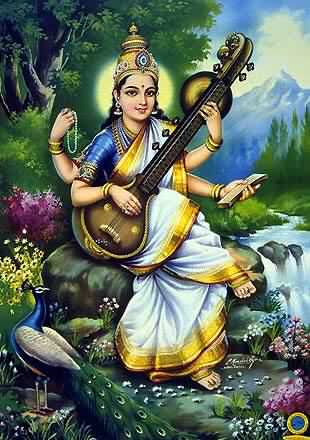
Saraswati
Saraswati

In typical supermom style, Saraswati has four arms, all of which are full. Each arm symbolizes one of the four components of the human personality with regards to learning: mind, intellect, alertness and ego. She gracefully juggles a sacred manuscript in one hand, a rosary in another, and with the other two she plays music of life and love on a stringed instrument known as a veena. She is usually pictured sitting atop a lotus flower, with a peacock or a swan by her feet.

On the fifth day of the fortnight after the new moon of Magh, Hindus celebrate Vasant Panchami, to worship the Goddess Saraswati. It falls in late January or early February.

On this day young schoolchildren learn their first words, in honor of the goddess of learning, knowledge and speech.

Saraswati is invoked as a muse by artists conducting creative endeavors. In olden times Saraswati was invoked prior to a play by theater managers who prayed for the quick and articulate tongues of their actors.

“India has two million gods, and worships them all. In religion all other countries are paupers; India is the only millionaire.”

Mark Twain

Democracy Day – Rwanda

January 28


“Rwanda Democracy Day, a holiday in Rwanda, which is called the African Switzerland; a civic day concerned with equality for all peoples in the nation.”

–Anniversaries and Holidays, by Ruth Gregory, 1983

Just over a decade later, “Rwanda” would be synonymous, not with “African Switzerland” but with the genocidal carnage that rocked the country in 1994.

In the late 19th century, Rwanda became part of German East Africa. During World War I, when Germany invaded Belgium, Belgium returned the favor by taking German East Africa.

European colonialism exacerbated ethnic tensions and divisions between the Tutsi and the Hutu tribes. The Tutsi were the ruling minority in Rwanda. Physically, the Tutsis are slightly taller than the stocky Hutus. According to the Atlantic Monthly (June 1964):

Although they never constituted more than 15 percent of the population, [the Tutsi’s] hierarchical organization, built around a king known as the Mwami, their development of specialized warrior castes, and above all their possession of cattle enabled them to dominate the Hutu.

Ruanda-Urundi (Rwanda-Burundi) became a UN trust territory governed by Belgium.

The beginning of the end of Tutsi dominance came in 1959, when the king died without designating a successor. A two-year Civil War broke out between Tutsi and Hutu. The Hutu gained the upper hand and declared the country a republic on January 28, 1961. (Burundi remained a Tutsi monarchy.)

For this reason the country celebrated Democracy Day each January 28, but it appears not to be celebrated today, perhaps because the holiday marked the fall of the Tutsi, who in 1994 were slaughtered by the hundreds of thousands during three months of ethnically-motivated terror.

Rwandans remember the genocide each year on the anniversary of its beginning, April 7th.

15 years after the genocide, democracy is making a comeback. Rwanda held peaceful parliamentary elections in September 2008 in which women won by a landslide, making Rwanda the first nation in the world with a female-majority parliament.

Women Run the Show in Recovering Rwanda

Female Majority in Rwandan Parliament

In his inauguration speech, President Obama said that his country’s peace and democracy had been fully paid for by the blood of their forebearers and that there was no going back to the old days. This set me wondering whether, the quantity or value of the blood of our own forebearers had not been enough to buy us freedom.

MP Beti Olive Kamya, Rubaga,Uganda

Could it Happen Again?: Holocaust Remembrance

January 27

Today the UK and Germany remember the Holocaust of World War II when 6 million Jews were killed in concentration camps across Europe, along with untold numbers of Roma, communists, homosexuals, the mentally and physically handicapped, and political prisoners.

January 27th marks the anniversary of the liberation of the Auschwitz-Birkenau concentration camp. It is estimated that as many Jews were slaughtered at this one camp than remain on the entire European Continent today.

To this day the Jewish population has never reached its pre-1939 numbers.

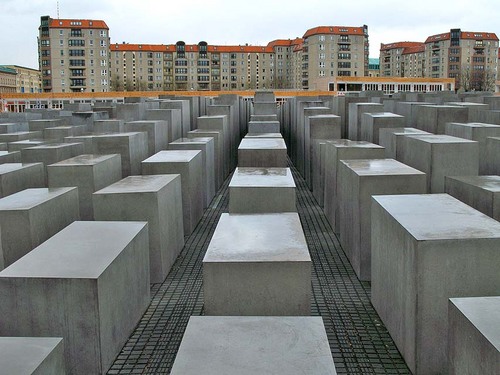
Berlin Holocaust Museum Memorial
Berlin Holocaust Museum

It’s easy to be tolerant in times of prosperity.

In better times Hitler may not have appealed to the Germans. But in times of scarce resources the search for a scapegoat as a possible way out was too appealing. The illusion Hitler sold was that Jews were responsible for the recession. The reality was that the seizure of Jewish assets and property meant “free money” for the rest of the nation. It was an offer too good for the Germans to pass up, even if it meant the “dehumanizing” of a minority.

Could it happen in America?

It would take a major catastrophe.

In the days after 9/11, though not widely reported in American media, hate crimes were committed against Muslims for no reason other than their religion. A Sikh man in Arizona was killed simply because he looked Muslim.

The nation waited for the speech in which the President made it clear to the public that Muslims in America are Americans, entitled to the same rights of life, liberty and the pursuit of happiness. And that violence against anyone based on their religion is contrary to the American way of life.

The speech never came. In the crusade against evil, preventing hate crime was not on the top of the agenda.

The weapons of hate aimed at one minority today can and will be used more effectively against others tomorrow, whether they be Jewish, Muslim, Hispanic, Mormon, Catholic, Socialist, or Scientologist…<

As a pastor in Germany once wrote:

First they came for the communists, and I did not speak out because I was not a communist;
Then they came for the socialists, and I did not speak out because I was not a socialist;
Then they came for the trade unionists, and I did not speak out because I was not a trade unionist;
Then they came for the Jews, and I did not speak out because I was not a Jew;
Then they came for me and there was no one left to speak out for me.

[Note: in the Washington DC inscription at the Holocaust Museum, the “Communist” line is not included.]
—————————————————————————————–

Former Indonesian President Suharto, the genocidal architect responsible for the killing of 183,000 East Timorese, a quarter of East Timor’s population, died earlier today [2008].

His obituary reads: Suharto Leaves Legacy of Stability in Region. In some places ethnic cleansing still falls under stability.
And “Never Again” is an ongoing struggle.

What is Holocaust Memorial Day?

Auschwitz

In Pictures: Holocaust Memorial Day

[published January 28, 2008]

Republic Day – India

January 26

Today is Republic Day in India.

Although India gained independence from Britain in 1947, the Constitution was officially adopted on January 26, 1950, marking the Republic of India as a sovereign nation with complete autonomy.

The date January 26th was chosen in remembrance of “Poorna Swaraj Diwas,” when the Indian National Congress declared independence on January 26, 1930.

Guests of Honor at recent Republic Days have included King Abdullah of Saudi Arabia, Russian President Vladimire Putin, and Nicholas Sarkozy, President of France.

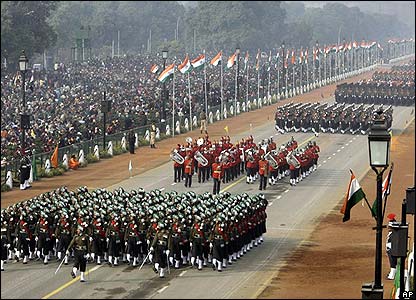
The Republic Day parade in New Dehli is a combination of cultural pride and military strength, symbolized by three fighter jets that fly over the ceremony each year.

Republic Day is for all Indians, regardless of religion or region. Still, sectarian tensions are high on Republic Day and security is heightened throughout the country.

Indian Army - Madras regiment - Republic Day

BBC: India’s Republic Day in Pictures
Kashmir view from 2007
India’s 59th Republic Day

Australia Day

January 26

On January 26, 1808 Major George Johnston led his men to the residence of Governor William Bligh and forcibly relieved him of his post. This remains the only successful coup by force in Australia’s history.

(You may remember Charles Laughton’s portrayal of the lovable, kooky Captain Bligh in 1935’s Best Picture “Mutiny on the Bounty” which portrayed the crew’s slapstick romp through the South Pacific.)

But that’s not why they celebrate. In fact the first recorded celebration of Australia day was 200 years ago, on January 25, 1808, the night before the coup. They called it First Landing or Foundation Day. It marked the 20th anniversary of the landing of British ships in what is now Sydney, with the purpose of setting up a permanent penal colony for the Bad Boys of Britain.

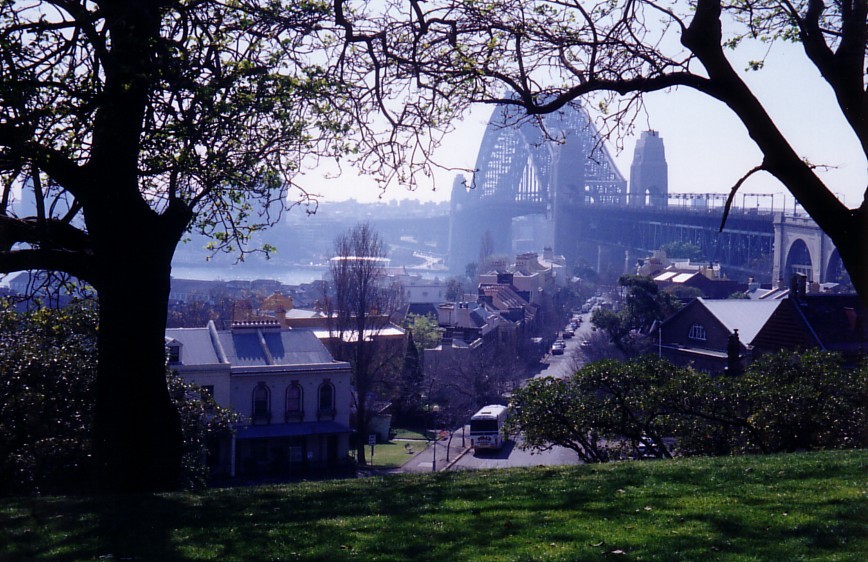
Sydney Bridge
Sydney, Australia

24 year-old George Johnston was the first officer to set foot on Sydney Cove sand that day. According to legend (ie. Wikipedia) he was so ill from the boat trip, he had to be carried on the back of convict James Ruse. Ruse had been sentenced to death back in England for stealing two watches. This was later commuted to 7 years in Australia. Ruse became Australia’s first successful European farmer.

from The Birth of Sydney…<

“The grant of land made to him by Governor Phillip in 1792 was the first act in a tragedy of dispossession for Aboriginal Australia. It would take 200 years exactly for the country to acknowledge that Phillip’s declaration was a sham.”

The 1789 London Morning Herald had a different take on the budding colony:

“The settlement we are making at Botany or rather Jackson’s Bay reminds us of the origin of the Roman Empire, which sprang out of a nest of robbers…The thief colony may hereafter become a great empire, whose nobles will probably, like those of the nobles of Rome and other empires, boast of their blood.”

The report prophesied correctly: Australians are a patriotic bunch, more so in recent years. But even today 1 in 4 Australians was born in another country. And 2 in 5 have at least 1 parent born abroad.

Heavy immigration has not been without conflict. In 2005, riots in the beachside suburbs of Cronulla targeted Middle-Eastern immigrants. It was the first riot to be fueled by text messaging.

This year Australia pays tribute to a couple whose heroism will be remembered for days to come. Lorraine and Robert Steel were honored (I mean honoured) with Order of Australia medals in part for their creation of the Parkes Elvis Festival in western New South Wales.

“January’s been very quiet in Parkes and we thought that we would do something to liven up living in Parkes in January to give us some business and hopefully to give business to our local motels and eatery.”

It’s now the world’s biggest Elvis festival, holding the Guinness World Record for most Elvis impersonators in a single place.
Australia Day History
Survival Day