Bob Marley Day – Song of Freedom

February 6

How long shall they kill our prophets

While we stand aside and look?

Some say it’s just a part of it:

We’ve got to fulfill de book…

Redemption Song, Bob Marley

Most national and religious holidays commemorate the death (or the birth) of a martyr or martyrs executed for their beliefs.

And then there are the victory holidays, of battles and wars, which essentially celebrate the deaths of somebody else’s martyrs.

And then there are Poets. History teaches us that unlike political and religious leaders, artists need not die for their cause to have a holiday named after them, provided they die young.

The Scots have Rabbie Burns, and the Slovenes have France Preseren. Jamaica and the world have Bob Marley, born this day in 1945.

Hard to believe he’d be in his sixties if he were alive today. He died at 36 of melanoma cancer. He left behind, not a traditional bible, but a legacy of spirit in song.

Buffalo soldier,

in the heart of America

Stolen from Africa,

brought to America

Fighting on arrival,

fighting for survival…

If you know your history

Then you would know where you coming from

Then you wouldn’t have to ask

Who the eck do I think I am…

–from Buffalo Solider

In an industry where the vast majority of popular music revolved around repetitive and vapid love songs, Marley’s lyrics articulated complex social issues: race, power, politics, and God. He filtered these themes through his own unique view of the world, one which saw beyond the arbitrary borders and distinctions of the society in which he lived. He once said:

“I don’t have prejudice against myself. My father was a white and my mother was black. Them call me half-caste or whatever. Me don’t dip on nobody’s side. Me don’t dip on the black man’s side nor the white man’s side. Me dip on God’s side, the one who create me and cause me to come from black and white…”

His first single, aptly titled “Judge Not,” was released in 1962, the year of Jamaica’s independence.

Marley spread the Rastafari philosophy around the world. His most famous concert may have been the 1978 One Love Peace Concert, during which he called the leaders of the ruling and opposing parties on stage to hold hands.
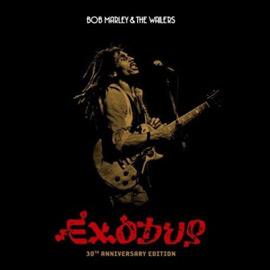
Exodus 20th Anniversary Edition

In 1999 Time Magazine called his 1977 album Exodus the “Best Album of the Century.”

The title alludes to the spiritual birth of the Judeo-Christian and Muslim religions. Marley’s lyrics consistently draw upon Biblical themes, Jamaican folk-lore, and his own experience to speak to the continuing struggle of the African Diaspora, particularly in the New World.

Open your eyes and look within:

Are you satisfied with the life you’re living?

We know where we’re going

We know where we’re from

We’re leaving Babylon

We’re going to our father land.

–Bob Marley, Exodus, 1977

Because of the timelessness of Marley’s lyrics and recordings, his legacy will continue to grow over the coming decades. The further we get from his death, the more people tend to recall the legend over the person.

In Before the Legend: The Rise of Bob Marley Christopher Farley touches on the very human side of Nesta…

“…near the end of his life, when his dreadlocks had begun to fall out because of the cancer treatments, he would still summon the strength to play with his kids. He would put on a Frankenstein mask from off the kitchen counter and chase his sons and daughters around their house in Miami. “A lot of people know Dad the musician,” [Marley’s eldest daughter] Cedella says. “We’ve always known him as Dad–who could be corny, funny, serious at times, but would never spank. If he saw a tear in your eye, he would look the other way. That’s the person that we know.”

He was called the “first Third World superstar,” but as he said of himself…

“…I don’t think Third World. To me, I am of the First World. I can’t put people in classes.”

Think Bob Marley’s legacy is overrated? It’s okay to say it, we’re all friends here. But think of this: It is culture and tradition that sustain a people separated from their homeland. Unlike previous diasporas, the Africa Diaspora was so brutal and so widespread that descendants were cut off from an evolution of culture and tradition that had been passed down for a hundred generations.

Marley’s success at embodying, expressing and popularizing a unique cultural movement in the 1960s and 70s, specifically of, by, and for the African Diaspora, was the culmination of hundreds of years of adaptation and indomitable faith. The movement redefined core values of peace, unity, God, redemption, and the enjoyment of life.

Nesta Robert Marley died in 1981. At his request he was buried with a bible, his guitar, a soccer ball, his ring, and a bong.
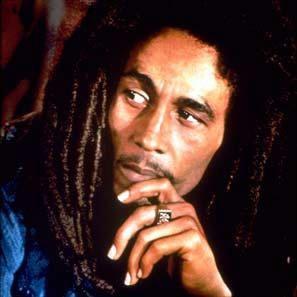
Nesta Robert Marley :  February 6, 1945-May 11, 1981

Songs of Freedom: The Music of Bob Marley as Transformative Education
Bob Marley’s Legacy Lives On

Marley Videos

Sri Lanka Independence

February 4

Sri Lanka has always been an island shrouded in mystery.

According to journalist William McGowan:

Even those living in Sri Lanka for many years felt its fundamental impenetrability; the longer you lived there, the more you realized you’d never really know it…

It was a country, after all, that Arab traders had once named Serendip, for its aura of accidental good fortune…If serendipity were to strike the island now, I’m afraid the dose would have to be massive.” (Only Man is Vile, 1992)

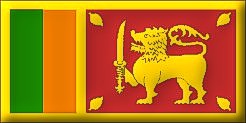
Actually, the word serendipity comes from the old name for Sri Lanka (Serendip), not the other way around. “Serendip” derived from the words Sinhala, “dwelling place of lions”, and dwipa, or “island”.

An ancient Persian fairy tale known as The Three Princes of Serendip told the story of three wise princes of the region whose collective intelligence led to good fortune, but only when they weren’t looking for it.

Bianca Capello
Bianca Capello

The English word was coined in 1754 by Horace Walpole, in a letter to a friend. His friend had sent him an unframed portrait of Bianca Capello that Walpole had admired. Walpole happened across the Capello coat-of-arms in a book of Venetian arms, which he used to help frame the portrait:

…This discovery indeed is almost of that kind which I call serendipity, a very expressive word…I once read a silly fairy tale, called The Three Princes of Serendip: as their highnesses traveled, they were always making discoveries, by accidents and sagacity, of things which they were not in quest of…

McGowen is right though. Sri Lanka is long overdue for some good karma. In addition to the devastation of the December 26, 2004 tsunami, the small island nation has been plagued with civil war ever since its independence, which it won from the British on this day in 1948.

Sri Lankans believe the Lord Buddha visited the islands three times:

“In Lanka, O Lord of Gods, shall my religion be established and flourish.”

Lord Buddha, The Mahavamsa, 6th century AD

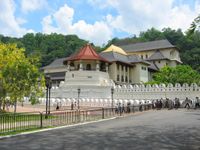
Every summer, Sri Lankans display the Sacred Tooth — believed to be the Buddha’s left canine — in an elephant procession known as Perahera.

Sacred Tooth Temple, Kandy, Sri Lanka

the 1st of February belongs to Brigid…

February 1 or 2


Brigid was a Celtic goddess whose festival was celebrated on February 1st and 2nd. Brigid’s Day, or Imbolc, heralded the middle of Winter and anticipated the coming of Spring. It was a festival of purification. (The word February itself comes from the Latin Februus, the god of purification and the dead.)

The Catholic church has been at odds with Brigid’s legacy for most of its existence. The bishops of Ireland found the goddess’s pagan following to be too deeply embedded in local tradition to be stomped out. Even the newly-converted Irish Christians refused to stop worshipping their exalted patroness. The Church decreed, If you can’t win ’em, join ’em. Brigid became Saint Brigid.

Over the centuries two Brigids emerged. One Brigid was transformed into Mary’s “midwife” at the birth of Jesus. (The position of Jesus’s mother was taken.)

In the other the she became the daughter of a Druid father ( and in some stories of a Christian mother from Portugal kidnapped by pirates!) and was named after the Celtic goddess. She lived from 451 to 525. She was known for her generosity as a young woman, and devoted herself to God, deflecting proposal after proposal from eligible suitors. She was baptized by St. Patrick himself and became a devout nun and Abbess, eventually founding the Abbey at Kildare in the 5th century.

St. Brigid of Kildare

In the Celtic tradition the Abbey at Kildare is believed to have preceded the so-called Saint herself. It was an ancient shrine to the Goddess before Christianity ever reached the Emerald Isle. There priestesses kept alight an eternal flame at the shrine until the 1220s when a Bishop, angered by the Abbess’s ‘no men allowed’ policy and the Druidic rituals, ordered the sacred flame to be put out.

The last insult to Brigid was her expulsion from the list of Saints in the 1960s. During Vatican II she was decanonized due to insufficient proof of her existence, after volumes of creative embellishment written about the supposed nun’s life and deeds over the centuries.

Brigid is affiliated with wisdom, healing, metal-work or craftmanship, flames and fire, and childbirth, even though she was a virgin in the Christian tradition.

In The Goddess Path: Myths, Invocations & Rituals Patricia Monaghan writes:

When we face the possible end of a relationship, when our bills are higher than the tiny resources we have, when we are emotionally drained by negative working conditions–it is all too easy to cling to what we have known previously…Brigid tells us otherwise…transformation is the only way to survive.

Likewise Imbolc is the transformation of winter into spring.

…the day on which you assume a new name; the day on which you pledge to make specific changes in your life. [Imbolc] could be thought of as a kind of goddess-specific New Year’s Eve.

In writing of St. Brigid, the Catholic Patroness of Ireland, (1907) Joseph Knowles notes:

St. Brigid received from her people a worship which history accords no other saint…She was the light that shone over their Island to direct the footsteps of the daughters of Erin in the paths of virtue and sanctity. In speaking of her they discarded the prefix Saint, and called her, in homely, yet reverent fashion, “Mo Brighe”–or “My Bride.

Note how Knowles reverses the carry-over from Brigid’s pre-Christian goddesship.

In the British Isles Brigid’s Feast and Imbolc merged with Candlemas. Both involves the ancient druidic lighting ceremony and purification rites, originally meant to honor Brigid. Some calendars list February 1 as Imbolc, others February 2. Most likely the celebration began on the evening of February 1 and concluded the following day, as was the tradition of the time.

On Brigid’s Day, Selena Fox, author of Lore and Riutals recommends:

“Do a self purification rite with Elemental tools–

cleanse your body with salt (Earth)

your thoughts with incense (Air)

your will with a candle flame (Fire)

your emotions with water (Water)

and your spiritual body with a healing crystal (Spirit)

Bless candles that you will be using for rituals throughout the year.

Invoke Brigid for creative inspiration.

Take a Nature walk and look for the first signs of Spring.”

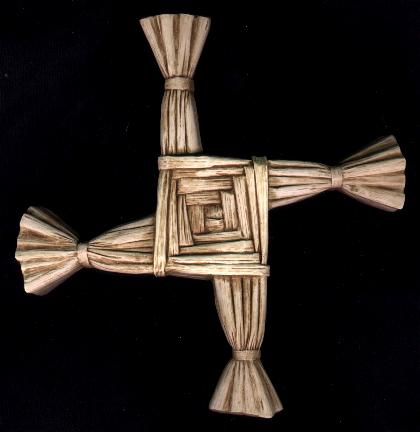
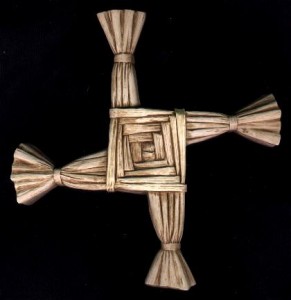
One ritual of Brigid’s Day was to plant or hang straw cross from the previous year’s harvest around the outside of the house and in the rafters in honor of the goddess of flame, to protect the house from fire. “An odd gesture,” writes Patricia Monaghan, “for a collection of old straw ornaments in the attic seems to encourage, rather than prevent, house fires.

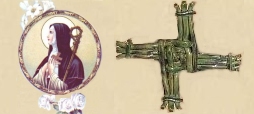
Brigid and her Cross

(Brigid’s Cross)

On Imbolc 1993 the Brigidine Sisters of Ireland relit the Kildare flame.

Brigid resources:

Brigid: the Goddess Who Wouldn’t Die

Brigid: the Survival of a Goddess

St. Brigid

Brigit or St. Brigid?

Brigid of the Celts

Brigit the Exalted One

Imbolc

Brigid’s Day Celebration

Brigid’s Day Foods

Imbolic Customs and Lore

Nauru Independence Day

January 31

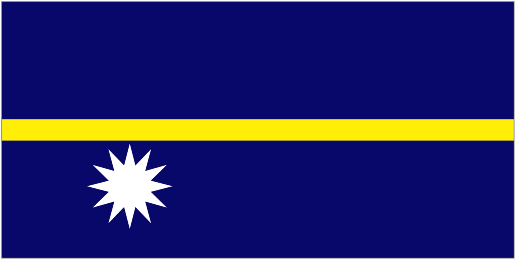
Over 40 years ago the small island of Nauru was granted its independence from Australia.

According to People and the Earth: Basic Issues in the Sustainability of Resources and the Environment, Nauru is the only nation in the world whose economy is based on bird droppings.

“Nauru survives by  the mining of the natural fertilizers that were produced over many millennia by the interaction of bird droppings (guana) with marine sediments exposed at the surface. Essentially depopulated during Japanese occupation in World War II, about 8,000 Nauruans now live on 1,100 of the 5,236 acres that are not mined to produce fertilizer for markets in Japan, New Zealand, and Australia.”

“When the resource is gone and mining ceases, currently estimated to occur in the year 2000, there will be no exportable product for Nauru except stamps and weight lifters. Even with reclamation, Nauru is unlikely to become a major tourist stop since there will be little of the island left that has not been stripped of every pound of exportable phosphate rock.”

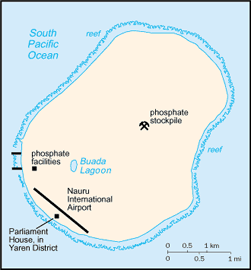
Nauru from above

Aware of their finite resources, Nauru’s leaders used profits to diversify their assets, including the 52-story Nauru House, Melbourne, Australia’s tallest building when it was built.

The history of Naura goes back 3,000 years, when the peoples of Polynesia and Micronesia settled the island. The 12 “tribes” of Naura remained cut off from outside society other until the end of the 18th century. In the 1830s contact with the Western shipping and traders increased, allowing islanders to trade resources for popular imports: alcohol and firearms. Both, unfortunately, exacerbated the bloodshed of the 10-year Nauru Civil War during the 1880s. The population fell from 1,400 to 900.

After Germany annexed the Island at the end of the 19th century, they discovered and began mining phosphate.

Australia captured the island in World War I and it was governed  by the UK, New Zealand, and Australia.

During World War II the Japanese captured the island, turning it into one big airstrip, while deporting 1,200 inhabitants for hard labor for the war effort. Australia retook the island in 1945.

On January 31, 1968 Nauru was granted independence.

True to predictions, the export that had sustained the island since 1907 was depleted. The nation with one of the world’s highest per capita GDPs at the time of its independence became one of the world’s poorest. Its fertile land, now destroyed by a century of mining, is uninhabitable and unable to be restored.
Naura House in Melbourne was sold for $140 million to clear the nation’s growing debts. The island encouraged offshore banking as a tax shelter, and soon became a beacon of hope for money launderers everywhere.

Nauru cracked down on money laundering due to international pressure. Today Naura exports less than $600,000 in phosphate–its only export–and imports $19 million.

And the island, once cut off from the world and self-sufficient for thousands of years, is now completely dependent on Australian aid.

http://www.janeresture.com/nauru/
http://www.pontocombo.com/noon_documentaries.htm
http://www.everyculture.com/Ma-Ni/Nauru.html
http://nynerd.com/the-story-of-nauru-island/

Wolfgang Amadè Mozart’s Birthday

January 27

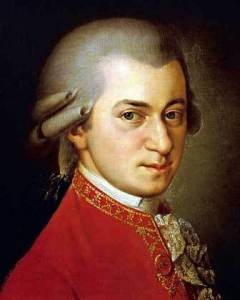
Today, January 27, is Wolfgang Amadè Mozart’s birthday.

If you’re like me, everything you know about Mozart comes from Falco’s immortal ballad “Rock Me Amadeus.”

“1756, Salzburg, January 27, Wolfgang Amadeus Mozart is born.
“1761, at the age of five Amadeus begins composing.
“1773, he writes his first piano concerto…

But did you know that, according to Marcel Danesi’s Forever Young: The Teen-Aging of Modern Culture:

There are solid data to suggest that even minimal exposure to the music of Mozart, for instance, benefits both children and adults in many ways.

Ironically, this maturing effect of Mozart’s music did not work on the great composer himself, who despite his musical genius, lived much of his life in a state of perpetual adolescence. Mozart’s letters are riddled with misspellings, unorthodox grammar, and references to his fecal and scatological obsessions.

“How I like Mannheim?–as well as one can like any place without Baasle [little cousin]. Pardon my poor handwriting, the pen is already old; now I have been shitting for nearly 22 years out of the same old hole and yet it’s not torn a whit!…Now I must close, as it so happens, because I am not dressed yet, and we’ll be eating soon so that afterward we can go and shit again, as it so happens. Do go on loving me as I love you, then we’ll never stop loving each other…”

Nov. 13, 1777, letter, to cousin Maria Anna Thekla Mozart, translated by Robert Spaethling, Mozart’s Letters, Mozart’s Life

Perhaps the fact that Mozart virtually “skipped” childhood [He wrote his first symphony at age 8.] led him to make up for it in later years. Granted, Mozart probably didn’t expect his personal letters to wind up on the Internet, but then who does. Anyway, his eccentricities didn’t detract from his following, either during his life or after.

Nearing the centenary of Mozart’s birth, The Musical World (1855) wrote:

There is no name in music which addresses itself more powerfully and universally than that of Mozart in appeals to the heart as well as to the intellect. From infancy his melodies are made familiar to us; they are hummed at our cradles, taught us at schools, sung at our theatres, and made the groundwork of our musical appreciation.

We’ll never know how Mozart would have aged. He died on December 5, 1791, at age 35. He died of illness, though specifically of what illness we may never know.

Young Mozart
Young Mozart

Mozart’s Requiem

The mystery of Mozart’s death revolves around his haunting final work: Requiem. The Requiem was commissioned anonymously, and conveyed by a “Gray Messenger.”

Before long he became convinced that the Messenger had come to warn him of his own mortality and that he was indeed composing the work for his own death. Concerned with this morbid fascination, his wife Constanze hid the score and forbade him to work on the Requiem for several weeks.  But, shortly after resuming work in mid-November, Mozart became ill and took to his bed. He gathered a choir of friends around his bedside the afternoon of December 4th to sing the movements he had completed. He died less than twelve hours later.

Robert Levin, Requiem by Wolfgang Amadeus Mozart

His death was fictionalized in Peter Schaffer’s Amadeus. Historians believe the Requiem was not a rival composer’s plot to kill Mozart, but was commissioned by an Austrian count and amateur musician who intended to pass the work off as his own, in honor of his deceased wife.

Over 200 years after his death, historians and musicians still place Mozart in a category of his own. Mozart’s ability to connect to music-lovers for over ten generations, and his ability to express the entire range of human consciousness through music is made more remarkable considering the two things the composer never had: a true childhood, and a true adulthood. As the current Pope Benedict XVI once said:

“His music is by no means just entertainment; it contains the whole tragedy of human existence.”

Cardinal Joseph Ratzinger, 1996, quoted in God’s Choice: Pope Benedict XVI and the future of the Catholic Church

Republic Day – India

January 26

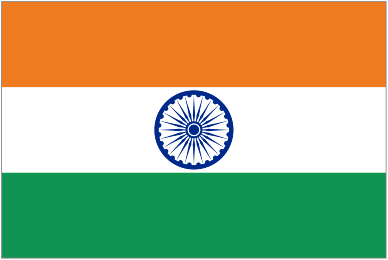
Today is Republic Day in India.

Although India gained independence from Britain in 1947, the Constitution was officially adopted on January 26, 1950, marking the Republic of India as a sovereign nation with complete autonomy.

The date January 26th was chosen in remembrance of “Poorna Swaraj Diwas,” when the Indian National Congress declared independence on January 26, 1930.

Guests of Honor at recent Republic Days have included King Abdullah of Saudi Arabia, Russian President Vladimire Putin, and Nicholas Sarkozy, President of France.

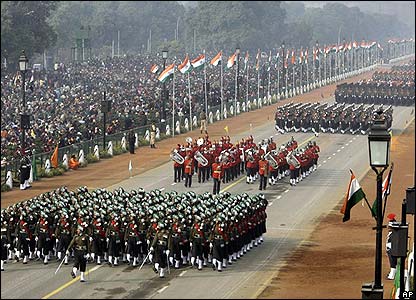
The Republic Day parade in New Dehli is a combination of cultural pride and military strength, symbolized by three fighter jets that fly over the ceremony each year.

Republic Day is for all Indians, regardless of religion or region. Still, sectarian tensions are high on Republic Day and security is heightened throughout the country.

Indian Army - Madras regiment - Republic Day

BBC: India’s Republic Day in Pictures
Kashmir view from 2007
India’s 59th Republic Day

Australia Day

January 26

On January 26, 1808 Major George Johnston led his men to the residence of Governor William Bligh and forcibly relieved him of his post. This remains the only successful coup by force in Australia’s history.

(You may remember Charles Laughton’s portrayal of the lovable, kooky Captain Bligh in 1935’s Best Picture “Mutiny on the Bounty” which portrayed the crew’s slapstick romp through the South Pacific.)

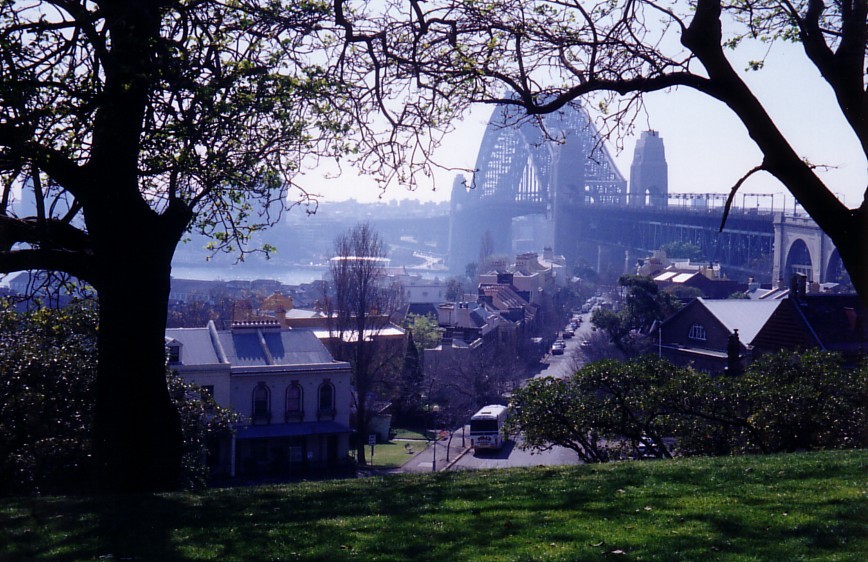
But that’s not why they celebrate. In fact the first recorded celebration of Australia day was 200 years ago, on January 25, 1808, the night before the coup. They called it First Landing or Foundation Day. It marked the 20th anniversary of the landing of British ships in what is now Sydney, with the purpose of setting up a permanent penal colony for the Bad Boys of Britain.

Sydney Bridge
Sydney, Australia

24 year-old George Johnston was the first officer to set foot on Sydney Cove sand that day. According to legend (ie. Wikipedia) he was so ill from the boat trip, he had to be carried on the back of convict James Ruse. Ruse had been sentenced to death back in England for stealing two watches. This was later commuted to 7 years in Australia. Ruse became Australia’s first successful European farmer.

from The Birth of Sydney…<

“The grant of land made to him by Governor Phillip in 1792 was the first act in a tragedy of dispossession for Aboriginal Australia. It would take 200 years exactly for the country to acknowledge that Phillip’s declaration was a sham.”

The 1789 London Morning Herald had a different take on the budding colony:

“The settlement we are making at Botany or rather Jackson’s Bay reminds us of the origin of the Roman Empire, which sprang out of a nest of robbers…The thief colony may hereafter become a great empire, whose nobles will probably, like those of the nobles of Rome and other empires, boast of their blood.”

The report prophesied correctly: Australians are a patriotic bunch, more so in recent years. But even today 1 in 4 Australians was born in another country. And 2 in 5 have at least 1 parent born abroad.

Heavy immigration has not been without conflict. In 2005, riots in the beachside suburbs of Cronulla targeted Middle-Eastern immigrants. It was the first riot to be fueled by text messaging.

This year Australia pays tribute to a couple whose heroism will be remembered for days to come. Lorraine and Robert Steel were honored (I mean honoured) with Order of Australia medals in part for their creation of the Parkes Elvis Festival in western New South Wales.

“January’s been very quiet in Parkes and we thought that we would do something to liven up living in Parkes in January to give us some business and hopefully to give business to our local motels and eatery.”

It’s now the world’s biggest Elvis festival, holding the Guinness World Record for most Elvis impersonators in a single place.
Australia Day History
Survival Day

John Hancock: Handwriting Day

January 23

john_hancock
John Hancock

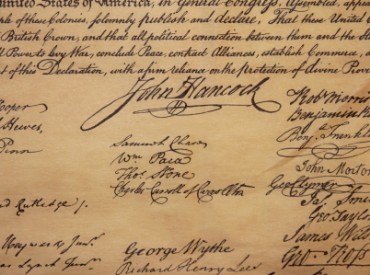
Break out those quills…today is National Handwriting Day. And by no coincidence it’s the birthday of Founding Father John Hancock, famous for signing his name on the Declaration of Independence large enough, so the story goes, for King George III of England to read it without his glasses.

John Hancock made his fortune by inheriting his father’s shipping business. During the days of high British taxes, Hancock was charged with smuggling, but he was lucky enough to have future President of the U.S. John Adams as his attorney. After a five-month trial, the charges were dropped for lack of evidence. The smuggling charges actually increased his popularity among the increasingly rebellious citizens of colonial Massachusetts.

In 1775, when the British declared that they would absolve charges against any colonists willing to put down their arms and live in peace, they made two exceptions: Sam Adams and John Hancock.

Also that year, the Second Continental Congress in Philadelphia elected John Hancock as its president. Under Hancock, the Continental Congress declared the independence of the United States of America and drafted the document which proclaimed it so.

In July, 1776, 100 “Broadsides” of the first Declaration of Independence were printed. These didn’t have any of the Founding Fathers’ signatures—Only two names: John Hancock, President of the Congress, and Charles Thompson, the Congress’s Secretary. And they weren’t signed. The names were printed. Had the Revolution failed at that point, Hancock and Thompson would have been screwed.

As fate would have it, the revolution didn’t fail. In August the entire Congress put their names to the nation’s founding document. That’s the Declaration we’re familiar with, with John Hancock’s scrawling signature overshadowing all others.

There’s no evidence he claimed the large signature was so “King George can read it without his glasses,” a story that gained momentum years after the signing. He was however known for his flamboyance and vanity, and the boast would not have been not out of character.

Hancock's famous signature on the Declaration of Independence

After the Continental Congress, Hancock became governor of Massachusetts, a position he held for much of the rest of his life.

Even today, the term “John Hancock” is synonymous with “signature.” Which is why today is National Handwriting Day, an unofficial holiday promoted by producers of writing tools, who have plenty of reason to promote this holiday.

Whereas penmanship was once considered an indicator of status and intellect, in recent years handwriting itself has joined the endangered species list. According to Lisa Marnell, Director of Handwriting Help For Kids:

Fourth- and fifth-grade kids are learning keyboarding when they would’ve been honing cursive writing, which is much faster than block printing…Also, many younger kids are starting school without the hand strength they need to write well – holding a mouse or playing with a Game Boy simply doesn’t develop fine motor skills.

These days you can write anything on a computer or even a phone, except for two simple yet untype-able words: your signature.

Who knows, we may go back to the olden days–the days when most ordinary people knew how to write only one thing: their signature. In which case, John Hancock would still be the most apropos symbol of our nation’s penmanship.

Broadside version, Declaration of Independence

*Only 25 original Broadsides of the Declaration of Independence exist. One of the best preserved Broadsides was found in 1989 when a bargain-hunter at a flea market bought a $4 picture because he liked the frame. He took it home to discover the Declaration of Independence behind the picture. It last sold for $8 million.