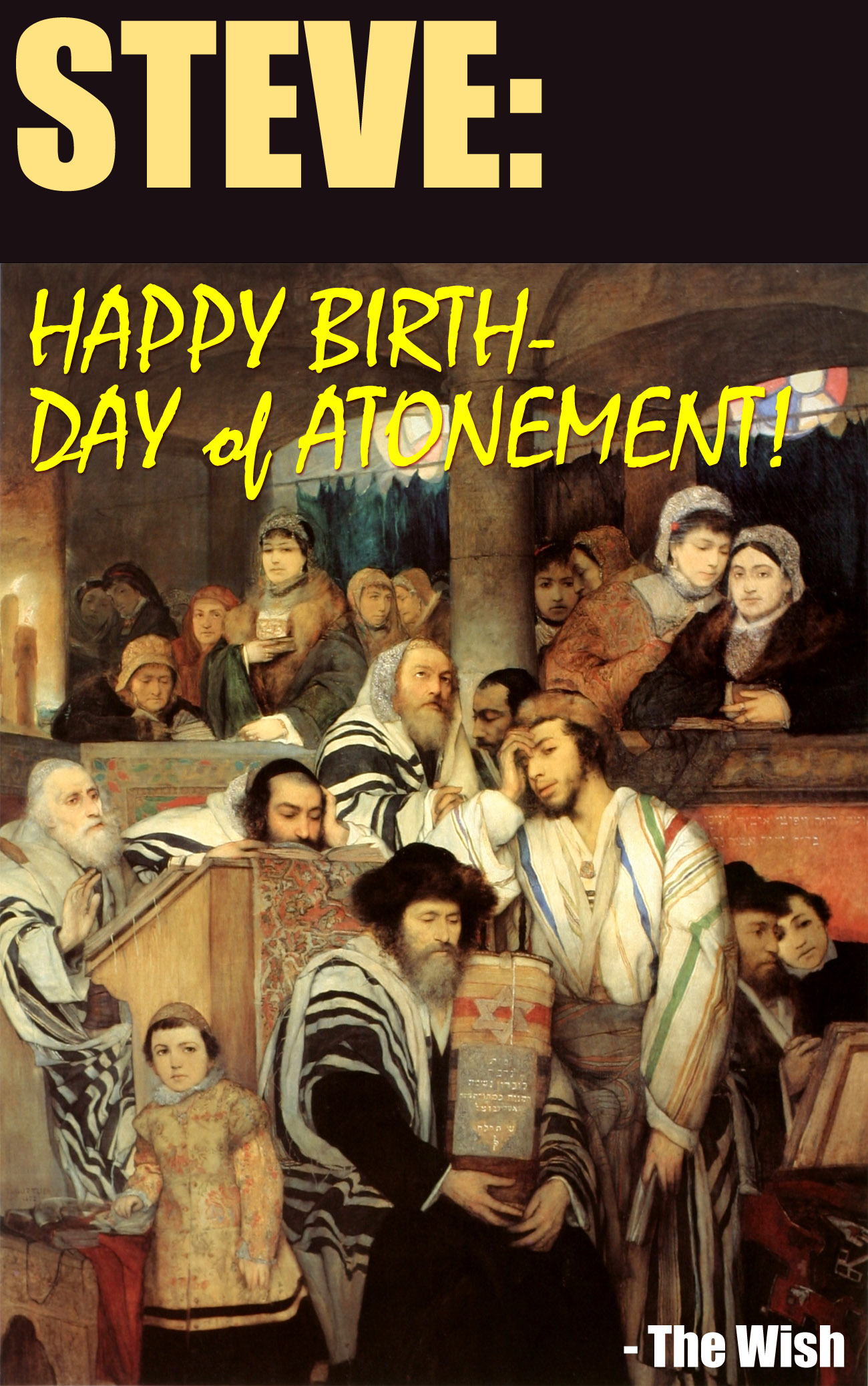
Yom Kippur

October 8, 2011
September 26, 2012
September 14, 2013
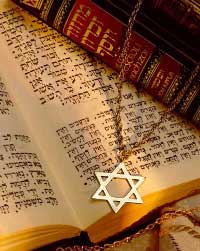
The tenth day of the seventh month is the Day of Atonement. Hold a sacred assembly and fast, and present an offering made to the Lord by fire. Do no work on that day, because it is the Day of Atonement…I will destroy from among his people anyone who does any work on that day.”

Leviticus 23:26-30

And, as if all the above hadn’t sunk into Moses’ brain, the Lord restated his point. On the holiest of the year:

“You shall do no work at all. This is to be a lasting ordinance for the generations to come, wherever you live.”

No work, got it.

That I’m at work as I write this doesn’t bode well for my future as a Jew.

So…does this mean don’t go to work? Or merely don’t do any work while I’m there. Because I’m good–I mean good–at not doing work. I have ways to procrastinate even my procrastination.

Like right now, for instance, I’m at work writing about procrastination.

In all honesty though, it’s not Yom Kippur yet as I write this. But, regardless, I know I will be at work for Yom Kippur.

I’m a cultural Jew, the type of Jew who, according to my friends, makes Reform Jews feel Hassidic. Hot bacon salad dressing was served at my Bar Mitzvah. (Rabbi Brown was not happy.) And, as it fell on Halloween, we filled the reception area with inflatable skeletons, gave out devil’s tails and horns as gifts, and hired a DJ dressed like Dracula who popped out of a coffin. (Again, Rabbi Brown…not happy)

But writing about the holidays of so many cultures this past year has allowed me some insight, not only to the various religions of the world but to the purpose of my own, and the meaning of holidays like Yom Kippur.

Yom Kippur is actually the last of ten days of exploration of one’s relationship with God, beginning with the Jewish New Year on Rosh Hashanah. Muslims observe a similar custom during Ramadan, the last ten days of which are most sacred. For Shia Muslims the ten days between the Islamic New Year, Muharram, and Ashura are also particularly holy.

In Buddhist cultures, debts should be paid off by Chinese New Year. In Japan, houses must be cleaned. In old England, leases had to be paid by autumn equinox, Michaelmas, and by March 25, the old New Year. In America, New Year’s resolutions—promises to oneself—are written to begin on January 1.

Yom Kippur bears some resemblance to New Year’s resolutions (not in that we forget after two weeks, but) in that they are not about our contracts with other people. Rather, they are internal promises…to oneself and/or to God.

Many individuals do this in their own lives, religious or not. It’s called a birthday. We naturally reflect on our life the previous year, and wonder what the next will have in store. It’s like our own personal new year. Our own holiday.

But birthdays were not celebrated so much five millennia ago. Instead, our ancient ancestors found that–just as the world shed its dead and snowy hide each year and was born anew each spring–so humans must designate a sacred time to come to terms with the weight of the previous year, in order to start afresh, and meet the year to be with a clean slate.

Many cultures observe this rite in the spring, with the rebirth of flora and fauna, or after the winter solstice, as the days begin to grow longer. That Judaism’s big day occurs in autumn, at the harvest, speaks volumes about the culture. It’s like Judaism was born old; like God was saying Yom Kippur, the harvest of the soul, is not preparation for life, but preparation for death.

That Yom Kippur just happens to fall on my birthday in 2008 makes it a particularly auspicious time for me to reflect upon the year.
In Spanish they don’t say, “How old are you?” They say, “How many years do you have?” Before you have many, it’s the longest period of time you can imagine. After too many, it’s the blink of an eye.

More years have now passed between today and my birth than between my birth and World War II. This is a pivotal milestone. You see, when I was a child and saw old news reels of the Holocaust, it seemed like ancient history. As was anything that happened before I was born, from the Roman Empire to JFK.

The older I get, the closer it seems. Time moves fast. It might as well have been yesterday.

* * *

This year, I’m not celebrating my birthday. I’m celebrating the day after.

Friday I’ll be flying up to visit my sister and her family, and handing off the birthday baton to my little niece, who will turn one year old the day after my birthday. Her name’s Aurora—Dawn. A beautiful, if not audacious name to give a child born at harvest time.

I haven’t seen her since she was 3 months old, though I’ve seen her grow through pictures. Everything she knows about the world happened in the past 365 days. It’s something beyond the scope of my imagination.

To her, we are the ancients.

To us, she’s the blink of an eye.
[published October 9, 2008]
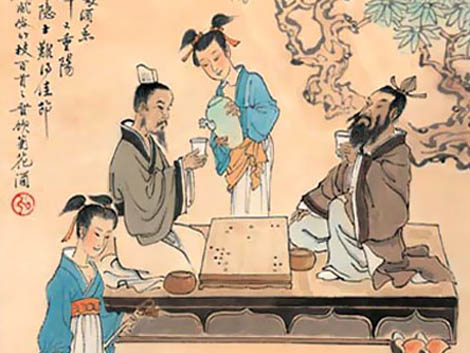
Chongyang – China’s Double 9th

As the days grow shorter and colder, the Chinese celebrate Chongyang, an old festival honoring ancient people. Wait, no—an ancient festival honoring old people.

Chongyang is also known as Double Ninth. As the highest odd single number, 9 is considered especially lucky in Chinese culture. Chongyang falls on the 9th day of the 9th month of the Chinese calendar.
The tradition is so old that no one really knows how it began.

One story of the festival’s origin tells of a boy named Heng (or Huan) Jing who studied under a Taoist teacher. The old man warned Heng Jing how to avoid the plague that was killing the villagers of the Ruhe River region. He told the boy the devil would rise up from the water on the 9th day of the 9th month. He instructed Heng Jing to tell his townspeople to pin Cornus leaves (or tie Dogwood twigs) to their clothes, soak chrysanthemums in liquor, and climb up a nearby mountain.

Now, these days a student like Heng would do the socially responsible thing and commit his master to a hospital for the mentally unstable, but Heng Jing did as he was told. Sure enough, on the 9th day of the 9th month the devil rose from the waters. But as the devil pursued Heng Jing and his people up the mountain, the overpowering scent of the Cornus and chrysanthemum made the devil dizzy, and he fell back into the water.

Ever since, the Chinese have celebrated Double Ninth by drinking chrysanthemum wine and pinning Cornus leaves to their clothes.

One of the most popular activities of Chongyang is “Deng Gao”, which means going to a high place. Chinese families and groups trek up to the hills or mountains with dogwood twigs. Those who can’t make the trip, eat cake instead. (Gao is a homonym for both ‘high’ and ‘cake’.)

Culturally, Chongyang is enjoyed as the last time of year people can hike the mountains and enjoy the great outdoors before the onset of winter. Chongyang has a special place in Taoism. In the philosophy of yin and yang, even numbers are associated with yin while odd numbers are associated with yang. The double of the highest odd single digit represents a benevolent combo of yin and yang.

www.huawei.com – the Chongyang Festival

www.chinavoc.com – Double Ninth

www.radio86.co.uk – Chongyang: The Double Ninth Festival

Navami & Dashami

October 5-6, 2011

Maha Navami

According to an 1815 French text…

“Maha-navami, known also under the name of Dasara, [is] specially dedicated to the memory of ancestors. This feast is considered to be so obligatory that it has become a proverb that anybody who has not the means of celebrating it should sell one of his children in order to do so.”

Okay—celebrants don’t actually sell off the kids to honor to celebrate, but the holiday is a big deal in India (especially Bengal) as well as parts of Nepal, Bhutan, and other countries with Bengal populations.

Also, Maha-navami isn’t the name of the whole celebration. Navami means ninth day, and refers to the ninth and penultimate day of the Durga Puja festival. It’s observed in different ways throughout the subcontinent.

Maha-navami falls right after Maha-ashtami (eighth day) and opens with Sandhi Puja, the ritual that recalls Durga’s defeat over Mahishasura’s two generals, Mundo and Chando.

Dashami

The following day, Dashami, is a sadder occasion, as worshippers of Durga try to postpone the inevitable.

Dashami is the day when Goddess Durga accompaning her children sets for Kailash, her husband’s abode. With a heavy heart the Bengalis immerse the clay idol of Durga in the sacred Ganges bidding her goodbye and earnestly waiting to see her again the next year…

http://www.durgapujagreetings.com/nirghonto.html

Durga Puja – the Morning After (The Ecological Impact)

Durga Puja – Bengal

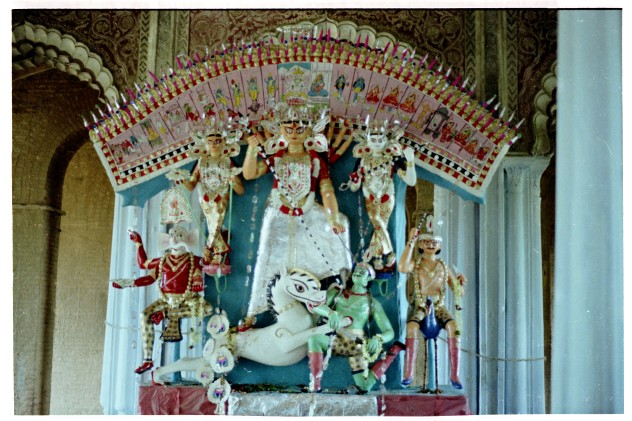
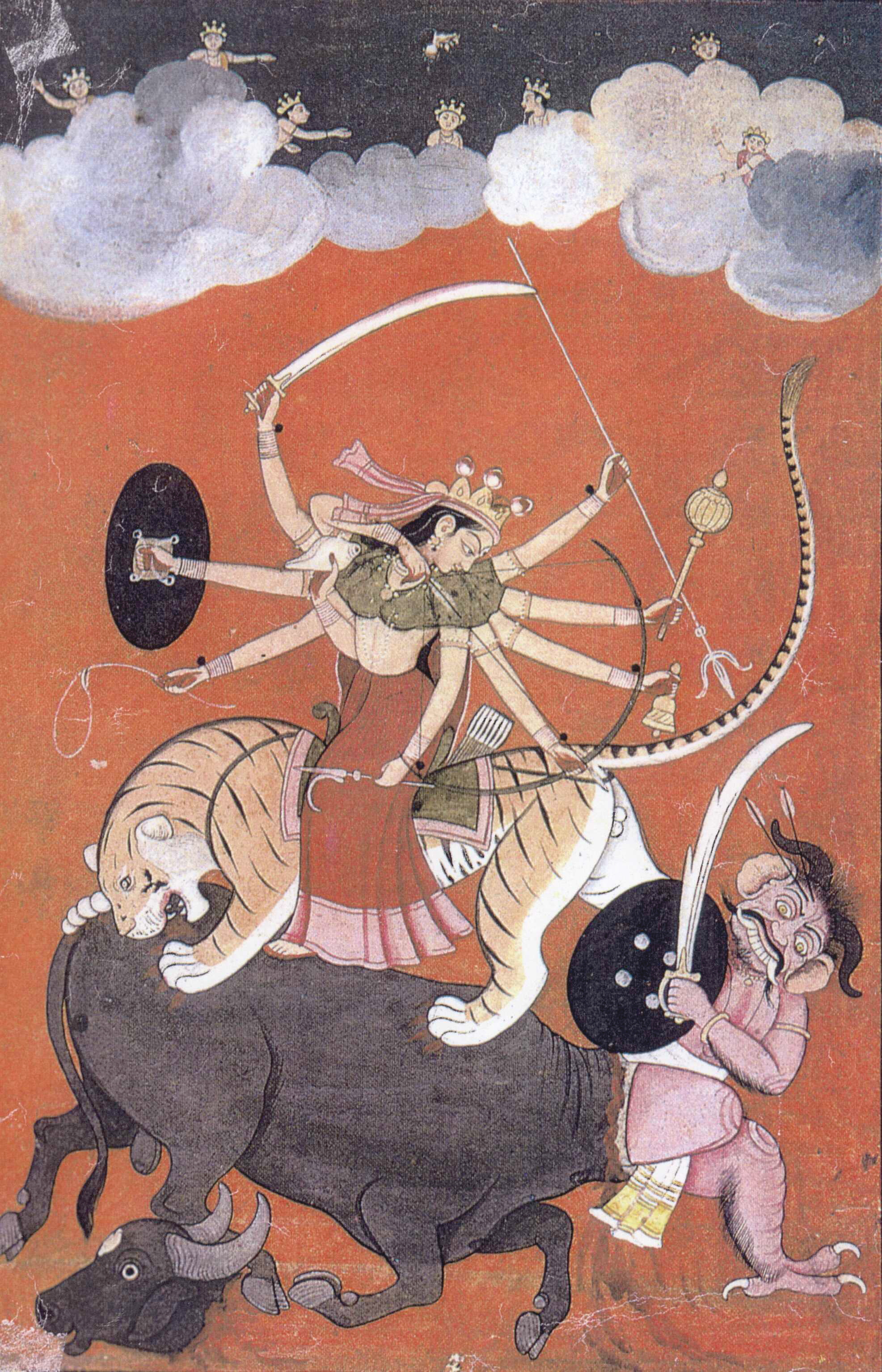
Durga Puja is the largest celebration of Bengal and Bangladesh, and is also celebrated throughout Bhutan, and Nepal. It worships the mother goddess Durga, who was called into existence by the trinity of Hindu gods, Shiva, Brahma and Vishnu, to defeat the demon Mahishasura.

According to legend, Shiva gave the once-loyal Mahishasura a power that he would later regret: that Mahishasura would not be killed by any man.

Confident he could never be stopped, Mahishasura went all maniacal on the lesser gods (Devtas) and plunged the Universe into havoc.  The gods pleaded with Shiva, Brahma, and Vishnu. The three created the only thing that could stop Mahishasura: an all-powerful goddess.

Durga was made from the best of all gods:

Her face reflected the light of Shiva,
her ten arms were from Lord Vishnu,
her feet were from Lord Brahma,
the tresses were formed from the light of Yama, the god of death
and the two breasts were formed from the light of Somanath, the Moon God,
the waist from the light of Indra, the king of gods,
the legs and thighs from the light of Varun, the god of oceans
and hips from the light of Bhoodev (Earth),
the toes from the light of Surya (Sun God),
fingers of the hand from the light of the Vasus, the children of Goddess river Ganga
and nose from the light of Kuber, the keeper of wealth for the Gods.
The teeth were formed from the light of Prajapati, the lord of creatures,
the Triad of her eyes was born from the light of Agni, the Fire God,
the eyebrows from the two Sandhyas,ie, sunrise and sunset,
the ears from the light of Vayu, the god of Wind.

http://www.durga-puja.org/mythology.html

The gods then armed her to the teeth (which as we know, were Prajapati’s) and she proceeded to kick the surprised Mahishasura’s butt. Since that day, Durga has symbolized the unity of the forces of good over those of wickedness.

Durga Puja lasts almost a fortnight, beginning on the 12th of Aashin in the Bengla calendar (September 29 in 2008), but doesn’t really get kicking until the 18th of Aashin (October 5 this year) and lasts four or five days:

October 2008 (Aashin 1415)

October 3 (evening) to October 4: Maha Panchami

October 4/5: Maha Shashti

October 5/6: Maha Saptami

October 6/7: Maha Ashtami

October 8: Maha Navami

October 9: Dashami

Today’s Maha Shashti is “the sixth day of the moon when Goddess Durga is welcomed with much fanfare and gusto. Look for the ‘Bodhon’ rituals when Goddess Durga is unveiled.” –http://www.durgapujagreetings.com/nirghonto.html

Though the religious aspects of the festival are still strong, Durga Puja has become a cultural and community celebration in recent decades.

Rosh Hashanah

September 29, 2011
September 17, 2012
September 5, 2013

Happy New Year!

It’s New Year’s in the Jewish calendar, but you won’t hear Jews counting down to midnight, or dropping a big sparkly ball from the Western Wall.

For one, the Jewish day—and thus all Jewish holidays—begin at sundown the night before. Second, Rosh Hashanah is not so much a time of celebration as a time of reflection and repentance.

Despite its name, “Head of the Year”, Rosh Hashanah actually marks the beginning of the seventh month of the Hebrew calendar. The first month is known as Nisan, which falls in the spring.

The Hebrew Calendar actually has four “New Year’s”:

1. In Winter, Tu B’Shevat is the New Year of Trees, originally the day farmers took inventory of trees for tax purposes.

2. In Spring, Jews welcome Nisan as the “first” month of the year, as God commanded Moses in the Jewish holy book, the Torah.

This month hall be considered by you as the First of the Months; it is the First for you of the months of the year.” — Exodus 12:2

3. In Summer, Rosh Chodesh Elul is the New Year of Animals, during which animals and property were counted.

4. Yet, it’s in the Fall that the big New Year is celebrated. According to Jewish tradition, Rosh Hashanah marks the sixth day after creation, the birthday of humanity. Thus, the beginning of the relationship between God and man.

Just as Tu B’Shevat and Rosh Chodesh Elul call for an inventory of property, Rosh Hashanah requires an inventory of the soul. Some scriptures say it’s during this time that God sits upon a throne with a book entailing the deeds of each human life. Rosh Hashanah is the beginning of a ten-day period of introspection, collectively known as the High Holy Days, which culminates with the holiest day of the year, Yom Kippur.

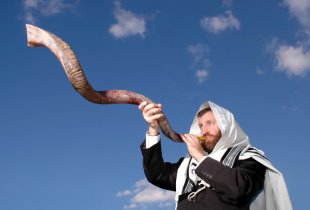
During this time, practicing Jews attend special services at their local synagogue where Rosh Hashanah is marked with the blowing of a ram’s horn known as a shofar. Traditional Rosh Hashanah foods include apples and honey, previously collected this season, to symbolize sweetness in the coming year.

This year Rosh Hashanah marks the first day of the year 5771 in the Jewish calendar.

Michaelmas

September 29

And when the tenants come to pay their quarter’s rent
They bring some fowle at Midsummer, a dish of fish in Lent,
At Christmasse a capon, at Michaelmasse a goose;
And somewhat else at New-yeres tide, for feare their lease flie loose.

Gasciogne, Posies (1575)

September 29 is the Feast Day of the Archangel St. Michael and All Angels.

The archangel Michael is featured prominently in both the Old and New Testaments, as well as apocryphal writings such as the book of Enoch. The appeal of the Archangel spread throughout Christendom during the Middle Ages. Perhaps because of his position as the leader of the army of angels in Revelation, Michael became the patron saint of knights, whom fighters called upon in times of battle.

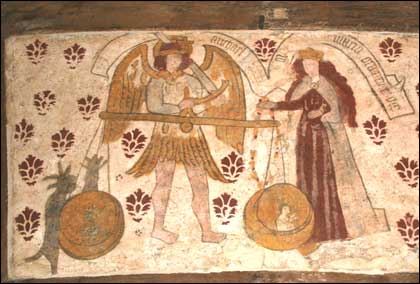
He is also the “good guy” Angel of Death–the one with wings and a scale, not with a black cloak and scythe. Michael’s symbolic scale was believed to weigh the souls of the recently deceased, to determine their worthiness in heaven. Fittingly, St. Michael’s Feast falls during the zodiac sign of Libra, the scales.

The medieval painting above shows St. Michael's scales, weighing the soul of a tiny figure hoping to enter the kingdom of heaven. The devil weighs down the scale on the left while the Virgin Mary weighs down the right with a rosary.

Just as the figure of Michael replaced pagan deities such as the Germanic Wotan (Norse Odin) and the Greek Hermes during the conversion of Europe, his feast day on September 29 replaced nature-based celebrations of the autumnal equinox and the harvest. During the Middle Ages, the equinox fell on or around September 29.

In England, Michaelmas was one of the four quarter days by which debts and suits had to be settled, falling roughly on the solstices and equinoxes: Lady Day (March 25), Midsummer Day (June 24), Michaelmas (September 29) and Christmas (December 25).

Geese, which were fat and hardy this time of year, were often given to landlords and creditors as part of repayment. Goose became the traditional meal of Michaelmas, and a symbol of good luck; hence the saying:

Whoever eats goose on Michaelmas Day
Shall never lack money his debts to pay

In the Church of Latter-Day Saints, before Michael became an angel, he was Adam, the first man. Jehovah’s Witnesses, meanwhile, believe that Michael and Jesus are but one and the same.

Michaelmas was considered the last day to safely eat the season’s blueberries.

…We’ll pick in the Mortenson’s pasture this year.
We’ll go in the morning, that is, if it’s clear,
And the sun shines out warm; the vines must be wet.
It’s so long since I picked I almost forget
How we used to pick berries: we took one look round,
Then sank out of sight like trolls underground…

from Blueberries by Robert Frost

Confucius’s Birthday – Teachers’ Day

September 28

confucian

Before embarking on a journey of revenge, dig two graves.

Confucius

+++

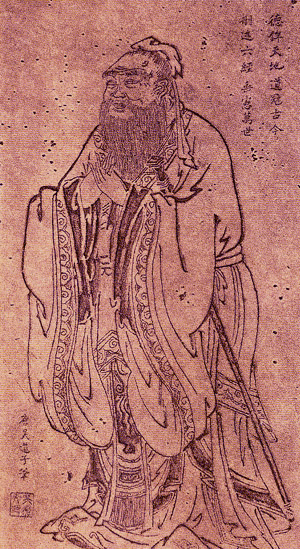
Today is the (observed) birthday of the man whom many believe to be the greatest teacher ever, Master Kung, K’ung Fu Tzu. Or as he’s known in English: Confucius.

Compared to his legacy, the circumstances of his life were somewhat underwhelming.

He was born in 551 BC in Lu, China, into a poor, once noble family. His father died when he was three. According to the Chinese philosopher Mencius, Confucius worked as a storekeeper, and also tended to oxen and sheep in the public fields.

A large chunk of Confucius’ life is missing from the record, as can be expected from a non-royal figure who lived 2500 years ago. But these gaps have been filled in by millennia of legends. We do know that by his early fifties, Confucius was in the employ of the Duke of Lu, Ding, as Minister of Public Works and as Minister of Crime. But Confucius left Lu and the court of the Duke at age 52. Whether it was because of some moral ambiguity on the part of the Duke’s, because of a social snub toward Confucius, or because of animosity from those vying for the Duke’s power, we can’t be sure.

Confucius spent the next several years traveling through China, to the states of Wei, Song, Chen, Cai, and Chu.
He returned to Lu in 484 BC where he lived out his remaining years. By the time of his death he had amassed a sizable following of students, who would formalize and carry on his teachings.

Like I said, underwhelming. But by the next century, Mencius would write, “Ever since man came into this world, never has there been one greater than Confucius.” Confucius was remembered as a sage who should have been king, in a world too shortsighted to see that.

Confucius once said he was not a “maker” of knowledge, but a “transmitter” of it. “I am not one who was born in the possession of knowledge; I am one who is fond of antiquity, and earnest in seeking it there.” (Analects)

Though his teachings and philosophy were based on studies of history, they were vastly different from those that came before.

He taught that rulers who governed by example and by virtue would have more loyal subjects than those who governed by force alone. That the society governed by the former system, and the people within it, would eventually lean toward goodness. And that humans are similar by nature, but their habits and practices “carry them far apart.” (Analects)

He defined the practices of virtue as Gravity, Generosity of Soul, Sincerity, Earnestness, and Kindness.

He condoned strong attachment to family and respect toward elders and ancestors.

And he put into words the Golden Rule of reciprocity: Don’t impose upon other what you would not want for yourself.

Ancient scholars studied for their own improvement. Modern scholars study to impress others.

There are an estimated 6 million followers of Confucianism around the world today, but these are a small minority of those who follow the teachings laid out by Confucius over 2500 years ago. Confucianism remains a dominant philosophical system in Chinese life. His philosophy and teachings fundamentally influenced Eastern thought since his lifetime, as well as Western thought following Confucianism’s introduction into Europe by Jesuit Matteo Ricci in the 16th century.

Since the 1990s, birthday ceremonies in honor of the Great Teacher have flourished in China, after decades of repression.

The nation of Taiwan celebrates this day as Teacher Day.

Confucius Temple Ceremony in honor of Confucius’s birthday.

Meanings of Confucianism

Confucianism Overview @ religioustolerance.org

Saudi National Day

September 23

In 2008, National Day in Saudi Arabia was a muted celebration. It coincided with the end of the holy month of Ramadan, one of the most auspicious times of the year. And in Saudi Arabia, when it comes between the state and Islam, Islam has the first, last, and every word in between.

Islam is not just the official religion of Saudi Arabia, it’s the only religion. The law of the land is Shari’a–Islamic religious law based on the teachings of the Qur’an.

Shari’a covers everything from banking to hygiene. According to “Islamic Finance: Law, Economics, and Practice”:

…we do not mean that the Holy Quran and Sunna of the Holy Prophet or the rulings of Islamic scholars provide a specific answer to each and every minute detail of our socioeconomic life. What we mean is that the Holy Quran and the Holy Sunna of the Prophet have laid down the broad principles in the light of which the scholars of every time have deduced specific answers to the new situations arising in their age.

Saudi Arabia is one of the last true monarchies, where the king is also the head of state. The Saud royal family has ruled the bulk of the Arabian peninsula off and on since the 18th century. September 23 commemorates the creation of the modern Saudi Arabian state in 1932, but the date has only been celebrated as a holiday since 2005.

1932 was also the year that the discovery of oil in nearby Bahrain set off a wave of Western speculation. The following year Standard Oil of California struck a deal with the Saudi government to explore for oil. Pay dirt came in 1938 when the first of numerous massive oil reservoirs were discovered. Today Saudi Arabia is the largest oil exporter in the world.

In 2006, Forbes Magazine ranked Saudi Arabia’s Prince Alwaleed Bin Talal Alsaud the 8th richest man in the world, the youngest of the top ten. And the national oil company, Saudi Aramco, is believed to be the world’s most profitable company; however, their finances are not made public.

The country’s most invaluable treasures however–as any Saudi Arabian will tell you–are Al-Masjid al-Harām (“the Sacred Mosque”) at Mecca and Al-Masjid al-Nabawi (“Mosque of the Prophet”) in Medina.

The Sacred Mosque can accommodate over 800,000 worshippers, and over two million Muslims gather there each year during the Hajj, the great pilgrimage of Islam. At its center is the Kabba, where Ibrahim (or Abraham) is believed to have offered to sacrifice his son for God. Muslims around the world face this spot in Mecca when they pray.

The original Mosque in Medina was built by the Prophet Mohammad, who is buried at the site.

Recent National Day celebrations have been more jubilant (Saudi Arabia Celebrates National Day – AFP), but they don’t get going until nightfall. Temperatures in the 100’s (F) keep tend to keep celebrants inside during the day.