In Flanders Fields… Remembrance Day/Veterans Day

November 11

One of the most famous poems of war was written in May 1915 by a Canadian doctor stationed at Ypres during World War I. When the Canadians arrived on April 17 they were strangers to trench warfare. The Germans were not.

The Canadians occupied what would prove to be a particularly tragic stretch of grass of the infamous Flanders field. When the Germans attacked, they used every weapon in their arsenal, including poison gas.

The Canadians suffered 6,000 casualties during the April-May 2nd Battle of Ypres, half of them on a single day. Lt. Colonel John McCrae recalled it as

“Seventeen days of Hades! At the end of the first day if anyone had told us we had to spend seventeen days there, we would have folded our hands and said it could not have been done.”

Dr. McCrae was entrusted with the futile task of treating the wounded. On May 3, the day after his friend and former student Alexis Helmer was killed in battle, McCrae surveyed the poppies of the cemetery field and paused to scribble three verses.

In Flanders Fields the poppies blow
Between the crosses row on row,
That mark our place; and in the sky
The larks, still bravely singing, fly
Scarce heard amid the guns below.

We are the Dead. Short days ago
We lived, felt dawn, saw sunset glow,
Loved and were loved, and now we lie
In Flanders fields.

Take up our quarrel with the foe:
To you from failing hands we throw
The torch; be yours to hold it high.
If ye break faith with us who die
We shall not sleep, though poppies grow
In Flanders fields.

One of the first people to read it was a young soldier named Cyril Allinson.

“The poem was an exact description of the scene in front of us both. He used the word blow in that line because the poppies actually were being blown that morning by a gentle east wind. It never occurred to me at that time that it would ever be published. It seemed to me just an exact description of the scene.”

McCrae would never know peace. He died of pneumonia in January 1918 in northern France, 10 months before the Armistice that ended World War I. In the United States, the anniversary of the armistice is known as Veterans Day. In Europe and Canada, November 11th is Remembrance Day.
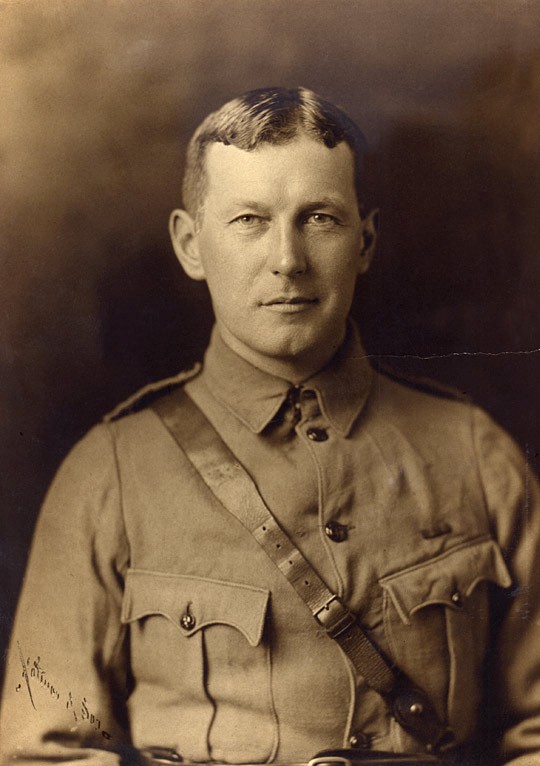
Lt. Colonel Dr. John McCrae

Today veterans sell poppies in memory of all those who have served since Flanders Fields.

How the tradition of selling poppies for veterans began: http://news.bbc.co.uk/2/hi/uk_news/magazine/6133312.stm

Atatürk Memorial – Turkey

November 10

flag_turkey

“November 10 should never be a day of mourning. Let’s not forget that important people are remembered for their ideas, works, sacrifices and endeavors; not through mourning.” — Prime Minister Tayyip Erdogan, November 10, 2009

At precisely 9:05 on the morning of November 10th each year, life comes to a halt in Turkey. In cities across the country, Turks observe a moment of silence to remember the moment Mustafa Kemal Atatürk passed away in 1938 in Istanbul.

Atatürk—literally “Father of the Turks”, a title officially bestowed upon him in 1934—was Turkey’s George Washington, Abraham Lincoln, and FDR all rolled into one. He commanded troops under the Ottoman Empire during World War I. Following the war, when it appeared foreign powers had usurped the Sultanate in all but name, Atatürk led the fight against Western invaders and created a new Turkish state, free of foreign influence. He stabilized the new nation of Turkey as its first President and introduced sweeping social and economic reforms during his 15 year presidency.

Memorials for Atatürk adorn not only Turkey, but even places as far-flung as Australia and New Zealand.

Kemal Atatürk Memorial, Canberra
Kemal Atatürk Memorial, Canberra ©2007 Peter Ellis

“Mankind is a single body and each nation a part of that body. We must never say ‘What does it matter to me if some part of the world is ailing?’ If there is such an illness, we must concern ourselves with it as though we were having that illness.”

— Mustafa Kemal Atatürk

A brief biography of Mustafa Kemal Atatürk and a tour of the Mausoleum

Abet and Aid Punsters Day

November 8

Warning to women who go camping:
Beware of evil intent

If you’re experiencing withdrawal from October holidays, no better way to be Hallowean’ed than by celebrating Abet and Aid Pun Day.

We’ve no clue how this holiday originated or why November 8th is the fortunate day in question. [By coincidence it holds the distinction of falling on the day between Russia’s former Revolution Day—marking the beginning of the Soviet experiment on November 7, 1917—and the fall of the Berlin Wall—marking the end of the experiment on November 9, 1989.] The holiday actually dates all the way back to the 1970’s, though its precise origins are lost to time.

Regardless of how it began, Abet and Aid Punsters Day is a good time to reflect on the holiday headlines of the past year…

Holiday headlines:

Children’s Day:
Kids in trouble for resisting a rest.

Bastille Day:
Celebrants who jumped off Paris bridge declared temporarily in Seine.

Revolution Day:
Army beauty pageant called off. Troops revolting.

Christmas:
Santa’s helpers: deemed Subordinate Clauses.

Holiday predictions:

After eating enough Thanksgiving leftovers, you will quit cold turkey.

If it’s drizzly on December 25th, yule have a merry Christ-mist.

Holiday with the most waves? Flag Day of course!
(Incidentally, Betsy Ross’s first design was decided upon by referendum: the country’s first flag poll!)

Valentine’s Day:
Some girls like roses, all like two lips.

Independence Day:
In July, may the fourth be with you.

Until next year, remember what happened to the holiday calendar thief…
He got twelve months!

[Translator’s note: this page is guaranteed to make no sense in any language but English. (And even then, very little.)]

Russian Unity Day

November 4

flag_russia

Russia’s current incarnation of Unity Day dates all the way back to the early 21st century. Yep, it’s fairly new in that respect, but the reason for the celebration goes back to 1612.

In the early 17th century Russia faced full-scale invasion from its Polish-Lithuanian neighbors to the West. These days it’s hard to think of Russia as threatened by Poland and Lithuania, but in 1569 the latter two formed a mighty union known as the Polish-Lithuanian Commonwealth.

The Polish army got as far east as Moscow, and surprisingly 5000 Polish cavalry defeated a force of 35,000 Russian soldiers outside the city, a devastating loss to the Russian army and public morale.

This was known as the Time of Troubles in Russia, referring to the period when Russia lacked a Tsar. Tsar Feodor Ivanovich died in 1598 without heir. The Romonov dynasty would not emerge as the clear leader of the country and reestablish the Tsardom until 1613.

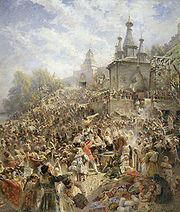
In 1612 a local merchant named Kuzma Minin gathered a ragtag volunteer “national militia” to fight against the Poles. Led by Knyaz Dmitry Pozharsky, the group laid siege to the city and finally ousted the the Poles from Moscow in October (Old Calendar) that year.

The Russians began celebrating the anniversary of the ouster on October 22 (Oct. 22 O.S./Nov. 4 New) in the generations thereafter.

After the formation of the Soviet Union the celebration lost popularity in favor of the anniversary of the 1917 October Revolution.

In 2005 Russia re-established November 4 (October 22 Old School) as Russia’s Unity Day.

Today the main square of the Kremlin is named for Minin and Pozharsky, though Pozharsky gets the short end of the deal, as it’s known colloquially as Minin Square.

"Appeal of Minin", Makovsky, 1896

Battle of Milvian Bridge

October 28

October 28, 2010 marks the 1698th anniversary of the Battle of Milvian Bridge, a battle of two Emperors that changed the course of history.

Maxentius and Constantine were brothers-in-law, both had valid claims to the throne thanks to Diocletian’s division of the Empire in 306, and both their fathers had been previous Emperors. In fact, Maxentius’s father had committed suicide after a failed rebellion against Constantine.

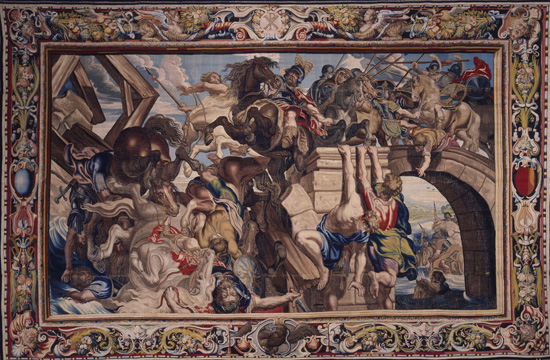
In 312 A.D. Maxentius held Rome; Constantine held the north. Hearing of Maxentius’s claim, Constantine gathered his army and headed south, encountering Maxentius’s troops at the Milvian Bridge just outside Rome. The actual Milvian bridge was not functional, perhaps purposefully destroyed by Maxentius in preparation for the expected attack. But Maxentius made a grave tactical error. He used a makeshift pontoon bridge to transport his troops to the other side of the Tiber, and placed them too close to the riverbank.

Battle of the Milvian Bridge

Constantine, a 40 year-old veteran of campaigns against the Franks and Gauls, forced Maxentius’s army against the river, allowing them only one means of escape: the bridge. During the retreat, the bridge collapsed, and the portion of Maxentius’s troops stranded on the north side were slaughtered or taken prisoner.

Maxentius supposedly drown in the river. His body was found, decapitated, and paraded through Rome the following day.

It is said Constantine had a vision the night before of the sign of the cross, and the words “In this sign, you shall conquer.”

Constantine’s victory over Maxentius was later seen as a victory of the Christian god over the Roman pagan deities. Constantine became the first Christian Emperor, reversed the ruthless persecution of Christians that had dominated the reign of Diocletian, and implemented a policy of religious tolerance throughout the Empire.

Though not an official holiday, many Christian sects observe the anniversary of Milvian Bridge on October 28 in memory of the historic turning point of early Christianity.

Milvian Bridge: Unique Historical Moments in Christian History

Sylvia Plath Day

October 27

…I do not want much of a present, anyway, this year.
After all I am alive only by accident.
I would have killed myself gladly that time any possible way…

from A Birthday Present, Sylvia Plath, 1962

There’s nothing like the poetry of Sylvia Plath to brighten up a birthday celebration. Today, October 27, is Sylvia Plath Day in Northampton, Massachusetts, where Plath attended Smith College. She was born on this day in 1932, and died thirty years later, on February 11, 1963.

Plath lost her father at an early age. She suffered from depression and mental illness, which she described in her semi-autobiographical work, The Bell Jar. The Bell Jar details the mental and emotional journey of college student Esther Greenwood, who interns at a New York fashion magazine. (Think “The Devil Wears Prada” without the catchy soundtrack and more electroshock therapy.)

At age 23, Plath married English poet Ted Hughes. Plath taught at her alma mater Smith before moving to England with Hughes. Her first poetry collection was published in 1960.

Smith suffered a miscarriage, but the couple later had two children, Nicholas and Frieda. Plath and Hughes separated in late 1962.

The following February, a month after the publication of The Bell Jar, Plath placed her head in the oven as her two young children lay sleeping in the next room.

…Sweetly, sweetly I breathe in,
Filling my veins with invisibles, with the million
Probable motes that tick the years off my life…

from A Birthday Present

Nearly two decades after her death, Plath became the first poet to win a posthumous Pulitzer Prize, for “The Collected Poems” published in 1981.

“I think that in today’s Prozac world and with depression often being glamorized as an intrinsic sign of artistic greatness, the real tragic dimensions of the disease get lost in the fervor. Sylvia may have thought her children would be better without her, who knows? From her poems and her journals, her writing indicates that she certainly loved her children and to say that her act was reprehensible belies an understanding of depression, which is not merely a case of the blues. It is a disease that overwhelms even the immeasurable love bonding a parent to a child…

“I assume that Sylvia Plath day is intended to celebrate her life and her talent. As a poet and an academic achiever, she is worthy of admiration. Her suicide is not to be admired but to be lamented.”

–Pamela, sylviaplathforum.com

Cinnamon Bun Day – Sweden

October 4

Not a good holiday for those on a diet.

It’s worth wondering how a people noted for their healthy physique could be gastronomically symbolized by a cinnamon bun. The thing is a black hole of caloric intake.

Cinnamon buns, or kanelbullar, have been a Swedish staple since at least the 1920s. According to Birgit Nilsson Bergström of Sweden’s Home Baking Council:

“We found that the cinnamon bun was the best symbol for Swedish home baking. I don’t think there are any Swedes who don’t like them.”

These angelic looking, yet devilishly tasty swirls of dough and sugar made their way across Northern Europe during the 20th century, and finally got their big Hollywood break in the hit 1977 film Star Wars.

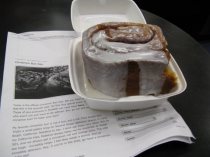
I decided to celebrate today by finding the world’s best cinnamon bun, and came across a National Cinnamon Bun Day blog by baking aficionado Anne of Sweden. The Swedish cinnamon expert has sampled some of the finest buns in the world and proclaims she found the perfect bun, not in Scandinavia, but in a distant land…

“My favorite cinnamon bun is not a bun, but a roll, from Sweet Jill’s. That’s a small pastry shop on Second Street (Belmont Shore) in Long Beach, California. Needless to say, I don’t eat them very often. But on my California trips…The rolls are huge – incredibly large, I bet they weigh a pound. And so incredibly delicious.

So at great expense and hazard to my own person, I undertook the perilous journey to this quaint and mystical seaside town of Belmont Shore.

I was surprised to find the workers at Sweet Jill’s unaware of Cinnamon Bun Day. When I asked for a world-famous cinnamon bun, my server replied, “Walnut or low-fat?” He may have noticed the disappointment in my face, or the tears welling up in my eyes. (I don’t like walnuts and don’t believe in low-fat.) For, moments later, he pulled from the oven a fresh batch of beautiful, nut-free, fat-full cinnamon swirls.

I did not weigh it, but I would agree with Anne, you could feed a family of four for a week.

Okay, truth be told, I grew up near Sweet Jill’s, a classmate of mine even worked there in high school, and I set foot in there maybe once all the time I lived there. It goes to show the old axiom is true: You don’t know the treasure in your own backyard, until you start researching National Cinnamon Bun Day in Sweden.

The bun/roll/swirl was delicious as its legacy warranted, and I can honestly say, I end this holiday, if not wiser, heavier.

http://annesfood.blogspot.com/2008/10/national-cinnamon-bun-day.html (Warning: You may absorb calories just by looking at this website.)

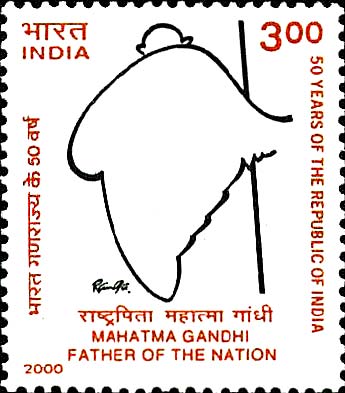
Gandhi Jayanti

October 2

It is not my purpose to attempt a real autobiography. I simply want to tell the story of my numerous experiments with truth, and as my life consists of nothing but those experiments, it is true that the story will take the shape of an autobiography.

Mohandas Karamchand Gandhi, 1940

India, a land overflowing with the holy days of its many religions, has only three official national holidays of its own: Republic Day, Independence Day, and Gandhi Jayanti.

The first two celebrate the power and the freedom of the state and its people. The third celebrates the power and humbleness of a man, the Father of the Nation, Mahatma Gandhi.

Mohandas Karamchand Gandhi was born on this day in 1869 in Porbander, Gujarat. He was influenced by his mother’s Jainism, and its concept of Ahimsa, but he was not particularly religious, or even spiritual as a child.

His father died when he was 15, and at 18 he left India to study law at University College London. It was there, when faced with the different lifestyles of Westerners, he reflected on his own beliefs. As a vegetarian, he joined the Vegetarian Society, and began reading in earnest the scriptures of Hinduism, including the Bhagavad Gita, as well as doctrines on Buddhism, Christianity and Islam.

After returning briefly to India, he took a position at an Indian firm in South Africa. The post was supposed to be for a year, but Gandhi stayed for twelve. First he worked with Indians to oppose a bill denying Indians the right to vote. The bill passed despite his efforts. In 1897, he was nearly lynched by an angry white mob, but Gandhi refused to prosecute his assailants.

Then Gandhi led the Indian resistance against forced registration in South Africa. It was during this time Gandhi solidified his theories of peaceful resistance through civil disobedience, eventually forcing the government to agree to a compromise.

In 1915, at age 45, Gandhi returned to his homeland. He would spend the remaining 30+ years of his life fighting–through nonviolence–for the independence of his country, for the rights of his countrymen, and for peace between his brothers. It was this last cause for which he would give his life.

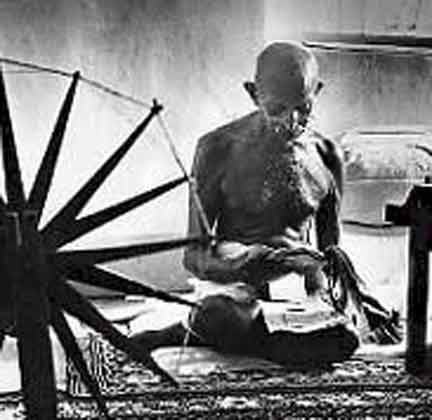
Gandhi’s weapons included strikes, protests, and boycotts of British goods. He encouraged Indians to spin their own cloth and renounce British titles of nobility.

Following a mass protest that ended in violence in 1922, Gandhi served two years in prison for sedition. Afterward, Gandhi worked to bridge the gap between the Indian political divisions that had intensified during his imprisonment.

In the Spring of 1930, Gandhi led the 400 kilometer Salt March, in which thousands of Indians journeyed to the sea to make their own salt, in protest of the Salt Tax. The British arrested tens of thousands of Indians in the wake of the campaign.

Gandhi continued his opposition to British rule throughout World War II. In 1947, India finally won its long awaited independence. To avoid an impending civil war between India’s Muslims and Hindus, Gandhi reluctantly agreed to support the partition of the country into two republics, India and Pakistan.

Just as Gandhi feared, the partitioning was accompanied by mass bloodshed.

On January 30, 1948, Gandhi was taking his nightly walk through the garden of the Birla Bhavan house in New Dehli when he was shot and killed by a radical Hindu, angry at Gandhi’s support of payment to country of Pakistan.

At his request, his ashes were spread throughout India.

“It is a superstition and an ungodly thing to believe that an act of a majority binds a minority. Many examples can be given in which acts of majorities will be found to have been wrong, and those of minorities to have been right. All reforms owe their origin to the initiation of minorities in opposition to majorities…

Democracy cannot be evolved by forcible methods. The spirit of democracy cannot be imposed from without. It has to come from within…

Liberty and democracy become unholy when their hands dyed red with innocent blood.”

Gandhi on Democracy

Gandhi was instrumental in civil rights movements on two continents, Asia and Africa. His teachings inspired leaders of the civil rights movement on a third continent, North America, after Gandhi’s death.

For these reasons and more, in 2007 the United Nations declared October 2 “International Day of Non-Violence.” The Dalai Lama once said of Gandhi:

His life has inspired me ever since I was a small boy. Ahimsa or nonviolence the powerful idea that Mahatma Gandhi made familiar throughout the world. Nonviolence does not mean the absence of violence. It is something more positive, more meaningful than that, for it depends on wholly on the power of truth.

See also: School Day of Peace and Non-Violence