Peace Memorial Day – Taiwan

February 28

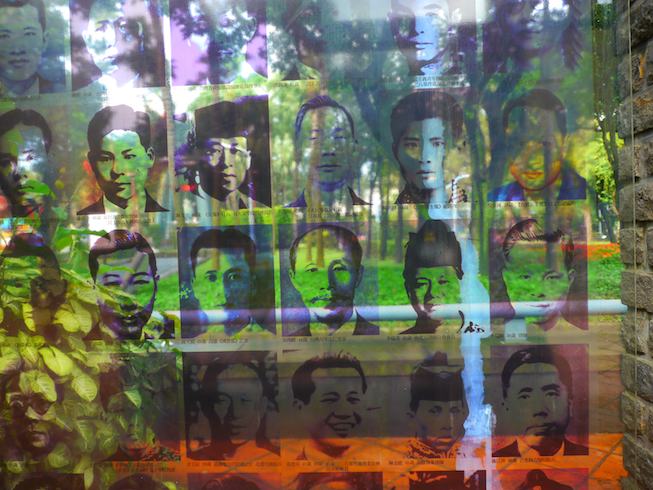
228 Peace Memorial Park – Taipei

It started with a woman selling cigarettes.

February 27, 1947: Lin Jian-Mai was peddling black market cigarettes at a portable stand on Taiping Road in Taipei, Taiwan (then Formosa), when she was caught and arrested by anti-smuggling police from the “Kuomintang” (Chiang Kai-Shek’s Nationalist Chinese government). During the arrest she yelled and struggled with the agents, who had taken her wares and her cash. As a gathering crowd watched the commotion, an overzealous agent pistol-whipped the woman, hard.

The angry crowd surrounded the officers, who then fired warning shots to make an escape for themselves. One of the shots hit and killed a pedestrian.

Word of the incident spread. People were already angry at the corruption of the Chinese government, and the living conditions that had necessitated the black market.

A mob gathered outside the police station, demanding the guilty officer be brought out. When their demands were refused by the captain, the crowd grew angrier and set fire to a police vehicle.

The next day, February 28, amid anti-government demonstrations, the Governor’s security force fired upon the demonstrators with machine guns. Formosans rebelled, attacked mainlanders, and took over part of the city’s infrastructure. On March 7 Chiang Kai-Shek’s army arrived from mainland China for back-up. That’s when the slaughter really began.
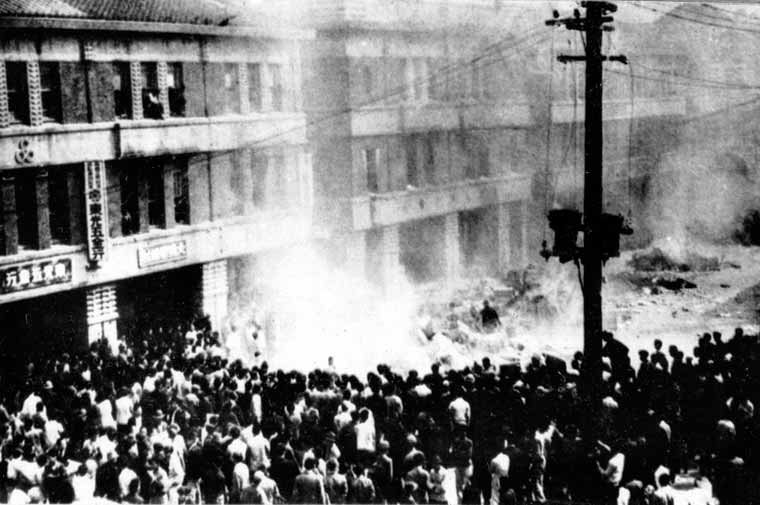
The beating of the cigarette vendor may have triggered the 228 Incident, but tensions leading to something like this had been brewing for two years, ever since Chiang Kai-Shek’s government won back Taiwan in 1945 after a half-century of Japanese control.

Corruption and nepotism grew rampant. Taiwan was treated like a colony of the mainland. The Governor Chen Yi controlled the island’s economy and forced Formosans to pay unimaginable amounts for common  goods. The Taiwan Company, for example, was run by Governor Chen’s nephew. The company bought coal at 200 yen a ton and sold it to the people for 4,000.

“With his Chinese aides and ‘monopoly police’ [Chen] took over and expanded the Japanese system of government industrial and trade monopoly (sugar, camphor, tea, paper, chemicals, oil refining, cement). He confiscated some 500 Jap-owned factories and mines, tens of thousands of houses.”

Snow Red and Moon Angel, Time Magazine

Chen ran everything from “the hotel to the night-soil business.” And that included the cigarette factory.

It was in this crucible that Chen’s monopoly police beat a woman vending non-sanctioned tobacco—cigarettes that weren’t manufactured by Chen’s government-run companies. It was the spark that set the island aflame.

When Chiang Kai-Shek’s troops arrived from mainland China, they engaged in:

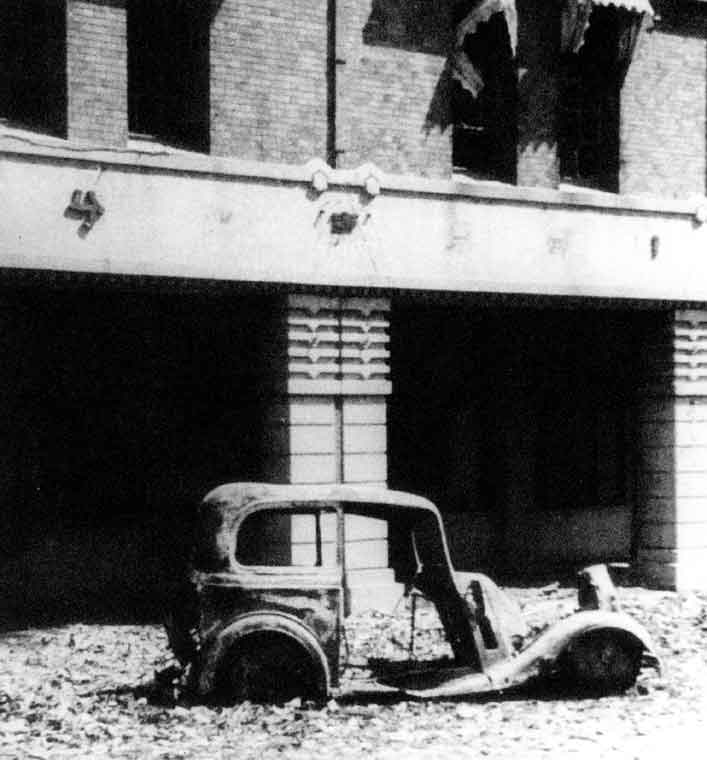
“‘three days of indiscriminate killing and looting. For a time everyone seen on the streets was shot at, homes were broken into and occupants killed. In the poorer sections the streets were said to have been littered with dead…There were instances of beheadings and mutilation of bodies, and women were raped,’ said one American witness.”
—   New York Times

Witnesses estimated as many as 10,000 people were killed. But there are no official tallies. The government banned Formosans from even mentioning what came to be known as the 228 Incident.

The riots and massacres would trigger the era of “White Terror” in Taiwan. The violence was further fueled by the Chinese Civil War between Mao Zedong’s Communist army and Chiang Kai-Shek’s Nationalist forces. The Communists eventually won everything but the tiny island of Taiwan, which calls itself, the Republic of China.

Even so, martial law in Taiwan didn’t end until 1987.

…I am reminded of the brief note I put down on my diary after seeing the movie, The Last Emperor. The note simply says, “A good and interesting movie, but a wrong title.” By a wrong title I meant that Pu-yi was not the last Emperor of China; there have been many since…One would include among them, Yuan Si-kai, Chiang Kai-shek, Mao Zedong and Deng Xiaoping. Each of the them certainly behaved as emperor and wanted others to so treat him. The tradition of authoritarianism of the ruler is still deeply engrained in the minds of both the rulers and the ruled in Chinese culture. A forceful example can be found as recently as June 4, 1989 at Tienanmen Square. For the rulers, only glory and power count. Human rights, freedom of equality or respect for the lives of people have to surrender to the might of the rulers.”

—Tsung-yi Lin, from the Preface to Formosa Betrayed, by George Kerr

Secrets of Dating: Julian vs Gregorian calendars

There is often a difference of 11 to 13 days between the date an event occurred in history and the date it is celebrated on the calendar today. This is due to a discrepancy that occurred in the shift from the Julian to the Gregorian Calendar.

The Julian Calendar, named for Julius Caesar, called for an extra day (Leap Day) to be inserted once every four years, in order to keep consistent with the 365 & 1/4 day solar year.

It was a vast improvement over the previous Roman calendar, which drifted up to 100 days from the actual solar year. However even the Julian calendar wasn’t entirely accurate. The solar year is slightly less than 365 & 1/4 days. Not enough to notice at first. It took almost a century for the Julian Calendar to drift just one day from the solar year.

But by the 1500s people were starting to notice that the calendar was off by 11 days from the summer and winter solstice.

Astronomers calculated that to accurately mirror the solar year, one Leap Day had to be removed each century. In other words, each century should have 24 Leap Years rather than 25. The new calendar was called the Gregorian calendar, because it was installed under Pope Gregory’s Papacy in 1582 AD. [This is why years ending in ’00 no longer have Leap Days. (Except every 400 years which is why 2000 was a Leap Year. {Just don’t worry about it. You have better things to do with your brain power.}

Anyway to get rid of the 11 excess days that had accumulated over the previous 15 centuries Pope Gregory did just that. He tossed 11 days from the 1582 calendar. This means people went to bed on October 4th, 1582 and woke up on October 15th. (And you thought Daily Savings was a drag!)

It took Great Britain and its colonies another 200  years to adopt the Gregorian system and get rid of the 11 days. Russia didn’t adopt the Gregorian calendar until 1918. Which is why the Russian “October Revolution” of 1917 took place on November 7 according to Western calendars.

It’s been suggested that the Austrians were annihilated at Napoleon’s Battle of Austerlitz because of the Julian vs. Gregorian calendar debacle.  Reinforcements from Russia thought they had eleven extra days to make their rendezvouz with the Austrians.

So if you see holidays celebrated 11 to 13 days after the rest of the world, it’s because the Eastern Orthodox Churches celebrates according to their pre-Gregorian dates. (Christmas, Epiphany, New Year…)

And remember, if you ever miss a birthday by several days, just tell ’em you’re on the Julian calendar. It’s old school.

Independence Day – Western Sahara

February 27

Independence does not mean PeaceA common theme in decolonization. When Western powers depart from their former colonies, old claims over the newly-independent territory resurface, and neighboring powers assert that the new nation was a territory prior to its European annexation.

Morocco and Western Sahara are neighbors but their history is like night and day.

Morocco was an independent nation back when America was still a colony of Britain. Morocco was one of the first nations to recognize the fledgling United States in 1777, and the Moroccan-American Friendship Treaty remains the U.S.’s longest unbroken treaty.

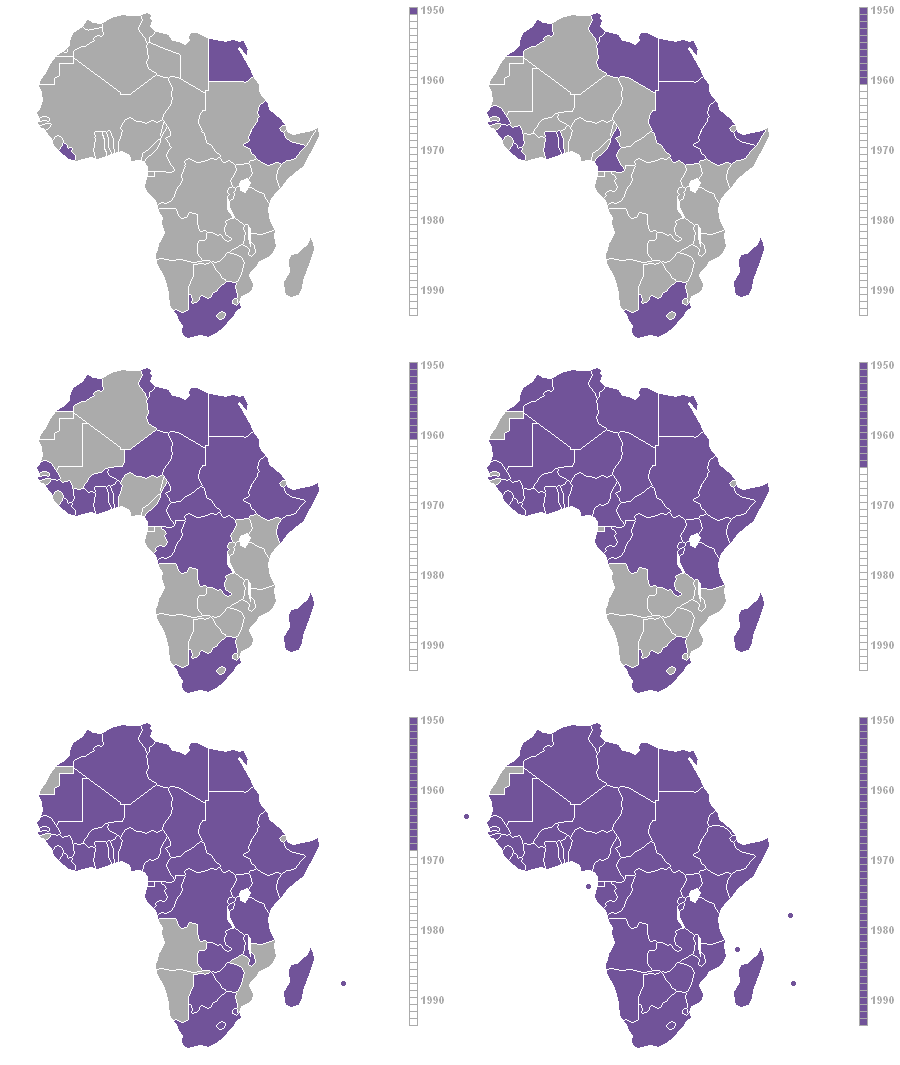
Morocco’s colonial days were relatively brief. Morocco’s status as a French protectorate was finalized in 1905, but it became one of the first African nations to gain independence in 1956.

African Nations by Independence, 1950-1993

Western Sahara is another matter. Its borders are disputed even today. The region has been claimed by Morocco, Mauritania, Spain, and France, and wasn’t granted ‘independence’ from Spain until 1975. It wasn’t really independence though. Morocco was granted the top 2/3’s of Western Sahara. Mauritania received the remaining third.  Spain’s formal mandate expired on February 26, 1976.

The following day a political faction known as Polisario announced themselves as the true government-in-exile of the country, occupied by Morocco.

The fighting rages on to this day. Donald MacDonald writes, “Since my visit to the camps in June 1993, the political stalemate has dragged on, “disappearances” of Saharawi citizens have continued, and the refugee camps have been devastated by flooding.”

http://www.btinternet.com/~donald.macdonald/poli.htm

The Moroccan press claims, “The Shrawis, who arrived in three groups to El Karkrat, fled the Tindouf Camps (southwestern Algeria) where thousands of Moroccan-Sahara natives are held against their will by the Algerian-backed separatist movement Polisario.”

Currently “158,800 Sahrawi refugees live in camps in the Algerian desert where malnutrition is widespread.”

http://africa.reuters.com/wire/news/usnAHM645411.html

Journalists covering the independence movement in Western Sahara have been assaulted, detained or expelled. One journalist who referred to the Sahrawis (Western Saharans) living in Algeria as “refugees” (rather than as “captives” of the Polisario) was taken to court, fined, and barred from journalism for 10 years.

“Media criticism of the authorities is often quite blunt, but is nevertheless circumscribed by a press law that provides prison terms for libel and for expression critical of “Islam, the institution of the monarchy, or the territorial integrity” of Morocco (a phrase understood to mean Morocco’s claim to the Western Sahara.”

http://www.hrw.org/english/docs/2006/01/18/morocc12228.htm

Liberation Day – Kuwait

February 26

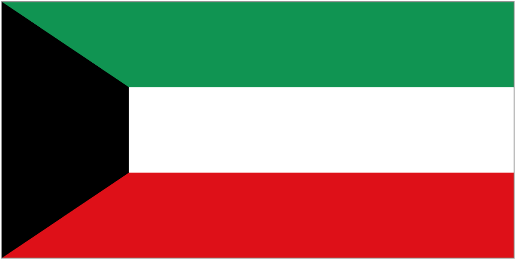
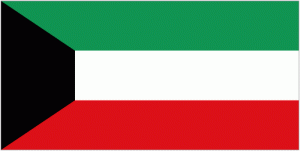
Kuwaiti Flag
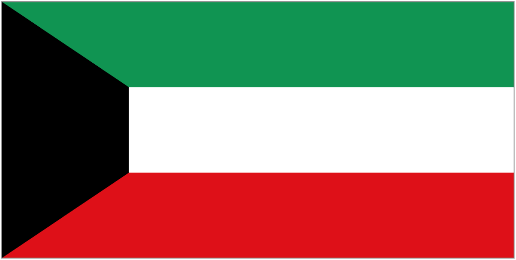
Kuwaiti Flag

“Liberation Day (February 26) celebrates the liberation of Kuwait by a multi-national force from seven months of traumatic Iraqi occupation on February 26, 1991. Each year the day is marked with public gatherings and get-togethers. However, the day is also tinged with sadness as Kuwait remembers and honours the martyrs who lost their lives fighting Iraqi oppression and the 605 Prisoners of War still held captive in Iraqi jails.”http://ikuwait.blogspot.com/2007/02/kuwait-deserves.html

This week Kuwait celebrates not one but two national holidays: National Day and Independence Day.

National Day celebrates independence of Kuwait from Britain in 1961 and the reign of Sheikh Abdullah Al Salim Al Sabah, the Emir who guided Kuwait during this transformation and who earned the moniker “Father of the Constitution.”

On this day teens and adolescents celebrate by spraying untold volumes of silly string on passing motorists on the Gulf Road. What the connection is, I don’t know, but as one motorist writes:

“…despite our best efforts to avoid gulf road, there is no getting away [from] these foamy sprays. They will run after you. Chase you down the road. They will even open your door, because having white foams sprayed on your car interior is even funnier than the outside.”
http://anafilibini.blogspot.com/2007/02/kuwait-national-day.html

The area that is now Kuwait was largely uninhabited up until the 18th century although archeologists have found indications of settlements as far back as 4500 BC.
The same family of Sheiks have ruled Kuwait since the 1750s, when Kuwait’s location on the Persian Gulf made it a thriving port. The sovereignty of Kuwait gets shady in the late 19th century due to conflicting claims by the Ottoman and British Empires and by Kuwait itself.


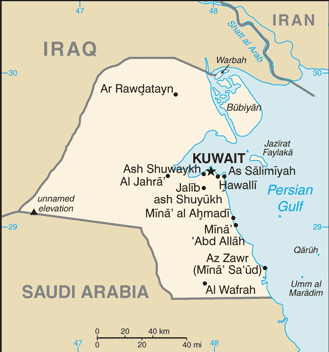
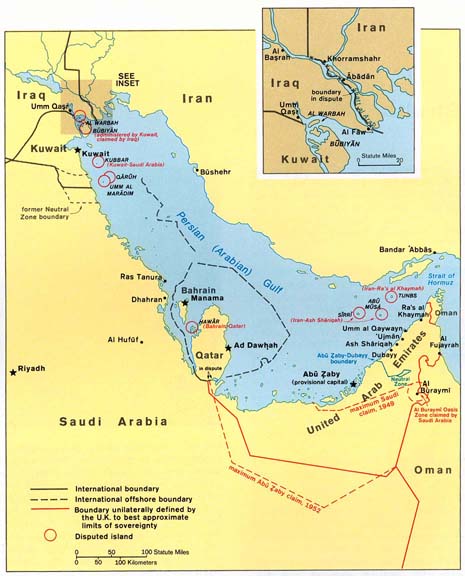
(Kuwait and the Persian Gulf)

Kuwait enjoyed the ambiguous status of a “caza,” an autonomous city by the Ottoman Empire, but in 1899 it began a fungible relationship with Britain, sacrificing some autonomy in return for British naval protection. Britain wanted to secure access through the Gulf—a major transit point between England and India—and block Germany and its Ottoman allies.

In the 1930s the discovery of oil changed the fate of the country overnight. At that time pearl-diving was a leading occupation for Kuwaitis; two decades later the small nation would be one of the largest oil exporters in the world.

Kuwait gained independence from Britain on June 19, 1961, and the following year Kuwait became the first country in the Gulf region to adopt a Constitution and parliament.

In 1974 Kuwait nationalized the Kuwait Oil Company, created by British Petroleum and Gulf Oil in 1934.

Thirty years after independence Kuwait suffered another threat to its sovereignty. Iraq invaded its neighbor to the south after the country refused to reduce their oil exports.<

Iraq had tried to lay claim to Kuwait immediately after it declared its independence in 1961, but annexation attempts were blocked by the UK. According to British diplomat Sir Anthony Parsons, “In the Iraqi subconscious, Kuwait is part of Basra province, and the bloody British took it away from them.”

Kuwaitis insist they were never a possession of the Ottoman Empire.

Following 7 months of occupation a U.S.-led coalition invaded Iraqi-occupied Kuwait. After only a few days of fighting Saddam Hussein pulled his troops from the country on February 26, 1991. Since then February 26 has been celebrated as a second Independence Day or Liberation Day.

Other facts about Kuwait:

National elections are held every four years for the 50-member parliament. The Prime Minster and President are appointed by the Emir.

The population skyrocketed from 200,000 to 3 million over the past 50 years. An estimated 2 million are non-nationals. Residents must have lived in the country for 20 years to vote.  Women weren’t granted suffrage until 2005.

Despite being the first democracy in the region, political parties are not allowed. A defied the ban in 2005, creating their own party, and were arrested for plotting to overthrow the government.

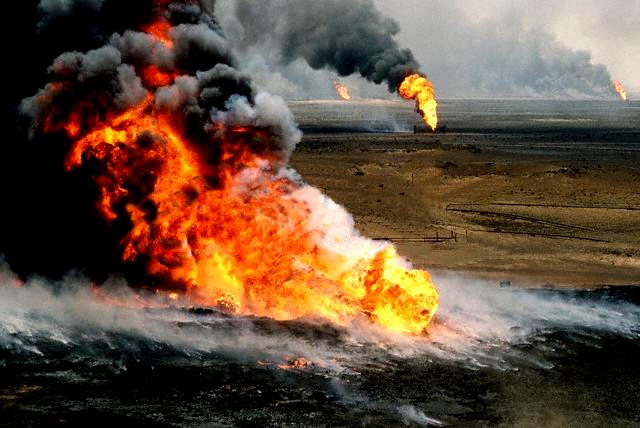
Upon leaving Kuwait in 1991 Hussein’s army set Kuwait’s oil reserves ablaze. Kuwait underwent massive infrastructure redevelopment to recover from one of the worst environmental disasters in the 20th century.

The country is predominantly Sunni Muslim.

Links:

Kuwait Oil Company

http://www.worldstatesmen.org/Kuwait.htm

http://kuwaitiesonline.com/Gulf_war/camel-fire.jpg

An expat in Kuwait on the eve of National Day

Turkish diplomat in Kuwait

http://kuwaitiesonline.com/old-kuwait.htm

Kuwait – National Day

February 25

This week Kuwait celebrates two national holidays: Independence Day and Liberation Day.

Though Kuwait officially became independent on June 19, 1961, National Day is celebrated in February in honor of Sheikh Abdullah Al Salim Al Sabah (1895-1965) who came to power in February 1950. [And possibly because it’s too hot to go outdoors in June.] The Emir guided Kuwait during its transformation to modern statehood and earned the moniker “Father of the Constitution.”

On this day teens and adolescents celebrate by spraying untold volumes of silly string on passing motorists on the Gulf Road. What the connection is, no one knows, but as one motorist writes:

“…despite our best efforts to avoid gulf road, there is no getting away w/ these foamy sprays. They will run after you. Chase you down the road. They will even open your door, because having white foams sprayed on your car interior is even funnier than the outside.”

http://anafilibini.blogspot.com

Although archeologists have found indications of settlements as far back as 4500 BC, the area that is now Kuwait was largely uninhabited up until the 18th century.

The same family of Sheiks has ruled Kuwait since the 1750s, when Kuwait’s location on the Persian Gulf made it a thriving port.

The sovereignty of Kuwait gets shady in the late 19th century due to conflicting claims by the Ottoman and British Empires and by Kuwait itself.

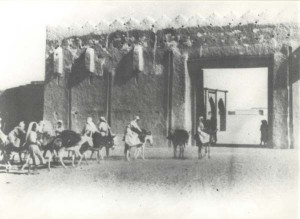
Old Kuwaiti Gate

Kuwait enjoyed the ambiguous status of a caza, an autonomous city by the Ottoman Empire, but in 1899 it began a fungible relationship with Britain, sacrificing some autonomy in return for British naval protection. Britain wanted to secure access through the Gulf—a major transit point between England and India—and block Germany and its Ottoman allies.

In the 1930s the discovery of oil changed the fate of the country overnight. At that time pearl-diving was a leading occupation for Kuwaitis; two decades later the small nation would be one of the world’s leading oil exporters.

Kuwait gained independence from Britain on June 19, 1961, and the following year Kuwait became the first country in the Gulf region to adopt a Constitution and parliament.

In 1974 Kuwait nationalized the Kuwait Oil Company, created by British Petroleum and Gulf Oil in 1934.

Other facts about Kuwait:

The population skyrocketed from 200,000 to 3 million over the past 50 years. An estimated 2 million are non-nationals. Residents must have lived in the country for 20 years to vote. And women weren’t granted suffrage until 2005.

Despite being the first democracy in the region, political parties are not allowed. A group of activists defied the ban in 2005, creating their own party, and were arrested for plotting to overthrow the government.

Kuwaiti kids in the days before silly foam

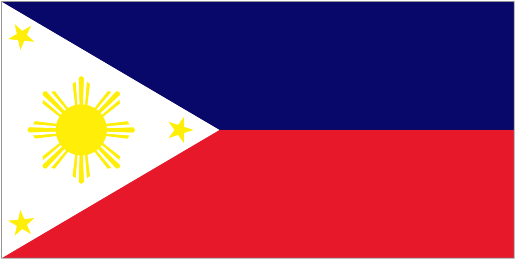
People Power Day – Philippines

February 22-25

“People Power” in the Philippines refers to the overthrow of dictator Ferdinand Marcos in 1986.

Famous in the West for his wife’s taste in shoewear, his administration was also known for embezzlement, corruption, despotism, fraud and rigging elections.

In 1972 President Marcos declared martial law in response to a bombing in Manila that killed killed nine civilians. Marcos had his political opponent Benigno Aquino arrested, and though no evidence connected him to the crime, a military tribunal found him guilty and sentenced him to death by firing squad. The sentence was later mitigated, but he remained in prison for seven years. In jail Aquino suffered a heart attack and was granted leave to receive surgery in the United States.

Aquino and his wife Corazon did not return to the Philippines for 3 years. In that time both were active speakers against the Marcos government, which had amended the Constitution in the 1970s and 80s to extend martial law, increase the scope of Marcos’s power and the length of his term.

Benigno Aquino returned to Manila on August 21, 1983. He was assassinated “by a lone gunman” according to the government, the moment he stepped off the airplane.

He was reportedly called “The Greatest President we never had,” by Liberal Party leader Jovito Salonga.

There was never proved any direct evidence linking Marcos to the assassination, but it sparked widespread discontent with the Marcos administration. In November 1985 Marcos announced Presidential elections to take place in February. Benigno Aquino’s widow Corazon ran against Marcos.

The Marcos government claimed to have won the election, but accusations of extreme voter fraud and massive public demonstrations against his rule combined with military opposition and U.S. pressure forced Marcos to resign on February 25, 1986.

Today People Power Day is not one day but four days, from February 22—marking the beginning of the demonstrations—to February 25, when Marcos stepped down.

Marcos loyalists attempted to bring down the Corazon Aquino administration, but were unsuccessful. President Aquino was the first woman and the first Asian to deliver a keynote address before the United States Congress.

Puerto Galera Accommodations

Mexican Flag Day

February 24

Flag of Mexico!
Legacy of our heroes,
Symbol of the unity of our parents and of our siblings,
We promise you to be always faithful
To the principles of liberty and justice
That make our Homeland
The independent, humane and generous nation
To which we dedicate our existence.

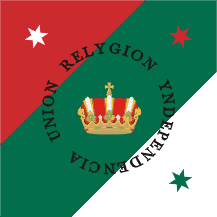
Flag Day is held on the anniversary of the creation of the Plan de Iguala in 1821, named for the city Iguala in which it was signed. The Plan did not end the War of Independence but paved the way for victory. It set forth three  ‘Guarantees’ or agreements of the future Constitutional Mexican government:

  1. Establishment of Roman Catholicism as the national religion<
  2. Creation of an independent, sovereign nation of Mexico
  3. Equality for social and ethnic groups

The call “Religión, Independencia y Unión” became the motto of the Mexican people, and the Plan led to the creation of national army, (the Army of the Three Guarantees) made up of the forces of Augustin de Iturbide and Vicente Guerrero.

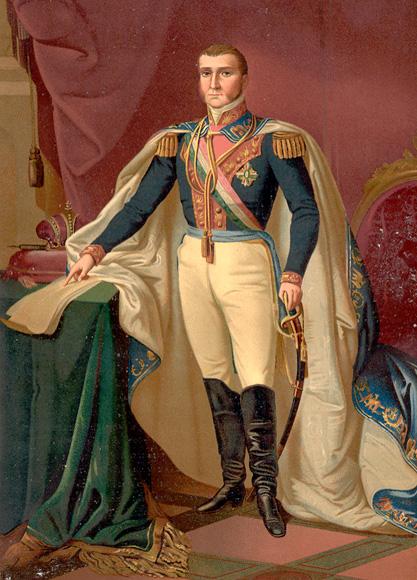
Iturbide was one of the most colorful and important figures in Mexican history.

Augustin de Iturbide Augustin de Iturbide

(Augustin de Iturbide)

Born in Mexico, the son of a Spanish father and Mexican mother, he joined the Spanish army at age 15. By 27, when the war broke out, he was a lieutenant. By 33 he was the commander of Spanish forces of Northern Mexico. Then, in 1820 Iturbide did a remarkable thing: he did a complete about face and joined the cause of the Mexicans, taking most of his army with him.

Upon signing of the Plan de Iguala, Iturbide’s forces joined with those of Vicente Guerrero, future President of Mexico. The Treaty of Cordoba, signed by the Spanish Viceroy confirmed the establishment of an independent Mexico in late 1821.

In 1822 Iturbide was crowned Augustin I, Emperor of Mexico. Opposition to his military style government steadily grew. Forces under General Santa Anna forced Iturbide to abdicate and leave the country, with the understanding he would be executed upon setting foot in Mexico again. Mexico was declared a republic in 1823.

Iturbide traveled to Italy and London, but returned to Mexico in 1824, despite the threat of execution. Authorities made good on their promise. Iturbide was arrested in Tamaulipas and shot by law enforcement authorities in the nearby town of Padilla. He was 42.

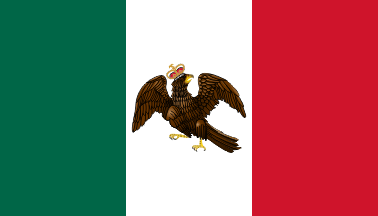
The first Mexican national flag was adopted by the Decree of November 2, 1821 and confirmed two months later on January 7, 1822.

Its colors stand for:

  • Green: hope and victory
  • White: purity of ideals
  • Red: blood of national heroes

The symbol of the eagle sitting atop a cactus devouring a serpent dates back to a timeless legend. The ancestors of the Aztecs wandered about Mexico for 200 years in search of a homeland. They had been told by the god Quetalcoatl that the site of their future home would be marked by an eagle perched on a cactus with a snake in its mouth. When they encountered such a scene they claimed the location as their homeland.

The site marks what is now Mexico City, one of the largest cities in the world.

Defenders of the Fatherland Day

February 23

Today Russia celebrates Defenders of the Fatherland Day.

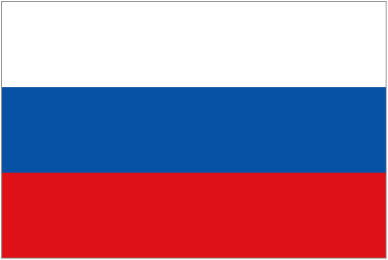
Russian Federation Flag

On February 23 (Julian Calendar) 1917, Russian women in Petrograd celebrated the 7th International Women’s Day. In response to food shortages caused by the war with Germany, the women of Russia’s capital city “poured onto the streets,” demanding “bread for our children” and “the return of our husbands from the trenches.”
(www.marxists.org/archive/kollonta/1920/womens-day.htm)

The protests gained momentum the following days when workers’ strikes forced the closure of hundreds of factories. On February 26 the Tsar, who was away conducting the war, ordered his general to disperse the demonstrators, now numbering in the hundreds of thousands, saying such disturbances were “impermissible at a time when the fatherland is carrying on a difficult war with Germany.”
(Tony Cliff Lenin: All Power to the Soviets)

Russian troops fired on the crowds, killing dozens of protesters. But the real problem for the Tsar was that many of the Tsar’s troops refused to fire on crowds and sided with the strikers. The clashes of February 24-27 claimed about 1500 lives on both sides. In the end the Tsar lost the support of his own troops, was forced to abdicate his throne.

But that’s not why the Russians celebrate on February 23.

Nope, it’s because of what happened on February 23 the following year.

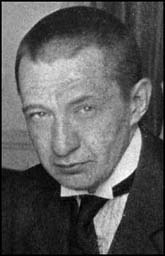
Nicholas II’s abdication gave way to a Russian Provisional Government, led by Social Revolutionary Alexander Kerensky. Under Kerensky the government declared Russia a republic, pronounced freedom of speech, made steps to encourage democracy, and released thousands of political prisoners.

But Kerensky, perhaps because he was the former Defense Minister, continued to keep the Russians engaged in the disastrous war against Germany. Bad move. Like the Tsar before him, the war would be his downfall.

Kerensky
Alexander Kerensky

How Russia got its Soviet:

The Russian word soviet meant “council.” Soviets were workers’ councils with little power, set up in the wake of 1905’s Bloody Sunday.

The Bolsheviks were an extremist minority party and as such could not hold much sway in a democratic assembly. Instead Lenin and the Bolsheviks bypassed the Provisional Government entirely and consolidated their power in these urban workers’ councils known as soviets, the most prominent one being the soviet in Petrogad.

In 1917 their platform called for the seizure of land, property and industry by the peasantry and workers, for the transfer of power to the local workers’ councils, and for the immediate end of war with Germany.

In April few took the Bolsheviks seriously.

By November they ruled the country.

What happened in 7 months?

Under Kerensky’s Provisional Government food and supply shortages worsened. Mass numbers of Russian soldiers continued to defect. And the drain of resources for the war effort strangled the economy. Even though most people were against the war, political parties would not withdraw. Lenin and the Bolsheviks’ opposition to the war bought them enough support to pull off the armed uprising later called the “October Revolution,” which occurred in—you guessed it—November. (Gregorian)

After the uprising the Bolsheviks put forth a resolution before the Provisional Government to transfer political power to the soviets.When the Provisional Government voted it down (What a surprise) the Bolsheviks walked out. The next day the Bolsheviks, with the support of 5,000 members of the Russian Navy in Petrograd, issued a decree dissolving the Provisional Government.

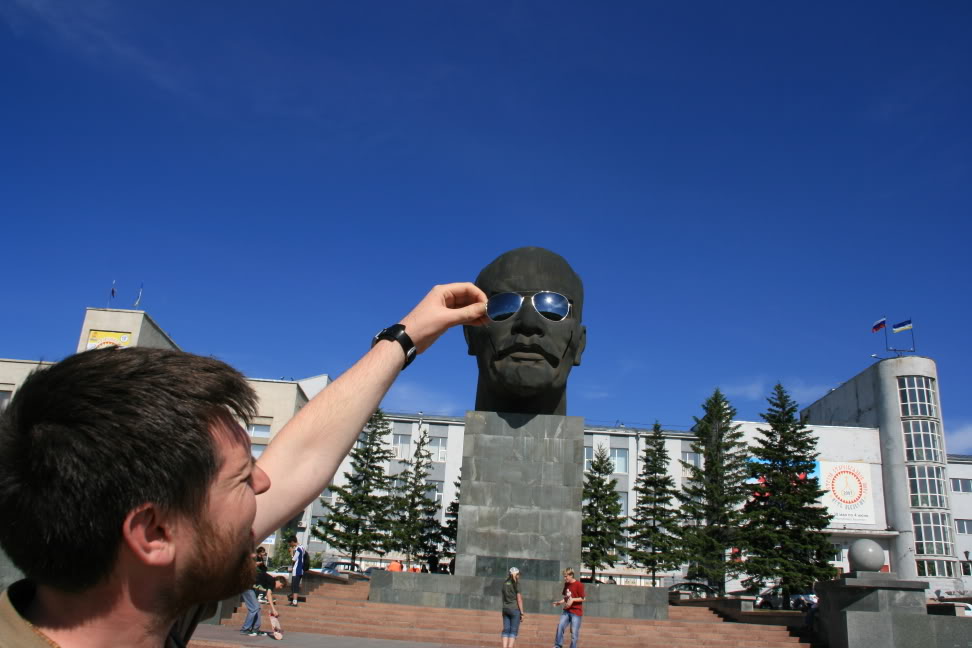
Lenin with Sunglasses
Lenin: Future's so bright, gotta wear shades

Lenin believed a standing army was a bourgeois institution and would not be necessary in a communist society; he was proved wrong. In order to ensure beneficial terms in an armistice with Germany, and facing a massive civil war, the Bolsheviks called for the establishment of a standing Workers’ and Peasants’ “Red” Army to replace the disintegrated Imperial Army.

The decree was issued on January 28. Ten days later on February 23* assemblies were held across the country to recruit soldiers for the new army. The “mass meetings brought 60,000 men into the Red Army in Petrograd, 20,000 in Moscow and thousands more in other places around the country.”

*(On February 1, 1918 Russia switched from the old Julian Calendar, abandoned by the West in the 16th through 18th centuries, to the Gregorian Calendar. As a result, the date February 1, 1918 in Russia was followed by February 14, 1918.)

February 23 was declared Red Army Day. It was changed to Soviet Army Day by Stalin. And to Defenders of the Fatherland Day following the collapse of the Soviet Union.

Recently, according to dincarslan.blogspot.com

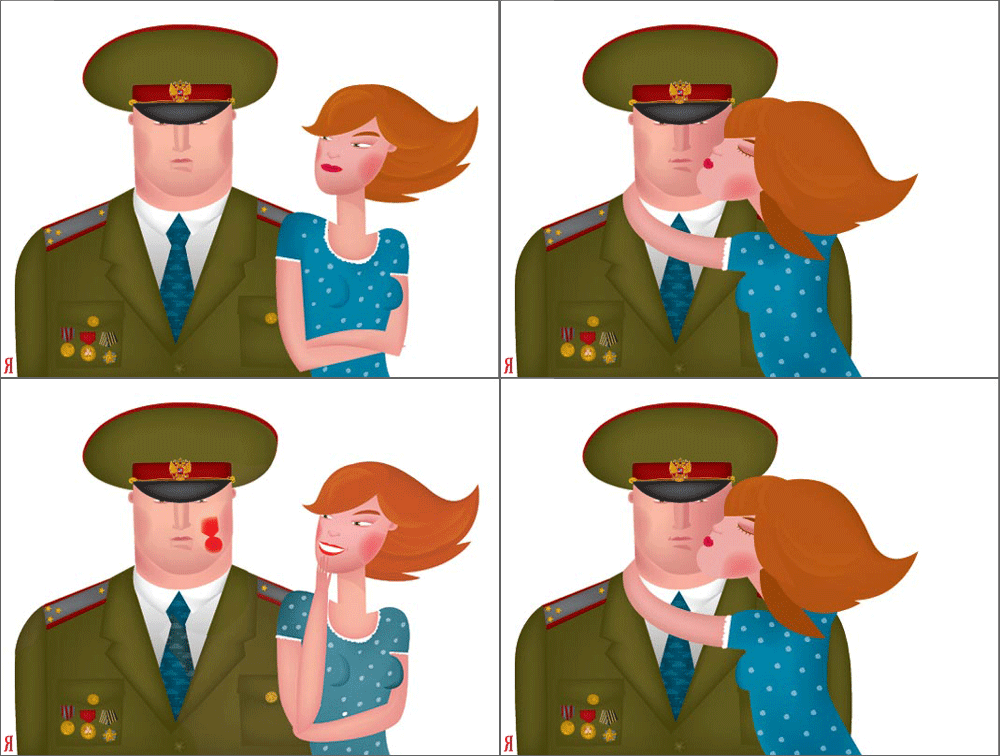
“the long reaching poisonous arms of capitalism have found a new virgin field to exploit and made this day a “Men’s Day” where the women gives (or should give) gifts to their fathers, brothers, boyfriends and male colleagues.”

So, ironically, the date on which the Russians once celebrated women, February 23, is now a holiday extolling men.

Defenders of the Motherland Day

Lyubov Tsarevskaya has a more traditional, patriotic view of the holiday:

“This is the ultimate reflection of one’s devotion and patriotism. As Jesus Christ said, Greater love hath no man than this, that a man lay down his life for his friends. (John 15:13) The history of the army in Imperial, Soviet, and now, Russian times is replete in stirring examples of self-sacrifice and heroism.”

The Chechens regard February 23 in a remarkably different manner:

On Army Day Chechens Quietly Remember Mass Deportation

It Has Been 63 Years Since the Deporation of the Chechens and Ingush

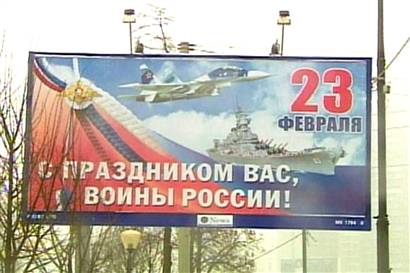
Army Day blunder
A 2006 poster proclaiming “Congrats to the Russian Soldiers” mistakingly shows the USS Missouri.