George Washington’s Birthday?

Actual birthday: February 22?
Observed: 3rd Monday in February

George Washington’s birthday is observed on the third Monday in February. Since the third Monday falls between Lincoln’s and Washington’s birthdays, many people celebrate it as Presidents’ Day. But the federal holiday’s name was never officially changed. It is still ‘Washington’s Birthday Observed’ even if it is commonly referred to as ‘Presidents Day’ by state legislatures and mattress stores alike.

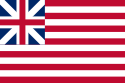
(Flags George served)
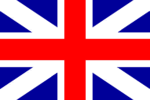
Union Jack 1700s 1776 US flag US Flag 1777
(1700s Union Jack; early 1776 colonial flag; 1777 U.S. flag)

Thing is, George was actually born on February 11th, not February 22nd.

In 1732, British colonies still used a form of the Julian Calendar. Under the British system the calendar year ended on March 24 and the new one began on March 25. Thus March 24, 1732 would be followed by March 25, 1733.* (A modern equivalent would be if the U.S. calendar followed the tax year—if April 15 marked the end of 2008 and April 16 marked the start of 2009.)

Why anyone got rid of this ingenious system God only knows.

Anyway, Britain’s decree to adopt the Gregorian calendar on March 25, 1752, changed two things:

First, 11 days had to be axed from the calendar.** I don’t know who had a grudge against September, but that month was chosen to do the deed. Thus, the date “September 2, 1752” was followed by September 14, 1752.

Did this mean if your birthday fell on September 3rd you didn’t get a year older? No, most folks just reassigned their birthdays or other days of note to the corresponding Gregorian date. So September 3rd became September 14.
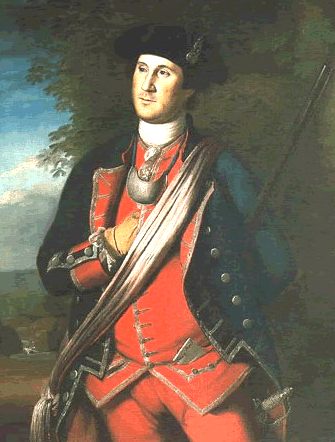
George Washington, 1772, by C. Wilson Peale

From the time of the switch onward, Washington chose to observe his birthday on February 22 rather than February 11. In fact, February 22 was celebrated as Washington’s birthday by Americans even when he was alive.

Also, 1752 became the shortest year ever in the British calendar. At just 9 months, it began on March 25 and ended December 31. Thus Washington’s 20th birthday on February 22, 1753 was exactly 365 days after his 19th birthday on February 11, 1751.

If you’re not confused yet, go here.

=================

*[For millennia the beginning of Spring (what we’d consider February or March in the Northern Hemisphere) was considered the beginning of the year. The Roman calendar we use today was an exception rather than the norm. And in fact, even Romans considered March the first month of the new year up until 153 BC. It took centuries for that change to take hold in rural agrarian society.]

**[Astronomers under Julius Caesar suggested that inserting an extra day (leap day) in the calendar once every four years would make up for the fact that the solar year was actually 365.25 days, not 365. That calculation was slightly off, but only by less than a day per century. After fifteen centuries the disparity was too great to ignore. So Pope Gregory instituted a new calendar, removing three leap days every four centuries. But to make up for lost time—or gained time depending on how you look at it—countries adopting the Gregorian calendar had to skip 11 to 13 days on their calendars.]

www.crowl.org/Lawrence/time/britgreg.html
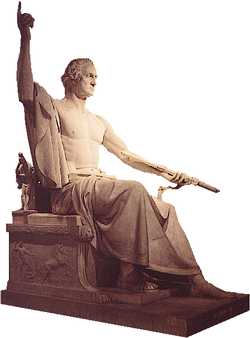
www.mountvernon.org/education/biography/born.html

George Washington: Unanimous my Animous

George Washington: unanimous my animous

Observed: Third Monday in February
Actual Birthday: February 22

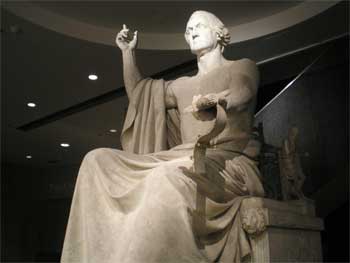
washington_statute-01

Was George Washington elected unanimously?

The tallies of the first presidential election in 1789, submitted by electors of 10 of the 13 United States of America, were as follows:

  • George Washington: 69 votes
  • John Adams: 34 votes
  • John Jay: 9 votes
  • Robert Harrison: 6 votes
  • John Rutledge: 6 votes
  • John Hancock:4 votes<
  • George Clinton: 3 votes
  • Samuel Huntington: 2 votes
  • John Milton: 2 votes
  • James Armstrong: 1 vote
  • Edward Telfair: 1 vote
  • Benjamin Lincoln: 1 vote

[Source: The Papers of George Washington: the Electoral Count for the Presidential Election of 1789]
So you see John Adams had 1 short of half as many votes as Washington. Why do we say Washington was elected unanimously?

Originally the Constitution asked state delegates to submit two names for President. The idea being the person with the most votes would become President and the one with the second most votes would be Vice-President.

Every single one of the 69 delegates across the 10 participating states voted for George Washington as one of their two choices. The remaining 69 votes were split among 11 other prospects as shown above. John Adams was unique among the 11 others in that he acquired votes not just from his own state (Massachusetts) and its neighbors but as far south as Virginia.

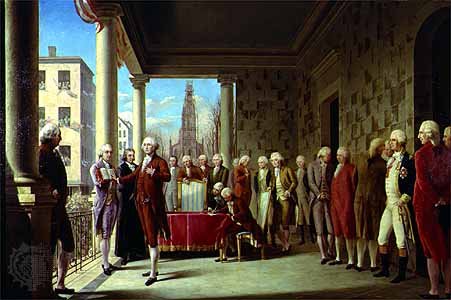
Inauguration of Washington, by Elorriaga
Inauguration of Washington, by Ramon de Elorriaga

On April 30, 1789 George Washington was inaugurated President. The ceremony took place on a Federal Hall balcony overlooking Wall Street in New York City, the nation’s first capital. Ironically, New York was the one state that had ratified the Constitution but had not voted for Washington. Or anyone else. New York legislators had failed to pass an Election Act in time to select delegates to participate in the election.

North Carolina didn’t ratify the Constitution until November 1789, 7 months into Washington’s Presidency. Rhode Island ratified it the following year.

Eyewitness Account of Washington’s Inauguration
Rhode Island ratifies Constitution
This Day in History: Washington unanimously elected by Electoral College
NY Times Article on Elorriaga’s Painting: The Inauguration in Oil, April 21, 1889

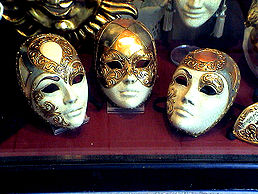
Carnevale

Date varies. Fat Tuesday (Mardi Gras) falls on February 21, 2012

venice_masks

Scores of cities from Rio to Cologne host their own Carnival festivities during the week before Lent, but not many can boast a party that dates back to 1268.

In those days, the Venice Carnevale was frowned upon by the local authorities and the Church. The debauchery and gluttony of the celebration recalled ancient pagan rites that flew in the face of the austerity of the 40-day Lent.

The Carnival before Lent is kind of like the “Boycott Gas for a Day” movement. It takes the punch out of not consuming something for a day if you consume twice as much the day before.

But don’t tell this to the Venetians. The Carnevale is a symbol of the city. And the symbol of Carnevale is the mask. Celebrants don their “masquerade” masks and costumes for both outdoor and indoor celebrations. During Carnevale neighbors become strangers and strangers become friends.

Despite being the biggest and most famous Carnival celebration in all Europe, the current incarnation of Carnevale is only a few decades old. The festival has been banned numerous times by the authorities during its 800-year history, notably in 1797 when Napoleon conquered the Venetian Republic, and more recently by dictator Benito Mussolini in the 1930s.

The Venice Carnevale differs from its counterparts because Venice lacks the streets required for the processions which are the main event of other celebrations. But Venice more than makes up for it with indoor banquets and masquerades and outdoor parties.

“…the whole town was transformed into a vast theatre, full of music, dance and festivities. The various ‘campi’ or small squares throughout the town were traditionally used to stage various events, as they still are today.”

Melanie K. Smith, Issues in Cultural Tourism Studies

Venice Beach Mardi Gras

Every Day’s a Holiday didn’t have the resources to make it to Venice or Mardi Gras this year, but we did attend the next best thing: the Venice Beach Mardi Gras in California, which as it falls on Saturday, is technically a Samedi Gras.

The word carnival — literally “farewell to the flesh” — refers to the period before Lent during which Catholics could still eat meat. “Carnival” has since come to mean any large communal party with rides and cotton candy. So the term “Mardi Gras” (Fat Tuesday — the day before Ash Wednesday) has been mistakenly used to refer to all the festivities leading up to the big day itself.

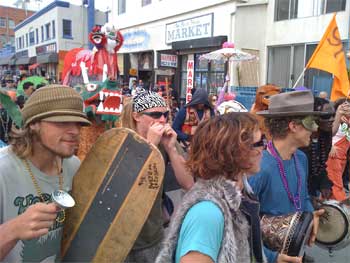
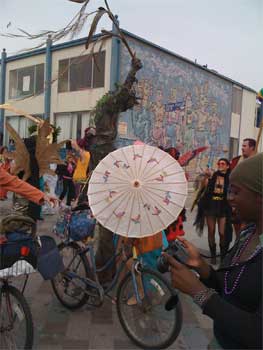
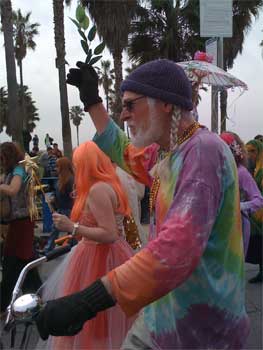
Saturday’s Venice Beach Mardi Gras featured locals in outlandish costumes, loud musicians, ecstatic crowds of bewildered tourists, and merry-making all around.

So really it was indistinguishable from any other day at Venice Beach.

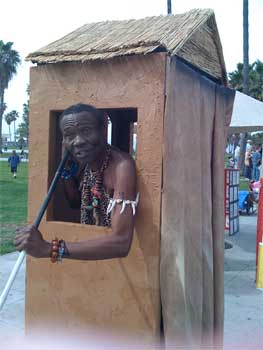
The Bushman of Venice Beach

I spoke with “The Bushman”, a Liberian who’s been on the boardwalk for ten years, and who shouted at passersby in his distinct African accent the same question many of us have been asking this Carnival season:

“Where’s my stimulus package!”

Judging by the amount of bills tourists tossed his way…he may have entered a new tax bracket.

See you in Venice!

Venice Beach Mardi Gras
venice_beach_wall-01
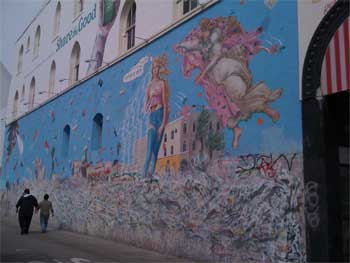
Venice Beach mural
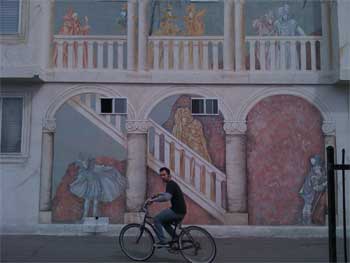
Venice Beach apartment building

Venice Beach: California Carnivale

Originally posted Feb. 23, 2009

Mardi Gras

February 21, 2012

[published Feb. 5, 2008]

Mardi Gras, as I’m sure you’re well aware, is first and foremost a devout religious ceremony, marking the last day in the Catholic liturgical calendar that observing Christians can wear beads, eat pancakes and show their boobs.

“Fat Tuesday” (or to the AMA: “Obese Tuesday”) marks the finale of the carnival season. The whole carnival season itself is called, surprisingly, “Carnival,” which spans from Twelfth Night (Epiphany) until the day before Ash Wednesday.

This year’s Mardi Gras is the earliest Mardi Gras in 25 years. But if you’re worried about the abbreviated Carnival season, fear not. The next time Fat Tuesday will fall as early as February 5 is 2160.

What’s changed about Carnival since Katrina? Not the popularity. After Katrina, visitors had dropped from 1 million to 360,000 in 2006. That number skyrocketed to 800,000 in 2007, and crowds this year are estimated to have surpassed the one million mark.

What else has increased? According to locals, the violence. As of Monday there were 5 shootings that injured 9 people, including one incident where a bullet fired in a scuffle outside the Holiday Inn Express pierced the wall of the hotel and struck a bystander in the head.

This year was celebrated as the 40th anniversary of Bacchus, the original “superkrewe.” Superkrewes like Bacchus and Endymion are credited with changing the face of Carnival, starting in the late 1960s. They invited international celebrities as guests of honor to the parades; they introduced larger, more extravagant floats and unprecedented amounts of booty–the bead and throw kind, not the Girls Gone Wild.

The increase in the size of the Krewes (Endymion alone has 2000 riders, 39 floats and 27 marching bands) and the celebration allowed out-of-towners more participation at Carnival. Still, long-time Orleanians note that the new larger scope of Carnival has compromised the communal feel the celebration once held.

Each year krewes select a king and queen for their parade and ball. Tradition dictates that the king is an older, distinguished member of the social club. A group of eligible young women are served a special King Cake with one bean (or plastic baby) baked inside. She who finds the lucky bean in her cake becomes the new Queen, provided she hasn’t choked to death.

King Cake

(King Cake)

Mardi Gras and Carnival’s roots go back to the spring festivals of ancient Greece and Rome, notably Lupercalia, which took place in February.

“Carnival” means “farewell to the flesh.” A great, succinct history of Carnival’s evolution is at:

A Brief History of Mardi Gras

Links:

Mardi Gras Multimedia

Arthur Hardy’s History of Mardi Gras

Mardi Gras History

2006 NY Times article: No Cinderella Story, No Ball, No Black Debutante

Krewe Index

Name 3 words that end in ‘gry’

February 21

Language is the soul of a nation… Do you want to make a people disappear? Destroy its language.

Jules-Paul Tardivel, L’anglicisme, voila l’ennemi, 1880

flag_bangladesh

Today is International Mother Language Day.

For some reason the excitement surrounding this occasion is not quite as intense as other more important holidays, such as Talk Like a Pirate Day. This may be because our national linguistic experience differs from most countries. As one joke goes:

What do you call someone who speaks two languages?

Bilingual.

What do you call someone who speaks three languages?

Trilingual.

What do you call someone who speaks one language?

American.

Even our neighbors to the north have had a very different outlook on language. In Canada there are laws monitoring the use of the French and English languages, down to the size of words on cereal boxes.

Conflicts between dueling languages (like the Quebecois woman who complained to a pet store owner that her parrot didn’t speak French) are not always trite. As Quebec’s Jean-Charles Harvey wrote:

In the middle of an ocean of English-speaking men and women, the only chance of survival for the French is if it becomes synonymous with audacity, culture, civilization and freedom.

Jean-Charles Harvey, La peur, 1945

+  +  +

The origin of International Mother Tongue Day lies in the aftermath of the bloody partition of India and Pakistan in 1947. The nation now known as Bangladesh was East Pakistan after the partition. Even though over half of Pakistan’s 69 million inhabitants lived in East Pakistan, the country was largely ruled from West Pakistan’s central government. In 1948 the central government declared Urdu as the nation’s only official language. This meant Bengali, the native language of over 90% of the people of East Pakistan (and thus one of the most spoken languages in the world) could not be taught in school or used in government affairs. The change also threatened to make the majority of educated people of East Pakistan essentially ‘illiterate’ and unable to participate in government or hold national posts.

This understandably outraged the East Pakistanis, and a Bengali Language Movement formed. Pakistani Governor-General Muhammed Ali Jinnah proclaimed that the Bengali language movement was a “fifth column” movement attempting to sabotage true Pakistani unity.

In February Dhaka University planned mass protest demonstrations, but the central government imposed a ban on all public assemblies in the city of Dhaka. On February 21 students held the protest anyway.

Bangladesh demonstrators, Feb. 22, 1952
University of Dhaka demonstrators, Feb. 22, 1952

Police attacked the students with batons. Students fought back, throwing bricks at the police, who responded with tear gas and gunfire. Several students were killed. The outcry over the police attacks led to more demonstrations and violence over the following days. On February 22 police attacked a mourning rally, presumably for violating the ban on assemblies.

The government-censored news reports purported that the demonstrations were instigated by communists and Hindu foreign influences. After two more years of protest Pakistan passed a resolution accepting Bengali as a national language of Pakistan along with Urdu, and the anniversary of the first martyrs was adopted by UNESCO as International Mother Language Day in 1999.

The story of Bengali has been repeated, and preceded, by countless stories of language repression

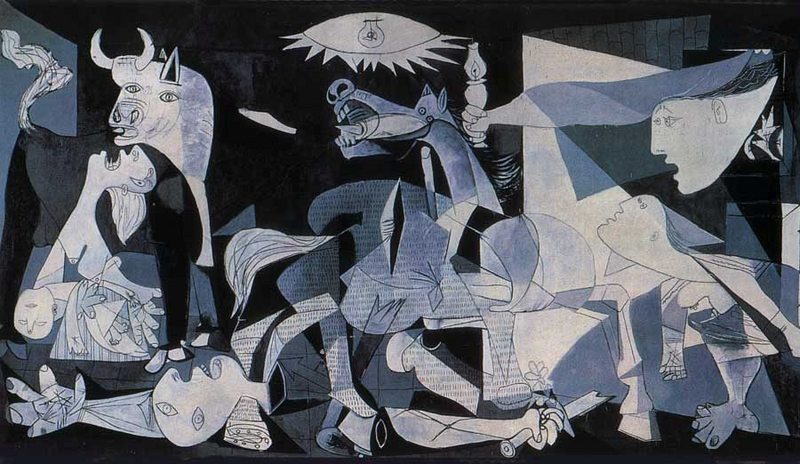
In the twentieth century Spanish dictator Franco banned the Basque language—one of the oldest languages in the world—for thirty years, nearly destroying it. (Basque has no known linguistic relations, and as such is one of the four language families in Europe: the others being Indo-European, Uralic, and Turkic.)

http://terresdefemmes.blogs.com/photos/uncategorized/guernica.jpg
Picasso's depiction of the bombing of Guernica

new-art.blogspot.com/2005/11/post-guernica-now.html

Of the over 6,000 recorded languages in the world today, less than 300 are spoken by populations of 1 million or more. Much like how McDonald’s and Barnes & Noble have driven out local restaurants and book stores, so the larger languages are replacing indigenous ones. According to the U.N. thousands of languages are in danger of extinction.

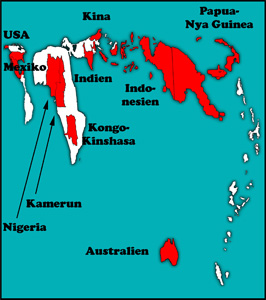
South America had an estimated 1,500 languages before European contact. Today it has 350. Strangemaps displays a map of the world (from Limits of Language by M. Parkvall) distorting the size of nations and continents by their linguistic diversity:

Lingual Map
Linguistic map of the world

The lingual giant Papua New Guinea boasts some 850 languages. Countries in red speak over 200 languages.

The U.S. gets a bad rap for how few languages we speak, but as you can see, as a whole its inhabitants speak nearly as many as the entire European continent.<

Yesterday I drove through a stretch of Westminster, California that, I kid you not, was entirely in Vietnamese.

The most popular* languages in the world are:

  • Mandarin Chinese
  • Hindi
  • English
  • Spanish
  • Arabic
  • Russian
  • Portuguese

and the one that started today’s holiday: Bengali.

(*popular as in how many people speak them, not as in votes on Americal Idol)

Today’s language question: Name three words in English that end in “gry”

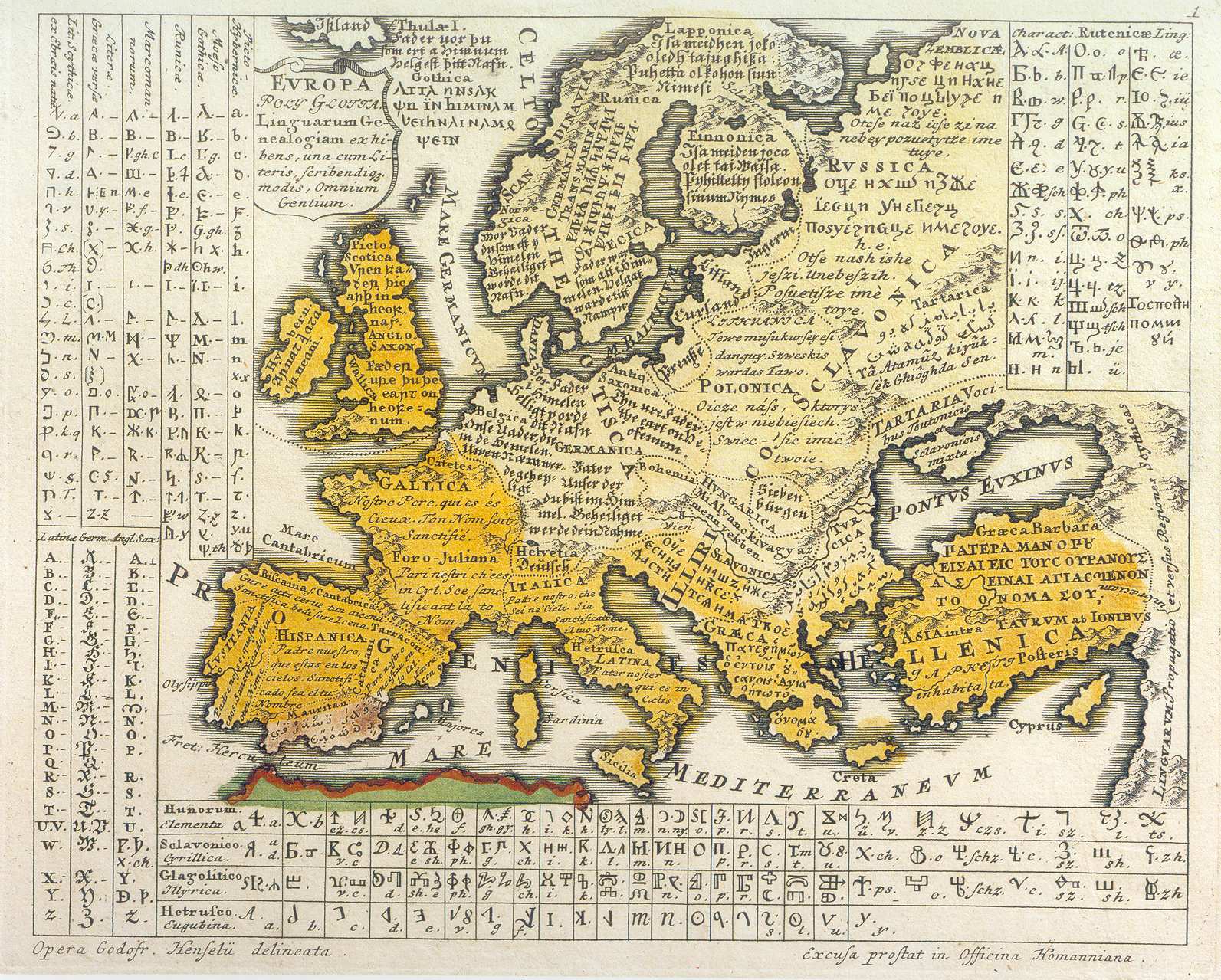
Language map of Europe
European Language Map

Also from Strange Maps:

Languages of Europe: Praise the Lord and Pass the Dictionary

Other Links:

Urdu controversy is dividing the nation further

National Council for Promotion of Urdu Language

Bengali Language Movement and History

Wikipedia: Bengali_Language_Movement

Wikipedia: Languages of Europe

International Mother Language Day

February 21

I’d like to take this moment to assure you that all typos in this blog are my subversive attempts to alter the English language.

That said, you can read all about the history of International Mother Language Day–a holiday that started in Bangladesh over 50 years ago–at last year’s post Name Three Words That End in ‘gry’.

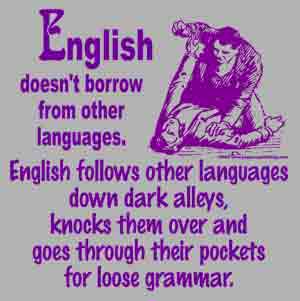
Rather than repeat myself, I decided to research my own native tongue, English, and found that, contradictory to popular belief, English does not borrow from other languages:

English doesn't borrow from other lanugages

But perhaps the most peculiar aspect of English is its pronunciation, as T.S. Watt noted in the poem, “Brush up your English”, published in the Manchester Guardian in 1954:

I take it you already know,
Of tough and bough and cough and dough.
Others may stumble, but not you,
On hiccough, thorough, laugh and through.
Well done! And now you wish, perhaps,
To learn of less familiar traps.

Beware of heard, a dreadful word,
That looks like beard and sounds like bird.
And dead – it’s said like bed, not bead,
For goodness’ sake, don’t call it ‘deed’!

Watch out for meat and great and threat,
(They rhyme with suite and straight and debt).

A moth is not a moth in mother,
Nor both in bother, broth in brother.
And here is not a match for there,
Nor dear and fear for bear and pear.
And then there’s dose and rose and lose –
Just look them up – and goose and choose.
And cork and work and card and ward,
And font and front and word and sword.
And do and go and thwart and cart –

Come, come, I’ve hardly made a start!
A dreadful language? Why man alive!
I’d mastered it when I was five.

Tsagaan Sar in Mongolia

Date varies. February 21-23, 2012

Mongolian flag

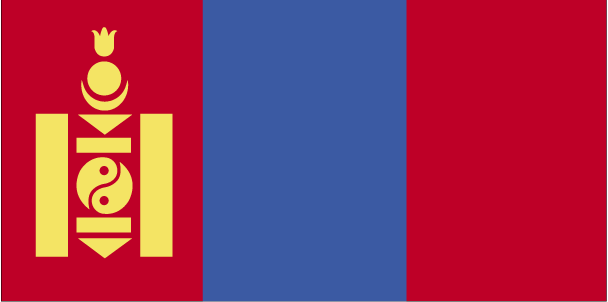
Today Mongolians celebrate Tsagaan Sar, or “White Month.” It roughly mirrors the Chinese Lunar New Year (but don’t say this out loud in Mongolia) and heralds the coming of spring.

The beginning of spring is definitely something to look forward to in Mongolia where temperatures hover well below 0°F in the winter months. A couple weeks ago the temperature was under -30º F.

This year’s Tsagaan Sar is a particularly harrowing one for the residents of Mongolian’s capital Ulaanbaatar (Mongolian for “City of many A’s”)

Last month the police shut down the city’s numerous vodka distilleries after alcohol poisonings:

ILLEGAL VODKA PRODUCTION UNCOVERED IN POLICE RAID
by Ch. Sumiyabazar

An illegal vodka distilling factory in the Songinokhairhan District of Ulaanbaatar was discovered in a police raid last Sunday. The Uurag Altai company, whose operation license was halted two years ago, was found distilling vodka with the fake label “Morit Khangal,” whose vodka has killed 14 people and hospitalized dozens of others…

‘The small room where this business was conducted was horrible, small and had a terrible stench. A container used for mixing chemicals was unclean. There were no safety or hygienic standards at all,’ said a police officer.

Last week, two additional deaths were reported due to tainted vodka produced by the Asian Wolf company in Baganuur District that killed eleven people on New Year’s Eve. The deaths followed an emergency situation banning sales, distribution and bottling of alcholic products in the metropolitan area.

The Deputy Premier M. Enkbold appealed to the public not to celebrate the upcoming holiday, Tsagaan Sar lunar new year, with vodka.

Let’s hope they heed the warning.

Ulaana,’ who is researching in Mongolia, blogs: “My Tsagaan Sar experiences have been so vodka soaked, it’s hard to imagine a celebration here without it.”

Perhaps vodka-less celebrations wouldn’t be as fun, but probably more memorable.

Saikhan Shinlarai to all!

Posted February 9, 2008

Mongolian Lunar New Year

Tsagaan Sar – an Australian in Mongolia

Tsagaan Sar – a peace corp blog

Mongolians Brave Sub-Zero Winter to Welcome New Year – Feb. 2010

Louis Riel Day

3rd Monday in February

Manitoba flag

Lunatic or a Patriot? The Voice of God or an Enemy of the People?

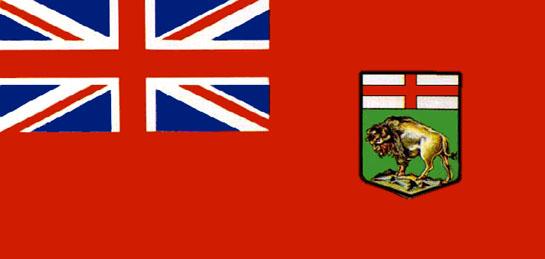
Nope, not George Bush, we’re talking about another controversial figure, whose life is celebrated today in Manitoba.

Louis Riel was a leader of the Metis people of Manitoba and Saskatchewan and of French-Canadian Catholics.

Riel studied to become a priest and then a lawyer, but did not complete either training. Still, his education and his powerful speaking abilities allowed him to become the mouthpiece of the Metis people.

The Metis were the descendants of the native peoples of Manitoba and early French-Canadian settlers.

In the 1860s the Canadian government was preparing to absorb a large territory ‘owned’ by the Hudson Bay Company. Riel’s homeland, the Red River Colony, was within the territory’s bounds, and the Metis people feared they would lose autonomy over the their own land.

“As tensions mounted among the Metis it was clear that strong leadership was needed. Riel’s experiences during the past ten years had produced a life-style very different from that of the buffalo-hunting Metis, but it was these people he now aspired to lead…Riel — ambitious, well-educated, bilingual, young and energetic, eloquent, deeply religious, and the bearer of a famous name — was more than willing to provide what the times required.”

Dictionary of Canadian Biography

The term “Red River Rebellion” is used to describe the events of 1869-1870, when Riel led a provisional government that opposed the surveying of their land by the Canadian government and occupied the Canadian Upper Fort Garry.

The rebellion was mostly bloodless, but during this time Riel ordered the controversial execution of Thomas Scott, a Protestant Orangeman from Ontario, originally from Northern Ireland. Scott had taken part in an action against Riel’s men and had been taken prisoner in an attempt to rescue a local Canadian leader named JC Schultz.

After the Rebellion Sir John A. MacDonald, concerned about the possibility of the land being annexed by Minnesota, placated the Metis with the creation of the provence of Manitoba. But the Protestant outcry over the Thomas Scott killing was strong. MacDonald refused to grant clemency to Louis Riel for his role in the execution.

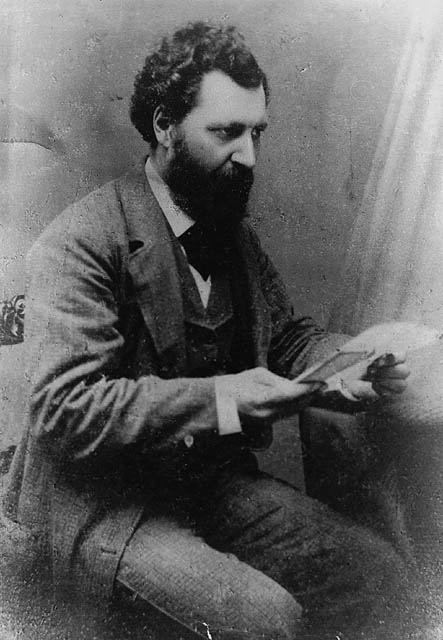
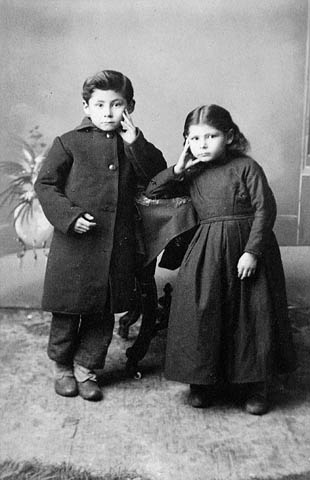
(left) Louis Riel, circa 1875; (right) His children Jean-Louis and Angelique, 1880

Riel spent the next 14 years in exile, in Quebec, New England and the American Midwest. He was elected twice to parliament by Quebec, but could not take his seat in Ottawa on account of the warrant for his arrest.

In 1884 Riel was teaching school in Montana when he was approached by some Metis representatives from Saskatchewan who asked for his help in negotiating for their land rights with Canada.

What they may not have known was that during the intervening years Riel had spent time in mental institutions and became increasingly convinced that he had been chosen by God to lead his people.

The second Rebellion was not as bloodless as the first. In the end Riel was placed on trial for treason. Riel refused his lawyers pleas to declare himself not guilty by reason of insanity. He was found guilty, and though the jury recommended mercy on his behalf, the judge ordered his execution. It has been said that Riel was found guilty of treason, but was executed for the murder of Thomas Scott.

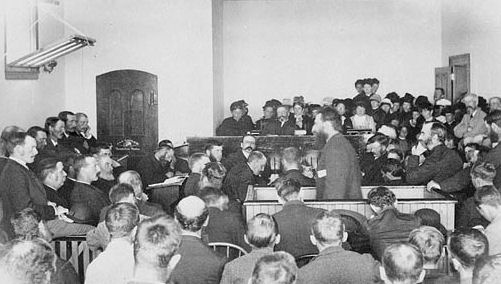
Riel testifies at his trial, 1885

In those years and the decades following his death Riel was painted as an insane megalomaniac traitor by the mostly Protestant Canadian media. However he remained a hero and symbol of nationalism to the Metis people and many French-Canadians

Also today, the third Monday in February, Alberta residents celebrate “We’re not Saskatchewan Day.”

OK, not really, but..
http://www.saskabush.com