
National Black HIV/AIDS Awareness Day

February 7

unaids

My senior year of high school: As my uncle lay dying of AIDS in the hospital, a classmate of mine explained to our AP psychology class that God had created AIDS to punish gay people.

I didn’t say anything. My uncle was gay, and I was afraid that would only cement his point.

It’s 17 years later. Apparently, God didn’t know when to quit.

He punished homosexuals and heterosexuals, Blacks and Whites, Latinos, Asians, Native Americans and First Nations, men and women, the poor, and of course sub-Saharan Africa, perhaps because he felt he hadn’t given that continent enough to contend with already.

HIV/AIDS is neither racist nor sexist. It is an equal-opportunity infector, with only one preference: that its host live long enough to infect others.

Still, in 2004, men accounted for nearly three-quarters of all new HIV/AIDS cases in the United States, and African-Americans—who make only 12% of the general population—accounted for half of all new cases.

The spread of HIV/AIDS in Africa and among African-Americans led to other rumors about AIDS: not that it was sent by God to punish gays, but that it was invented by the government to use against Blacks.

The persistence (or truth-resistance) of rumors like these underlies a mystery that medical doctors and scientists haven’t explained. Ever since its youth in the early 1980’s, HIV/AIDS has displayed an uncanny ability to play upon the fears and prejudices of America with the expertise of a 1930’s dictator rising to power.

By taking root in the ‘Out’ caste in America (The mysterious killer was once called ‘Gay Cancer’), it ensured that serious government effort to stop or study the virus would be postponed for years, that millions of future hosts would be stigmatized, and that open dialogue about the disease would be nearly impossible.

The problem worsened as AIDS took hold in minority communities, where negative feelings about homosexuality ran even deeper than in society at large:

“Today, while there are black men who are openly gay, it seems that the majority of those having sex with men still lead secret lives, products of a black culture that deems masculinity and fatherhood as a black man’s primary responsibility — and homosexuality as a white man’s perversion.”

Double Lives on the Down Low – New York Times, 2003

Men in heterosexual relationships who secretly have sex with other men are said to be on the “down low”. According to Ruth Houston:

“Record numbers of Black women are contracting HIV/AIDS through heterosexual contact – mainly  from husbands and boyfriends on the down low…Many of us have been mistakenly led to believe we can tell a “down low brother” by his outward appearance or mannerisms – the way he walks, talks, dresses, or acts.  As a result, many innocent Black men have been falsely accused.”

Black AIDS Day: A Wake-up Call for Black Women About the Down Low

But Keith Boykin, a former White House aide, believes the role of Down Low men has been overplayed:

“The down low…provided a sexy new vehicle to drive home a more predictable message about AIDS in the black community. With hints of closeted sexuality and talk of double lives, it played right into our stereotypical image of black men, and it conjured up the secrecy of a mysterious underground lifestyle.”

Beyond the Down Low, 2005

The same year that I was told that God had sent AIDS to punish gays, another classmate, an African-American bound for Princeton, argued in class that homosexuality was a Western phenomenon that didn’t exist in Africa. Even more confusing was my teacher’s response in evidence that it did: “What are you talking about? AIDS is rampant in Africa!

If God did create AIDS, perhaps he did so, not to punish the marginalized, but to test the rest of us. We didn’t fail the test completely, but we haven’t passed with marks to write home about.

We have invested billions in AIDS research, developed miracle medicines that were unimaginable only a decade ago. But even this has shined a gloomy light on another human flaw.

Because of miracle technology, some of the uninfected continue to live their lives as if HIV/AIDS is no longer a fatal disease, [“If we change our lifestyles, the Viruses have won!“?] expecting that, worst case scenario, science will be there to bail them out.

A Peace Corps volunteer tells the story of how, at the end of her two years, the water pump broke in her small rural village. The villagers expected her to fix it. When she told them she thought they should fix it, that it would benefit the whole village to do so, they “laughed and said they would just wait for the next volunteer to come” and ask them. These formerly self-sufficient villagers had grown, not just to expect foreign aid, but to rely upon it.

Have we become a culture of dependency, confident that science will bail us out of the next mess?

AIDS has a remarkable power to adapt and reinvent itself, both chemically and politically. There is still no cure for the disease, and the drugs that now allow some Westerners to live with HIV are still wildly unaffordable for millions dying in Africa and the Third World.

Working in the field of drug and alcohol addiction in Los Angeles, I found that the “War on HIV/AIDS” is not so much a war as an endless series of battles that are fought through guerrilla tactics, by ordinary men and women on every street and in every house in cities across the continent.

And that miracle drugs are not the shields of the soldiers. They are band-aids for the wounded. The weapon is responsibility.

Every 10 seconds, someone on the planet dies of AIDS. More than 8,000 people will die today from this disease.

Make no mistake about it, the cavalry will not come to save us…

You see, we are the cavalry.

Keith Boykin, An Exhortation To a Weary Army

Tu B’Shevat – New Year for Trees

February 7-8, 2012
January 25-26, 2013
15th day of the month Shevat

The evolution of this holiday is a bit unusual. In ancient times Tu B’Shevat wasn’t really a “holy day” at all, but more of a tax day. Fruit-bearing trees were taxed differently depending on their age. And fruit could not be taken until after the tree’s third year. The fifteenth day of the month of Shevat was chosen as the “birthday” for all trees in the land of Israel, regardless of when they were planted.

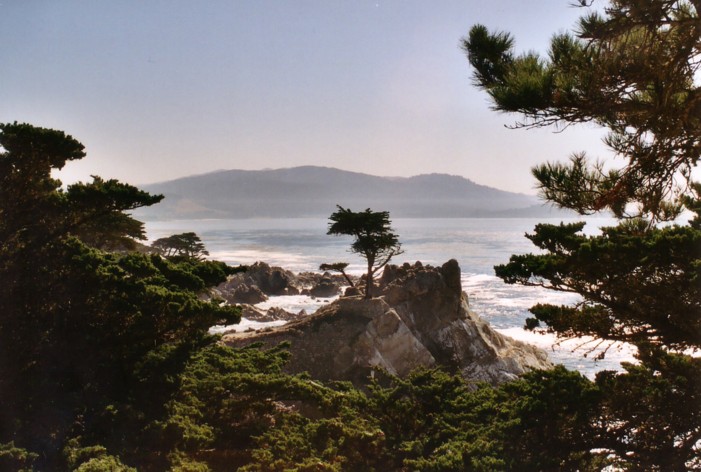
Lone Pine, Monterey
Lone Pine, Monterey, California

Today it is celebrated as more of an Arbor Day for the Jewish people.

The is no one way to celebrate Tu B’Shevat.

In Italy Rabbi Barbara Aiello and her congregation bring green plants to the residents of a local retirement home, to bright up the rooms.
In Modiin, Israel a kindergarten class plants trees.

Many Jewish families around globe have a special “sedar” or meal on Tu B’Shevat. Four types–or colors really–of wine are consumed during the sedar, as well as different types of fruit.

In the Kabbalah tradition the fruits symbolize different levels of the world:

  • 1. assiyah, the level of “action,” is symbolized by fruits with an inedible shell, such as nuts. The inside represents holiness, protected by the outer shell.
  • 2. yezirah, the level of “formation.” This level is represented by fruits with edible outsides and pits on the inside.
  • 3. beriah, the level of “creation,” is symbolized totally edible fruits, such as apples, grapes, figs, and raspberries.
  • 4. atzilut, the purest level is known as “emanation,” and is not symbolized by fruit or anything for that matter, as it cannot be represented by anything concrete.

In modern times Tu B’Shevat has been adopted by the environmental movement, and a sort of Earth Day culture has developed around it. The modern tradition of planting trees goes back to 1884 when settlers in Galilee planted 1500 trees. Today it is common for schoolchildren in Israel to do the same.
Another reason Judaica may have latched onto the holiday tighter in diaspora than originally in Israel, was the representation of the tree and tree’s roots as symbols for the roots of the Jewish people back in the Holy Land, and fruit symbolic of the Jewish family and future yet to be realized. The theme of genealogy and family grew to be of fundamental importance during the eras of exile. Tu B’Shevat’s imagery of trees and land tapped into the scattered people’s longing for a faraway homeland.
Branches

The blessing for the fruit is:

Baruch Atah Adonai, Elohaynu Melech Haolam, borei pri ha’eitz.

“Blessed are You Adonai, our God, ruler of the universe, who brings forth the fruit of the tree.”

Tu B’Shevat begins, as all Jewish holidays, at sun-down and continues the next day.

Chinese Lantern Festival

15 days after Chinese New Year
February 6, 2012
February 24, 2013

Experience is a comb nature gives us when we’re bald.

— Chinese Proverb

chinese_lantern-01

If you thought Chinese New Year was big this year, guess what:

It ain’t over.

Chinese New Year celebrations last for 15 days, right up until the first full moon of the year. The fifteenth night of the first lunar month, and culmination of the party, is the Lantern Festival.

There are many stories about the festival’s origin. According to one legend, a coastal village came under attack by ship. The villagers ran up to the mountains to hide. When the attackers moved on, a villager remaining in town lit up a sky lantern to signal to the villagers in the mountains that it was safe to come down.

Another legend says that the Jade Emperor in Heaven planned to unleash a fire of vengeance upon a town that had killed his favorite Goose. A fairy, hearing of the plan, warned the townspeople to light a bevy of lanterns on that day. From Heaven it appeared the town had already been set ablaze, and the Jade Emperor did not destroy it.

Moral of the story: do not mess with a Jade Emperor’s Goose!

Jade Emperor
Jade Emperor

People across China and Taiwan greet the first full moon of the year by creating their own short-lived Milky Way. Thousands of Sky Lanterns are released into the sky, in one of the most spectacular sights of the new year.

Before sending one’s sky lantern up into the heavens, it’s good luck to write a wish or prayer on the lantern or on a piece of paper inside it. The higher the wish and lantern ascend the more good luck they are believed to bring.

The Taiwanese word for Sky Lantern–Tian Ding–means “having a baby boy.”

The festival is called Yuan Xiao in Chinese. Yuan Xiao is also the name of the little glutenous rice-flour dumplings consumed in mass quantities on this day.

Sapporo Snow Festival – Yuki Matsuri

Early February
(February 6-12, 2012)

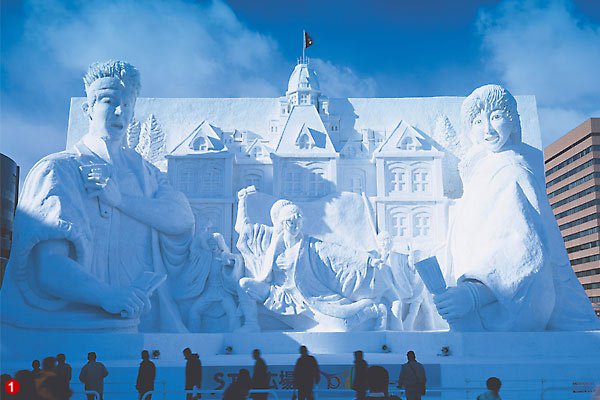
Sapporo Snow Festival

When high school students in the sleepy town of Sapporo built some snow sculptures in Odori Park in the winter of 1950, little did they know the international phenomenon they would unleash.

In the coming years the festival grew in popularity among the locals. In 1955 the nearby military base got into the act, building the first super-sculture for which the festival is now famous. Japan’s Self-Defense Force found that the sculpture building was a good team exercise for the men.

But the festival got its big boost in in 1972 when Sapporo hosted the Winter Olympics, and the Snow Festival gained international recognition.

Sapporo gets an average of 5 feet of snow in January alone, making the beginning of February the perfect time to build these amazing sculptures. It begins this year on February 5 and lasts seven days.

Today the Sapporo Snow Festival is one of the biggest and most famous winter festivals. Millions of people from all over Japan and all over the world come to Sapporo to see the hundreds of snow and ice sculptures.

Sapporo Snow Festival © JTB Photo

Waitangi Day – New Zealand

February 6

flag_newzealand

New Zealand’s national holiday celebrates the signing of the Treaty of Waitangi on this day (February 6) in 1840.

The word ‘celebrate’ is disputed though. The treaty was the original agreement between representatives of the British Crown and the Maori chieftains, and its signing is considered the birth of New Zealand. However, to many Maori—the indigenous descendants who make up about a sixth of New Zealand’s population—the Treaty represents the country’s ‘original sin’.

The problem with the Treaty of Waitangi stems from discrepancies between the English and Maori translations (translated by a well-meaning but less-than-fluent English missionary in a single night) so the chieftains and the British never precisely agreed on the same stipulations. The New Zealand government solved this dilemma by, when in doubt, not honoring the Maori version. This didn’t sit well with the Maori, whose protests against the loss of their lands fell on deaf ears for over a century.

Once heralded as a symbol of victory for indigenous rights, the Treaty has become the cornerstone of a growing awareness of social injustices committed against the Maori, who protest each Waitangi Day.

But as Tariana Turia, co-leader of the Maori Party, said:

“It’s critically important that people understand that the Treaty is not about settlement, it’s not about grievance. The Treaty was a document of unity, and all of us should understand it.” – New Zealand Herald

Marae, Waitangi, © 2009 Alison MacCallum

And if there’s one thing that unifies the New Zealand people, it’s that nobody outside New Zealand understands them. Here are some “Kiwi-isms” to help you better communicate with these fun-loving but linguistically-challenged people:

A into G: arse into gear (to get going)

Box of birds: cheerful, very good

Carked it: kicked the bucket

Cellotape: scotch tape

Cotton buds: Q-tips

Dag: an amusing character

Dunny: toilet

Eketahuna: the NZ “Timbuktu”

Fanny: you don’t need to know, just never say “fanny pack”. It’s called a”bum-bag.”

Guts for garters: in big trouble

Ice block: popsicle

Judder bar: speed bump

Kia ora: “hello” in Maori

Money for jam: easy money

Off yer face: intoxicated

Pavlova: tasty dessert named for a Russian ballerina who visited NZ (though Australians try to claim it)

Rattle your dags: hurry up

Throw a wobbly: become angry

Your shout: your turn to buy drinks

More at the official NZ-to-English Dictionary

Oh, and Waitangi is the name of the river that was the site of the Treaty’s signing. It means “noisy” or “weeping river”.

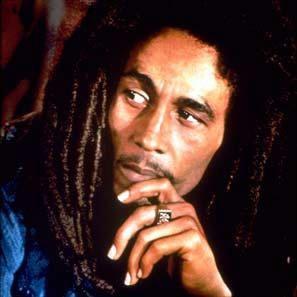
Bob Marley Day – No Woman, No Cry

February 6

“I don’t have prejudice against myself. My father was a white and my mother was black…Me don’t dip on the black man’s side nor the white man’s side. Me dip on God’s side, the one who create me and cause me to come from black and white.”     – Bob Marley

There’s a scene in L’auberge espagnole where the main character witnesses a guitar-playing American woo a European girl with his very white rendition of “No Woman, No Cry.”

“…I remember when we used to sit
In the government yard in trenchtown…”

Strange how this song, co-written and immortalized by a Jamaican man about the ghetto of Kingston, would become an unofficial anthem for North Americans backpacking through Europe, to the point of cliché.

There’s a beauty that shines through Bob Marley’s music, despite the many impediments of the artists and tourists who try to duplicate his magic.

Officially, Marley shares credit for “No Woman, No Cry” with his old friend Vincent ‘Tartar’ Ford, a “bredda from Trenchtown.” Ford was a paraplegic who ran the soup kitchen in Kingston where Marley once lived and played. How much Ford actually contributed to writing the song, we don’t know. Marley once said he wrote the song while he was tuning his guitar in Ford’s yard; it’s been argued (in litigation) that Marley simply wanted to avoid contractual obligations by crediting songs to his friends and the Wailers. In this case, he wanted to send royalties the way of Ford and his kitchen.[Reggae Routes]

Of course, the creative process is never as clean-cut as litigators and music executives would like.

Marley’s biographer Vivien Goldman commented on the song-writing process:

“That song may very well have been a conversation that they had sitting around one night. That’s the way Bob’s creativity worked. In the end it didn’t matter. The point is Bob wanted him to have the money.” – NY Times, 1/4/09

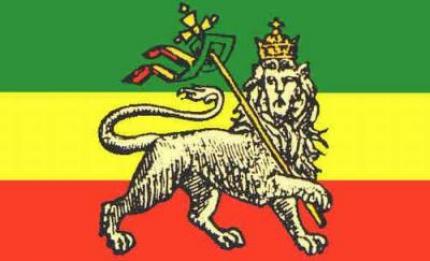
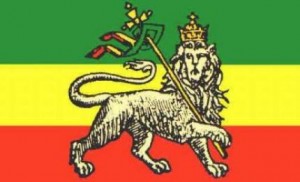
Vincent ‘Tata’ Ford outlived his ‘bredda’ by over a quarter century. He lived to see Marley grow from being a music sensation to an international movement. Marley now has a greater following than even the man whom he, like other Rastafarians, revered as a prophet, the Lion of Judah: Emperor Haile Selassie I.

We’ll never know just how much Ford contributed to one of the world’s most famous songs. The 68 year-old former soup kitchen manager died five weeks ago, on December 28, 2008, in Kingston, Jamaica, from complications related to diabetes.

Good friends we have, oh, good friends weve lost
Along the way.
In this great future, you cant forget your past
So dry your tears, I seh.

Bob Marley & Vincent Ford, No Woman, No Cry

February 6 is Robert Nesta Marley’s birthday, and a national holiday in his homeland of Jamaica.

[published Feb. 6, 2009]

Bob Marley Day – Song of Freedom

February 6

How long shall they kill our prophets

While we stand aside and look?

Some say it’s just a part of it:

We’ve got to fulfill de book…

Redemption Song, Bob Marley

Most national and religious holidays commemorate the death (or the birth) of a martyr or martyrs executed for their beliefs.

And then there are the victory holidays, of battles and wars, which essentially celebrate the deaths of somebody else’s martyrs.

And then there are Poets. History teaches us that unlike political and religious leaders, artists need not die for their cause to have a holiday named after them, provided they die young.

The Scots have Rabbie Burns, and the Slovenes have France Preseren. Jamaica and the world have Bob Marley, born this day in 1945.

Hard to believe he’d be in his sixties if he were alive today. He died at 36 of melanoma cancer. He left behind, not a traditional bible, but a legacy of spirit in song.

Buffalo soldier,

in the heart of America

Stolen from Africa,

brought to America

Fighting on arrival,

fighting for survival…

If you know your history

Then you would know where you coming from

Then you wouldn’t have to ask

Who the eck do I think I am…

–from Buffalo Solider

In an industry where the vast majority of popular music revolved around repetitive and vapid love songs, Marley’s lyrics articulated complex social issues: race, power, politics, and God. He filtered these themes through his own unique view of the world, one which saw beyond the arbitrary borders and distinctions of the society in which he lived. He once said:

“I don’t have prejudice against myself. My father was a white and my mother was black. Them call me half-caste or whatever. Me don’t dip on nobody’s side. Me don’t dip on the black man’s side nor the white man’s side. Me dip on God’s side, the one who create me and cause me to come from black and white…”

His first single, aptly titled “Judge Not,” was released in 1962, the year of Jamaica’s independence.

Marley spread the Rastafari philosophy around the world. His most famous concert may have been the 1978 One Love Peace Concert, during which he called the leaders of the ruling and opposing parties on stage to hold hands.

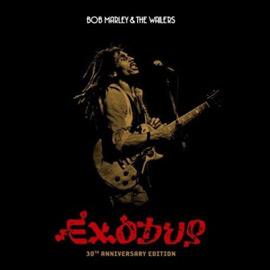
Exodus 20th Anniversary Edition

In 1999 Time Magazine called his 1977 album Exodus the “Best Album of the Century.”

The title alludes to the spiritual birth of the Judeo-Christian and Muslim religions. Marley’s lyrics consistently draw upon Biblical themes, Jamaican folk-lore, and his own experience to speak to the continuing struggle of the African Diaspora, particularly in the New World.

Open your eyes and look within:

Are you satisfied with the life you’re living?

We know where we’re going

We know where we’re from

We’re leaving Babylon

We’re going to our father land.

–Bob Marley, Exodus, 1977

Because of the timelessness of Marley’s lyrics and recordings, his legacy will continue to grow over the coming decades. The further we get from his death, the more people tend to recall the legend over the person.

In Before the Legend: The Rise of Bob Marley Christopher Farley touches on the very human side of Nesta…

“…near the end of his life, when his dreadlocks had begun to fall out because of the cancer treatments, he would still summon the strength to play with his kids. He would put on a Frankenstein mask from off the kitchen counter and chase his sons and daughters around their house in Miami. “A lot of people know Dad the musician,” [Marley’s eldest daughter] Cedella says. “We’ve always known him as Dad–who could be corny, funny, serious at times, but would never spank. If he saw a tear in your eye, he would look the other way. That’s the person that we know.”

He was called the “first Third World superstar,” but as he said of himself…

“…I don’t think Third World. To me, I am of the First World. I can’t put people in classes.”

Think Bob Marley’s legacy is overrated? It’s okay to say it, we’re all friends here. But think of this: It is culture and tradition that sustain a people separated from their homeland. Unlike previous diasporas, the Africa Diaspora was so brutal and so widespread that descendants were cut off from an evolution of culture and tradition that had been passed down for a hundred generations.

Marley’s success at embodying, expressing and popularizing a unique cultural movement in the 1960s and 70s, specifically of, by, and for the African Diaspora, was the culmination of hundreds of years of adaptation and indomitable faith. The movement redefined core values of peace, unity, God, redemption, and the enjoyment of life.

Nesta Robert Marley died in 1981. At his request he was buried with a bible, his guitar, a soccer ball, his ring, and a bong.

Nesta Robert Marley :  February 6, 1945-May 11, 1981

Songs of Freedom: The Music of Bob Marley as Transformative Education

Bob Marley’s Legacy Lives On

Marley Videos

Super Bowl

February 3, 2013
February 5, 2012

It may not be an official holiday, but today is one of the most spiritual days in American culture. For today, over 100 million Americans gather together and pray…that their team will win the Super Bowl.

The Super Bowl is of paramount importance to Americans, and one can tell, not only because of the vast media attention and commercialism that surround it, but because they apply Roman numerals to it., e.g., Super Bowl XLIII.

The location of the Super Bowl changes each year and is determined three to five years in advance. Unlike championships for basketball and baseball, the location has nothing to do with the teams involved. Though 2009’s contenders hail from Pittsburgh and Arizona, Super Bowl XLIII takes place in Tampa Bay, which is expected to see a $300 million boost to its economy because of the festivities. No team has ever played in the Super Bowl on its own turf.

Those spectators who aren’t among the 100,000 or so to attend the live festivities gather in small communal groups, usually in the home of whichever friend has the largest TV. [In previous years Super Bowl week has seen the purchase of 1.5 million TV sets, although that number may have gone down this year.]

Almost as important as the game itself are the commercials during the Super Bowl, which have become a phenomenon in themselves. A 30-second spot during the Super Bowl will cost about $3 million, enough to feed a family of four for four centuries.

There’s a reason they’re so expensive.  According to tampabaysuperbowl.com approximately 140 million Americans watched Super Bowl XLI, more than the number that went out to celebrate New Year’s Eve. The exact number is unknown, since many viewers watch in groups, but Neilson estimates that of the top ten primetime network telecasts since 2000, the Super Bowl has accounted for nine of them.

Super Bowl is also the U.S.’s second-highest food-consumption day of the year, right behind Thanksgiving.

Speaking of which, Reverend Matthew Lawrence, Rector of the Church of the Incarnation in Santa Rosa, has written a Super Bowl Confessional Prayer, in which he points out the similarities between the Super Bowl of today and the bloody “games” of the Roman Coliseum, where unruly pagan crowds once rooted for the slaughter of early Christians:

Most merciful God,
Forgive us for what we are about to do;

For our blood-curdling cries,
Lord, have mercy;
For our lust for violence,
Lord, have mercy;
For our emulation of military conquest,
Lord, have mercy;
For our favor to the strong,
Lord, have mercy;
For our scorn upon the weak,
Lord, have mercy;
For the vengeance which we seek
upon enemies whom we oppose for the most arbitrary of reasons,
Lord, have mercy.

We acknowledge and bewail our mortal sins and weaknesses;
We are troubled by these dark comparisons:
the football stadium and the coliseum;
the fans and the pagan mobs;
the star athletes and the demigods;
the linebackers and the gladiators;
the cheerleaders and the furies;
the commentators and the chorus;
the corporations and the slave owners.

We can only hope that you see, as we do,
that this is only a game;
and that you haven’t lost your sense of humor.
Despite appearances to the contrary, our heart remains faithful to you.
Even as we glory in the spectacle of our football enemies
being pounded into the dust, we will strive to remember you.

God, be with those who will taste dirt this day.
Heal those who will be injured;
Console the losers with gratitude for the privilege of having played;
Ennoble the victors with gentle reminders of their mortality;
And show your favor toward all contestants
Who this day will shed their blood and break their bones
for our trivial sakes…

AMEN.