Today’s Wear Red Day, but it’s not a fashion statement. It’s a life statement: to build awareness of women’s heart disease.
Today women are at greater risk of fatal heart attack than men.
Each year more women die of cardiovascular disease than cancer, tuberculosis, AIDS, and malaria combined. While mortality rates for men have gone down, the danger for women has risen. Around the world 16 women die of cardiovascular illness every minute.
Recognizing the early symptoms of a heart attack is essential in saving lives. Women rush their husband or male family members to the hospital, but tend to be more dismissive of the same warning signs in themselves.
Sweats, heart palpitations, shortness of breath–Could be more than menopause.
The “Hollywood Heart Attack” in which someone clutches their chest in pain is not the standard for everyone. Chest pain is the most common symptom, but almost half of all women who experience a heart attack do not have chest pain. Atypical symptoms include:
back, neck or jaw pain
nausea or vomiting
indigestion
weakness, fatigue
dizziness, lightheadedness
Symptoms that can occur months prior to a heart attack include:
fatigue
sleep disturbance
shortness of breath
chest pain
indigestion
anxiety
shoulder blade or upper back pain
Recognize the symptoms: Women tend to end up at the emergency room 15 to 20 minutes later than men, and those minutes can mean a life.
Both women and men can fight heart disease through cardiovascular exercise, a healthy diet, and regular screenings. Heart Disease Signs Heart Healthy Women
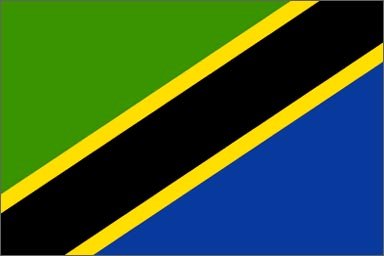
Chama Cha Mapinduzi is the name of the ruling party of Tanzania. It means Party of the Revolution in Swahili. The party came to be on February 5, 1977 after the merging of Tanzania’s two major parties under the leadership of Julius Nyerere.
Nyerere was born in 1922 just east of Lake Victoria in what was then Tanganyika. He herded sheep and “led a typical tribal life” in the village where his father was chief of a small tribe.
He began school at age 12 and studied to be a teacher at Makerere University in Uganda. After teaching for three years he received a scholarship to the University of Edinburgh.
Upon returning to Africa he taught English, Swahili, and history in Dar es Salaam. He was elected president of the Tanganyika African Association, which he had helped to form as an undergraduate at Makerere.
Under his leadership TAA transformed into the Tanganyika African National Union (TANU) a political force dedicated to Tanganyikan independence. As his reputation grew colonial leaders pressured him to choose between teaching and politics. Though he chose the latter, his supporters would call him Mwalimu, or “teacher,” for the rest of his life.
He traveled to New York to speak to the United Nations on Tanganyikan independence on behalf of the TANU, which became the most powerful political coalition in the country. In the late 1950s, Tanganyika won independence and Nyerere was elected its first president.
As President Nyerere helped unite Zanzibar and Tanganyika, forming Tanzania. He was instrumental in combining the two parties of Tanganyika and Zanzibar to form the CCM, or Party of the Revolution
He was controversial for increasingly distancing himself and the country from Western and European governments and leaning more toward Communist China.
He introduced the concept of Ujamaa, or “familyhood,” as an economic movement, melding socialism with traditional tribal government. (Ujamaa is one of the seven values defining the holiday Kwanzaa in the U.S.
He stepped down from power in 1985, before it was cool for heads of state to voluntarily do so.
A few years before his death he gave an interview to Charlayne Hunter-Gault:
CHG: You mentioned the one-party rule in your country where you were president for four terms during which time you promoted the principle of “Ujamaa,” socialism, and you have acknowledged that it was a miserable failure…
NYERERE: Where did you get the idea that I thought “Ujamaa” was a miserable failure?
CHG: Well, I read that you said socialism was a failure…
NYERERE: A bunch of countries were in economic shambles at the end of the 70s. They are not socialists..You have to take in the values of socialism which we were trying to build in Tanzania in any society.
CHG: And those values are what?
NYERERE: And those values are values of justice, a respect for human beings, a development which is people-centered, development where you care about people. You can say ‘leave the development of a country to something called the market,’ which has no heart at all since capitalism is completely ruthless. Who is going to help the poor? And the majority of the people in our countries are poor. Who is going to stand for them? Not the market. So I’m not regretting that I tried to build a country based on those principles…Whether you call them socialism or not…what gave capitalism a human face was the kind of values I was trying to sell in my country.
Sri Lanka has always been an island shrouded in mystery.
According to journalist William McGowan:
Even those living in Sri Lanka for many years felt its fundamental impenetrability; the longer you lived there, the more you realized you’d never really know it…
It was a country, after all, that Arab traders had once named Serendip, for its aura of accidental good fortune…If serendipity were to strike the island now, I’m afraid the dose would have to be massive.” (Only Man is Vile, 1992)
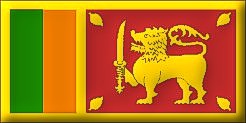
Actually, the word serendipity comes from the old name for Sri Lanka (Serendip), not the other way around. “Serendip” derived from the words Sinhala, “dwelling place of lions”, and dwipa, or “island”.
An ancient Persian fairy tale known as The Three Princes of Serendip told the story of three wise princes of the region whose collective intelligence led to good fortune, but only when they weren’t looking for it.
Bianca Capello
The English word was coined in 1754 by Horace Walpole, in a letter to a friend. His friend had sent him an unframed portrait of Bianca Capello that Walpole had admired. Walpole happened across the Capello coat-of-arms in a book of Venetian arms, which he used to help frame the portrait:
…This discovery indeed is almost of that kind which I call serendipity, a very expressive word…I once read a silly fairy tale, called The Three Princes of Serendip: as their highnesses traveled, they were always making discoveries, by accidents and sagacity, of things which they were not in quest of…
McGowen is right though. Sri Lanka is long overdue for some good karma. In addition to the devastation of the December 26, 2004 tsunami, the small island nation has been plagued with civil war ever since its independence, which it won from the British on this day in 1948.
Sri Lankans believe the Lord Buddha visited the islands three times:
“In Lanka, O Lord of Gods, shall my religion be established and flourish.”
Lord Buddha, The Mahavamsa, 6th century AD
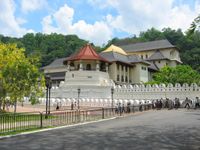
Every summer, Sri Lankans display the Sacred Tooth — believed to be the Buddha’s left canine — in an elephant procession known as Perahera.
“the finest thing I have seen or hope to see this side of heaven”
February 3
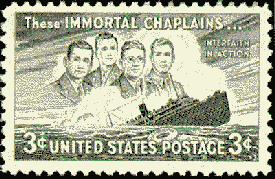
A priest, a rabbi, and two ministers set out to sea to fight the Nazis.
This is not a joke, but the beginning of a sad but inspiring story of four chaplains who are remembered today as, aptly, the Four Chaplains.
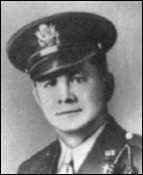
George Fox
George Fox was the eldest, a 42 year-old WWI veteran who had become a Methodist Minister at age 34. He joined the Army Chaplain Service the same day his teenage son joined the Marines.
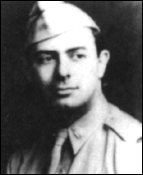
Alex Goode
Alex Goode, a Brooklyn-born Rabbi in Pennsylvania, studied at Cincinnati and Hebrew Union College before earning a Ph.D. from Johns Hopkins. He joined the Army Chaplains in 1942, leaving behind his wife and 3 year-old daughter
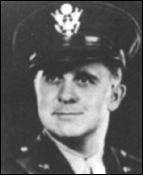
Clark Poling
Clark Poling, was born in Ohio and grew up in Massachusetts and Poughkeepsie. He studied in Michigan and at Rutgers before getting his B.D. at Yale’s Divinity School. The young Dutch Reformed Pastor told his father, a WWI Chaplain, that he didn’t want to sit the war out in the shelter of the church. His father told him that in WWI chaplains had the highest mortality rate of all. “You just can’t carry a gun to kill anyone yourself.”
John Washington
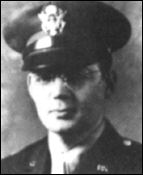
The fourth chaplain was Father John Washington. As an Irish Catholic Priest, he was the only unmarried, childless chaplain of the four. He grew up in a poor immigrant family and was even in a gang as a youth, but received a calling from God, and was ordained in 1935. The bespectacled Washington joined Fox, Goode, and Poling at the Harvard Chaplain School, and the four developed a strong friendship.
USAT Dorchester
In January, 1943 they boarded the U.S.A.T. Dorchester bound for Europe. With over 900 passengers, mostly soldiers and few civilians, the ship was 150 miles from Greenland when it entered the waters known as “torpedo junction”. During the voyage, the four worked together to ease the fears of the men. Priest, Minister, and Rabbi offered prayers to soldiers of all faiths, not just their own.
The evening of February 2, the Captain instructed the soldiers to wear their life vests. Most however didn’t take the warning to heart. On February 3, the Dorchester was struck by a German torpedo, killing about 100 men instantly.
The ship began sinking in minutes. In the chaos, most lifeboats floated away or capsized. The four chaplains directed the men, urged hope, established a sense of order, and helped men into the lifeboats. When the lifeboats were gone, the four chaplains handed out life vests to the men.
When the life vests were gone, the four chaplains, without hesitation, each removed their own, and gave them out to the men, thus ensuring their own demise.
The Four Chaplains sunk with the Dorchester, along with over 600 men. Survivors recalled the last thing they saw on the ship was the four chaplains aboard the sinking ship, still encouraging the men with prayer and song…
“Our Father, which art in Heaven, Hallowed be Thy name. Thy kingdom come, Thy will be done.”
“Sh’ma Yisrael Adonai Elohenu, Adonai Echad.” [Hear O Israel, the Lord is our God, the Lord is One.]
The 8,000 chaplains of the U.S. military during World War II earned 2,453 high medals. Though none could receive the Medal of Honor because of its special qualifications, a medal was created as its equal specifically for the Four Chaplains.
John Ladd, a survivor of the Dorchester, recalled the actions of the four chaplains atop the sinking ship as “the finest thing I have seen or hope to see this side of heaven.”
For this reason, February 3 is celebrated as Four Chaplains Day among military members and interfaith groups across the United States. The Sunday nearest is remembered as Four Chaplains Sunday.
Once a year in Japan, the land of order and politeness, it is considered perfectly acceptable behavior for children to hurl beans and peanuts at their classmates without reprimand.
That day is today, Setsubun, or Lunar New Year, and understandably, kids more than anyone carry on the tradition. Though Setsubun lacks the weight it commanded back in the 8th century, many Japanese do not let this day pass without tossing at least a few legumes inside and outside for good luck.
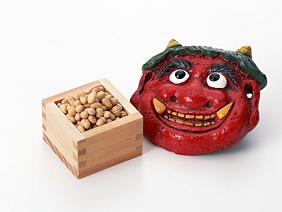
Mame Maki, the aforementioned bean-throwing activity, is meant to ward off evil spirits for the coming year. People scatter beans on the ground or toss them at imaginary Oni (roughly, demons or ogres) while yelling:
“Oni wa Soto, Fuku wa Uchi!”
(It looks and sounds worse than it is.) It’s pronounced Foo-koo, so watch your tongue, and it translates to:
“Get out, Demon/Ogre! Come in, Good Luck/Happiness!”
Mame Maki bears resemblance to the tradition at Western weddings of throwing rice grains to represent fertility.
(re-enactment: don't try this at home)
Like American children on Halloween, Japanese schoolchildren wear Oni masks to represent the demons while their peers gleefully pelt them with beans and nuts, as an American schoolteacher in Japan describes here.
Traditionally soybeans have been the projectile of choice, but recently peanuts have been picking up steam. Both are sold in stores in small packets.
Another tradition is to eat the number of beans of your age today, plus one for the coming year.
This evening families eat a special thick sushi called futomaki, or hutomaki.
And they eat while facing a “lucky” direction–which differs each year.
Other ways to ward off the demon include piercing the head of a sardine with a holly branch and hanging it in a doorway.
hiragi
Also, celebrities born under the current year’s zodiac sign (ie. 12 year-olds, 24, 36, 48…) can be seen on TV performing Mame Maki pubicly.
Setsubun means “division of the season.” There are four setsubun, throughout the year but the one celebrating the changing of winter into spring has always been the most auspicious. Similar to the Indian Makar Sankranti festivals and Celtic Imbolc, which both mark the coming of Spring.
Prior to 1873 Japan used a luni-solar calendar of 355 days. Every few years an inter-calaria month of 30 days was added to keep the lunar calendar in line with the solar.
After Japan adopted the Gregorian calendar in 1873, the spring festival began to wane, as Japan began celebrating New Year’s with the rest of the Gregorian world on January 1.
Setsubun used to be celebrated on the second full moon after the solstice. It now occurs every February 3.
If Candlemas be dry and fair
Half o winter’s yet to come and mair,
If Candlemas be wet and fowl
Half o winter’s gane at Yule.
If Candlemas Day be fair and bright
Winter will have another fight.
If Candlemas Day brings cloud and rain
Winter won’t come again.
Happy Marmota Monax Day!
Not every species gets a holiday. Holidays tend to revolve around the species homo sapien, but February 2 belongs to the marmota monax, aka Groundhog.
In the days before meteorologists, when a few extra weeks of winter could mean the difference of feeding your family or not, cultures had to develop their own traditions of predicting the weather.
The Celtic holiday Olmelc (also Imbolc) meant “ewe’s milk.” When livestock began lactating, Celts knew spring was just around the corner.
Other Europeans looked to the habits of hibernating mammals to determine signs of spring: bears were the chosen prognosticators in England and France, badgers in Germany.
“The badger peeps out of his hole,
If he finds snow, walks abroad
But if he sees the sun shining
he draws back into hole.”
(Let’s just assume it sounds better in German.)
However the practice was not attached to any specific date. Indeed, the idea of a bear coming out of hibernation–or any animal–precisely on February 2, was not only absurb, it was way too early.
Perhaps North Americans discovered that sleeping bears were not so friendly (and were very hungry) after being prodded awake in early February, which is why the American tradition leaned more toward the German way. However, instead of badgers, German settlers in 18th century America prodded woodchucks, aka groundhogs, to come out of their holes.
The resulting synthesis of these traditions in America was recored by James Morris, a shopkeeper in Morgantown, Pennsylvania.
“Last Tuesday, the 2nd, was Candlemas day, the day on which, according to the Germans, the Groundhog peeps out of his winter quarters and if he sees his shadow he pops back for another six weeks nap, but if the day be cloudy he remains out, as the weather is to be moderate.” — February 4, 1841
Today, the most famous groundhog in America is Punxsutawney Phil, who began officially predicting the weather for the proud people of Punxsutawney way back in 1886.
According to the president of the Punxsutawney Groundhog Club in 1978,
“In 92 years of Punxsutawney Phil’s emergence, he has never, never, never been wrong.”
Statistics say another thing. According to stormfax.com, Phil has actually predicted the coming of spring correctly a whopping 39% of the time. This is 2% better than the average Canadian groundhog, but still not inspiring considering the 50/50 call.
+ + +
Our lives are far less dependent on the weather than in ancient and medieval times. But new age religions have created a resurgence of Imbolc and other seasonal pagan rituals, focusing instead on the purification of the spirit and on the connectivity between all living things.
In North America, the melting pot of all cultures, February 2nd stands out as a perfect example of ancient rituals from Europe and Asia morphing into a truly bizarre amalgamation. The unusual collection of traditions that survive as Groundhog Day makes it the platypus of holidays.
Hmm…Platypus Day…
*google search*
Darn, not the first to think of it. According to http://alum.wpi.edu/~wes/holiday.htm, Platypus Day is February 2. Looks like Phil’s got competition!
Brigid was a Celtic goddess whose festival was celebrated on February 1st and 2nd. Brigid’s Day, or Imbolc, heralded the middle of Winter and anticipated the coming of Spring. It was a festival of purification. (The word February itself comes from the Latin Februus, the god of purification and the dead.)
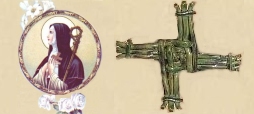
The Catholic church has been at odds with Brigid’s legacy for most of its existence. The bishops of Ireland found the goddess’s pagan following to be too deeply embedded in local tradition to be stomped out. Even the newly-converted Irish Christians refused to stop worshipping their exalted patroness. The Church decreed, If you can’t win ’em, join ’em. Brigid became Saint Brigid.
Over the centuries two Brigids emerged. One Brigid was transformed into Mary’s “midwife” at the birth of Jesus. (The position of Jesus’s mother was taken.)
In the other the she became the daughter of a Druid father ( and in some stories of a Christian mother from Portugal kidnapped by pirates!) and was named after the Celtic goddess. She lived from 451 to 525. She was known for her generosity as a young woman, and devoted herself to God, deflecting proposal after proposal from eligible suitors. She was baptized by St. Patrick himself and became a devout nun and Abbess, eventually founding the Abbey at Kildare in the 5th century.
St. Brigid of Kildare
In the Celtic tradition the Abbey at Kildare is believed to have preceded the so-called Saint herself. It was an ancient shrine to the Goddess before Christianity ever reached the Emerald Isle. There priestesses kept alight an eternal flame at the shrine until the 1220s when a Bishop, angered by the Abbess’s ‘no men allowed’ policy and the Druidic rituals, ordered the sacred flame to be put out.
The last insult to Brigid was her expulsion from the list of Saints in the 1960s. During Vatican II she was decanonized due to insufficient proof of her existence, after volumes of creative embellishment written about the supposed nun’s life and deeds over the centuries.
Brigid is affiliated with wisdom, healing, metal-work or craftmanship, flames and fire, and childbirth, even though she was a virgin in the Christian tradition.
“When we face the possible end of a relationship, when our bills are higher than the tiny resources we have, when we are emotionally drained by negative working conditions–it is all too easy to cling to what we have known previously…Brigid tells us otherwise…transformation is the only way to survive.“
Likewise Imbolc is the transformation of winter into spring.
“…the day on which you assume a new name; the day on which you pledge to make specific changes in your life. [Imbolc] could be thought of as a kind of goddess-specific New Year’s Eve.“
In writing of St. Brigid, the Catholic Patroness of Ireland, (1907) Joseph Knowles notes:
“St. Brigid received from her people a worship which history accords no other saint…She was the light that shone over their Island to direct the footsteps of the daughters of Erin in the paths of virtue and sanctity. In speaking of her they discarded the prefix Saint, and called her, in homely, yet reverent fashion, “Mo Brighe”–or “My Bride.“
Note how Knowles reverses the carry-over from Brigid’s pre-Christian goddesship.
In the British Isles Brigid’s Feast and Imbolc merged with Candlemas. Both involves the ancient druidic lighting ceremony and purification rites, originally meant to honor Brigid. Some calendars list February 1 as Imbolc, others February 2. Most likely the celebration began on the evening of February 1 and concluded the following day, as was the tradition of the time.
On Brigid’s Day, Selena Fox, author of Lore and Riutals recommends:
“Do a self purification rite with Elemental tools–
cleanse your body with salt (Earth)
your thoughts with incense (Air)
your will with a candle flame (Fire)
your emotions with water (Water)
and your spiritual body with a healing crystal (Spirit)
Bless candles that you will be using for rituals throughout the year.
Invoke Brigid for creative inspiration.
Take a Nature walk and look for the first signs of Spring.”
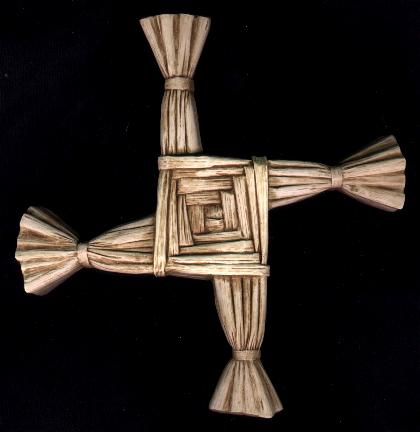
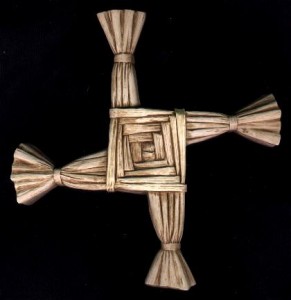
One ritual of Brigid’s Day was to plant or hang straw cross from the previous year’s harvest around the outside of the house and in the rafters in honor of the goddess of flame, to protect the house from fire. “An odd gesture,” writes Patricia Monaghan, “for a collection of old straw ornaments in the attic seems to encourage, rather than prevent, house fires.“
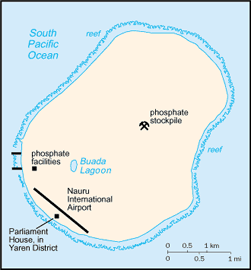
“Nauru survives by the mining of the natural fertilizers that were produced over many millennia by the interaction of bird droppings (guana) with marine sediments exposed at the surface. Essentially depopulated during Japanese occupation in World War II, about 8,000 Nauruans now live on 1,100 of the 5,236 acres that are not mined to produce fertilizer for markets in Japan, New Zealand, and Australia.”
“When the resource is gone and mining ceases, currently estimated to occur in the year 2000, there will be no exportable product for Nauru except stamps and weight lifters. Even with reclamation, Nauru is unlikely to become a major tourist stop since there will be little of the island left that has not been stripped of every pound of exportable phosphate rock.”
Nauru from above
Aware of their finite resources, Nauru’s leaders used profits to diversify their assets, including the 52-story Nauru House, Melbourne, Australia’s tallest building when it was built.
The history of Naura goes back 3,000 years, when the peoples of Polynesia and Micronesia settled the island. The 12 “tribes” of Naura remained cut off from outside society other until the end of the 18th century. In the 1830s contact with the Western shipping and traders increased, allowing islanders to trade resources for popular imports: alcohol and firearms. Both, unfortunately, exacerbated the bloodshed of the 10-year Nauru Civil War during the 1880s. The population fell from 1,400 to 900.
After Germany annexed the Island at the end of the 19th century, they discovered and began mining phosphate.
Australia captured the island in World War I and it was governed by the UK, New Zealand, and Australia.
During World War II the Japanese captured the island, turning it into one big airstrip, while deporting 1,200 inhabitants for hard labor for the war effort. Australia retook the island in 1945.
On January 31, 1968 Nauru was granted independence.
True to predictions, the export that had sustained the island since 1907 was depleted. The nation with one of the world’s highest per capita GDPs at the time of its independence became one of the world’s poorest. Its fertile land, now destroyed by a century of mining, is uninhabitable and unable to be restored.
Naura House in Melbourne was sold for $140 million to clear the nation’s growing debts. The island encouraged offshore banking as a tax shelter, and soon became a beacon of hope for money launderers everywhere.
Nauru cracked down on money laundering due to international pressure. Today Naura exports less than $600,000 in phosphate–its only export–and imports $19 million.
And the island, once cut off from the world and self-sufficient for thousands of years, is now completely dependent on Australian aid.










 In the days before meteorologists, when a few extra weeks of winter could mean the difference of feeding your family or not, cultures had to develop their own traditions of predicting the weather.