5th day of 5th lunar month
June 23, 2012
June 6, 2011
June 16, 2010;
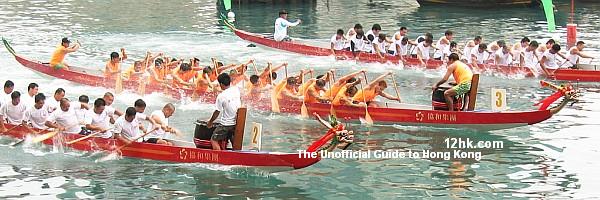
Duanwu is often called Double Fifth, because it falls on the fifth day of the fifth lunar month of the Chinese calendar, but it’s more commonly referred to as the Dragon Boat Festival, after its most famous annual event.
Almost as famous are the delicious special foods prepared for this date. The traditional dish, zongzi, is a triangular rice ball stuffed with sweet or savory fillings, and wrapped in bamboo leaves. The Duanwu beverage of choice is a special realgar yellow rice wine.
The inspiration for the holiday comes from the death of one of China’s first great poets, Qu Yuan. Qu Yuan was a political advisor in the late forth century BC who urged his king to unite with other kingdoms against the rising state Qin. However, jealous and corrupt political opponents counseled the king against the advice of Qu Yuan, who was accused of treason and forced into exile. It was during this exile that Qu Yuan traveled the country gathering and recording local folklore and legends. When Qin did eventually attack and capture the capital city of Ying, Qu Yuan composed one of his greatest works, “Lament for Ying”. He then committed suicide by tying himself to a rock and jumping into a river.
The local fishermen tried to keep the fish from eating Qu Yuan’s body by throwing food into the water. Over time this became a tradition. Later a legend gained credence that Qu Yuan was killed by a great underwater dragon.
Qu Yuan
The Maoist government banned celebrations of Duanwu in 1949. It wasn’t until only a few years ago that the Chinese government officially reinstated three of the country’s most popular holidays: Tomb Sweeping Day, Mid-Autumn Festival and Duanwu.
“O Denmark! in thy quiet lap reclined,
The dazzling joys of varied earth forgot,
I find the peace I strove in vain to find,
The peace I never found where thou wert not.”
Denmark’s two main national holidays celebrate completely contradictory principles. One celebrates the birthday of the monarch (April 16) while the other celebrates the anniversary of the taking of power away from the monarch, on June 5, 1849.
To understand the importance of the 1849 Constitution, we have to delve into the histories of the Danes and Swedes, which are hopelessly incestuous until 1523. Don’t even try telling the two apart before then. But Sweden’s breakaway in 1523 led to a new relationship between the two. Namely, one of war, a hobby the two nations pursued with abandon for the next century and a half.
Finally along came a Danish king in the mid 17th century, Frederick III, who somehow managed to win over the hearts and minds of the Danish people by leading them to utter defeat at the hands of the Swedish in 1658—and then by staging an unprecedented comeback in Game 7 of the Dano-Swedish War (1658-1660), defending the city of Copenhagen from destruction and forcing Sweden to relinquish territory.
King Frederick III, by Wolfgang Heimbach
The crowds went wild. The conqueror Frederick III became the Lakers of Denmark, and his popularity grew to such an extent that the First Estate was persuaded to disband the legislative assembly and concede all power to Frederick. This was accomplished by the Lex Regia Perpetua / Kongelov (King’s Law), a document which…
“has the highly dubious honour of being the one written law in the civilized world which fearlessly carries out absolutism to the last consequences.” (R. Nisbet Bain, Danmarks Riges Historie)
The king’s word was the law of the land for nearly two centuries. It wasn’t until 1849 that King Frederick VII peacefully overturned the principles of the Kongelov, relinquishing absolute power and establishing the constitutional monarchy of Denmark.
The last revision to the Constitution was in 1953, also on June 5.
How to celebrate Constitution Day? Or Grundlovsdag as it’s called…
According to wikipedia.org,
“Some people attend political meetings, though many – especially the elderly – meet at the sites of the political meetings to drink beer and other alcoholic beverages.” (Public Holidays in Denmark)
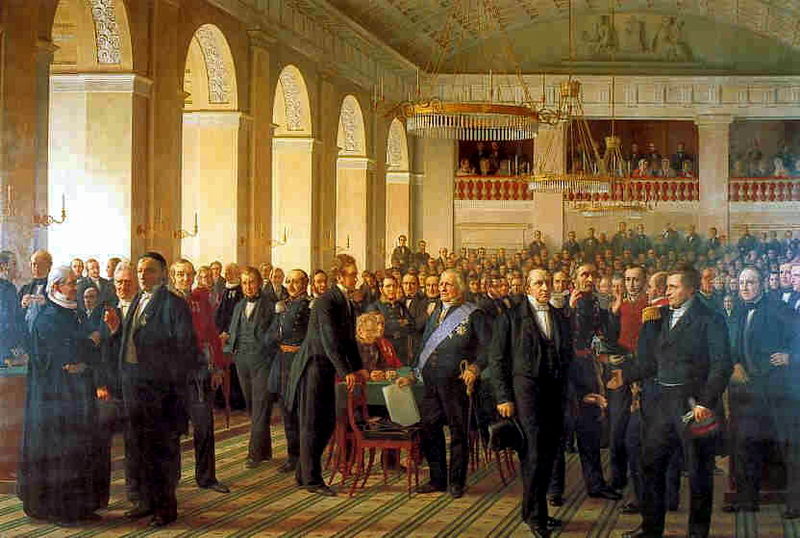
National Constitution Assembly of 1848, by Constantin Hansen
It would be hard to describe Tonga in a word, but you could do worse than ‘exceptional’. Over the past two hundred years, the remote archipelago has stubbornly been the exception in the Pacific rather than the norm.
Though it was a British protectorate until 1970, Tonga is the only Pacific island nation never to have been formerly colonized. It’s the only nation in the region continuously governed by its indigenous population. And it’s the last Polynesian monarchy, making it one of only five members of the Commonwealth of Nations to have its own monarch.
Located about 3,000 kilometers east of Australia, Tonga consists of 171 islands.
Tonga is one of the smallest countries in the world, both in terms of area and population. At 747 sq. km, its landmass is roughly one-tenth the size of Los Angeles County and it has 1/100th the population.
Its life expectancy is 73–quite long for the region. And for our Moscow readers, the lowest temperature ever recorded in Tonga was 48 F/8.7 C.
That’s not to say Tonga is without problems. In addition to widespread poverty, public demands for reducing royal power have met stiff resistance. And its not hard to see why. Over the past two hundred years, Tonga’s monarchs have been the core force in maintaining its highly autonomous status and development.
Tonga has been inhabited since about 2500 BC. Oral history recalls the sovereign line dating back a thousand years. But there are no written records of Tongan history before Captain Cook’s landings in the 1770s. Cook called the place the “Friendly Islands” based on the population’s hospitality and his positive exchanges with the locals.
King George Tupou I
The first king of Tonga as we recognize it today was King George Tupou I. Tupou is believed to have been born in 1793. As a chieftain, he consolidated power over the disparate island groups.
“From a small, disputed inheritance in the Ha’apai group in 1820, his ambition to reunite Tonga after its civil wars which had begun in the 1780s led him first to the conquest of Ha’apai in 1826; he secured the inheritance of Vava’u in 1833, and the inheritance of the Tu’i Kanokupolu title which nominally gave him Tongatapu in 1845, and thus made him king of all Tonga.”
He had abolished serfdom in Vava’u—part of Tonga—back in the 1830s. In 1862 he took two more extraordinary steps. Not only did he create a parliamentary system of government, he also…
“…abolished the system of semi-serfdom that had previously existed and established an entirely alien system of land tenure whereby every Tongan male, upon reaching the age of 16, was entitled to rent for life at a nominal fee a plot of bush land (api) of 8.25 acres, plus a village allotment of about three-eighths of an acre for his home.”
For these and more sweeping changes, the first modern king is Tonga’s national hero. The anniversary of the Tupou’s coronation in 1875 is celebrated in December, but June 4 is Tonga’s National Day. It remembers both the anniversary of the the abolishment of serfdom in 1862 and the end of Tonga’s status as a British protectorate over a century later.
On May 27, 1967, the Australian public voted to alter the language of the Constitution to remove discriminatory laws against the indigenous people.
One such Constitutional clause had previously declared:
“In reckoning the numbers of the people of the Commonwealth, or of a State or other part of the Commonwealth, aboriginal natives shall not be counted.”
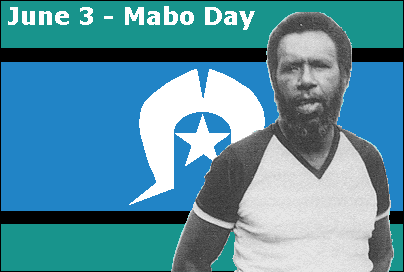
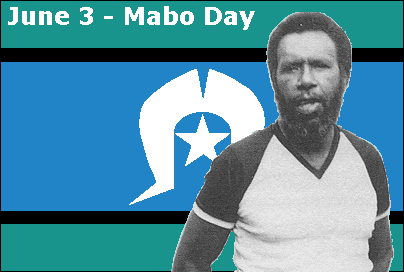
Still, even decades after this sweeping reform, the Australian court held to a policy known as Terra Nullius. Terra Nullius was the doctrine that insisted that the occupation of the Australian continent did not occur until after European ‘discovery’ and colonialization. This historical whoops now generally estimated to be about 40,000 years off. It wasn’t overturned until the last decade of the 20th century, on June 3, 1992, in the extraordinary case of Eddie Mabo.
Eddie Mabo - Mabo Day
Born on the island of Mer in the Torres Strait in Queensland, Mabo was working as a gardener and groundskeeper at James Cook University when he was denied passage back to his birth island during a trip to visit his ailing father. Mabo took on the aged Australian albatross of indigenous landrights disputes. While pursuing a teaching degree (in his 40’s) Mabo waged a decade-long legal battle confronting the fallacy of Terra Nullius. He took his case all the way to the highest court in the land.
“The Mabo decision is arguably the most important decision that the High Court of Australia has made since Federation. It states Indigenous people have Legal Rights not just Symbolic Rights to all Crown Land in this country, as well as possible rights to pastoral leases. Mabo Day marked the beginning of a new era for Indigenous people. It changed Australian’s views of themselves and their rights to this land. It has forced mining companies and the corporate world to take stock of Indigenous peoples’ claims. It has radically altered the relationship between Indigenous and non Indigenous people in this country.”
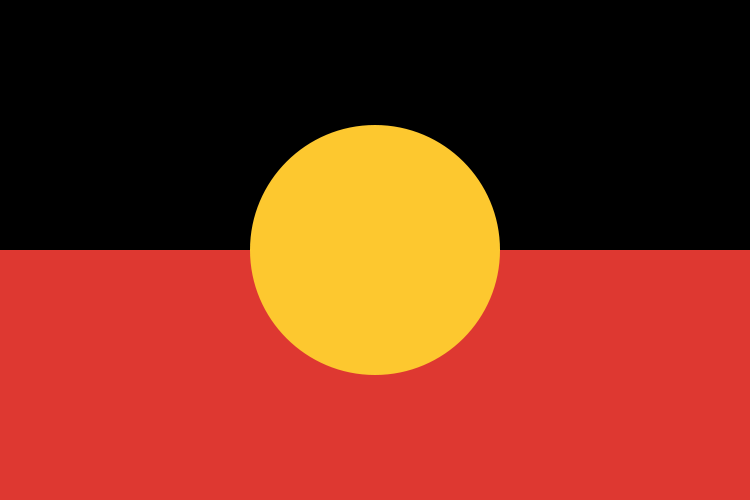
Though Mabo Day is not an official holiday in Australia, the week from May 27 to June 3 is now known as Reconciliation Week. It is a week meant to encourage dialogue and help mend centuries of injustice against the nation’s indigenous people and to foster healing between Australia’s diverse communities.
Today the descendants of the world’s oldest Republic celebrate Republic Day.
Over 2500 years ago present-day Italy was ruled by a king with a superbadass name, Tarquinius Superbus, who inherited the throne, not through direct lineage, but the even-older-fashion way–by offing his wife’s dad King Tullius.
Servius Tullius had angered the Roman elite by implementing revolutionary policies that protected the poor and laid the foundations for constitutional government. Tarquinius and the king’s daughter Tullia, outraged at how her father was flushing their country down the toilet, led the conspiracy to assassinate him, ending his 44-year reign. According to legend, Tullia showed her remorse for the murder by repeatedly running over her father’s dead body with a chariot.
Tarquinius ushered in a new age of Roman reform, by repealing his father-in-law’s Constitutional decrees and maintaining the peace through violence, murder and terrorism. These halcyon days came to an abrupt halt in 510 BC. Just as Tullius’ daughter became the king’s downfall, Tarquinius’ son Sextus would become his, taking down not only his father, but the entire concept of monarchy in his wake.
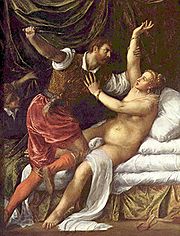
The Rape of Lucretia
The unruly and loathsome Sextus decided it would be a thrill to rape one of the most respected and pious members of Roman patrician society. He told Lucretia, wife of the nobleman Collatinus, that if she refused to submit to him, he would have her killed and place her body in bed with a dead slave, all before her husband returned home. A fate worse than death, she would be disgraced for all time.
Lucretia gave in to the threat. But after the evil deed, she reported circumstances of the rape to her family. She then committed suicide to save them from scandal. The furor that arose against the king led to a revolt against the monarchy and the deposing of the whole king’s clan.
On these precarious beginnings grew the most famous republic in world history. A republic that only ended half a millennium later when Julius Caesar was elected dictator for life.
But that has nothing to do with Republic Day. No, the Italians celebrate Republic Day to commemorate this day back in 1946, when they elected to boot the House of Savoy, Europe’s longest ruling royal house, from power.
‘fascio-nating’ bit of linguistic trivia:
In 1922, after a series of riots and civil unrest, Italy’s King had appointed the strong figure of Mussolini, leader of the Fascist Party, to be the nation’s new Prime Minister. (Today’s word fascist comes from the Italian fascio, referring to a bundle of rods. In the 19th century the fascio was used by political groups as a symbol of Italian unity: the individual sticks of the fascio were fragile, while the bundle itself was unbreakable.)
The King assumed Mussolini would reign in the rebelling democratic and parliamentary institutions. Mussolini did indeed consolidate power, by declaring himself supreme dictator and doing away with any semblance of representative or Constitutional government.
In 1939 Mussolini and the Fascists brought Italy into World War II on the side of Nazi Germany in the hopes of rebuilding an empire–a mission accomplished by conquering King Zog of Albania. Mussolini met his fate near the end of the war. Executed by a Soviet firing squad, Mussolini’s body was hung upsidedown at an Esso gas station, where it became a punching bag for angry Italian citizens.
But his death didn’t ease resentment against the monarchy that had once promoted the dictator.
There were no names or specifics on the famous 1946 referendum. The ballot asked voters to determine whether the Head of the Italian State would be held by the Royal Family–the House of Savoy–or a democratically elected representative.
During this process King Vittorio Emanuele III handed over the throne to his son Umberto II. Umberto is called “the King of May”, referring to his fleeting reign. On June 2 and 3 a narrow margin of Italians voted for the final abolition of the Italian monarchy.
As a result of the referendum the king and his progeny were forced to leave Italy forever. It wasn’t until 2002 that this provision was overturned, and the son of King Umberto, Victor Emmanuel, exiled for 56 years, finally re-entered the land he once almost ruled.
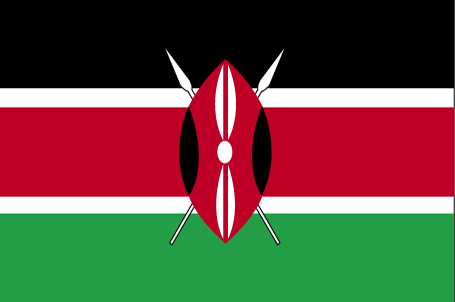
June 1 is Children’s Day in over 40 countries on five continents, but in Kenya, where roughly half the population is 14 or under, June 1 is Madaraka Day, one of Kenya’s three national holidays.
The original Madaraka Day was June 1, 1963 when Kenya gained self-rule for the first following a century of colonization.
Madaraka means “autonomy” or “self-rule”. On the first Madaraka Day in 1963, Kenya’s founding father Jomo Kenyatta addressed the importance of the concept of “Hamrabee”.
“As we participate in pomp and circumstance, and as we make merry at this time, remember this: we are relaxing before the toil that is to come. We must work harder to fight our enemies — ignorance, sickness and poverty. I, therefore, give you the call Harambee! Let us all work hard together for our country—Kenya.”
Harambee comes from a Bantu term. meaning “work together” or “let us all pull together”. In bears much in common with ujamaa, a term popularized in Western culture by the emergence of Kwanzaa.
“Harambee is not new but a traditional principle which existed in every traditional society in Kenya. Each society had self-help or co-operative work groups by which groups of women on the one hand and men on the other organised common work parties, for example to cultivate or build houses for each other; clear bushes, harvesting etc.”
Six months later, on December 12, 1963, Kenya achieved full independence as the Republic of Kenya.
[The date of Kenya’s independence became of paramount interest in the United States in 2009 after a document surfaced purporting to be President Barack Obama’s birth certificate. The “Republic of Kenya” document is dated February 17, 1964.]
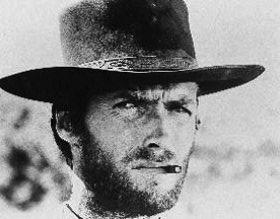
Today is No Tobacco Day, instituted by the World Health Organization in 1987. Originally observed on April 7, 1988 as a day of “No Smoking”, the name was changed to reflect the dangers of all forms of tobacco, and the date was moved to May 31, we assume to celebrate the birthday of Clint Eastwood.
Used to be no movie star would be caught live in front of a camera without a cigarette in his or her mouth. It was an uphill battle convincing cinema-going youth not to smoke what with images of their favorite stars puffing away on screen.
But as their movie heroes died of cancer—from Yul Brynner to John Wayne—the anti-smoking argument became more convincing.
Still, today bloggers like the good doctoratlarge point out the top eleven oft-overlooked advantages of smoking, including:
“8) Nicotine is great for constipation.”
“5) You burn a hole in your pocket (literally if you are not careful), learning to survive with meager resources.”
and:
“2) You learn to kiss butts, and as everyone knows, this is a priceless asset to those wishing to make it big in life…”
Over the past 25 years, the general public’s view on smoking has changed immensely. Even Dirty Harry has altered his views on smoking, (if not on gun control):
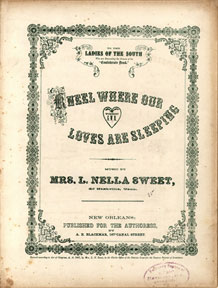
In the United States the May tradition of honoring the dead of wars past began after the Civil War. In individual towns in the South, women would lay flowers and wreaths atop the graves of their husbands, fathers, brothers, and sons. It was called Decoration Day. The song “Kneel Where Our Loves Are Sleeping” was published in 1867 with the dedication “to the ladies of the South who are Decorating the Graves of the Confederate Dead.”
“Kneel where our loves are sleeping. They lost but still were good and true. Our fathers, brothers fell still fighting, We weep, ’tis all that we can do.”
The following year the Commander of the U.S. Army, moved by the ceremonies of the South, declared a similar tradition in the North.
“The 30th of May, 1868, is designated for the purpose of strewing with flowers or otherwise decorating the graves of comrades who died in defense of their country during the late rebellion, and whose bodies now lie in almost every city, village, and hamlet churchyard in the land…
“Let no wanton foot tread rudely on such hallowed grounds. Let pleasant paths invite the coming and going of reverent visitors and found mourners. Let no vandalism of avarice or neglect, no ravages of time, testify to the present or to the coming generations that we have forgotten, as a people, the cost of free and undivided republic.”
Three decades after the Civil War, Richard Burton wrote his famous “Memorial Day“.
Now is the cleavage deep of North and South
Well closed, —the years o’er-cover it, as grass
Softens and sweetens some dry place of drouth
When comes the blessed rain; the requiem-mass
Is chanted of the mood that shattered peace:
Where common sorrows are, anger must cease:
Sorrow and love remain, while passions pass…
What is a patriot? Not the man who swears:
“My country, right or wrong;” nor he who claims
That sacred thing, yet like a dastard dares
To use her to his ends, to hide his shames;
…
For higher, holier than the will to war
The will to love, —now may the path of Peace
Within our states be like the pilot star
In the night sky, by myriads to increase
As the millennium broadens, gleam by gleam:
This is the prophet’s word, the poet’s dream:
All nations living in love’s great release.
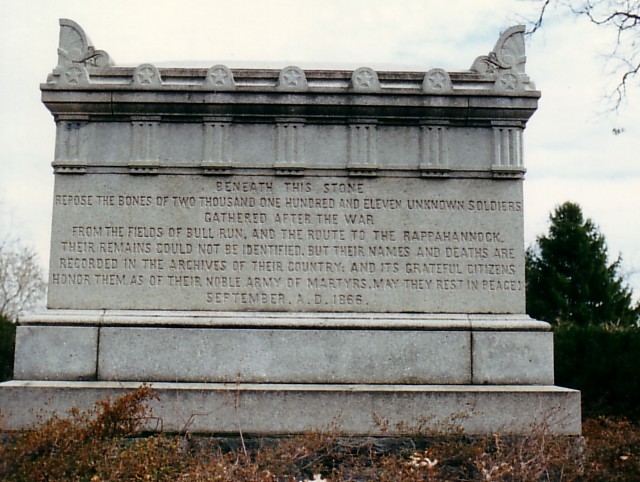
"Beneath this stone repose the bones of 2,111 unknown soldiers..." Arlington Cemetery
Southern states still observe separate dates for honoring the Confederate dead.
Texas – January 19;
Alabama, Georgia, Mississippi, Florida – April 26
South Carolina – May 10
Louisiana and Tennessee – June 3
After WWI, Memorial Day included remembering the dead of other wars, not just the Civil War.
To date, more Americans died in the Civil War than in all other wars combined.