Chinese New Year 2009: Year of the Ox

[published January 26, 2009]

fireworks

Year of the Ox:

Ox: You are a born leader, and you inspire confidence in those around you. You speak little, but are quite eloquent.  You are steadfast, solid, hard-working, goal-oriented, mentally and physically alert and generally easy-going, but remarkably stubborn. Be careful about being too demanding. You are also methodical and good with your hands. You will make a good surgeon, general or hairdresser.

— ancient Chinese Fortune Cookie

Actually they don’t have Chinese fortune cookies in China. Fortune cookies are an American thing.  Although the Chinese did hide secret messages in Moon Cakes way back in the 14th century, the closest cookie you’ll find to the modern incarnation date from 1800’s Japan.

Makin' fortune cookies, Japan, 1878
Makin' fortune cookies, Japanese etching, 1878

The legend is that fortune cookies were brought to North America by Chinese laborers around the time of the 1849 Gold Rush, but there’s no evidence of this.

They were probably were introduced in the U.S. by a Japanese immigrant in San Francisco in the 1910’s. Another claim is that they were made by a Chinese restaurant owner in L.A. So the question isn’t are they Japanese or Chinese, but are they Northern Californian or Southern Californian?

Fortune cookies became a staple at Chinese restaurants in the U.S. after World War II.

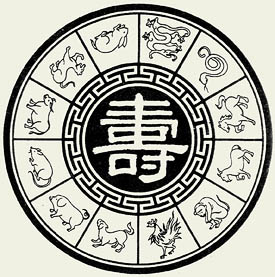
Chinese Zodiac

The Chinese Lunar Calendar is one of the oldest calendars in the world, and probably the oldest known horoscope.

The Rat is the first year of the 12-year cycle. An ancient legend explains the order of the animals. The twelve animals of the zodiac quarreled with each over who would be first, and the gods were asked to decide. A race was held, in which the 12 animals of the zodiac had to cross a river.

Ox was the first across the river. Little did he know Rat had hitched a ride on his back, and Rat darted across the finish line when they reached the other side. For this reason Ox is second.

Perhaps because of Rat’s savvy, “Years of the Rat” always coincide with a U.S. Presidential election. Since 1900, “Year of the Rat” elections have re-elected the sitting President, with the exceptions of 1912 (Wilson), 1960 (Kennedy), and 2008 (Obama).

Today marks the beginning of the year of the Ox.

Barack Obama is one of two “Oxes” to be elected President. [Gerald Ford and Chester Arthur were also “Oxes” but took over for resigning and assassinated Presidents.] The other was Warren G. Harding, who died in office, and whom until recently, many historians considered to be the country’s worst President.

15 Presidents (5 each) have been Rats (including George Washington), Snakes (FDR & JFK),  and Pigs (Jefferson, Jackson, Reagan).

Rats, Snakes, Pigs & other Presidents by Chinese Zodiac

“The ancient Chinese attributed the origin of all life to the balance between heaven and Earth, and the yin and the yang.”

Shelly Wu, Chinese Astrology

Chinese New Year is one of the most widely celebrated holidays in the world.

Chinese New Year

Feb. 7, 2008
Jan. 26, 2009
Feb. 14, 2010
Feb. 3, 2011
Jan. 23, 2012

The Chinese Calendar is one of the oldest calendars in the world, dating back thousands of years, though it has undergone many changes in that time.

The Chinese calendar is a lunisolar calendar. New Year usually begins on the second new moon following the winter solstice, or the first new moon after lichun.

(Lichun is one of 24 markers that chart the solar year. It falls on or around February 4 in the Gregorian calendar.)

There are 12 months in the Chinese calendar, each lasts 29 to 30 days. The months track the course of the waxing and waning moon. This results in a calendar shorter than the solar year by about 10 days. To keep consistent with the solar year and the changing of the seasons, an intercalary month is inserted every three years. (The Chinese calendar is much, much, much more complicated than that. For a better explanation see:

Calculating the Chinese New Year

or in pdf format:
http://www.math.nus.edu.sg/aslaksen/calendar/cal.pdf

Countries that celebrate the lunar New Year include:
Malaysia, Singapore, Taiwan, Mauritania, Viet Nam (Tet), Indonesia, Mongolia (Tsagaan Sar) Thailand (not an official holiday), Laos, and Brunei. Also cities across AustraliaCanada, and the United States have large Chinese New Year celebrations, making it one of the most widely celebrated holidays in the world.
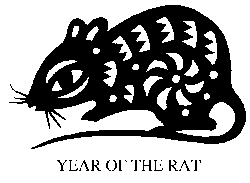
Year of the Rat

2008 (or 4706 in the Chinese calendar) was the Year of the Rat. Rat is the first symbol of the Chinese Zodiac. There are two stories regarding how Rat came to be first:

Many years ago, according to an Ancient Chinese legend, Buddha decided to choose animals as the signs of 12 year cycle. He summoned all the animals to be present at a meeting next morning and he would secretly select the first 12 animals arriving to be the signs of a year respectively. The rat and cat, who were good friends, agreed to wake each other up. Next morning Rat, who woke up first, broke his promise and left cat sound asleep as he quietly left alone to arrive at the meeting.

Buddha selected the first 12 animals as they arrived to be the signs for the years. They came in this order: the rat, ox, tiger, rabbit, dragon, snake, horse, goat, monkey, rooster, dog, and the pig. By the time the cat arrived everyone was celebrating their good fortune and that is why there is no cat in the zodiac. Needless to say, Cat and Rat became enemies from then on. Chinese Zodiac Symbols

Chinese Zodiac

Another legend is that Rat tricked Ox into carrying across the river on his back, then dashed to the finish before ox had time to get out of the water. Thus Rat is before Ox.

Either way, the important thing to remember is that Rat is tricky, full of promises and good words, but in the end just wants to win the race.

Coincidentally, the Year of the Rat always falls on election year. [Hmmm…
Fox News Hires Karl Rove]

[published Feb. 7, 2008]

2009 was the Year of the Ox. 2010 was the Year of the Tiger [the sexiest of all zodiac symbols –Ed.], 2011 was the Year of the Rabbit, and 2012 is the Year of the Dragon!

Chinese Zodiac

Happy (Old) New Year!

January 14

Happy New Year!

It’s January 1 in the Orthodox Calendar, observed by Orthodox Churches in Russia, Macedonia, Serbia, and many of the former Soviet Republics, including Ukraine, Armenia, Belarus, and the one that’s all consonants. (Kryrrrgyztyrgystan)

So is Russia two weeks behind the times? Do they feel the need to have the last word on New Year’s Eve parties? Or does being torn between two New Year’s dates simply give them the chance to party for two full weeks?…(which the Russian winter could definitely use.)

Russian New Year

The story goes that up until the late tenth century, much of Russia and Byzantium celebrated the New Year during the spring equinox. That changed in 988 AD when Basil the “Bulgar-slayer” Porphyrogenitus* introduced the Byzantine Calendar to the Eastern Roman Empire.

Basil II
Basil II

The Byzantine Calendar was like the Julian Calendar except it began on September 1, and its “Year One” was 5509 BC—the year historians calculated as the creation of the world (Anno Mundi) according to genealogies of the Bible, from Adam to Jesus.

It took roughly four centuries for the “September 1st” New Year to make its way into the heart of Russia. And just when the Russians were getting used to that, Peter the Great switched to the Julian Calendar, moving New Year’s to January 1 in 1700 AD.

It was only a matter of 50 years until all of Protestant Europe stopped using the Julian Calendar altogether, in favor of the Catholic Europe’s Gregorian Calendar, leaving Russia and the Orthodox Church out in the cold.

So for the next two-hundred years, even though Russia celebrated New Year’s on January 1st according to their calendar, their entire calendar was about 11-13 days behind the rest of the West. (Which is why the Russian October Revolution took place in November.)

It wasn’t until 1918 that Lenin finally moved Russia to the Gregorian calendar.

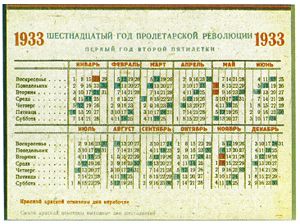
But the Soviet Union couldn’t let sleeping dogs lie. During the 1930s they declared war on the number 7, dividing months into five six-day weeks. Fortunately, this decade-long practical joke on the Russian people ended in June 1940.

Soviet Calendar of 1933

These days, when it comes to the Old Calendar vs. the New Calendar, the Russians have tossed aside their austere ways and say, “Why choose? Have both!”

Most New Year celebrations happen on December 31st, but the holiday season continues until January 14. It’s a day of nostalgia, called Old New Year, a more sedate version of New New Year, often spent with family and watching the 1975 classic “Irony of Fate”, the Russian “It’s a Wonderful Life.”

"Irony of Fate" poster

Julian Day

Today we also celebrate day 2,454,846 in the Julian Day system—the number of days that have passed since noon, Greenwich Mean Time, January 1, 4713 BC. The Julian Day system was developed by Joseph Scalizer in 1582, and is used mainly by astronomers and people with way too much time on their hands.

*Basil’s title Porphyrogenitus means “born in the purple”. The title was bestowed at birth upon children who were (1) born to a reigning Emperor and Empress of the Byzantine Empire, and (2) born in the free-standing Porphyry (purple) Chamber in the Great Palace of Constantinople. (That’s why there’s less Porphygenituses than Smiths.)

Russian New Year

Happy Old New Year

Russian Orthodox Calendar

Uttarayan

January 14

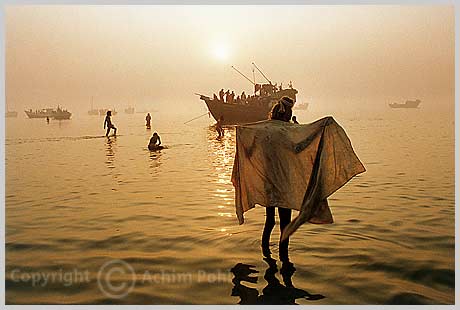
Today is the first day of Uttarayan, the 6-month season which lasts from January 14 to July 14 in India.

The festivals that celebrate the changing of the season go by many names in India. Makar Sankranti, Pongal, Lohri, and so on. They coincide with January 13th/14th in the Gregorian calendar.

The reason why Makar Sankranti is celebrated more than any other is that it marks the day the Sun starts moving north and the auspicious half of the year is characterized by increasing daylight. Of all the heavenly bodies, the Sun is the most glorious and the most important to life – and the Festival Marak Sankranti is one of the most important and happy feasts in its honor. It is the time when winter begins to loosen its grip and the days begin to grow warmer and warmer. — from Indian Festivals and Events

© Achim Pohl

Sankranti means, literally, to change direction, or to go from one place to another, and Makara (a crocodile/snail/elephant hybrid) refers to the Indian predecessor of the Greek constellation Capricorn. Thus, January 14th in India marks the day the sun begins to move from Sagittarius to Capricorn in the north.

The winter harvest festivals are celebrated in different ways among the one-billion plus people who make up the cultures of India. In the south January 14th is only the first day of a four-day holiday known as Pongal, named for the special rice dish associated with the harvest festival.

Indians in Gujarat celebrate with feasts and kite festivals in which the colorful skies help waken the gods who hibernated through winter. The largest of these is the International Kite Festival in Ahmedabad.

satyameva-jayate.org/2008/01/14/makar-sankranti/

Photos of Ahmedabad Kite Festival

High Flyers of Gujurat

Pongal!

January 14

Pongal – Day 1

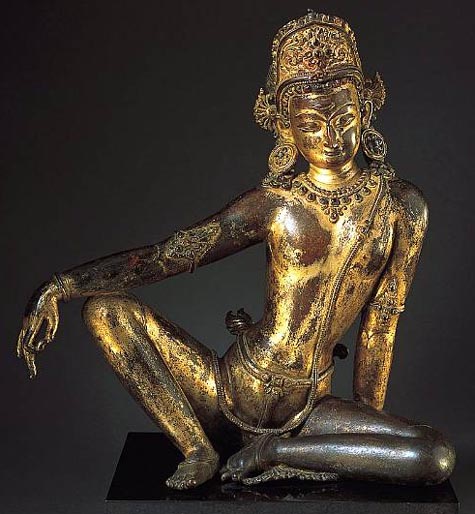
Day One of Pongal is called Bhogi or Bogi, and is dedicated to the storm god Indra. Indra is the leader of the Devas–the gods and celestial beings that watch over the heavens and control the elements–such as wind, fire, rain, and air. Indra’s weapon is the thunderbolt. In that way he is similar to the Norse Thor, though his status is higher. Indeed, Indra is the subject of roughly 250 hymns and stories in the Rigveda, more than any other deity. He is incredibly handsome, but he has more vices than any other god. (Maybe that’s why he makes for such good stories!) And he never turns down a good cup of soma (the “Red Bull and vodka” of the gods.) Which would explain why the weather is the way it is.

Indra idol

He is known for his strength and smarts in slaying the dragon Vritra, which represents chaos and non-existence. It is one of the most famous battles in Hindu mythology. In defeating Vritra, Indra separates and supports the heavens and earth.

He is not as revered in modern Hinduism as he once was. This is partly attributed to his character flaws–his mistakes catch up to him and his power reduced–and partly due to the rising influence of gods such as Shiva, Vishnu and Devi. (And maybe we just aren’t as at the whim of the weather as we were in Indra’s prime.)

Bhogi is a day for family. Houses are cleaned and scrubbed top to bottom and all extra clutter is set aside, (the original Spring cleaning) and surfaces are prepared for decoration with a specially-prepared rice and paste concoction, Kolam, adorned with red mud.

In the fields freshly-harvested rice is cut with sickles anointed with sandalwood and paste. A bonfire is lit and all aforementioned “clutter” from the house is burned, along with agricultural waste. The fire symbolizes staying warm during the “last lap of winter.”

pongalfestival.org/bogi-festival.html

jnanam.net/indra/

Lohri

January 13

punjab_flag

In Punjab, January marks a lull in the winter wheat harvest. Farmers plant wheat in October and harvest the crops in March or April. By January the wheat has sprung up and farmers rejoice in anticipation of a bountiful harvest.

The traditional Indian calendar has twelve months and two seasons: Uttarayan (January 14 to July 14) and Dakshinayana (July 14 to January 14). Today is Lohri, the last day of Dakshinayana, considered winter in the traditional Indian calendar. From here on out the days grow longer and warmer.

In the morning on Lohri day, children go from door to door singing and demanding the Lohri ‘loot’ in the form of money and eatables like til (sesame) seeds, peanuts, jaggery, or sweets like gajak, rewri, etc. — hinduism.about.com

In the evening people dance around the bonfires, throwing in til, puffed rice, and popcorn into the fire, praying for prosperity and abundance in the coming season, and singing traditional songs:

Who do you have?
The groom with the tandoor
The groom’s daughter got married,
He gave 1 kg sugar!
The girl is wearing a red suit!
But her shawl is torn!
Who will stitch her shawl?!
The uncle made choori!
The landlords ate it!
He made the landlords eat a lot!
Lots of innocent guys came,
Innocent boy got left behind.
The police arrested him!
The policeman hit him with a brick!
Cry or howl!
Give us lohri…long live your jodi!”

Yes, something’s lost in translation. [But imagine what Indians would make of “Hey Diddle Diddle!”] This folk song, sometimes called “Ho’s in the Chorus,” (The word “ho!” is sung after each lyric.) harkens back to the legend of Dulla Bhatti.

Dulla Bhatti was a Muslim “Robin Hood” figure who fought against the Mughal Empire in Punjab, in what’s now the northeast of India. In addition to distributing his loot among the poor, Dulla was famous for rescuing boys and girls who had been sold into slavery or inducted into the Mughal army. Dulla adopted girls who had been kidnapped (“her shawl is torn“) as his daughters, restored their reputations (The lyric “The uncle made choori…He made the landlords eat a lot” refers to the uncle’s responsibility to vouch for a niece’s virginity) and married them off with hefty dowries. (“The groom’s daughter got married; he gave a measure of sugar.“)

Dulla Bhatti was eventually captured and hanged at the emperor’s court in Delhi. But his legend lives on during the Lohri celebration across Northern and Western India.
Lohri is among other things a fertility rite, marking the coming of spring. That may explain why the first Lohri of a newlywed bride is especially auspicious in Punjab. New brides are the center of festivities, dressed immaculately with bangles running up and down their arms; they can expect to be pampered today, as are the mothers of newborn babies experiencing their first Lohri.

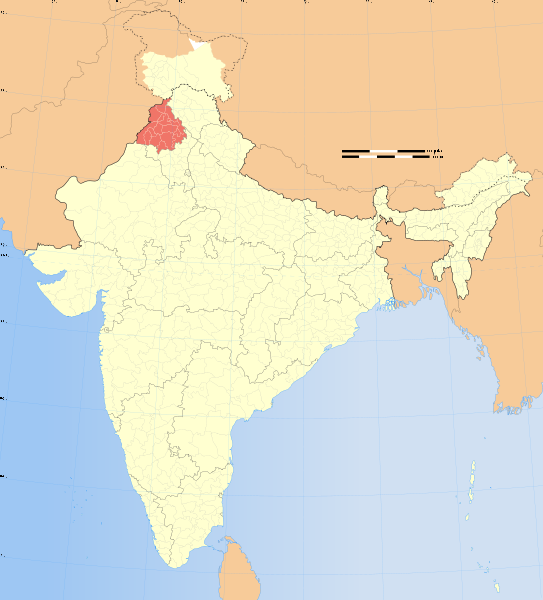
Punjab (red), Northern India

Lohri ushers in a host of mid-January celebrations across India, known in various regions as Makar Sankranti, Pongal, and Maghi.

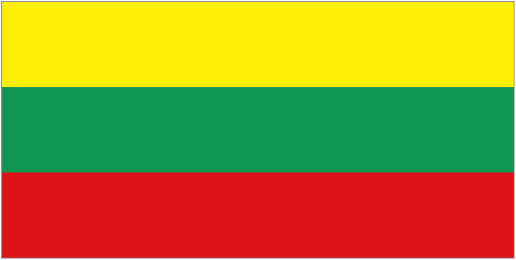
Freedom Defenders Day – 13.1.1991 – Lithuania

January 13

“One of the most important battles in Europe’s modern history was fought and won in Vilnius 16 years ago.”

Carl Bildt, Swedish Foreign Affairs Minister, January 2007

In the late 1980’s a “Singing Revolution” swept through the Baltic States of Lithuania, Latvia and Estonia.

Thousands of citizens coalesced night after night in each of the republics to sing national songs that had been banned under the Soviet regime. (Latvia, Lithuania and Estonia, as well as half of Poland, had been annexed by the Soviet Union in accordance with a secret corollary of the Nazi-Soviet Pact between Adolf Hitler and Joseph Stalin a week before the outbreak of WWII.)

On the Pact’s 50th anniversary 2 million people participated in a human chain across the Baltic States to protest the occupation.

The Lithuanian Communist Party seceded from the Soviet Communist Party, and in its first free election Sajudis, the newly formed pro-independence party, won a majority. The Lithuanian Legislature declared its independence from the Soviet Union in March of 1990.

The leaders of the Soviet Union were not too keen on this. Soviet troops entered Vilnius on January 11th and seized control of strategic posts such as the Defense Department, railway office, and Press House.

Youtube: Soviet troops vs. unarmed Lithuanian civilians, January 13, 1991

By January 12th the news had spread through the country and throngs of Lithuanians gathered at the capital to protect other locations such as the Vilnius TV tower. In the wee hours of January 13th, Soviet tanks attacked the TV tower, plowing through crowds of unarmed people. Fourteen civilians were killed.

At 2:30 in the morning:

“a small TV studio from Kaunas came on air unexpectedly. A technician of the family program that usually broadcast from Kaunas once a week, was on the air, calling for anyone who could help to broadcast to the world in as many different languages as possible about the Soviet army and tanks killing unarmed people in Lithuania. Within an hour, the studio was filled with several university professors broadcasting in several languages. The small studio in Kaunas received a threatening phone call from the Soviet army division of Kaunas. By 4 in the morning this studio received the news that Swedish news station finally saw the broadcast and will be broadcasting the news to the world.”

At the 15th anniversary of the January 13th revolution, Arturas Paulauskas, Speaker of the Lithuanian Seimas said:

“In January 1991 there was no country in the world the people of which did not help us. Every uttered word defending our freedom at that time was an invaluable contribution into our victory, especially the words by the Russian people…Just the way they won here, in Vilnius, in January 1991. And here in Lithuania, and there in Riga, Tallinn, later in Kiev, other countries. Most importantly they won in Moscow: The country that attacked and enslaved no longer exists…

“FREE is stronger than FREER and stronger than the FREEST M. Gorbachev offered us to be FREER, but all we wanted was simply to be FREE.”

Paulauska’s final thoughts explained why the Lithuanian people must remember this relatively new holiday. Yet his speech echoed the sentiments of leaders throughout history as to why we celebrate holidays:

“It is a real joy to see young people…who were not yet born in January 1991…gathered at the fire and signing patriotic songs. However all this does not yet mean that this young generation knows what to do with freedom defended in 1991.

“Our generation still has to hand down to them Lithuania with alive spirit of freedom and true values. From hands to hands, from minds to minds, from hearts to hearts…Let us never forget this responsibility. In the name of those who were killed 15 years ago. And in the name of those still to come.”

Full text here.

Also see Lithuanian Independence Day – February 16

Swami Vivekananda & Youth Day

January 12

The glory of Krishna is not that he was Krishna, but that he was the great teacher of Vedanta…Persons are but the embodiments, the illustration of principles. If the principles are there, the persons will come by the thousands and millions.

But if the principle is lost and forgotten and the whole of national life tries to cling round a so-called historical person, woe unto that religion, danger unto that religion!

Swami Vivekananda

Over a third of the 1 billion+ Indian population is under 15. Two-thirds are under 30. So when this country celebrates Youth Day, you better pay attention.

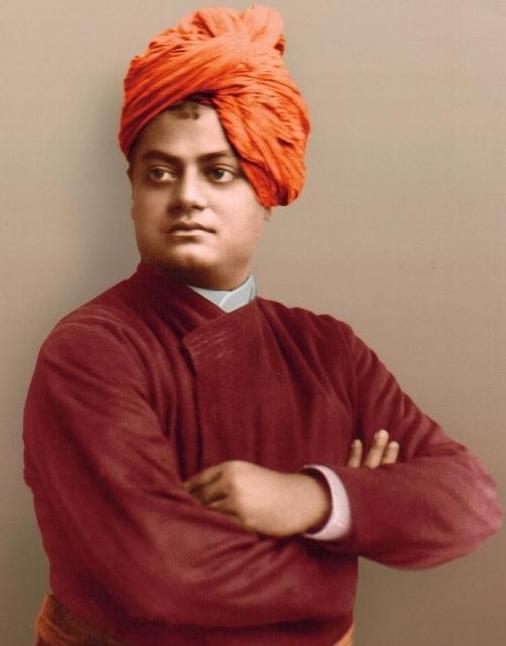
The United Nations and much of the world celebrates Youth Day on August 12, but India chooses to celebrate on January 12, the birthday of Indian scholar and teacher Swami Vivekananda. Vivekananda was an activist for the common people and the Spiritual Ambassador of India to the West during the late 19th century.

Swami Vivekananda

Swami Vivekananda

Vivekananda caused a spiritual earthquake in the U.S. when he spoke at the World’s Parliament of Religions in Chicago 1893. This was at a time when Hindus could be “outcast” simply by crossing the Atlantic.

One witness said: “No photograph or description can give a correct idea of the power of his eyes. They were wonderful. Like the Ancient Mariner in Coleridge’s famous people he ‘held you by the eye.’” (A. Srinivasa Pai)

One of the most powerful principles he taught and lived was that of “Jiva is Shiva,” that each individual is divinity itself. He believed that no one is truly free until all are truly free, even to the extent that personal salvation be secondary to helping others achieve salvation. He coined the term daridra narayana seva — serving God through less privileged human beings. His teachings heavily influenced the young Mahatma Gandhi.

Vivekananda was not without opponents. He believed that science and observation were the basis of religion, and thus religion taken on faith alone was the equivalent of superstition.

“I would rather have every one of you be rank atheists than superstitious fools, for the atheist is alive and you can make something out of him. But if superstition enters, the brain is gone…”

http://www.eaglespace.com/spirit/workbeforeus2.php

He espoused the revolutionary idea that religion be based on direct personal experience, rather than pure faith.

Religion is not going to church, or putting marks on the forehead, or dressing in a peculiar fashion. You may paint yourselves in all the colours of the rainbow, but if the heart has not been opened, if you have not realised God, it is all vain.

Vivekananda died on July 4, 1902, just shy of his 40th birthday. Today his memory serves as an inspiration to young people throughout India and the world.

If you have lost your wealth, you have lost nothing;

if you have lost your health, you have lost something;

if you have lost your character, you have lost everything.

Swami Vivekananda

More Words of Swami Vivekananda