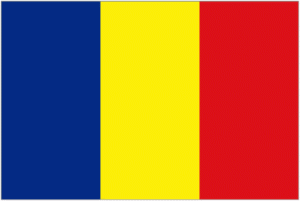
Romanian Flag Day

June 26

Awaken thee, Romanian, shake off the deadly slumber

Today is National Flag Day in Romania.

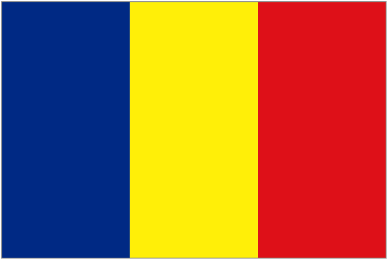
The three colors of the Romanian flag represent the blood of the people, the golden crops of the land, and the blue sky above…according to the Communists who ruled Romania from 1947 to 1989. But much has changed since the fall of the Iron Curtain, including the country’s national anthem, which was “Three Colors” from 1977 to 1989.

Like the flag itself, the country is an amalgamation of three nations: Dacia, Wallachia, and their all-too-famous cousin Transylvania. Though Transylvania is the most notorious, Romania was actually formed by the merging of the other two, Moldavia and Wallachia in 1859. Transylvania didn’t join the club until 1918.

Peles Castle, Romania © David Watterson
Who put the Roman in Romania?

After decades of clashes between Rome and the land known as Dacia, the Roman Emperor Trajan attacked and conquered the defiant kingdom around 100 AD. The war had tested and refined Roman military ingenuity. Dacia was powerful, wealthy, and no stranger to war. Trajan declared 123 days of celebration in Rome following the victory.

Two full Roman legions were posted in Dacia even in peacetime. The soldiers and Dacians intermarried, as did their native tongues. Dacian fighters repelled the Roman invaders around the 4th century, but even today Romania bears the name of the ancient empire. Romania, meaning Land of the Romans, didn’t become the official name until 1862, three years after the creation of the Moldavia-Wallachia state.

The Romanian flag has survived in one form another for 1500 years. Emperor Justinian issued a decree in 535 describing the region’s coat of arms and banner:

“On the right…a red shield, on which towers can be seen, signifying the other Dacia; in the second section a blue-sky shield, with the ensigns of the Bur tribe…and golden in the middle.”

A thousand years later the colors still coincided with the three major regions: red for Moldavia, gold for Wallachia, and blue for Transylvania. And in 1600, the prince Michael the Brave briefly united the three provinces before his assassination in 1601. The colors were used during this time to symbolize the amalgamated territories.

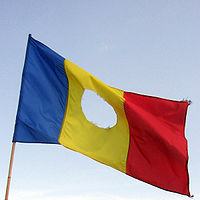
During the Communist regime a coat of arms was added to the banner, but removed in 1989, sometimes quite literally…
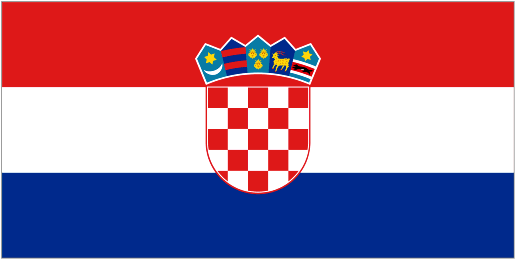
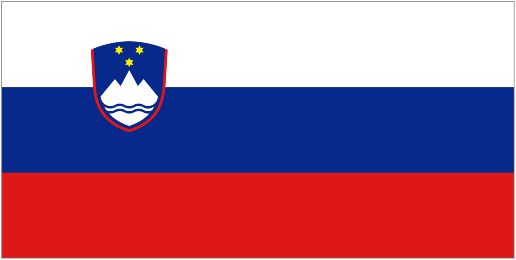
Statehood Day – Croatia & Slovenia

June 25


Like a family of members forced to live under one roof through most of the 20th century, the states that made up Yugoslavia had little in common but rivalries. Forged in the wake of World War I, the country was initially known as the Kingdom of Serbs, Croats, and Slovenes. The Kingdom of Yugoslavia, as it was later called, was dismantled after the Nazi invasion of 1941.

The country rose from the ashes of World War II as Democratic Federal Yugoslavia. Then as Socialist Federal Republic of Yugoslavia. (The Democratic thing didn’t work out too well.) Yugoslavia—the union of Serbia, Croatia, Slovenia, Macedonia, Montenegro, and Bosnia & Herzegovina—held together during the post-War period largely due to the iron will of one man, Josep Tito, the country’s president from 1953 to 1980.

Tito didn’t get along with Stalin. Because Yugoslavia’s Socialist revolution wasn’t thrust upon it by the Soviet Union, but was home-grown, Yugoslavia’s Communist Party wasn’t dependent upon the Soviets. They didn’t look at Stalin as a national hero. Relations with the Soviets soured after Yugoslavia refused to compromise its independence and merge with Bulgaria, as the Soviet Union requested. And throughout the Cold War, Yugoslavia remained neutral.

In 1980 President Tito’s death left a power vacuum that would never be filled. In the late 80’s, ethnic tensions broke out in Kosovo and across the separate states.

Tensions came to a head in June 1991 when, following a Croatian referendum, Croatia and Slovenia announced their intentions to break away from the union. Both states declared their independence on June 25th of that year. Though Slovenia’s declaration met with some violence, Croatia’s erupted into a full scale war. The former Yugoslavia became the site of one of the bloodiest European conflicts since the end of the World War II.

Today—June 25—Croatia and Slovenia, the Yugoslav fraternal twins, celebrate their birthdays.

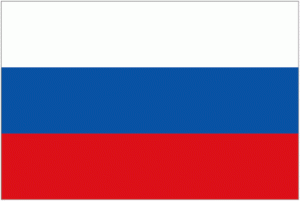
Russia Day

June 12

In the grand saga of the Russian Empire, Russia Day is a relatively new holiday, eagerly burrowing into the Russian consciousness to create roots and establish traditions.

In the early 1990’s it was known as “Russian Independence Day”. June 12th marks the day in 1990 that the Congress of People’s Deputies of the Soviet Russian Republic declared independence from the Soviet Union.

The irony that Russia declared independence from an entity to which it was virtually synonymous in the eyes of the world was not lost on the Russians. So in 1994, the holiday name was changed to “Day of the Declaration of the Sovereignty of the Russian Federation” for clarification, which was ultimately more confusing than the first name.

Finally, in an uncharacteristic Russian push for brevity, Vladimir Putin shortened it to Russia Day in 2002, and the name has stuck.

One Russia Day tradition is the handing out of the “Russia Medals” for achievements in science and culture. But the rituals that seem to have made the biggest headway are sports and racing.

Marathons, drag races and motorcycle stunt competitions will bring Moscow traffic to a stop today. Several running and motoring races take place today, including the final leg of the 1,151 kilometer “Golden Ring” race which finishes up just outside the Kremlin, and the “drifting” contests where drivers basically treat their cars like big roller skates. The weekend also hosts the “Call of Russia” Tournament, the Independence Cup, and the Moscow Sailing Cup.

In general though, the populace has yet to rally around June 12th as a symbol of what it means to be Russian.

“…for some people, June 12 signifies a tragedy because it marks the end of a glorious Soviet era. And for others, the date means nothing at all. What a fitting date for a state holiday!” — Boris Kagarlitsk, Moscow Times

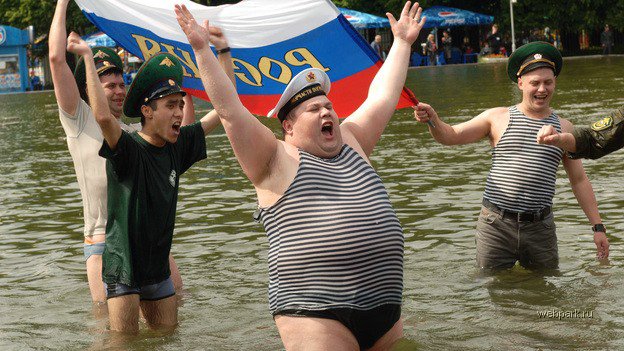
But I love Russia Day if, for nothing else, it gives me an excuse to post one of my favorite pictures.

Russian_joy

A Sporting Russia Day – The Moscow News

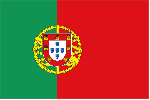
Day of Portugal

June 10

The feats of Arms, and famed heroic Host
from occidental Lusitanian strand,
who over the waters never by seaman crossed
fared beyond the Taprobane-land (Ceylon)
forceful in perils and in battle-post,
with more than promised force of mortal hand…

Os Luíadas

June 10 is Portugal’s National Day, aptly known as “Portugal Day” or Dia de Portugal. Actually it’s longer, but few go around saying, “Happy Day of Portugal, Camões, and the Portuguese Community!”

Portugal Day marks the death of writer, historian and adventurer Luís de Camões in 1580.

Camões wrote the Portuguese national epic Os Lusíadas , a history in verse of the Iberian nation and the era of discovery.

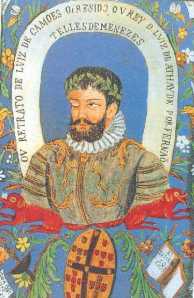
Compared to his writings, little is known of Camões’ real life. He was banished from Lisbon in 1546, supposedly because of an affair with a lady of the court. He served in the military for two years in Morocco, where he lost his right eye. He returned to Lisbon where the king (John III) pardoned him for injuring an officer in a street brawl; then spent 17 years in exile from his homeland, living in Goa, India and Macau, China. During these years he conceived of and wrote much of Os Lusíadas. Legend tells us he survived a shipwreck in the Mekong Delta in Vietnam, keeping his manuscript dry by swimming with one arm and holding it above the water with the other.

Luis de Camões - he ain't winking

(The word “Lusiadas” stems from the tribe that occupied Portugal in ancient times, and refers to the Portuguese.)

Camões presented his masterpiece to King Sebastian in 1572 and won a small royal pension. However, he spent the end of his life in in a Lisbon poorhouse.

The year of Camões’ death, King Philip of Spain claimed the throne of Portugal after the disappearance of King Sebastian at the Battle of Alcácer Quibir. Portugal remained under Spanish control for sixty years.

Today, citizens of Portugal get the day off, the President addresses the nation, and Portuguese around the world gather to celebrate their homeland and their heritage.

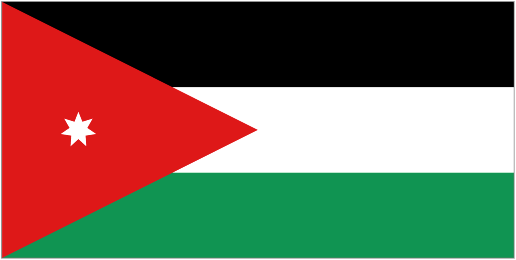
King Abdullah’s Ascension – Jordan

Anniversary of the Ascension of King Abdullah II – June 9;
Army Day / Anniversary of the Great Arab Revolt – June 10

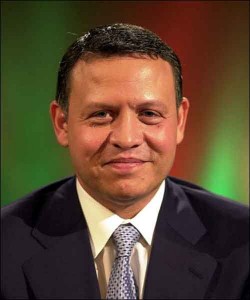
King Abdullah II of Jordan was not selected as Crown Prince until January 24, 1999, just two weeks before the death of his father. Previously the king’s brother had been heir apparent (and it was speculated that had the king lived longer, Abdullah’s younger half-brother would have been made heir). As it was, upon the king’s death from non-Hodgkin’s lymphoma, Adbullah became the king of Jordan on February 7, 1999. A separate enthronement ceremony was held on June 9 so that…

“future anniversaries of King Abdullah’s accession would not clash with events marking the death of his father.” — (Jordan Crowns New King, June 1999 — BBC.)

•  •  •

Jordan is known as the Hashemite Kingdom of Jordan. The Hashemites descend from Hashim ibn Abd Manaf, the great grandfather of the Prophet Muhammad, through the Prophet’s daughter Fatimah. Hashim means “cuts into pieces. It sounds like a guy you wouldn’t want to mess with, but Hashim earned his nickname benevolently…

“when during a shortage of flour he prepared cakes and flour and gave a grand feast to the entire inhabitants of Makkah.”  (Muhammad… Mercy for the Worlds: Rehmatullil Alameen)

King Abdullah II’s father, King Hussein (1935-1999), once said of the Hashemites…

“We are the family of the prophet and we are the oldest tribe in the Arab world.” (Hussein CNN obit.)

•  •  •

King Abdullah II studied in England and the United States as well as Jordan. In fact he recently established King’s Academy in Jordan in the spirit of his alma mater, Massachusetts’ Deerfield Academy, even hiring the boarding school’s headmaster to lead it.

He served in several capacities in the Jordanian military, including as Commander of Special Operations, and had attained the rank of Major General when he assumed responsibilities as monarch.

Jordan’s geography and history places it in a unique place in Middle Eastern and Western diplomacy. Like his predecessor, King Abdullah has played a key role in the Palestinian-Israeli relations. In a recent speech commemorating the dual anniversaries of the Great Arab Revolt (Army Day) and his 1999 inauguration, the King responded to military personnel who criticized naturalization of Palestinians for fear doing so could weaken plans for a Palestinian state.

“You should be sure that we will not accept, under whatever circumstances, a solution for the Palestinian question at the expense of Jordan. Also, Jordan will not have any role in the West Bank. At the same time, we will not give up our historical role and duty in supporting our Palestinian brethren until they set up their independent state on their national soil.” — King Abdullah II

The West Bank was part of Jordan until the Six Day War in 1967. Over half of Jordan’s population are of Palestinian extraction, including the King’s wife, Queen Rania, who was born in Kuwait to Palestinian parents.

The King’s mother is Princess Muna al-Hussein, born Antoinette Gardiner in Suffolk, England. She met King Hussein on the set of Lawrence of Arabia and converted to Islam; the two were married from 1961 to 1971 and had four children.

King Abdullah II of Jordan

Jordan New Agency – the Hashemites

The Great Arab Revolt

Queen Rania’s Twitter Page

The Peculiar Impact of [the film] Lawrence of Arabia on Today’s Arab World

Denmark’s National Day

June 5

“O Denmark! in thy quiet lap reclined,
The dazzling joys of varied earth forgot,
I find the peace I strove in vain to find,
The peace I never found where thou wert not.”

Adam Gottlob Oehlenschlager, “To My Native Land

Denmark’s two main national holidays celebrate completely contradictory principles. One celebrates the birthday of the monarch (April 16) while the other celebrates the anniversary of the taking of power away from the monarch, on June 5, 1849.

To understand the importance of the 1849 Constitution, we have to delve into the histories of the Danes and Swedes, which are hopelessly incestuous until 1523. Don’t even try telling the two apart before then. But Sweden’s breakaway in 1523 led to a new relationship between the two. Namely, one of war, a hobby the two nations pursued with abandon for the next century and a half.

Finally along came a Danish king in the mid 17th century, Frederick III, who somehow managed to win over the hearts and minds of the Danish people by leading them to utter defeat at the hands of the Swedish in 1658—and then by staging an unprecedented comeback in Game 7 of the Dano-Swedish War (1658-1660), defending the city of Copenhagen from destruction and forcing Sweden to relinquish territory.

King Frederick III, by Wolfgang Heimbach

The crowds went wild. The conqueror Frederick III became the Lakers of Denmark, and his popularity grew to such an extent that the First Estate was persuaded to disband the legislative assembly and concede all power to Frederick. This was accomplished by the Lex Regia Perpetua / Kongelov (King’s Law), a document which…

“has the highly dubious honour of being the one written law in the civilized world which fearlessly carries out absolutism to the last consequences.” (R. Nisbet Bain, Danmarks Riges Historie)

The king’s word was the law of the land for nearly two centuries. It wasn’t until 1849 that King Frederick VII peacefully overturned the principles of the Kongelov, relinquishing absolute power and establishing the constitutional monarchy of Denmark.

The last revision to the Constitution was in 1953, also on June 5.

How to celebrate Constitution Day? Or Grundlovsdag as it’s called…

According to wikipedia.org,

“Some people attend political meetings, though many – especially the elderly – meet at the sites of the political meetings to drink beer and other alcoholic beverages.” (Public Holidays in Denmark)

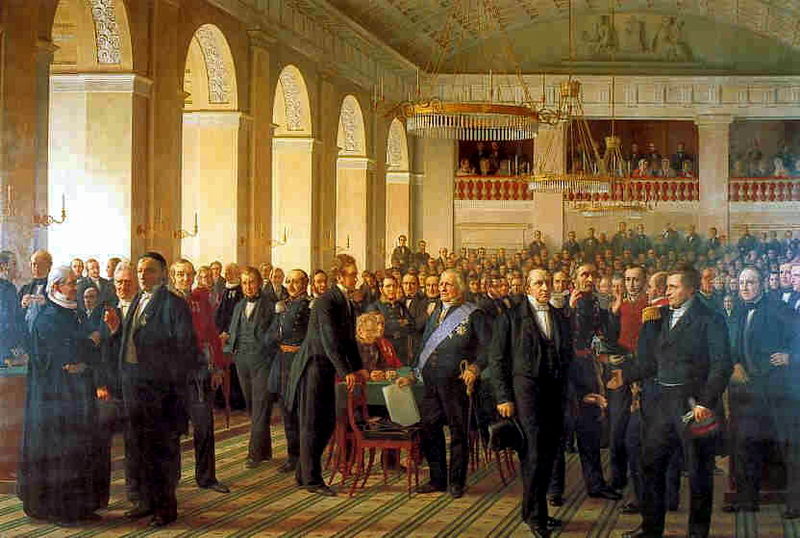
National Constitution Assembly of 1848, by Constantin Hansen

Official Denmark Constitution – Royal Danish Ministry of Foreign Affairs

Frederick III of Denmark

Tonga – Emancipation Day

June 4

It would be hard to describe Tonga in a word, but you could do worse than  ‘exceptional’. Over the past two hundred years, the remote archipelago has stubbornly been the exception in the Pacific rather than the norm.

Though it was a British protectorate until 1970, Tonga is the only Pacific island nation never to have been formerly colonized. It’s the only nation in the region continuously governed by its indigenous population. And it’s the last Polynesian monarchy, making it one of only five members of the Commonwealth of Nations to have its own monarch.

Located about 3,000 kilometers east of Australia, Tonga consists of 171 islands.

Tonga is one of the smallest countries in the world, both in terms of area and population. At 747 sq. km, its landmass is roughly one-tenth the size of Los Angeles County and it has 1/100th the population.

Its life expectancy is 73–quite long for the region. And for our Moscow readers, the lowest temperature ever recorded in Tonga was 48 F/8.7 C.

That’s not to say Tonga is without problems. In addition to widespread poverty, public demands for reducing royal power have met stiff resistance. And its not hard to see why. Over the past two hundred years, Tonga’s monarchs have been the core force in maintaining its highly autonomous status and development.

Tonga has been inhabited since about 2500 BC. Oral history recalls the sovereign line dating back a thousand years. But there are no written records of Tongan history before Captain Cook’s landings in the 1770s. Cook called the place the “Friendly Islands” based on the population’s hospitality and his positive exchanges with the locals.

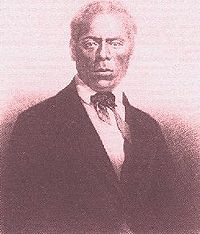
King George Tupou I

The first king of Tonga as we recognize it today was King George Tupou I. Tupou is believed to have been born in 1793. As a chieftain, he consolidated power over the disparate island groups.

“From a small, disputed inheritance in the Ha’apai group in 1820, his ambition to reunite Tonga after its civil wars which had begun in the 1780s led him first to the conquest of Ha’apai in 1826; he secured the inheritance of Vava’u in 1833, and the inheritance of the Tu’i Kanokupolu title which nominally gave him Tongatapu in 1845, and thus made him king of all Tonga.”

The Alleged Imperialism of George Tupou I. Campbell, I.C. Journal of Pacific History

He had abolished serfdom in Vava’u—part of Tonga—back in the 1830s. In 1862 he took two more extraordinary steps. Not only did he create a parliamentary system of government, he also…

“…abolished the system of semi-serfdom that had previously existed and established an entirely alien system of land tenure whereby every Tongan male, upon reaching the age of 16, was entitled to rent for life at a nominal fee a plot of bush land (api) of 8.25 acres, plus a village allotment of about three-eighths of an acre for his home.”

Landfalls of Paradise

For these and more sweeping changes, the first modern king is Tonga’s national hero. The anniversary of the Tupou’s coronation in 1875 is celebrated in December, but June 4 is Tonga’s National Day. It remembers both the anniversary of the the abolishment of serfdom in 1862 and the end of Tonga’s status as a British protectorate over a century later.

Wild Ride on an Italian Superbus

June 2

Today the descendants of the world’s oldest Republic celebrate Republic Day.

Over 2500 years ago present-day Italy was ruled by a king with a superbadass name, Tarquinius Superbus, who inherited the throne, not through direct lineage, but the even-older-fashion way–by offing his wife’s dad King Tullius.

Servius Tullius had angered the Roman elite by implementing revolutionary policies that protected the poor and laid the foundations for constitutional government. Tarquinius and the king’s daughter Tullia, outraged at how her father was flushing their country down the toilet, led the conspiracy to assassinate him, ending his 44-year reign. According to legend, Tullia showed her remorse for the murder by repeatedly running over her father’s dead body with a chariot.

Tarquinius ushered in a new age of Roman reform, by repealing his father-in-law’s Constitutional decrees and maintaining the peace through violence, murder and terrorism. These halcyon days came to an abrupt halt in 510 BC. Just as Tullius’ daughter became the king’s downfall, Tarquinius’ son Sextus would become his, taking down not only his father, but the entire concept of monarchy in his wake.

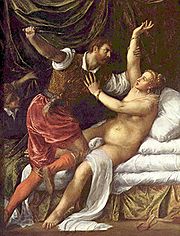
The Rape of Lucretia

The unruly and loathsome Sextus decided it would be a thrill to rape one of the most respected and pious members of Roman patrician society. He told Lucretia, wife of the nobleman Collatinus, that if she refused to submit to him, he would have her killed and place her body in bed with a dead slave, all before her husband returned home. A fate worse than death, she would be disgraced for all time.

Lucretia gave in to the threat. But after the evil deed, she reported circumstances of the rape to her family. She then committed suicide to save them from scandal. The furor that arose against the king led to a revolt against the monarchy and the deposing of the whole king’s clan.

On these precarious beginnings grew the most famous republic in world history. A republic that only ended half a millennium later when Julius Caesar was elected dictator for life.

But that has nothing to do with Republic Day. No, the Italians celebrate Republic Day to commemorate this day back in 1946, when they elected to boot the House of Savoy, Europe’s longest ruling royal house, from power.

fascio-nating’ bit of linguistic trivia:

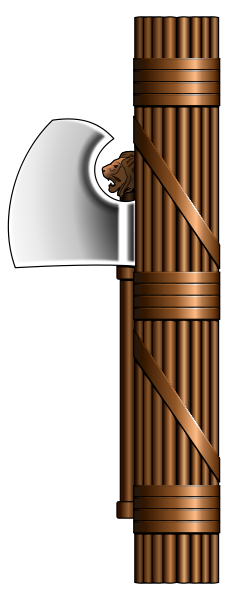
In 1922, after a series of riots and civil unrest, Italy’s King had appointed the strong figure of Mussolini, leader of the Fascist Party, to be the nation’s new Prime Minister. (Today’s word fascist comes from the Italian fascio, referring to a bundle of rods. In the 19th century the fascio was used by political groups as a symbol of Italian unity: the individual sticks of the fascio were fragile, while the bundle itself was unbreakable.)

The King assumed Mussolini would reign in the rebelling democratic and parliamentary institutions. Mussolini did indeed consolidate power, by declaring himself supreme dictator and doing away with any semblance of representative or Constitutional government.

In 1939 Mussolini and the Fascists brought Italy into World War II on the side of Nazi Germany in the hopes of rebuilding an empire–a mission accomplished by conquering King Zog of Albania. Mussolini met his fate near the end of the war. Executed by a Soviet firing squad, Mussolini’s body was hung upsidedown at an Esso gas station, where it became a punching bag for angry Italian citizens.

http://members.aol.com/Custermen85/ILDUCE/Mussolini.htm

But his death didn’t ease resentment against the monarchy that had once promoted the dictator.

There were no names or specifics on the famous 1946 referendum. The ballot asked voters to determine whether the Head of the Italian State would be held by the Royal Family–the House of Savoy–or a democratically elected representative.

During this process King Vittorio Emanuele III handed over the throne to his son Umberto II. Umberto is called “the King of May”, referring to his fleeting reign. On June 2 and 3 a narrow margin of Italians voted for the final abolition of the Italian monarchy.

As a result of the referendum the king and his progeny were forced to leave Italy forever. It wasn’t until 2002 that this provision was overturned, and the son of King Umberto, Victor Emmanuel, exiled for 56 years, finally re-entered the land he once almost ruled.