The Assumption

August 15

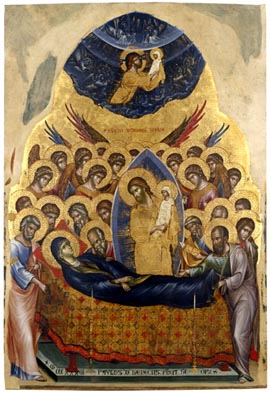
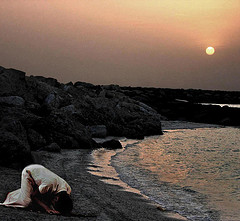
Celebrated on August 15, the Assumption refers to the death of Mary, the mother of Jesus, and her entry into heaven. But ‘Assumption’ might also refer to what we base our knowledge of the event on, which is–well, nothing.

That’s right, there’s actually no mention of Mary’s Assumption in any of the Gospels. But that’s hardly surprising. In the centuries after Jesus’ death, the sites of his last years in Jerusalem were purged of any reference to the religion that he preached, as the city was completely rebuilt by Emperor Hadrian in homage to pagan gods.

After the building of the Church of the Holy Sepulchre in 336, the sacred sites began to be restored and the memories of the life of Our Lord began to be celebrated by the people of Jerusalem,” writes Father Clifford Stevens.

One such site was the “Place of Dormition”, said to be the place where Mary “fell asleep” for the last time. The locals celebrated not the Assumption, but the “Memory of Mary”

For a time, the “Memory of Mary” was marked only in Palestine, but then it was extended by the emperor to all the churches of the East. In the seventh century, it began to be celebrated in Rome under the title of the “Falling Asleep” (“Dormitio”) of the Mother of God. Soon the name was changed to the “Assumption of Mary,” since there was more to the feast than her dying. It also proclaimed that she had been taken up, body and soul, into heaven.

According to tradition, Mary was taken up to heaven body and soul, rather than her soul alone–placing her in a select group of people, including the prophets Enoch and Elijah. By the 13th century the story of the Assumption was accepted as fact my much of Christendom. But the Assumption wasn’t deemed official church dogma until Pope Pius XII proclaimed it so in 1950.

Indian Independence

August 15

The Twentieth Century witnessed over 140 countries gain independence. [35 of them in the years 1960 and 1991 alone]. But few, if any, stirred such emotion, involved so much conflict, changed and disrupted so many lives, inspired so many future leaders, and so fundamentally altered the world we live in, both politically and philosophically, as the independence of India.

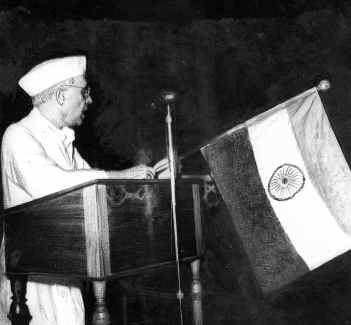
A hundred-year struggle against imperialism and colonization came to a climax as Prime Minister Jawaharlal Nehru addressed his people on the eve of India’s long-awaited independence:

Long years ago we made a tryst with destiny, and now the time comes when we shall redeem our pledge, not wholly or in full measure, but very substantially. At the stroke of the midnight hour, when the world sleeps, India will awake to life and freedom. A moment comes, which comes but rarely in history, when we step out from the old to the new, when an age ends, and when the soul of a nation, long surpressed, finds utterance.

Nehru during his Tryst with Destiny speech
Nehru's "Tryst with Destiny" speech

India found that, like so many other countries, while freedom and self-determination solved some ills, other problems were exacerbated. The partition of India into two separate, independent nations disrupted millions of lives and led to a bloody conflict that has not healed to this day.

Less than six months after independence, the Pakistani-Indian conflict would take the life of Mohandas Gandhi himself, the Indian former-lawyer who used civil disobedience to combat racial injustice in South Africa and who raised peaceful resistance to a new level to free his own countrymen in India. On January 30, 1948, Gandhi was shot by a Hindu radical, who was angry at Gandhi’s cooperation with Muslim Indians and Pakistanis.

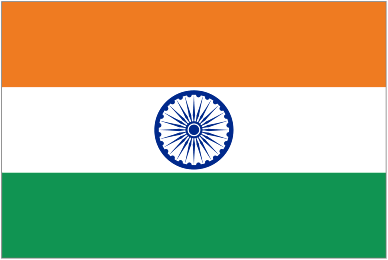
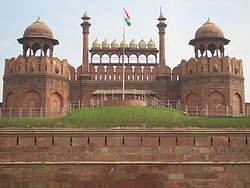
Indian flag rises above Red Fort, Delhi

Despite the death of its greatest leader, the story of Indian independence showed the world that the principles Gandhi preached, concepts of non-violence and the power of peace, were not mere religious dogma, not words spouted by the powerful to keep the powerless meek and compliant, but were weapons capable of ending an Empire.

Swami Vivekananda was once asked by an Englishwoman, “What have you Hindus done? You have never even conquered a single nation.” To which the Swami replied…

That is true from the point of view of the Englishman…but from ours it is quite the opposite. If I ask myself what has been the cause of India’s greatness, I answer, because we have never conquered.

The gift of India is the gift of religion and philosophy, and wisdom and spirituality. And religion does not want cohorts to march before its path and clear its way. Wisdom and philosophy do not want to be carried on floods of blood. Wisdom and philosophy do not march upon bleeding human bodies…but come on the wings of peace and love, and that has always been so.

Swami Vivekananda Vedanta Lecture – Spirituality, the Gift of India

Hungry Ghost Festival

August 14, 2011
August 30, 2012
August 20, 2013

No, not those kind of ghosts.

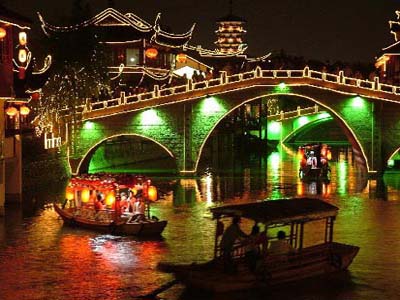
The period of Ghost Month–the seventh month of the Chinese lunar calendar–comes to a climax on Zhong Yuan, the Hungry Ghost Festival, on the eve of the fifteenth day. During Ghost Month the gates of the afterworld open to allow the dead to walk the earth and seek food.

Families prepare meals for the departed on Zhong Yuan. Many say prayers and burn special incense. Also, it is said these ghosts can enact revenge on those who wronged them in life.

There is a superstition against doing all sorts of activities during Ghost Month, including swimming–kind of unfortunately, as the Olympic swimming events occur smack in the middle this year.

In China the festival bears some similarity to Qingming–Tombsweeping Day–except the Ghost Festival focuses solely on the departed of previous generations.

Other traditions include the placement of a chair and alter outdoors in a prominent location for priests. Dishes of peaches and special flour-made rice are placed underneath the alter and spread by the priest to the souls of the dead. Atop the alter are symbolic sacrifices, including food and cakes, meant to invoke the gods for better weather and healthy crops. Families also make and burn fake paper money in tribute to the dead.

Zhongyuan Festival china.org.cn

Links:

http://shuangxingfu.blogspot.com/2009/08/hungry-ghost-festivalof-seventh-lunar.html

Raksha Bandhan

August 13, 2011

All across India sisters tie special colored bracelets of thread around their brothers’ wrists, as a symbol of protection. Likewise, the thread reminds the brother of his pledge and duty to protect his sister.

The threaded bracelet is called a rakhi and the holiday is Raksha Bandhan, a Hindu and Sikh celebration of brothers and sisters. It falls on the full moon (Shravan Poornima) in August. (August 16, 2008. August 5, 2009.)

There are two main stories of how the tradition came about.

One is that the goddess Draupadi tore a strip from her sari and wrapped it around Krishna’s wounded finger after battle. Later, Krishna returned the favor. When Draupadi’s malevolent brother-in-law attempted to dishonor her by removing her sari, Krishna continuously elongated her sari so she could not be disrobed.

Another is that Shashikala blessed a silken talisman and tied it around Lord Indra’s right wrist to protect him from harm during the battle of gods and demons. The rakhi gave him the strength to defeat them.

The tradition was further popularized during India’s Moghul period in the 16th century. Facing attack from the sultan of Gujarat, Queen Karnavati of Rajasthan sent a sacred Rakhi thread to the Mughal emperor Humayan, to remind him of their special connection and in the hopes of receiving assistance against the enemy.

This year in Ahmedabad, Gujarat, about 700 young men and women at H.K. Arts College reversed the tradition. Boys bestowed Rakhi on the girls as a symbol of determination to stop female foeticide, a crime that is largely responsible for lopsided male:female ratio in India, especially in states like Gujarat where that ratio is 100 to 83.

Female Foeticide in India

Tisha B’Av

9th of Av (August 8-9, 2011; July 28-29, 2012)

One of the most tragic dates in the Hebrew calendar, the ninth day of the month of Av commemorates not just one but several tragedies that befell the Jewish people on that date, from the destruction of the First Temple in 586 BC to the expulsion of the Jews from Spain in 1492.

According to the Bible, the First Temple was built by King David’s son and heir Solomon in the 10th century BC, with materials and assistance from King Hiram I of Tyre and under the direction of Tyrian and Phoenician master-builders.

Model of Solomons Temple
Model of Solomon's Temple

It was said to house the Ark of the Covenant, which was moved from the tent in which King David had deposited it. The Temple stood for six centuries.

The siege of Jerusalem in 589 BC ended with the razing of the Temple three years later.

The building of the First Temple has been studied by religious leaders and Freemasons alike (Solomon’s Temple is considered the symbolic foundation of Freemasonry). However, few remains of this era have been excavated from the site on which it once stood*. This may be partly because construction on the Second Temple began only 50 years after the fall of the first one, and partly because excavation on the Temple Mount is forbidden: In addition to being sacred to Judaism, the Temple Mount is the location of the Aqsa Mosque and the Dome of the Rock, two of the holiest sites in Islam, where Muhammad ascended to heaven (Isra wal Miraj) and where Abraham prepared to sacrifice his son to God (Eid al-Adha).

The building of Second Temple was sanctioned by the Persian King Cyrus the Great and completed under Darius I in 516 BC. This temple stood for five centuries and was completely rebuilt around 16 BC by King Herod.

In 67 AD Judea rebelled against Roman occupation. Roman general (and future Emperor) Titus laid siege to Jerusalem. The siege culminated with the complete sack of the capital, the expulsion of the Jews, and the final destruction of the temple–again on Tisha B’Av (the ninth of Av) in 70 AD.

Siege and Destruction of Jerusalem by the Romans - David Roberts
"The Siege and Destruction of Jerusalem by the Romans Under the Command of Titus, A.D. 70"- David Roberts, 1850

Tisha B’Av begins tonight at sunset and continues until nightfall tomorrow.

Freemasons and the Temple of the Solomon

Temple Mount Excavation Conflict

Crystalinks – Solomon’s Temple

*An October 2007 construction project unearthed remains believed to date from King Solomon’s Temple.


Bookmark and Share

Transfiguration of Jesus

August 6

transfiguration:
a: a change in form or appearance; metamorphosis
b: an exalting, glorifying, or spiritual change

The transfiguration, celebrated by the Roman Catholic Church each year on August 6, refers to what is perhaps history’s greatest Kodak moment: Jesus talking with the prophets Moses and Elijah (Elias) on the peak of Mount Tabor in 27AD.

Only the Apostles Peter, John and James witnessed the event, and unfortunately none of them posted pics it to their myspace account. (If you have a photograph of the Transfiguration, please email it to us!) Nor do we have any record of what was discussed, for the disciples were too distant to hear the conversation, and Jesus forbade them from even mentioned the event until after the Son of Man had risen.

What we do know comes from nearly identical versions in the Gospels of Matthew, Mark and Luke.

Jesus led the three Apostles to the mountaintop where “His face shone like the sun and his clothes became as white as the light,” says Mark.

Just then there appeared before them Moses and Elijah, talking with Jesus,” continues Matthew.

Peter offered to set up three shelters, one for each prophet, but as he spoke a cloud enveloped them. “A voice came from the cloud, saying, ‘This is my Son, whom I have chosen; listen to him,” concludes Luke. When the Disciples looked again, the two prophets had disappeared.

Theologians have debated the literalness of the Transfiguration. Most take the Transfiguration as a factual description of an actual event, especially in the Orthodox Church. Others view it as an allegory.

One interpretation of the Transfiguration is that Moses represents the Law and Elijah represents the Prophets.

In Jesus’ time, Moses was seen as having delivered the Law from God to the people and codifying it during their 40 year trek across the desert. In fact, after Genesis and half of Exodus, that’s what most of the first five books of the Bible are: lengthy lists and descriptions of the laws that governed ancient Hebrew society, from the now obscure laws concerning the treatment of slaves, the ritual sacrifice of goats, and proper stoning technique, to principles still considered the basis of Western law, such as “Thou shall not kill.”

Elijah meanwhile, may have represented the Prophets. Elijah is a prophet in the Jewish, Christian and Muslim faiths (“Ilyas” in Islam), but occupies very little space in any of those religions’ spiritual texts. One of his claims to fame was that he was said to have never died. Instead he was taken up to heaven in a chariot of fire. It was believed his future appearance on Earth would be an imminent predictor of the coming of the Messiah. In the New Testament, folks take St. John the Baptist for Elijah.

For all its celebration among the churches themselves, the event receives very little attention from the general Christian public. And these days a child is less likely to learn about transfiguration from Matthew, Luke, or Mark than from Harry:

“Transfiguration is some of the most complex and dangerous magic you will learn at Hogwarts. Anyone messing around in my class will leave and not come back.”

— Minerva McGonagall, HP 1:8

[2008: This year the Transfiguration falls only a few days away from Islam’s Al-Miraj, the Ascension of the Prophet. During what is often called the “Night Journey,” Muhammad travels first to Jerusalem in a single night, then up to the heavens where he meets the prophets of Islam’s past, including Jesus, Moses, and Abraham. Like the Transfiguration in Christianity, Islamic religious leaders debate whether Al-Miraj is an actual event or symbolic allegory. And like Jesus, Muhammad is transformed prior to the encounter, not by light but by the Qur’an’s most famous open-heart surgery.]

Greek Orthodox Transfiguration
Lughnasadh

July 31-August 1

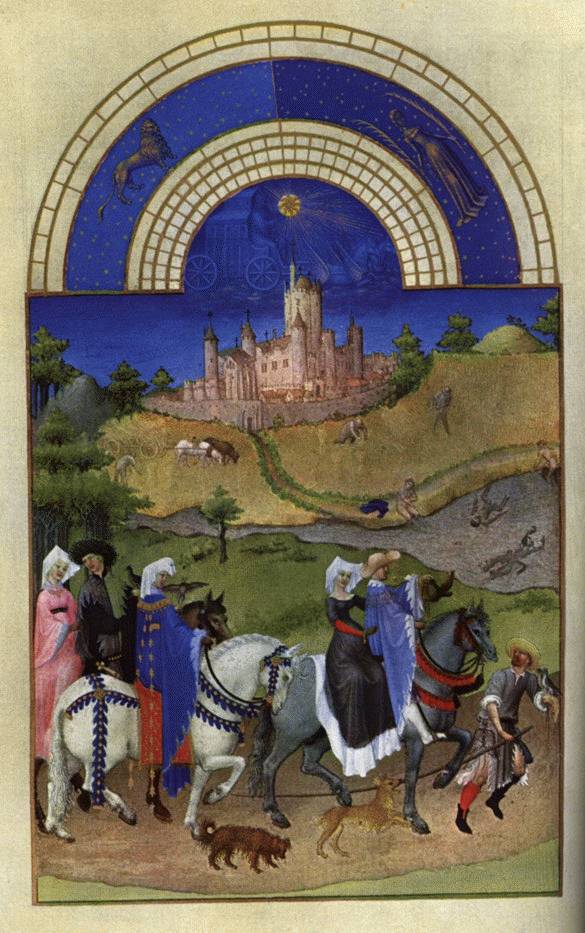
Book of Hours, August

Today is Lughnasadh! Not to be confused with Lasagna Day. That was July 29.

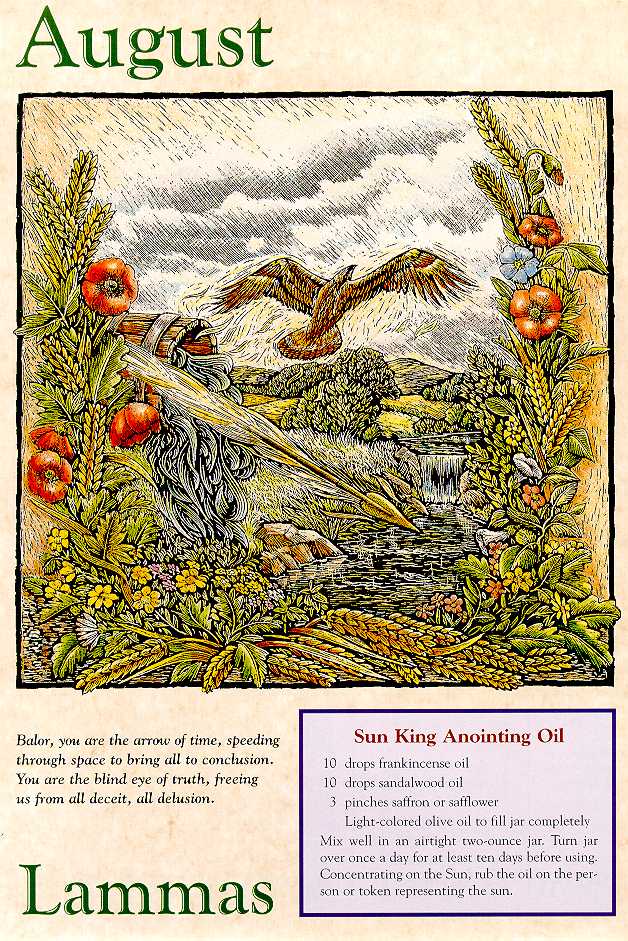
Also known by its more Christian name, Lammas, aka “Loaf-mas”, Lughnasadh marked the time of year villagers would celebrate the first Harvest, on or around August 1, by baking and sharing bread from the first grain of the season.

Lughnasadh is a cross-quarter day—days that fall directly between equinoxes and solstices—the others being Imbolc (Candlemas), Beltane (May Day), and Samhain (Halloween).

The holiday would have been celebrated by the Celts starting at sundown (on the 31st) until the following day.

July 31 is also Harry Potter’s Birthday! Coincidence?

Today the ancient pagan tradition is carried on by wiccans and is becoming increasingly popular in neopaganism.

from http://jksalescompany.com/dw/wicca_calendar.html

http://thunder.prohosting.com/~cbarstow/lammas.html

Lughnasadh recipes

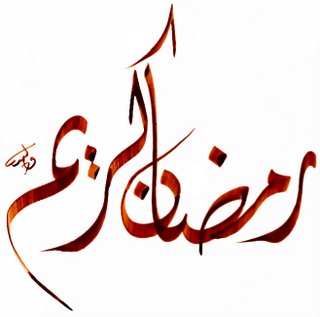
Ramadan 1432

~August 1, 2011 (varies)

Like all Islamic months, Ramadan begins when the crescent moon is first visible, just after the new moon.

During Ramadan, Muslims fast for thirty days.

30 days!? Wouldn’t you die after, like, a week?

Yes, you’d think that, but Muslims fast for 30 days, not 30 nights.

Families awaken early in the morning to eat Sahur (breakfast) before the sun rises and to pray the first of five daily prayers. The fourth prayer is at sunset (Maghrib), after which the family eats Iftar, the evening meal. Eating in between is forbidden, with exceptions for children, diabetics, pregnant women, the very elderly, ill people, etc. [No, you can’t eat children or ill people, silly. Children and ill people can eat.]

Procession through the streets of Cairon on the 1st day of Ramadan, M. Jarou, circa 1870
Procession through the streets of Cairo on the 1st day of Ramadan, c. 1870

Fasting, or Sawm, is one of the Five Pillars of Islam. The others are Faith (Iman), Prayer (Salah), Charity (Zakah), and Pilgrimage (Hajj).

The fasting refers not only to food, but to the abstinence of earthly desires. The Fast is is a way to show faith and devotion to God; yet it is much more than that. Muslims use this time to seek spiritual guidance and to atonefor sins and past mistakes. According to www.30-days.net:

Fasting helps one to experience how a hungry person feels and what it is like to have an empty stomach. It teaches one to share the sufferings of the less fortunate. Muslims believe that fasting leads one to appreciate the bounties of Allah, which are usually taken for granted – until they are missed!

The Islamic calendar is a lunar calendar. Unlike other calendars, the Islamic calendar contains no intercalary period (like a leap day or a leap week). Since the calendar is about 354 days, the date of Ramadan falls about 11 days earlier each year.

Ten or fifteen years ago, when Ramadan fell in the middle of winter, it was easier to fast, since the days were shorter. As we move into the summer months the fasting hours grow longer and longer.

But as Shahed Amanullah points out:

There is, however, a bright side to this holiday mobility. As Ramadan moves slowly through the calendar year, we have multiple opportunities to share Ramadan with other faith traditions and holidays as their paths cross in time. And each time this happens, there is a bit of cross-pollination that goes on that I believe enriches both traditions.

The word ‘Ramadan’ comes from an Arabic ramida, meaning “scorching heat”. It refers to the purging of sin from the soul.

Watch for the Sunset (©Aphrodite)

You Know It’s Ramadan When…

Ramadan Moon Over Morocco

———————

(from 2009/1430)

“August 23 will be the first day of the Holy Month Ramadan as the moon was not sighted on Friday, according to the Central Ruet-i-Hilal Committee.”

— Samaylive.com, August 22, 2009

Hilal has been sighted over many places (Florida, Texas etc) in the USA after the sunset on Friday 21st August 2009. The astronomical data also strongly predicted the possibility of naked-eye sighting in most of North America. Therefore we announce that Saturday, 22nd August 2009 is the first date of Ramadhan 1430.

— http://www.hilalsighting.org, August 21, 2009

[from September 1, 2008/1429]

This month marks a rare occurrence in the Islamic and Gregorian calendars. The ninth months of both calendars (Ramadan and September, respectively) begin and end on just about the same days. The Gregorian date of Ramadan will vary depending on where in the world you are and on the night sky. But essentially, Ramadan 1429 will begin September 1 and end on September 29th or 30th.

This is the first time this has occurred since…well, if you find out, let me know. There’s a good chance it’s the first time it’s happened in your lifetime.

This just in! Ramadan Announced