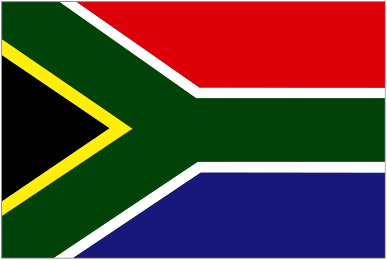
South Africa’s Women’s Day recalls the 20,000 woman-strong march in Pretoria on this day in 1956.
The marchers protested amendments to the Urban Areas Act, which, among other things, reserved urban living spaces for white South Africans, and required black men in cities and towns to carry special passes with them at all times or be subject to arrest. Originally enacted in 1923, the Pass Laws were expanded in the 1950s to require all black South Africans over 16 to carry the pass. Bearers had to have their passes approved each month by their employer–employers who, by South African law, could only be white.
As a gesture of unity against apartheid, tens of thousands of black South African women converged on the Union Buildings in Pretoria, the seat of the South African government, and delivered a petition with 100,000 signatures to the Prime Minister’s door.
The Pass Laws were not repealed until 30 more years of struggle, protest, and bloodshed.
Years later, the song chanted by the women that day, Wathint’ abafazi, wathint imbokodo” (“When you touch a woman, you strike a rock”), has become the motto of the women’s movement in South Africa and continues to be a symbol of women’s strength against racism and sexism.
7th night of the 7th month, Chinese Lunar
August 6, 2011
August 23, 2012
According to Chinese tradition, when a man proposes on The Night of Sevens, his bride to be is blessed by seven fairies from the heavens that brings luck in uniting their love forever.
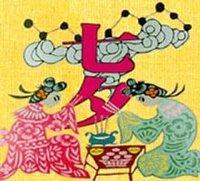
It’s Valentine’s Day in China. But it’s not named for a 3rd century Roman saint. Today’s “Qixi” Festival (Night of Sevens) has its roots in the legend of the Weaver Princess and the Cowherd.
There are many versions of the story. In one, a Weaver Princess comes down from the heavens to do a little skinny dipping. A Cowherd happens across her and—urged on by his mischievous ox—steals the Princess’s clothes. When the Princess finally comes out of the water to retrieve them, she has to agree to his proposal of marriage, as he had seen her in the buff (’cause them’s the rules.)
The Princess grows to love the Cowherd and together they have two kids; however, when the Princess’s grandfather, the Jade Emperor (some sources say her mother) hears about the match, he is not happy. He forces the Princess back to the Heavens, where her job is to weave the clouds. The Princess is the star known as Vega.
When the Cowherd, through some misadventures of his own, finally makes it up to the heavens to see her with their two kids, the Emperor separates them, placing a great river in the sky between them. The river is the Milky Way, and the Cowherd is the star Altair. Their two children are the smaller stars beside him.
It’s said that the two lovers are allowed to meet only once a year, in mid-summer, on the 7th evening of the 7th moon in the Chinese lunar calendar.
Qixi means “Night of Sevens” but it’s also called “Daughter’s Day.” In Japan, it is known as Tanabata and is also celebrated on July 7th. (7/7)
The traditions and rituals related to the festival have gone through several incarnations over the past 2000 years. These days Qixi is a day of romance for lovers and can be compared in many ways to Valentine’s Day in the West.
On August 4, Cornwall, England celebrates the Feast Day of Saint Sithney, the patron saint of mad dogs.
Legend has it that the Lord Almighty asked good ol’ Sithney if he would be the patron saint of girls seeking husbands. Sithney politely declined the offer, fearing he would be besieged with prayers for rich hubbies and fancy jewelry and the whatnot. Instead, Sithney said he’d rather be the patron saint of something like mad dogs, and the request was granted.
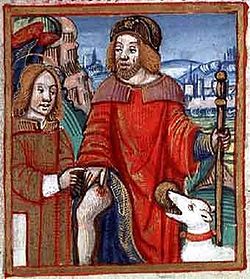
Saint Roch (Sithney wasn't available for photoshoot)
August 4 is also the birthday of U.S. President Barack Obama. We know when he was born, but where exactly where he was born is at present a topic of heated debate, dominating the media coverage on conservative talk shows. It may be that one day a child will review the historical archives of August 2009 and be surprised that the question of Obama’s citizenship even existed, let alone monopolized the news cycle, between the death of Michael Jackson and the devastation of Hurricane Grace. But until that day, we wish the President good luck in his quest to prove he’s American, and we ask Sithney to hasten his healing efforts on certain unnamed talk show hosts.
Today’s a good day to reach out and call (or Skype) that friend across the Pond. It’s Cross Atlantic Communication Day, marking the anniversary of the first sustained working telegraph cable between Europe and the Americas.
Before 1866, it took ten days for a message to cross the Atlantic by ship. An early form of the telegraph had been used in Germany as early as 1809, but it wasn’t until the 1830’s that related crucial innovations made the invention commercially viable.
Charles Wheatstone and William Cooke patented the first commercial telegraph in the UK in 1837. That same year inventor Samuel Morse developed a telegraph system in the US, using the language that would come to dominate the wires: Morse Code. In 1844 the U.S. installed a telegraph wire from Washington DC to Baltimore, whereupon Morse relayed its first now-famous message: “What hath God wrought?”
The idea of trans-Atlantic cable connecting Europe and the Americas appealed to several luminaries, but it’s generally seen as the brain-child of entrepreneur Cyrus Field, who raised the cash and made the first attempt in 1857. The 1,700m miles of cable was too big for any one ship to carry, so two were employed, the USS Niagara and the HMS Agamemnon. The two ships met up in the middle of the Atlantic, their two wires were spliced together, and they headed out in opposite directions, laying cable as they went. The cables broke multiple times, and the mission was eventually abandoned. The following summer, after several trials of errors, they set out again, and this time completed the mission, connecting a spliced cable from Newfoundland to Ireland.
On August 16, 1858, the first trans-Atlantic telegraph message was sent: “Glory to God in the highest; on earth, peace and good will toward men.” Followed by messages of goodwill and congratulations by Queen Victoria and President Buchanan.
“May the Atlantic telegraph, under the blessing of heaven, prove to be a bond of perpetual peace and friendship between the kindred nations, and an instrument destined by Divine Providence to diffuse religion, civilization, liberty, and law throughout the world.” — President James Buchanan
The two countries celebrated, but over the next few weeks the connection deteriorated, and finally gave out.
No one tried again for several years, and a Civil War engulfed the States. But in 1865, Cyrus Field tried again. Now there had been built one ship large enough to carry the whole cable: the Great Eastern, which was four times larger than any other ship in existence. Captain by Sir James Anderson, the Great Eastern traveled from Ireland to Newfoundland laying cable as it went. After over 1,000 miles the cable snapped, and the mission was abandoned.
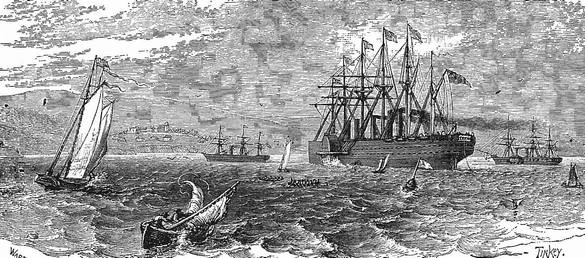
The Great Eastern arriving in Newfoundland, July 1866
The mission finally succeeded the following year when the Great Eastern lay another, more durable cable between the two coasts. The first sustained trans-Atlantic telegraph cable was completed on this day, July 27, 1866.
“It is a great work, a glory to our age and nation, and the men who have achieved it deserve to be honoured among the benefactors of their race.” — The Times, July 28, 1866
[The predecessor of the electric telegraph dated back to 1746, and it wasn’t used to send messages. French monk and scientist Jean-Antoine Nollet had 200 of his brethren stand around in a mile-round circle holding an iron wire and proceeded to shock them all, observing that the monks felt the shock at roughly the same time.]
Today’s holiday—National Rebelliousness Day—is interwoven with yesterday’s holiday, Día de Santiago, or the Feast Day of St. James, though the inciting incidents took place in separate hemispheres nearly two millennia apart.
In the wee hours of July 26, 1953, as the town of Santiago de Cuba recovered from the previous day’s Santiago (St. James) festivities, Fidel and Raul Castro led about 120 rebels in an attack on the Cuban military’s second largest barracks.
The attack failed almost before it began. The Moncada Barracks soldiers sounded the alarm before Castro’s men could gain access to the compound, losing any hope of surprise. Castro’s rebels were heavily outnumbered (sources say between 4:1 and 10:1) but fought on.
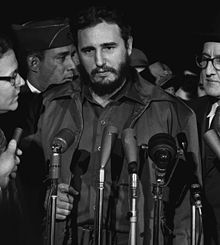
Fidel Castro in Washington DC, 1959
The rebels suffered over 60 casualties, though Castro later stated that only a handful died in the battle, and that the others were executed by the Batista regime after the battle ended.
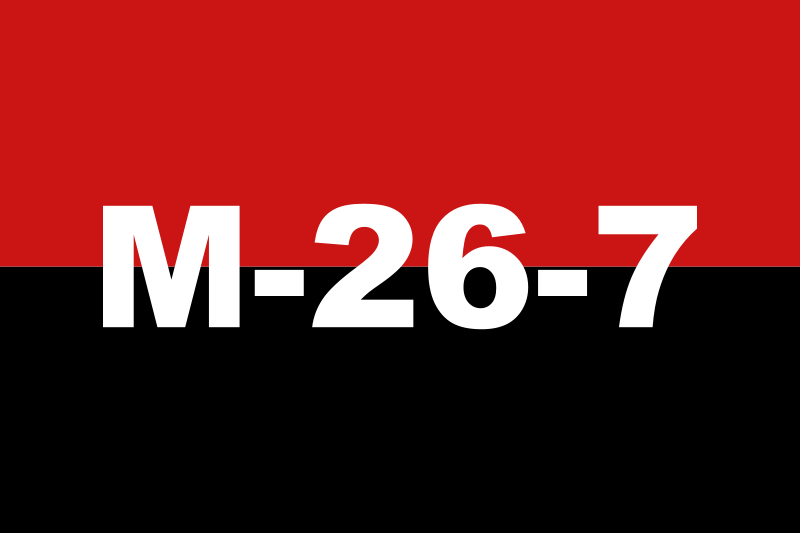
Castro was imprisoned with several of the other survivors, but a popular support movement successfully lobbied for their release. The attack on the Moncada Barracks marked the beginning of the Cuban Revolution, and henceforth, Castro’s coalition against the Fulgencio Batista regime was known as the 26th of July Movement.
Flag of the July 26th movement
Today, Cubans celebrate El Día de la Rebeldía Nacional with three days of fiestas, music, dancing and parades.
Today citizens of Venezuela, Colombia and Bolivia celebrate the birth of the Libertador of northern South America: Simón Bolivar. He was born on this day in 1783 in Caracas, Venezuela.
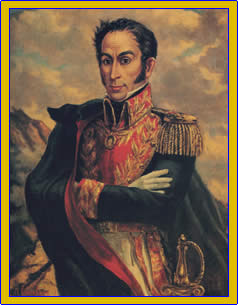
Simón Bolivar
Bolivar is one of the few people to have a country permanently named after him, and is the only person born in the New World to have been so honored.
Countries named directly after individuals
Belize – possibly from the Spanish pronunciation of “Wallace”. Captain Peter Wallace was a pirate commissioned by King James I to pillage Spanish ships in the region. He built his base at the mouth of what is now the Belize River. May also be from the Mayan “belix” meaning “muddy water”.
Bermuda – after explorer Juan de Bermudez, who arrived there in 1503.
Colombia – Christopher Columbus
Dominican Republic – after St. Domingo de Guzman, founder of the Dominican Order.
El Salvador – literally, “the Savior”, after Jesus of Nazareth.
Kiribati – from the Gilbert Islands, for Captain Thomas Gilbert.
Mozambique – possibly from sheik Mussa Ben Mbiki.
Philippines – King Philip II of Spain
San Marino – from St Marinus, an ancient stonemason who fled to the area to escape Roman persecution
Sao Tome and Principe – from St. Thomas. Portuguese explorers encountered the land on St. Thomas’s Day. (December 21)
Seychelles – for Jean Moreau de Sechelles, King Louis XV’s Finance Minister.
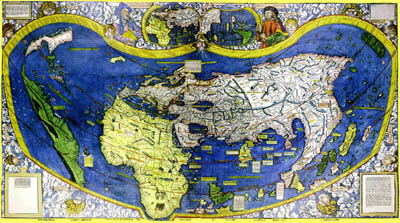
Amerigo Vespucci is the only person to have a continent named after him, and he got two! The explorer helped prove that the lands Christopher Columbus encountered were not in Asia, but were entirely new continents. In 1507 cartographer Martin Waldseemuller labeled the new continents after the Italian explorer when he printed 1000 copies of his famous globe of the world.
Yes, Parents’ Day is a real, official national holiday, just like Mother’s Day or Father’s Day. Celebrated on the fourth Sunday in July, it worked its way quietly through Congress in 1994 with bipartisan support and was signed into existence as a national holiday by President Clinton. Parents’ Day has mercifully hovered beneath the commercialism radar. And probably yours as well.
Normally I am not one to promote conspiracy theories on my blog (despite my own personal belief that Hollywood is run by a cadre of aliens from the planet Slebian) but the Parents Day origin story warrants some scrutiny.
“Gary L. Jarmin, Political Director for the American Freedom Coalition and chief coordinator for the lobbying campaign, originally submitted draft language to Congressman Dan Burton (R-IN) to make Parents’ Day a permanent day of commemoration…Burton introduced H. Res. 236 “to declare July 28, 1994 be recognized as Parents’ Day.” After a successful grassroots lobbying campaign, primarily led and coordinated by the State Directors of the American Freedom Coalition, the Congress adopted the resolution on March 11, 1994.”
According to the International Relations Center
…the American Freedom Coalition is closely tied to the Rev. Sun Myung Moon’s Unification Church. The Washington Post (March 30, 1988 ) has even described the AFC as a “Moonsponsored lobbying group.”
Yes, this is the same Sun Myung Moon who in 2004 “donned a crown in a Senate office building and declared himself the Messiah while members of Congress watched.” (NYTimes June 24, 2004)
The American Freedom Coalition and the National Parents’ Day Council share the same address as the Sun Myung Moon-sponsored Washington Times: 3600 New York Ave NE, Washington DC.
Members of the Unification Church call Sun Myung Moon “True Father” and his wife as “True Mother”. Collectively, “True Parents”. True Parents’ Day, honoring Moon and his wife, has been celebrated by the Unification Church for decades, though in March, not July.
Whether members of Congress realized exactly who was behind the creation of Parents’ Day is unknown. But it wouldn’t be the first holiday pushed through by less than transparent causes. We must remember that Women’s Day (March 8 ) and Labor Day were both supported by communist organizations, and for that reason met with much resistance, especially in the United States. Here, Women’s Day–celebrated on March 8 in the rest of the world–is barely recognized. And Labor Day–celebrated on May 1 in most countries–is observed in September.
Similarly, politicians in the 1980s hesitated to create Martin Luther King Day because of their belief that King was a communist sympathizer.
Sen. Helms delivered his speech on King on October 3 and later supplemented it with a document of some 300 pages consisting mainly of declassified FBI and other government reports about King’s connections with communists and communist-influenced groups…
Regardless of the motivations behind our holidays, the holidays themselves tend to take on a life of their own over time. Just as the true origins of many religious holidays have been changed and obscured over the centuries, perhaps a hundred years from now the bizarre evolution of Parents’ Day will be supplanted by stories of noble parental deeds.
Today the holiday seems superfluous with Mother’s Day and Father’s Day falling in the preceding months, but who knows? Maybe Parents’ Day will take on a roll Mother’s Day was originally meant to fulfill. Julia Ward Howe called it Mothers’ Day for Peace. It wasn’t about honoring mothers. It was a day for mother’s to come together to work toward the future well-being of their children. To use their power to make the world a better place for the parents of tomorrow.
July 22, or as it’s affectionately called across the Atlantic, 22/7, is Pi Approximation Day. But don’t let the name fool you. Unlike the more widely celebrated Pi Day (observed on March 14), 22 divided by 7 is actually a slightly closer approximation of Pi than 3.14.
Pi Pie at Delft University
The tradition dates back at least to 1995, when students at Chalmers University of Technology in Gothenburg, Sweden, celebrated July 22 by
“eating waffles and consuming Swedish Punch in various highly unlikely ways. There was also agitated discussion about how circles would look, if the ratio of their circumference to their diameter would equal 3.”
It just doesn’t get wilder than that. Later observances included the creation and digestion of the obligatory “Pi Pies”.
More historical documentation of these early Pi Approximation Day events can be found at: