Feast of the Virgin of Guadalupe

December 12

“…one may no longer consider himself a Christian, but you cannot truly be considered a Mexican unless you believe in the Virgin of Guadalupe.”

— Carlos Fuentes

It’s been said that Mexico came into being not in 1821–the year Spain recognized its independence–but nearly 300 years earlier, in 1531, when a recently widowed peasant-farmer named Juan Diego Cuauhtlatoatzin, beheld the most spectacular vision in Mexican history.

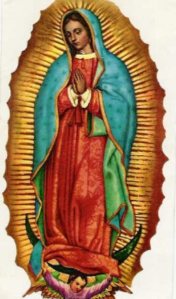
Guadalupe

On December 9, he was out walking near the ruins of Tepeyac Hill, where Aztecs once worshipped the mother goddess Tonatzin, when a young incarnation of the Virgin Mary appeared before him encompassed in a halo of light. She spoke to Juan Diego in his native tongue of Nahuatl, and asked him to deliver a message to the Mexican bishop: to build a church on the ground where she stood.

Upon hearing Juan Diego’s story, the bishop had his doubts. So the next time Juan Diego saw the Virgin, he confessed to her his failure to convince the bishop. She told him to pick some flowers at the top of the hill–even though it was December and no flowers should have been blooming. There he found Castilian roses, native to the bishop’s hometown in Spain. The Virgin arranged them in his tilma (apron), but when Juan Diego opened his tilma to the bishop, it held not flowers but the lifelike image of the Virgin of Guadalupe upon it.

Word spread of the miraculous vision and the image on the cloth. What the event suggested to the descendants of the Aztecs, many of whom had been made to feel unworthy by the strange pushers of this new faith due to the color of their skin, was that the Virgin revealed herself not to a Spanish bishop, but to a common, dark-skinned peasant. And Guadalupe herself was not the pale icon that had been forced upon the people by Europeans, but a mestizo, a mixture of races that would come to represent Mexico.

Old Basilica of the Virgin of Guadalupe, Mexico City

During the Mexican War of Independence in the 1810’s, the Lady of Guadalupe became the symbol of the new-born nation and the country’s patron saint.

In 2002, Pope John Paul II canonized Juan Diego as well. His feast day is December 9, the anniversary of the day he first saw Our Lady of Guadalupe. The Feast of Our Lady of Guadalupe is December 12, the last day she appeared to him.

Today Mexico is still overwhelmingly Catholic, but as Gustavo Arellano points out:

You don’t have to be Mexican or even Catholic to celebrate Guadalupe. Heck, you don’t even have to believe in God. All you need is a belief in the equality of people that’s in the core of Guadalupe’s message and you will surely feel her redeeming love.

On December 12, Mexicans and Mexican-Americans gather in churches and communities throughout North America and celebrate the symbol of the people of Mexico and patron saint of the Americas.

Rosa Parks Day

December 1

rosaparks
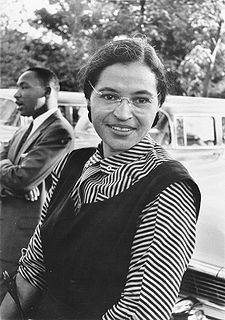
Rosa Parks, 1913-2005

On this day in 1955 a 42 year-old woman in Montgomery, Alabama, made history for something she didn’tdo.

Stand up.

When bus driver James Blake told 4 African-Americans to give their seats to white patrons, 3 of them did so. Rosa Parks, a department store employee on her way home, refused to move. Blake threatened to have her arrested. She replied, “You may do that.”

Rosa Parks wasn’t the first African-American woman to defy Montgomery’s segregated bus system, but hers was the case that captured America’s attention.

Long ago I set my mind to be a free person and not to give in to fear…When I sat down on the bus the day I was arrested, I was thinking of going home…After so many years of oppression and being a victim of the mistreatment that my people had suffered, not giving up my seat–and what I had to face after not giving it up–was not important. I did not feel any fear sitting in the seat I was sitting in. All I felt was tired. Tired of being pushed around. Tired of seeing the bad treatment and disrespect of children, women, and men just because of the color of their skin.

Rosa Parks, Quiet Strength

After Parks’ arrest, Civil Rights activists Edgar Nixon and Jo Ann Robinson organized a one-day boycott practically overnight. What started as a one-day boycott of Montgomery’s bus system lasted 381 days. A young minister from Atlanta named Dr. Martin Luther King Jr. was elected to head the boycott. Tens of thousands of African-Americans, who comprised the vast majority of Montgomery bus patrons, walked the long road to work or school rather than ride the bus.

The following year the Supreme Court deemed Montgomery’s bus segregation unconstitutional in Browder v. Gayle.

Parks died on October 24, 2005, just a month before the 50th anniversary of her famous stand–or sit rather.

In 2008, during Barack Obama’s historic election campaign, a short poem traveled across the web and radio:

Rosa sat

So Martin could walk

So Barack could run

So our children can fly.

Black Friday

Day after Thanksgiving

Before long, every entrance to the Exchange became so blocked by the still-gathering legions, that strength and patience were required by him who desired or found it necessary to work his way through the press of people…

What had happened to values? What did it mean? Tampering with gold…had precipitated an alarmingly unsettled condition, which might reach disastrously from one end of the land to the other…

Frederic Stewart Isham, Black Friday, 1904

Greetings, children. Buy Nothing Day is the day after Thanksgiving. The Devil calls it Black Friday.

Reverend Billy Talen, What Would Jesus Buy?

Black is the color ascribed to those terrifying autumnal days when the Stock Market takes a nose dive. Black Monday (October 19, 1987), Black Thursday (October 24, 1929) and the original Black Friday (September 24, 1869), when the price of gold fell dramatically after Jim Fisk and Jay Gould attempted to corner the market.

In the 21st century, Black Friday is day after Thanksgiving and the start of the Christmas shopping season, when stores hope to get their balance sheets back ‘in the black’ (positive, as opposed to ‘in the red’) after one of the busiest shopping days of the year.

The term Black Friday supposedly originated not with accountants but with Philadelphia bus drivers and police officers, who lamented the traffic congestion that inevitably gridlocked the city on the day after Thanksgiving.

In 2008, consumers got a reminder of the crowd-control meaning behind Black Friday’s name. A Wal-Mart employee was trampled to death by a mob of shoppers storming into the Long Island store to buy whatever holiday item is so important that one must kill one’s neighbor to purchase it. A pregnant woman in the same melee was hospitalized and reportedly suffered a miscarriage.

On the other side of the country, an argument in the electronics department of a Palm Desert Toys ‘R’ Us ended with two men shooting each other.

A brief aberration? Or a sign of things to come? According to Reverend Billy Talen, the Shopocalypse is upon us…

Guard against every kind of greed. Life is not measured by how much you own.

Luke 12:15

Thanksgiving!

4th Thursday in November
Oops, wrong picture!
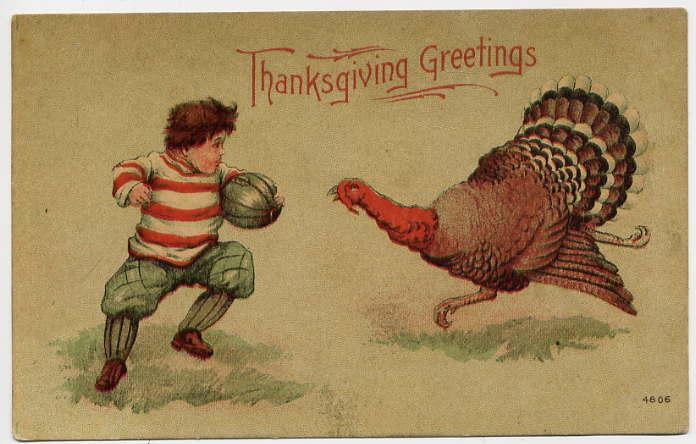
Today Americans join with friends and family to declare thanks for the past year’s blessings.

Though scholars argue over the first true Thanksgiving in North America, popular tradition attributes the holiday to the three-day feast of the Plymouth Rock Pilgrims and the Wampanoag Indians who showed them the ropes in 1621.

The celebrants feasted on deer and corn as well as turkey, and did so in early Autumn rather than in November. The Pilgrims had chosen to migrate to New England during the height (or depth) of the Little Ice Age, meaning Massachusetts was even colder in November than it is now. (Yes, hard to imagine.)

And the Pilgrims didn’t consider it a “Day of Thanksgiving” either.

To the Pilgrims, “Days of Thanksgiving” were solemn occasions of prayer, not feasts, during which labor and recreation were both discouraged. The Pilgrims’ first official Thanksgiving was a day of prayer in July 1623, after a drought. In the 19th century the memory of this event merged in the public eye with the autumn 1621 feast, perhaps given a boost by the rediscovery of the Plymouth Governor William Bradford’s journal by an English bishop in the 1850’s.

Though the British don’t celebrate Thanksgiving, the American tradition hails from England. Queen Elizabeth I had proclaimed a Day of Thanksgiving in 1588 after the destruction of the Spanish Armada. The first annual Day of Thanksgiving in Britain was declared in November 1605 after London authorities thwarted a terrorist plot to blow up Parliament, an event celebrated today as Guy Fawkes Day.

Autumnal harvest festivals were nothing new, but Days of Thanksgiving were also proclaimed after victories in times of war. In 1676, for example, descendants of the Pilgrims declared a Day of Thanksgiving for their victory over their former friends, the Wampanoag.

101 years later in the midst of the Revolutionary War, the Continental Congress declared December 18, 1777 a day of “solemn thanksgiving and praise,” and a day to support the troops through prayer.

George Washington declared Thursday, November 26, 1789 a day of Thanksgiving during his first year as President, a tradition continued by John Adams. But a national Thanksgiving fell by the wayside until Congress and President Madison declared a Thanksgiving Day in 1814, following the end of the War of 1812.

The biggest Thanksgiving bump occurred in 1863, when the nation was at war with its most formidable enemy: itself. Three months after the Battle of Gettysburg, President Lincoln sought to unify the country through prayer, by asking all Americans to “set apart and observe the last Thursday of November next, as a day of Thanksgiving and Praise to our beneficent Father who dwelleth in the Heavens.

It was the first Thanksgiving following the enactment of the Emancipation Proclamation.

Thanksgiving’s association with the first Pilgrims solidified throughout the 19th century as the reunified country sought to fortify its own unique national traditions.

Lincoln’s “last Thursday in November” became the official Thanksgiving rule until 1933.

That year, Franklin D. Roosevelt’s first year in office, November had five Thursdays, and Thanksgiving was to fall on the last day of the month. As one merchant organization wrote:

“It is an established fact that Christmas buying begins vigorously every year in the retail stores the day following Thanksgiving and that the Thanksgiving to Christmas period is the busiest retail period of the whole year. The Downtown Association of Los Angeles feels that Abraham Lincoln’s Proclamation of 1864 setting aside a day for Thanksgiving to be the 4th or last Thursday in November of each year can be carried out to the letter by designating in your Thanksgiving Proclamation this year, November 23rd, the fourth Thursday in November as the day of Thanksgiving.”

FDR moved Thanksgiving to the 4th Thursday in November, and did so again in 1939, despite letters of protest from calendar makers who had printed their calendars, universities that had planned their football season and vacations, traditionalists who believed that centuries-old holidays shouldn’t revolve around department stores, and one tongue-in-cheek West Virginian who wrote:

“I see by the paper this morning where you want to change Thanksgiving Day to November 23 of which I heartily approve. Thanks.

Now, there are some things that I would like done and would appreciate your approval:

1. Have Sunday changed to Wednesday;

2. Have Monday’s to be Christmas;

3. Have it strictly against the Will of God to work on Tuesday;

4. Have Thursday to be Pay Day with time and one-half for overtime;

5. Require everyone to take Friday and Saturday off for a fishing trip down the Potomac.”

Shelby O. Bennett, August 15, 1939

FDR’s tradition stuck. Today Thanksgiving falls on the 4th Thursday of November.

Americans are a grateful people, ever mindful of the many ways we have been blessed. On Thanksgiving Day, we lift our hearts in gratitude for the freedoms we enjoy, the people we love, and the gifts of our prosperous land…

Since the first National Day of Thanksgiving was proclaimed by President George Washington, Americans have come together to offer thanks for our many blessings. We recall the great privilege it is to live in a land where freedom is the right of every person and where all can pursue their dreams.

President George W. Bush, Thanksgiving Proclamation; November 15, 2007

First Thanksgivings: Original Sources

Presidential Thanksgiving Proclamations 1789-1815

Lincoln’s Proclamation, 1863

FDR’s letters re: Thanksgiving 1933 & 1939

1564: The First Forgotten French Pilgrims – NY Times 2008
Sadie Hawkins Day

November 13, 15, 16, or the Saturday after November 9

sadie_hawkins

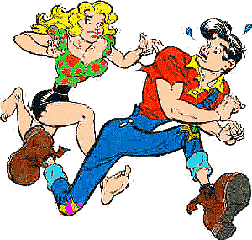
“For 15 years, Sadie Hawkins, homely daughter of Dogpatch’s earliest settler, had failed to catch a husband. Her Pappy in desperation one day called together all the eligible bachelors of Dogpatch…”

Thus spoke Sadie’s father:

“‘Boys! Since none o’ yo’ has been man enough t’ marry mah dotter, ah gotta take firm measures!! Ah declares t’day “Sadie Hawkins Day” — When ah fires all o’ yo kin start a-runnin’! When ah fires agin—after givin’ yo’ a fair start—Sadie starts a-runnin’. Th’ one she ketches’ll be her husband!'”

With the boom of Pappy Hawkins’ gun, artist and writer Al Capp started a sexual revolution.

The year was 1937. Al Capp, creator of the comic strip Li’l Abner, needed a plot point to move the story along in his November strip. Li’l Abner starred Abner Yokum, a small-town simpleton whose life revolved around fishin’ and not gettin’ hooked to his long-suffering girlfriend Daisy Mae. The Sadie Hawkins Day tradition fell into place. Al Capp invented a race wherein, if a woman could catch a man, she could wed him. Capp explained the reasoning behind the race in a three-panel historical flashback of the original Sadie Hawkins.

According to panel 3:

“Well, Sadie did catch one of the boys. The other spinsters of Dogpatch reckoned it were such a good idea that Sadie Hawkins Day was made an annual affair.”

Al Capp’s idea struck a cord, not just with the fictional residents of Dogpatch, but all around America. Keep in mind Al Capp came up with this back when it was frowned upon for a woman to even ask a guy out on a date or to a dance. Yet within two years of Sadie Hawkins’ original appearance, “Sadie Hawkins Day” was being celebrated at over 200 schools in 188 towns across the United States! (Life Magazine, Dec. 11, 1939.) Granted, at most of these institutions the girls didn’t marry the guys they caught. Instead, the schools held Sadie Hawkins Dances, in which girls would ask boys to the dance instead of the typical other way around.

“Costumes derive from characters in Li’l Abner. Girls generally dress as pretty Daisy Mae rather than as homely Sadie Hawkins. At Texas Wesleyan, where Bible study is a required course, a slogan for Sadie Hawkins Day was found in Daniel, XII, 4: “Many shall run to and fro, and knowledge shall be increased.” (Life Magazine, 12/11/39)

There is no set date for Sadie Hawkins Day. Lil-abner.com cites November 15 and November 16, 1937 as the first appearances of Sadie Hawkins. Other sources say November 13. Regardless of its first appearance, Sadie Hawkins Day is generally celebrated on November 13, 15, 16, or the first Saturday after November 9. A few sites insist that Sadie Hawkins Day is February 29, a date that would no doubt please Abner himself. (Others disagree.)

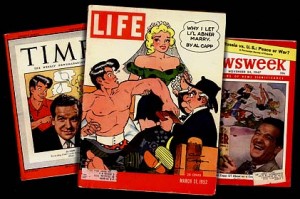
As it turns out, Daisy did not catch Abner that first Sadie Hawkins Day in 1937. In fact, it wasn’t until 1952 that Al Capp bowed to public pressure and allowed Daisy and Abner to tie the knot, an event that made the cover of Life Magazine.

lil_abner_cover

Incidentally, Capp himself would not have fared well in any Sadie Hawkins Day race. As a nine-year old boy in New Haven, the future comic writer was run over by a trolley and lost his left leg.

“All comedy is based on man’s delight in man’s inhumanity to man…I have made 40 million people laugh more or less every day for 16 years (on that formula)…”

“…We didn’t laugh because we were heartless wretches. We laughed because we are normal human beings, full of self-doubt, full of vague feelings of inferiority, full of a desperate need to be reassured.” Al Capp, Atlantic Monthly, February 1950

+++

“It is the ambition of every newspaper cartoonist to get published in something that won’t be used to wrap fish in the next morning.” Al Capp, Atlantic Monthly

My Well-Balanced Life on a Wooden Leg, by Al Capp, Review by Bobby Matherne

Al Capp, Time Magazine: Inhuman Man

The Comic Book Makers, by Joe Simon

In Flanders Fields… Remembrance Day/Veterans Day

November 11

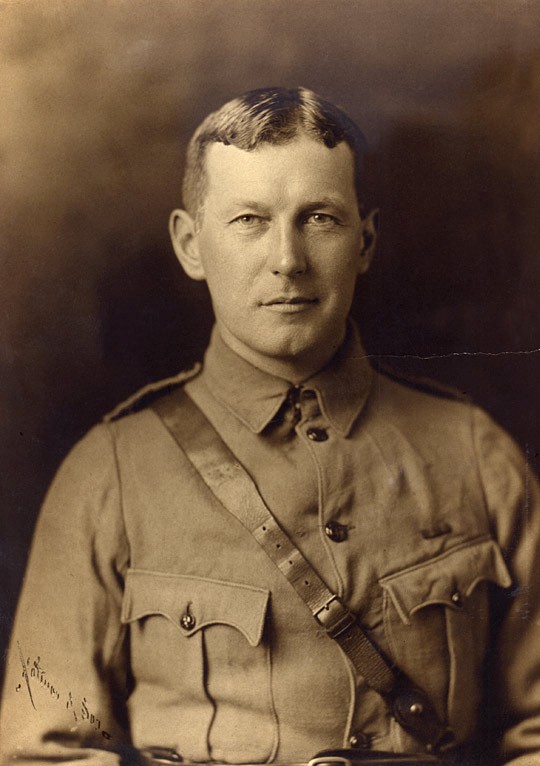
One of the most famous poems of war was written in May 1915 by a Canadian doctor stationed at Ypres during World War I. When the Canadians arrived on April 17 they were strangers to trench warfare. The Germans were not.

The Canadians occupied what would prove to be a particularly tragic stretch of grass of the infamous Flanders field. When the Germans attacked, they used every weapon in their arsenal, including poison gas.

The Canadians suffered 6,000 casualties during the April-May 2nd Battle of Ypres, half of them on a single day. Lt. Colonel John McCrae recalled it as

“Seventeen days of Hades! At the end of the first day if anyone had told us we had to spend seventeen days there, we would have folded our hands and said it could not have been done.”

Dr. McCrae was entrusted with the futile task of treating the wounded. On May 3, the day after his friend and former student Alexis Helmer was killed in battle, McCrae surveyed the poppies of the cemetery field and paused to scribble three verses.

In Flanders Fields the poppies blow
Between the crosses row on row,
That mark our place; and in the sky
The larks, still bravely singing, fly
Scarce heard amid the guns below.

We are the Dead. Short days ago
We lived, felt dawn, saw sunset glow,
Loved and were loved, and now we lie
In Flanders fields.

Take up our quarrel with the foe:
To you from failing hands we throw
The torch; be yours to hold it high.
If ye break faith with us who die
We shall not sleep, though poppies grow
In Flanders fields.

One of the first people to read it was a young soldier named Cyril Allinson.

“The poem was an exact description of the scene in front of us both. He used the word blow in that line because the poppies actually were being blown that morning by a gentle east wind. It never occurred to me at that time that it would ever be published. It seemed to me just an exact description of the scene.”

McCrae would never know peace. He died of pneumonia in January 1918 in northern France, 10 months before the Armistice that ended World War I. In the United States, the anniversary of the armistice is known as Veterans Day. In Europe and Canada, November 11th is Remembrance Day.

Lt. Colonel Dr. John McCrae

Today veterans sell poppies in memory of all those who have served since Flanders Fields.

How the tradition of selling poppies for veterans began: http://news.bbc.co.uk/2/hi/uk_news/magazine/6133312.stm

Halloween

October 31

Pagan: “a follower of a rustic or provincial religion”
from the Latin pagus, meaning a rural district.

The word “pagan” goes all the way back to the Greek root pagos meaning “that which is fixed”. “Fixed” as in “staying in position”, not like, your dog.

After crossing the Adriatic, the Romans used the word pagus to refer to a rural district. Pagan came to mean “country-dweller”.

Under Constantine, Christianity was not only tolerated, the religion replaced paganism throughout the Empire, with a top-down implementation. [For a more scholarly discussion, see the deleted “Storm” scene from X-Men 1.]

Long after Europe had converted to Christianity, some country-dwellers continued to worship their local and regional deities and observe the seasonal rituals of their ancestors to ensure prosperous harvests. Eventually the name for country-dweller became synonymous for followers of the old religions.

+ + +

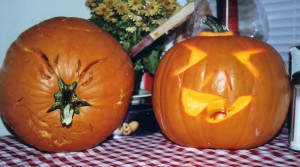
What makes Halloween so special among American holidays is that it appears to harken back to its pagan roots without the veneer of a Christian holiday, like Easter and Christmas. While Celtic and Germanic traditions such as Walpurgis Night (Witches Night) and Beltane (May Day) have all but died out, Halloween is among the most widely celebrated holidays in the U.S.

And while several national holidays (such as Memorial Day, St. Patrick’s Day, and Labor Day) are celebrated with parades, sports events, or barbecues, Halloween has several holiday-specific traditions that are celebrated at no other time of the year. This puts it in a small class of holidays that include Christmas, Easter, Thanksgiving, New Year’s, and Independence Day. Yet unlike the above holidays, Halloween is not recognized by the U.S. government. Nobody gets the day off. And still Halloween captivates the country at large and is becoming increasingly popular in Europe. This may be why Halloween has been singled out as contrary to the teachings of Christianity by some sects.

In truth, the holiday owes as much to traditions picked up during the celebrations of the ‘All Saint’s Day’ as to its pagan past. An observer of the Celtic holiday Samhain would hardly recognize the holiday today. Samhain was a cross-quarter day (directly between the equinox and solstice) when the Celts would practice acts of divination—predicting the future.

Some historians believe it was also a day to commemorate the dead, which is why the Pope moved All Saints’ Day–originally May 13–to November 1 to compete with the age-old local pagan traditions.

German and Irish immigrants brought their harvest traditions with them to America in the 19th century, such as the good old pagan bonfire on All Hallow’s Eve.

Hallowe’en masquerade parties were fashionable in Victorian America at the end of the 19th century. By the 20th century, the holiday belonged to the kids.

Which came first, the trick or the treat?

The British tradition of playing pranks on one’s neighbors on the night before Guy Fawkes Day (instituted 1606) traversed the Atlantic, taking hold on All Hallow’s Eve. On the nights leading up to All Soul’s Day, youths would take gates off their hinges, soap up neighbors’ windows, and create all-around havoc and mischief. (Now October 30 is known as Mischief Night). Today kids are much less prone to pull pranks on Halloween, but are more than happy to receive their sugar-coated pay-off.

Halloween is at once a caricature of traditions of rustic peoples, as seen through the eyes of their former enemies, and a wholly unique celebration, that has picked up its own imagery and rituals throughout the centuries.

On Paganism and Etymology

Halloween: Customs, Spells and Recipes

Mischief Night

October 30

At twenty minutes before eight, central time, Professor Farrell of the Mount Jennings Observatory, Chicago, Illinois, reports observing several explosions of incandescent gas, occurring at regular intervals on the planet Mars. The spectroscope indicates the gas to be hydrogen and moving towards the earth with enormous velocity.

We now return you to the music of Rámon Raquello, playing for you in the Meridian Room of the Park Plaza Hotel, situated in downtown New York.

In England Mischief Night originally referred to April 30 (May-Eve or Witches Night), the evening before May Day. Exactly six months apart, May Day and Samhain (November 1) were two of the four cross-quarter dates that Celtics and Druids celebrated during the year. The term Mischief Night was later applied to November 4, the evening before Guy Fawkes Day, when youths would play pranks on unsuspecting neighbors, like soaping up windows and prying gates off their hinges.

When and how Mischief Night got transferred to the evening before Halloween isn’t clear. In the United States, where Guy Fawkes Day isn’t observed, youths in the 1930s took it upon themselves to cause mayhem on the nights leading up to Halloween. What began as minor vandalism–egging cars and toilet papering houses–moved on to arson and destruction of property. In the 1980s and early 1990s, cities such as Camden, New Jersey, and Detroit–where October 30 is called “Devil’s Night”–reported over 100 fires in a single evening. Since that time however, serious Mischief Night crime has significantly declined.

It’s ironic that originally November 1 was the big holiday, and All Hallow’s Eve, was its prologue. Now Halloween has become the major holiday in itself, and Mischief Night fulfills some of the purpose Hallow’s Eve used to serve.

War of the Worlds

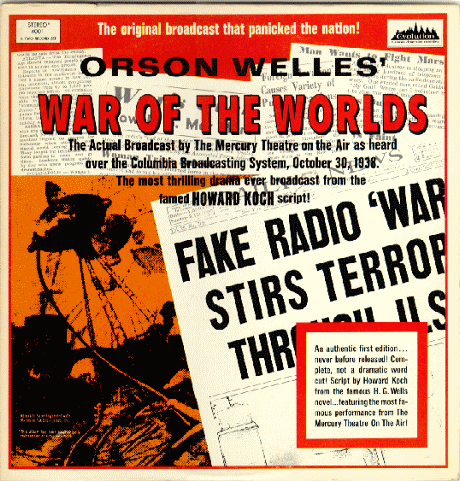
The greatest Mischief Night prank ever pulled happened seventy years ago today. A 23 year-old stage and radio actor named Orson Welles and his Mercury Theatre Players broadcast a radio rendition of H.G. Wells’ The War of the Worlds. Rather than creating a static stage reading or radio-play, Welles took the extraordinary step of reciting the events of the novel as if it were a real news broadcast.

After the initial introduction, in which Welles explained this was a radio play of War of the Worlds, a fake announcer took the listener to the Park Plaza Hotel to hear to music of “Ramon Raquello and his orchestra.” The music was periodically interrupted to inform the listener of live events going on elsewhere, from reports of a gas explosion seen on Mars, to the crash landing of an alien craft in Grover’s Mill, New Jersey.

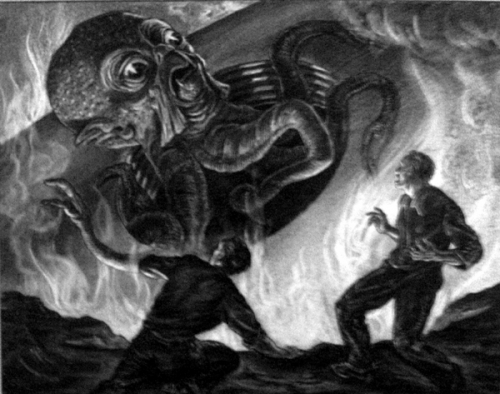
REPORTER: More state police have arrived. They’re drawing up a cordon in front of the pit…Wait a minute! Something’s happening… (Hissing sound) A humped shape is rising out of the pit. I can make out a small beam of light against a mirror. What’s that? There’s a jet of flame springing from that mirror, and it leaps right at the advancing men. It strikes them head on! Good Lord, they’re turning into flame! (Unearthly shrieks) Now the whole field’s caught fire. (Explosion) The woods..the barns…the gas tanks of automobiles…it’s spreading everywhere. It’s coming this way. About twenty yards to my right… (Abrupt dead silence)

ANCHOR: Ladies and gentlemen, due to circumstances beyond our control, we are unable to continue the broadcast from Grover’s Mill…We continue now with our piano interlude…

It was so realistic that listeners who tuned in after the introduction had no idea they were listening to the Mercury Theatre drama-hour…

ANCHOR: Ladies and gentlemen, I have a grave announcement to make. Incredible as it may seem, both the observations of science and the evidence of our eyes lead to the inescapable assumption that those strange beings who landed in the Jersey farmlands tonight are the vanguard of an invading army from the planet Mars.

The battle which took place tonight at Grovers Mill has ended in one of the most starling defeats ever suffered by an army in modern times; 7000 men armed with rifles and machine guns pitted against a single fighting machine of the invaders from Mars. 120 known survivors…

The monster is now in control of the middle section of New Jersey and has effectively cut the state through its center. Communication lines are down from Pennsylvania to the Atlantic Ocean. Martial law prevails throughout New Jersey and eastern Pennsylvania.

Tragically, New Jersey was in tact. However, the broadcast reached an estimated 6 million listeners and led to widespread hysteria across the tri-state area.

At the end of the broadcast, Orson Welles assured his listeners that the prank was simply:

…the Mercury Theatre’s own radio version of dressing up in a sheet and jumping out of a bush and saying Boo!…we couldn’t soap all your windows and steal all your garden gates by tomorrow night…so we did the next best thing…So goodbye everybody, and remember please…That grinning, glowing, globular invader of your living room is an inhabitant of the pumpkin patch, and if your doorbell rings and nobody’s there, that was no Martian…it’s Halloween.

Orson Welles, October 30, 1938