Lemuralia: Malicious Girls Marry in May

May 13

When midnight comes and drops silence for sleep,
and dogs and dappled birds are hushed,
The man who remembers the ancient rite
and fears the gods, rises up (barefoot)
And makes a thumb sign between his closed fingers
to avoid some ghostly wraith in the quiet.
When he has washed his hands clean with fountain water,
he turns around after taking black beans,
Glances away and throws, saying: ‘These I release;
I redeem me and mine with these beans.’

— Ovid’s Fasti

The head of the Roman household would, according to Ovid, perform this rite nine times and then, after rinsing his hands, would shout, “Leave, ancestral spirits!” another nine times, purifying his house of those departed whose souls refuse to rest. (The Japanese still observe a similar bean-throwing tradition during the Shinto lunar new year, Setsubun.)

The Roman superstition that Ovid describes was once a public festival known as the Feast of Lemuria, or Lemuralia, decreed by Rome’s co-founder Romulus.

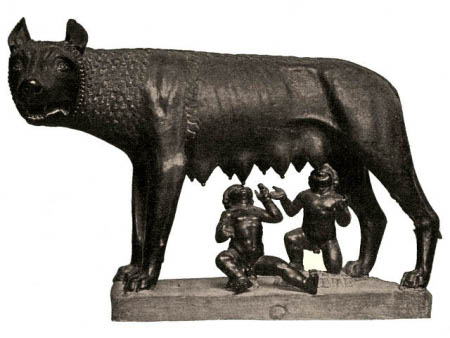
She-wolf suckles Romulus & Remus

Romulus and Remus were twin sons of Mars, god of war, who were nursed by a she-wolf in the wild. They wanted to build a great city, but couldn’t agree on the location. Romulus preferred Palatine Hill, Remus preferred Aventine Hill. They each built their own city. When Remus mocked Romulus by jumping over the wall meant to protect his, Romulus slew Remus in a fit of rage.

Guilt-ridden, Romulus was haunted by Remus’s ghost, who asked to be remembered on this day.

Lemuralia, says Ovid, is a corruption of Remus (Maybe Remuralia was too hard to pronounce?):

Over a long time the rough letter became smooth
at the beginning of the whole name.
Soon they also called the silent souls lemures…
The ancients shut temples on those days, as you now
see them closed in the season of the dead.
The same times are unfit for a widow’s marriage
or virgin’s. No girls who wed then live long…
Folk say: “Malicious girls marry in May.”

Around 610, Pope Boniface IV declared May 13 “All Saints Day”, in honor of all martyred. All Saints Day was later moved to November 1, coinciding with regional harvest festivals remembering the spirits of the dead.
Our Lady of Fátima – Portugal

May 13

Our Lady of Fatima

Sightings of the Virgin Mary date all the way back to 40 AD when the Virgin Mary first appeared to the Apostle James in Spain. They’ve occurred all over the world, in communities big and small, and the sightings continue to this day. In fact…

“Just last week, the Virgin Mary appeared in the form of a stain on a griddle at Las Palmas restaurant in Calexico, California. More than 100 people have come to gaze upon it, manager Brenda Martinez told the Imperial Valley Press…” — The Standard – May 13, 2009

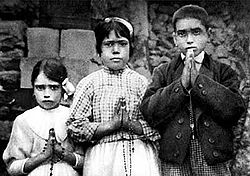
But the most famous sighting in modern times may be the one that took place on this day (May 13) in 1917 in Fátima, Portugal. As the World War raged throughout Europe, three Portuguese children—Francisco and Jacinta Marto, ages 9 and 7, and their cousin Lucia Dos Santos, age 10—were building a wall in the fields when their play was interrupted by a flash of lightning.

“They thought that a storm was brewing and herded the sheep together to take them home. They once again saw a flash of lightening and shortly afterwards they saw above a small holm oak tree a Lady dressed entirely in white and shining more brilliantly than the sun.”
http://www.marypages.eu/fatimaEng.htm

The apparition answered the children’s questions on heaven, and entreated them to return on the 13th of each month thereafter. At subsequent encounters she told them about heaven, hell, and God’s message. Over the next 5 months, word spread of the children’s encounters. By October 13, 70,000 people gathered in the field hoping to catch a glimpse of “Our Lady of Fátima” (now also known as “Our Lady of the Rosary”).

“After the long extensive rains, the sky became blue, people could easily look into the sun, which started to spin round like a wheel of fire which radiated wonderful shafts of light in all sorts of colours. The people, the hills, the trees and everything in Fatima seemed to radiate these marvellous colours.

Then the sun stood still for a moment then the wonderful thing that had happened reoccurred. It was repeated for a third time. But now the sun broke loose from the heavens and came down to earth with a zigzagging movement. It became bigger and bigger and looked as though it would fall on the people and flatten them. All were frightened and fell to the ground while they prayed for mercy and forgiveness.” —  http://www.marypages.eu/fatimaEng.htm

Jacinta, Lucia, & Francisco

Sadly, Francisco died only 2 years later and Jacinta the year after that.  Pope John Paul II beatified Francisco and Jacinta on May 13, 2000. Lucia lived to the ripe old age of 97. She died in 2005.

May 13 is celebrated in Portugal and by many Portuguese Catholics in other parts of the world. On May 13, 2009, “The 13th Day”, about the miracle of Fátima, premiered at the Cannes Film Festival in France.

Snellman Day – Day of Finnishness

May 12

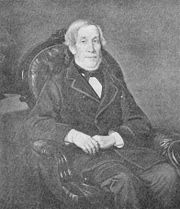
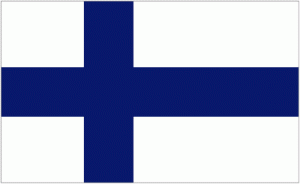
Today is Day of Finnishness in you-guessed-it: Finland. It’s also known as Snellman Day, named after the Finns’ national hero Johan Vilhelm Snellman, but referred to as Day of Finnishness (perhaps because ‘Snellman’ sounds like that teacher in high school whose nostrils screamed when he breathed through his nose).

Snellman was in fact a teacher (but no word on his nasal exhalations). He was also a statesman, journalist and philosopher, who crusaded to make Finnish the national language of Finland. While this seems like a no-brainer in retrospect, it was a controversial issue at the time.

Finnish as a written language dates only to the 15th century. According to Wikipedia:

The first known written example of Finnish…was found in a German travel journal dating back to c.1450: Mynna tachton gernast spuho somen gelen Emyna dayda… English: “I willingly want to speak Finnish, [but] I cannot”…*

[*presumably because the author was the only one who understood it.]

In the 16th century, Mikael Agricola had set down the rules of written Finnish in order to translate the New Testament. 300 years later however, outside of religious ceremonies written Finnish was still virtually unused.

Along came Snellman, who encouraged politicians and the upper classes to make Finnish a part of everyday life, a vehicle for the arts and sciences, instead of a vernacular spoken only by commoners and a written form relegated to church services. Snellman felt a unique national language was essential to building a strong, unified nation. His outspoken nationalist agenda—known as the Fennoman movement—was a loaded issue. His newspaper, Saima, was censored by the Russian-dominated Finnish government, and eventually shut down.

J.V. Snellman

After the death of the Russian Czar Nicholas I in 1855, the government eased censorship, and Snellman was appointed a professor at the University of Helsinki. He was appointed to Finland’s Cabinet in 1863 and devoted much of the remainder of his career to fixing the Finnish financial system. Russia granted Finnish a status on par with Swedish in Finland in 1892.

Finnish is virtually an island among European languages. All the other Scandinavian languages—Swedish, Danish, Norwegian, and Icelandic—are closely related, while Finnish’s closest relatives are Hungarian and Estonian.

After over five centuries of Swedish rule and one century as a Russian Grand Duchy, Finland declared its independence on December 6, 1917.

During World War II, Finland successfully defended its independence against the Russian invasion of 1939-1940.

+  +  +

A language of Finnish origin is currently taking over the world, but it’s not the one Snellman spoke. It’s called Linux, an open source computer operating system developed by Helsinki native Linus Torvalds. Linux is used in 90% of the world’s top supercomputers.

[Below: Armi Ja Danny – I Want to Love You Tender: Finnish National Anthem]

Gettin’ Glagolitic with Cyril & Methodius

May 11

Born in Thessaloniki in the 820’s, Cyril and Methodius are considered ‘Equals with the Apostles’ in the Eastern Orthodox Church, but were overlooked by the Roman Catholic Church for nearly a thousand years.

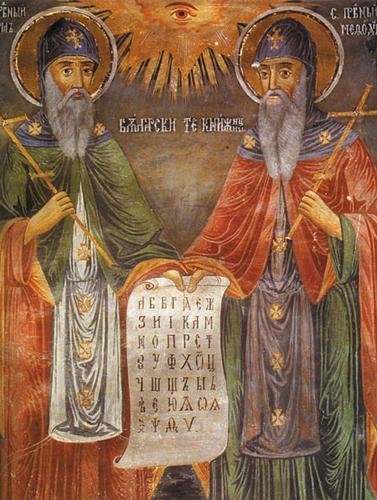
Sts. Cyril & Methodius

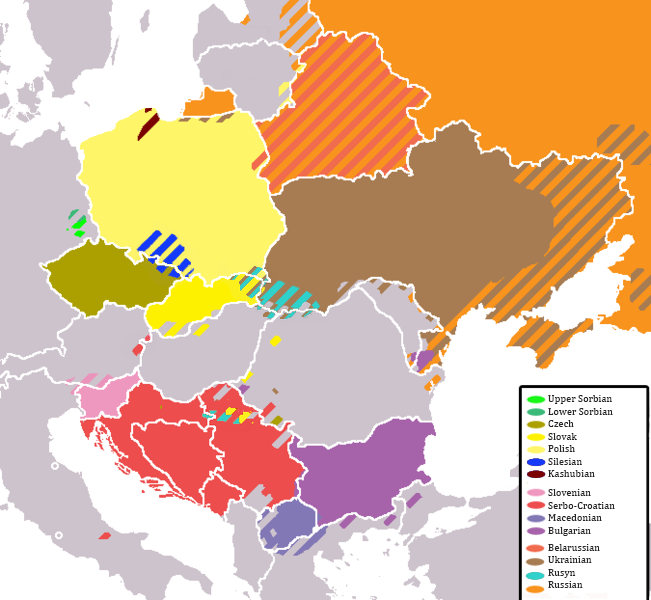
Cyril & Methodius were two missionary brothers with a gift for language. In the 860’s the Prince of Great Morovia (in Eastern Europe) entrusted them with the task of translating Biblical texts into the Slavic tongue of Great Morovia. They had one major obstacle: No such language existed. At least not in any standardized, written form. The Slavic languages were a collection of spoken dialects that stretched from Russia to the Adriatic coast.

The brothers first had to devise a whole new alphabet, named Glagolitsa (a variation of the Greek alphabet) to capture the Slavic language in writing.

The language the brothers developed, known today as Old Bulgarian, fortified the spread of Christianity across Eastern Europe. The brothers died in 869 and 882. But as a posthumous reward for their noble efforts, the East Frankish clergy outlawed the brothers’ language and imprisoned 200 of their students and disciples.

Old Bulgarian posed a political threat to the West. The codification of civil laws in a non-Latin, non-Germanic text limited Frankish-German control over the Slavic rulers. But ironically, the exile and diaspora of the users of Old Bulgarian to other parts of Eastern Europe only served to spread the knowledge and use of the language.

The Glagolitic alphabet was soon replaced with a descendant called Cyrillic (sorry Methodius), developed by a student of theirs, and is still in use over a thousand years later.

It wasn’t until the 1880s that the Saintly brothers got their own feast day in the Roman Catholic Church (July 5), and in 1980 Pope John Paul II deemed Cyril and Methodius two patron saints of Europe.

In the Eastern Orthodox Church, Saints Cyril and Methodius Day is observed on May 11 (Julian calendar) which is May 24 in the Gregorian calendar. It is also known as the Day of Letters.

In the Roman Catholic Church, their feast day is February 14.


Stonewall Jackson Day

May 10

“Had Jackson lived to command the right or left wing at Gettysburg, the Confederacy might be approaching its 150th year of independence today.”

– General Wesley Clark, “Stonewall Jackson“, by D. Davis

Two years ago, I was informed by a reader and friend that it is the duty of Every Day’s a Holiday to warn unsuspecting visitors to South Carolina not to bother going to the DMV on May 10. Any such excursions will certainly result in failure. For today state offices, banks, and businesses shut down to honor the memory of Thomas Jonathan Jackson, a man better known by his nickname: “Stonewall”.

Jackson has one-and-a-half holidays devoted to him. South Carolina commemorates the anniversary of his death on May 10, while Virginia combines the birthdays of Jackson (January 21, 1824) and Robert E. Lee (January 19, 1807) to celebrate Lee-Jackson Day.

Jackson lost his father and mother at an early age, and was raised by relatives. The orphan attended the U.S. Military Academy at West Point, and despite starting with an educational handicap, he graduated 17th out of a class of 59. He then served in the Mexican-American War, and taught at the Virginia Military Institute.

Three months after the outbreak of the Civil War in April 1861, Jackson was promoted to Brigider-General.

Stonewall Jackson as a young man, Virginia Military Institute

At the First Battle of Bull Run, when Union forces broke through Confederate lines, Jackson’s troops stood their ground defending the hill, causing Confederate General Barnard Bee to exclaim to his men, “There stands Jackson like a stone wall!” The name stuck. “Stonewall” Jackson and his “Stonewall Brigade” became symbols of Southern bravery.

Of course there may be another reason Jackson stood like a stone wall. As a student at West Point, one of Jackson’s many eccentricities was a belief that, if he bent over, it could damage his internal organs.

Jackson’s odd behaviors and personality traits caused some modern scholars to suggest…

“Stonewall Jackson meets the criteria for Asperger Syndrome, with clear evidence of a qualitative impairment in social interaction and restricted, repetitive, and stereotyped patterns of behavior, interests, and activities. Although individuals with Asperger Syndrome demonstrate major problems in social relationships, many are capable of great creativity because of their ability to focus on a single topic — in this case, on the field of battle and in military affairs.”

Genius Genes: How Asperger Talents Changed the World, by Michael Fitzgerald and Brendan O’Brien

Jackson was one of the greatest military strategists in U.S. history. By October he was promoted to Major General. He led his troops to striking victories in the Shenandoah Valley Campaign. The Stonewall Brigade distinguished itself at Antietam and numerous other battles. It’s been said that had Jackson lived long enough to assist Lee at the Battle of Gettysburg, the South might have won the war’s bloodiest stalemate, and maybe even the war.

But it wasn’t to be. Jackson met his end at the Battle of Chancelorsville in May 1863. Jackson showed little concern regarding bullets whizzing about him, and on May 2, he was wounded by Confederate troops who mistook his convoy for Yanks. His arm was amputated, and he died of misdiagnosed pneumonia eight days later.

“Sadly, in April of 1865, only 210 men from the original Stonewall Brigade were left at Appomattox.  Because of the reputation of the brigade on both sides of the war, the Stonewall Brigade was the first to march through the Federal lines at the surrender.”

— www.stonewallbrigade.com

Thomas "Stonewall" Jackson

Victory Day – Russia

May 9

In Russia and in several of the countries that were formally part of the Soviet bloc (including Belarus, Ukraine, and Moldova), today is Victory Day. It celebrates the surrender of Germany in 1945 and the end of World War II in Europe.

France, the United Kingdom, and other Western European countries celebrate Victory Day on May 8, but it was already the following day when the news hit Russia, the only country in the world that spans 11 time zones. And ever since then, May 9 has been celebrated with full Russian military pomp and circumstance. This year (2010) troops from England, France and the United States participated in Russia’s Victory Day parade for the first time.

+  +  +

Despite a 1939 treaty with Germany agreeing not to attack each other (and to split up Poland instead) Russia found itself cast in the role of Germany’s next victim only two years later. They encountered devastating losses in the first couple of years. However,

“…Russia was quick to learn from its mistakes, quicker than the Germans learned from theirs…Part of this was accomplished by simple attrition: less capable officers and troops were killed off, more capable ones survived. But there was also feedback from the front. Divisions were left in action until fewer than half the troops remained alive and fit for action…The veterans knew that everyone’s prospects of survival increased according to how much of their combat experience could be transferred to the new recruits.”

The World War II Bookshelf by James Dunnigan

In addition to its effective armored “Tank Corps” attacks, for which Germany never developed a practical countermeasure, the Soviets made use of their biggest advantage: Europe’s largest population. They overpowered the Germans with sheer numbers and indomitable resilience. The unfortunate result of this strategy was that over 20,000,000 Soviets were killed in the war, nearly half of them civilians.

While France, the United Kingdom, and the U.S. focused mainly on the Western Front…

“the ‘Eastern Front’ was the largest theater of war in history, notorious for its unprecedented ferocity, destruction, mass deportations, brutal weather conditions, and immense loss of life by means of battle, starvation, disease, and massacre…The Eastern front was arguably the single most decisive component of World War II, eventually serving as the main reason for Germany’s defeat.”

Eastern Front (World War II) — wikipedia.org

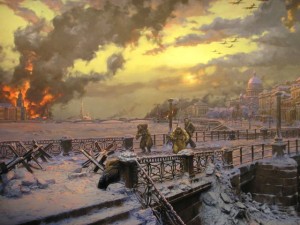
Siege of Leningrad, diorama, Sergey Nemanov

Standing out even among the battles of the Eastern Front were the Sieges of Leningrad and Stalingrad. Leningrad lasted nearly 900 days and was the deadliest siege in world history. But it was the Battle of Stalingrad that marked the turning point of the war and eventually broke the back of the German army.

“Victory at Stalingrad did not come easily or cheaply for the Russians. Nearly half a million soldiers and civilians died in defense of the city. Almost all of its homes, factories, and other buildings were destroyed. But the Russians had won, and that victory united the Russian people, giving them the confidence and strength that drove them on to Berlin.”

— “Top 10 Battles of All Time” by Lt. Col. (Ret.) Michael Lee Lanning

Had Hitler cut his losses at Stalingrad, the war might have turned out differently, but in January 1943, he ordered General Von Paulus:

“6 Army will hold their positions to the last man and the last round and by their heroic endurance will make an unforgettable contribution towards the establishment of a defensive front and the salvation of the Western world.” — Adolf Hitler, Jan. 24, 1943

According to World War II: Blitzkrieg and the Eastern Front,

“Out of 250000 [German] soldiers trapped in the Stalingrad pocket, approximately 90000 became prisoners; Barely 5000 survived the war.”

Upon learning of the defeat…

“Hitler ordered a day’s national mourning in Germany, not for the men lost at the battle, but for the shame von Paulus had brought on the Wehrmacht and Germany.”

www.historylearningsite.co.uk/battle_of_stalingrad.htm

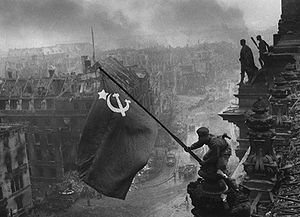
The final battle of the war (in Europe) and indeed the last major battle on Western soil was the Battle of Berlin. In April 1945, the Soviets plowed into Berlin with 2.5 million soldiers. Hitler committed suicide in Berlin on April 30. Germany officially surrendered on May 8, 1945.

Soviet flag atop Reichstag, Berlin, photo by Yevgeny Khaldei

Mother’s Day

Second Sunday in May

Mother of Hermes! and still youthful Maia!
May I sing to thee
As thou wast hymned on the shore of Baiae?

When the 22 year-old Keats wrote the beginning of his “Ode to Maia,” he had been an orphan for eight years. He was traveling to the seaside town of Teignmouth for the spring, to take care of his brother Tom, who was dying of tuberculosis—the same illness that took their mother and would later take Keats himself.

The first several lines of Keats’ ode were recorded in a letter to a friend: “I wrote them on May-day and intend to finish the ode all in good time.

The ‘good time’ never came. Keats died three years later. The poem was never written.

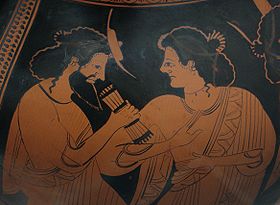
In Keats’ day it was well-known that May was named for the Greek and Roman goddess of spring, the eldest sister of the seven Pleiades and the mother to Hermes/Mercury by father Zeus/Jupiter. She was also trusted by the philandering Zeus to be his son Arcas’s wet-nurse when his jealous wife Hera turned Arcas’s biological mother into a bear.

Hermes & Maia

Some say our own tradition for dedicating a day to mothers comes out of Maia’s Roman feast. Her day was on the 15th, the Ides (full moon) of the month. Her name not only meant mother, but also “increasing”, referring to the abundance of flora and fauna in spring. (Likewise, the Angles and Saxons called the month “Tri-milchi”, because they could start milking their cows three times a day due to the plentiful grass.)

In other parts of the world, particularly the Middle East, Mother’s Day is celebrated closer to the vernal equinox, while in the U.K., “Mothering Sunday” is celebrated on the Sunday three weeks before Easter, usually in March. Beginning in the 1600s, employers would traditionally give servants the fourth Sunday of Lent off allowing them to attend services at their “mother church”. Mothering Sunday became synonymous for family reunions.

Mother’s Day in America

Mother’s Day in the United States is largely the work of two women.  Julia Ward Howe and Anna Jarvis.

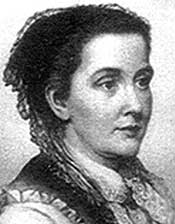
Julia Ward Howe

Julia Ward Howe was the abolitionist famous for turning the lackluster lyrics of “John Brown’s Body” into the “Battle Hymn of the Republic.” After the Civil War Howe changed her tune–or lyrics actually–to focus on on the women’s suffrage movement and the creation of a “Mothers’ Day for Peace” (note the apostrophe). During the Franco-Prussian War she spoke in London and Paris, and brought the idea of a Mothers’ Day for Peace back home to Boston. The holiday, which she envisioned would be celebrated in June, didn’t get much further than New England, but her Mothers’ Day Proclamation of 1870 stirred women across the country:

“Arise then…women of this day! Arise, all women who have hearts! Whether your baptism be of water or of tears! Say firmly: “We will not have questions answered by irrelevant agencies, our husbands will not come to us, reeking with carnage, for caresses and applause. Our sons shall not be taken from us to unlearn all that we have been able to teach them of charity, mercy and patience. We, the women of one country, will be too tender of those of another country to allow our sons to be trained to injure theirs.”

“…Blood does not wipe our dishonor, nor violence indicate possession.
As men have often forsaken the plough and the anvil at the summons of war, let women now leave all that may be left of home for a great and earnest day of counsel. Let them meet first, as women, to bewail and commemorate the dead. Let them solemnly take counsel with each other as to the means whereby the great human family can live in peace…”

Her vision of Mothers’ Day was one of maternal cohesion, women coming together to work for social justice.

But Mother’s Day as we know it—a day on which children celebrate and honor their own mothers—bears more in common with the vision of a West Virginian by the name of Anna Jarvis…

continued: Anna Jarvis — Mother’s Day in America

Mother’s Day in America – Anna Jarvis

continued from Mother’s Day

Ann Jarvis (left) & daughter Anna
Ann Jarvis (left) and daughter Anna

Before Julia Ward Howe began her Mothers’ Day for Peace campaign, another mother, Mrs. Ann Jarvis, had established a network of “Mothers’ Day Friendship Clubs” to improve sanitation conditions throughout West Virginia. She taught other mothers how to disinfect wounds, sterilize bottles, and prevent food from spoiling.

When the Civil War broke out, Jarvis and her clubs refused to take sides. Instead they tended to the wounded of both sides. After the war, having seen the carnage inflicted by and upon Union and Confederate troops, she pushed for the observance of a “Mothers’ Day”. Like Howe, Ann Jarvis’s Mothers’ Day stressed peace and social activism.

It was her daughter however–Anna Jarvis–who created Mother’s Day as we know it.

In 1907 Anna arranged a memorial service for her mother, the previously mentioned Ann Jarvis, who had passed away on May 9, 1905. Determined to help others appreciate their mothers when they were alive, Anna Jarvis held the first official Mother’s Day the following year, on the second Sunday of May, 1908.

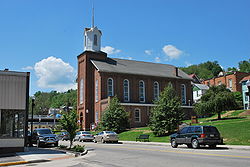
Over 100 years ago this weekend, 407 children and their mothers participated at the first Mother’s Day service at the Andrews Methodist Episcopal Church in Grafton, West Virginia.

Andrew Methodist Episcopal Church, Grafton, WV

Anna had a very specific idea of Mother’s Day. It was to be celebrated on Sunday rather than a specific date because it was a ‘holy day’, not a ‘holiday’. (Also, her mother taught Sunday school for 25 years.)

She even specified where the apostrophe was to fall: it was Mother’s Day, not Mothers’ Day. It would be a personal celebration in honor of one’s own mother, rather than for all mothers in general.

This version of Mother’s Day spread quickly–spurred on by the letters of Anna and her friends promoting the holiday. In 1910 West Viriginia became the first state to declare the holiday. Just four years later the resolution passed in both houses of Congress, and Woodrow Wilson proclaimed the second Sunday in May “a public expression of our love and reverence for the mothers of our country.”

But by the 1920s the new holiday met with opposition from an unexpected source:

Anna Jarvis herself.

Anna had no idea the commercial epidemic she would unleash upon the American public. Appalled by the materialistic takeover of what was to her a very personal day, she spent much of the rest of her life denouncing the exploitation of the day she had helped to create. She wrote:

A printed card means nothing, except that you are too lazy to write to the woman who has done more for you than anyone in the world.

Perhaps the irony is that the younger Jarvis succeeded where the elder Jarvis and Julia Ward Howe had not precisely because her incarnation of Mother’s Day was commercially exploitable. Americans could purchase gifts for their own mothers, as opposed to the concepts of Howe and the elder Jarvis, who envisioned a day of unity for social change.

Today Mother’s Day is a $15 billion dollar industry. More flowers are sold for Mother’s Day than even Valentine’s Day. More cards are sent than for any other holiday but Christmas. And more people will eat out this evening than any other day of the year.

Whereas previous activists like Howe and Jarvis Sr. looked at Mothers’ Day from the point of view of a parent—as a day for mothers to unite against war and injustice to make the world safer for their children—the younger Jarvis never saw it that way. To Anna this day would always be a gift to her mother.

Anna Jarvis, the mother of Mother’s Day, had no children.

[Speaking of commercialism, you probably couldn’t spot Maia and her sisters in the sky, but the Pleiades constellation looks like this:

You might recognize it better as this:

subaru

Subaru is the Japanese name for the constellation. The auto manufacturer’s logo shows the six stars normally visible to the naked eye.]