Memorial Day

last Monday in May
May 30, 2011
May 28, 2012
In the United States the May tradition of honoring the dead of wars past began after the Civil War. In individual towns in the South, women would lay flowers and wreaths atop the graves of their husbands, fathers, brothers, and sons.  It was called Decoration Day. The song “Kneel Where Our Loves Are Sleeping” was published in 1867 with the dedication “to the ladies of the South who are Decorating the Graves of the Confederate Dead.”
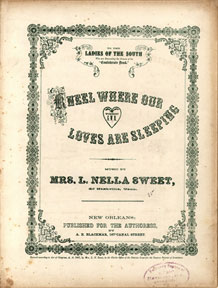
“Kneel where our loves are sleeping. They lost but still were good and true.
Our fathers, brothers fell still fighting, We weep, ’tis all that we can do.”

The following year the Commander of the U.S. Army, moved by the ceremonies of the South, declared a similar tradition in the North.

“The 30th of May, 1868, is designated for the purpose of strewing with flowers or otherwise decorating the graves of comrades who died in defense of their country during the late rebellion, and whose bodies now lie in almost every city, village, and hamlet churchyard in the land…

“Let no wanton foot tread rudely on such hallowed grounds. Let pleasant paths invite the coming and going of reverent visitors and found mourners. Let no vandalism of avarice or neglect, no ravages of time, testify to the present or to the coming generations that we have forgotten, as a people, the cost of free and undivided republic.”

Three decades after the Civil War, Richard Burton wrote his famous “Memorial Day“.

Now is the cleavage deep of North and South
Well closed, —the years o’er-cover it, as grass
Softens and sweetens some dry place of drouth
When comes the blessed rain; the requiem-mass
Is chanted of the mood that shattered peace:
Where common sorrows are, anger must cease:
Sorrow and love remain, while passions pass…

How like cathedral chimes the names we know,
Ringing above a leal united land:
Bull Run, Antietam
; Gettysburg, Shiloh,
Sherman’s grim march
to reach the white sea-strand,
Lookout’s cloud fight
, The Wilderness, —each bell
Reverberating valor—list! they tell
How Lincoln and Lee are friends, and understand.

What is a patriot? Not the man who swears:
“My country, right or wrong;” nor he who claims
That sacred thing, yet like a dastard dares
To use her to his ends, to hide his shames;

For higher, holier than the will to war
The will to love, —now may the path of Peace
Within our states be like the pilot star
In the night sky, by myriads to increase
As the millennium broadens, gleam by gleam:
This is the prophet’s word, the poet’s dream:
All nations living in love’s great release.
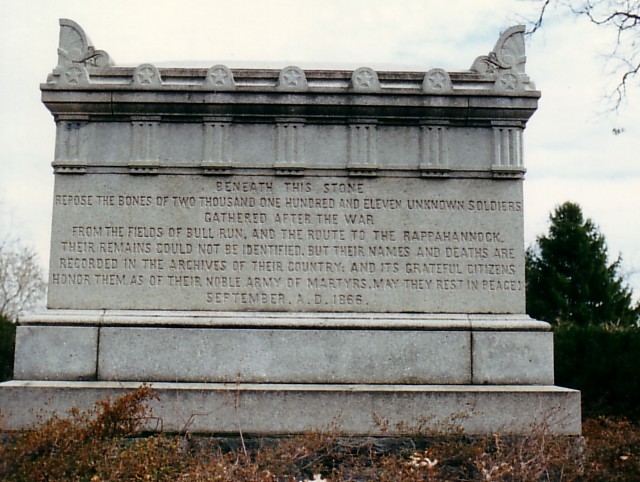
 

"Beneath this stone repose the bones of 2,111 unknown soldiers..." Arlington Cemetery

Southern states still observe separate dates for honoring the Confederate dead.

Texas – January 19;
Alabama, Georgia, Mississippi, Florida – April 26
South Carolina – May 10
Louisiana and Tennessee –  June 3

After WWI, Memorial Day included remembering the dead of other wars, not just the Civil War.
To date, more Americans died in the Civil War than in all other wars combined.

Francis Miles Finch’s The Blue and The Gray

Malaysian Harvest

May 30-31

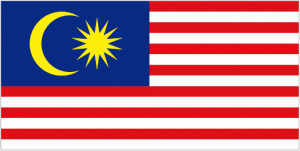
The end of May marks the Malaysian Harvest Festival in Sabah…


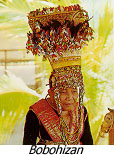
The best time to visit Sabah and experience this occasion is from May 30th to 31st, when the Kadazan and Dusun communities offer thanksgiving for a bountiful harvest. Highlights include a beauty pageant, cultural dances and rituals that culminate in the Thanksgiving ceremony performed by the ‘Bobohizan,’ or high priestess.”

http://www.tourismmalaysiausa.com/wtd_fest.asp

kaamatan-bobohi

The padi and rice festival is called Tadau Ka’amatan, and you’ll hear shouts of “Kopivosian Tadau Ka’amatan” (Happy Harvest Festival) throughout the streets.

During the festival, Sabah natives wear their traditional costumes and enjoy a carnival atmosphere which stretches from daybreak till dawn. ‘Tapai’ or home-made rice wine is served as the specialty for the day…

“According to their beliefs, the spirit of the paddy plant is said to be part of the Kinoingan – also known as the Bambaazon, who is revered as the creator, a source of life and existence. The rice spirit Bambaazon is therefore revered in the rice plant, the rice grain and the cooked rice. Many believe that “Without rice, there is no life“.
http://www.harvestfestivals.net/malaysianfestivals.htm

“The highlight of this harvest festival is a dance performed by the high priestess (Bobolian) in search of the rice spirits, whose presence is vital for a fruitful harvest. Much fun and excitement take place and merry makers indulge in dancing, feasting, and drinking of a potent wine called ‘tapai,’ buffalo racing and arm wrestling. The festivities end with the crowning of the Harvest Queen.” (tourismmalaysiausa.com)

“Moving in a single file, close to one another, the Bobohizan and their assistants enter the ‘spirit’ world in search of Bamabarayon. Every time a stray Bambarayon is located, piercing screams or pangkis is heard, expressing joy at the find, thus ensuring that they have another good harvest.” (harvestfestivals.net)

If you’d like to see Sabah, Malaysia but can’t afford the plane ticket, you can always rent Survivor. The immortal first season, including Susan’s famous “rat vs. snake” speech, was filmed in Sabah, at the northern tip of the island of Borneo.

Azerbaijan – and other names I have gone by

May 28

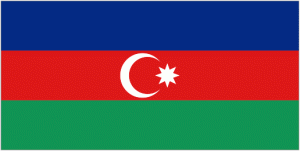
Azerbaijanis have been celebrating May 28 as Independence Day for the past 90 years–with a brief intermission during that whole 70-year Soviet occupation thing.

After the collapse of the Russian Empire in 1917 Azerbaijan joined ranks with Armenia and Georgia to form the Transcaucasian Democratic Federative Republic. Faced with the reality that no one could remember their quindeci-syllabic name, the trio split the following year, and Azerbaijan became the independent nation we know today.

For two years.

Then in 1920 the Bolshevik Red Army overthrew the Islamic world’s first democratic republic. Vaporizing the autonomy of the newborn Azerbaijani Parliament, the Bolsheviks also sadistically cursed Azerbaijan (together with Georgia and Armenia) with the name “the Transcaucasian Soviet Federative Socialist Republic”. Even the Soviets had to admit the cruelty of this name, and shortened it (slightly) to the Azerbaijan SSR (Soviet Socialist Republic) in the 1930s.

During the 23 months Azerbaijan had been an independent democratic republic, it granted women’s suffrage–preceding the U.S. and U.K.–and gave women equal political rights as men.

In January 1990 Soviet troops killed 132 demonstrators in the Azerbaijani capital of Baku. The following year during the turmoil of the Soviet Union’s collapse, Azerbaijan formerly declared its re-independence. One of its first acts as was to chose to celebrate the May 28–the date of its 1918 proclamation of independence–as its Republic Day.

The first years of the country’s independence were marred by the ongoing Nogorno-Karabakh War, a territorial war with neighboring Armenia. Atrocities ran deep on both sides; in 1992 the Armenian army allegedly killed over 600 Azerbaijanis in the town of Khojaly. All told, approximately 10,000 Azerbaijanis were killed in the war between 1988 and 1994, and nearly 30,000 were wounded.

93% of Azerbaijan’s 8 million people are Muslim. Freedom of religion is written into the Constitution.

Children’s Day – Nigeria

May 27

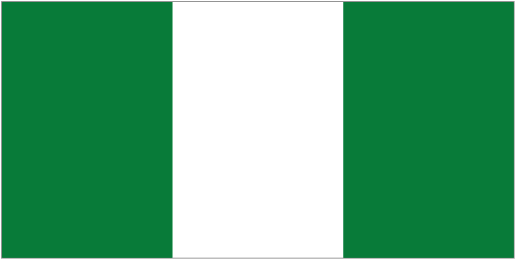
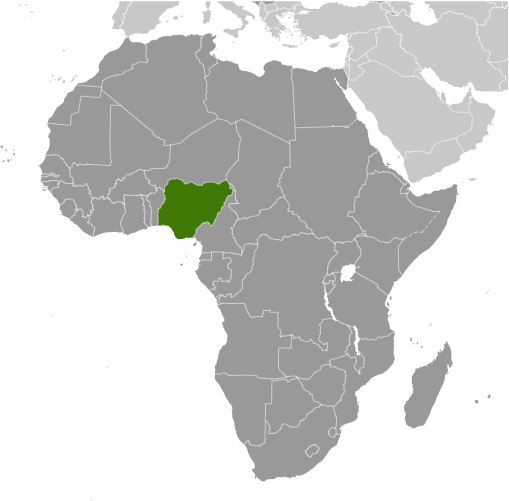
Today is Children’s Day in Nigeria. Why May 27? No clue. Some Nigerian sites purport that May 27 is International Children’s and Youth Day as declared by UNICEF, but Nigeria appears to be the only country to do so. The UN celebrates Universal Children’s Day on November 20. Dozens of other countries, including almost all former Soviet Republics, celebrate on June 1.

May 27 is coincidently the anniversary of the death of Indian Prime Minister Jawaharlal Nehru, whose birthday (November 14) is observed as Children’s Day in India.

May 27 is also the day in 1967 that General Gowon split Nigeria from four provinces into twelve, three days before the outbreak of the Nigerian Civil War.

In terms of population, Nigeria is even larger than Russia. About half of its 150 million people are 18 or younger. The average age women get married is 17. So you see, kids grow up fast in Nigeria.

Growing up fast is a sadly a necessity, as the average life expectancy in Nigeria is only 47, according to the World Factbook, despite the fact that Nigeria is one of the world’s largest oil-exporters. In fact, oil accounts for 80% of the national budget. Oil revenues come at a devastating price though. Nigeria experiences the equivalent of an Exxon Valdez oil spill every year.

“Indeed, a half century of oil exploration — and, experts say, exploitation — has earned the Niger Delta a dubious distinction: Environmentalists call it the most polluted ecosystem on Earth.”

Nigerian Oil Spills Make Exxon Valdez Look Like Drop in the Bucket

On the bright side, the International Monetary Fund ranks Nigeria as the third fasting growing economy in the world, behind China and India. Others disagree. [Lying With Statistics: Nigeria as 3rd Largest Economy]

One thing people tend to agree on. Nigerians—both children and adults—have a reputation for being among the friendliest and most hospitable people on earth. Nigerians believe in large extended families that form the foundation for a nurturing support system for children.

The extended support system and ancestral traditions may be what has helped Nigerian communities survive everything from colonization to coups and corruption. Whether Nigeria’s latest purported economic boom will translate to better health conditions for the its children remains to be seen.

Children’s Day is celebrated across the country by primary and secondary school students with parades and presentations. However, considering the dire situation of children in Nigeria…

“…Children’s Day celebrations must become occasions for serious soul searching, articulation of blueprints or assessment of the process of implementation of child-friendly programmes of governments, not necessarily only occasions for the celebration and showcasing of a few privileged children.”

— Nigeria – Children’s Day (editorial)

Oil Spills in Nigeria Lack Legal Accountability

UNICEF Commends Joint Action to Protect Women & Children

Bermuda Day!

May 24

How beauteous mankind is! O brave new world that has such people in ‘t!

The Tempest

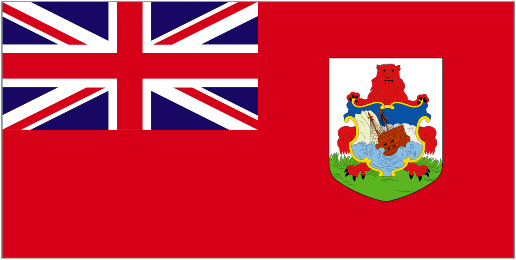
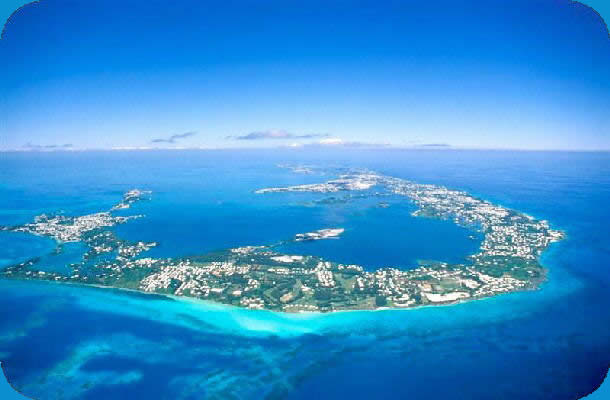
Today is Bermuda Day!

On 2005’s Bermuda Day public holiday in Bermuda’s 21 square miles in total land area, there were 23 road traffics collisions, 17 reports of loud music, 14 reports of annoying persons, 11 disturbances including fighting in public, 10 marine violations, 9 incidents of domestic assault, 6 assaults and 2 arrests for impaired driving.

http://www.bermuda-online.org/pubhols.htm

Looks like fun!

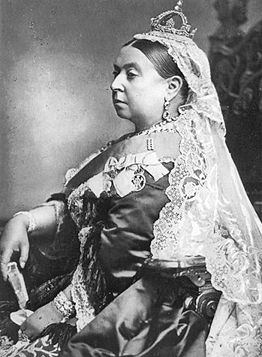
The holiday began in Bermuda as Empire Day in 1902, in honor of Queen Victoria, born on this day in 1819. (At the time of her birth Victoria was fifth in line of succession for the English throne, but due to a series of unfortunate royal deaths–or fortunate, if you’re Victoria–Victoria began her 61 year reign on her 18th birthday, 5/24/1837.)

The holiday was re-christened Commonwealth Day, and then, after the Bermuda race riots of the 1970s, Bermuda chose to rename the day Bermuda Day, to emphasize the country’s unity.

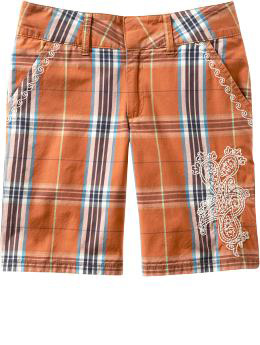
Bermuda Day used to mark the first day of summer season, and the first day a native could respectably go to the beach, or don a pair of those famous shorts that gave the island of Bermuda its name. (Some historians argue the reverse, but we know better.)

Today sets off the annual Bermuda Fitted Dinghy racing season–which, from what I understand, is a big deal, with lots of rules.

(Getting a little dinghy)

And 2008 marks the 100th Annual Bermuda Day Parade from Somerset to St. George.

This year there was debate about renaming the holiday National Heroes Day. The first honoree would be Bermuda’s Dame Lois Brown-Evans, who died last year shortly after Bermuda Day, just shy of her 80th birthday. Brown Evans was the country’s first female lawyer, the Commonwealth’s first female opposition leader, and the first elected Attorney General of Bermuda.

Queen Victoria (1819-1901) & Dame Marie Lois Brown-Evans (1927-2007)

But Bermudans have chosen to honor her and and National Heroes Day in October, in order to keep the Bermuda Day tradition alive.

Other reasons to love Bermuda:

#5. No billboards. A complete ban on outdoor advertising and neon signs. (Imagine pushing that one through Congress!)

#4. The world’s smallest drawbridge. Somerset Bridge measures less than two feet wide–barely wide enough for a boat’s mast.

#3. Brave New World. This far-off island inspired William Shakespeare’s The Tempest.

#2. The 21 sq. mile island puts up with 23,000 honeymooners a year.

#1.

Destination Bermuda

National Maritime Day

May 22

They say there’s nary a time like maritime — or is that no time like show time? At any rate, if there was ever a time to celebrate the merchant marine, that would be today, May 22, National Maritime Day.

Today the United States commemorates all those who have served in the merchant marine. Congress declared May 22 National Maritime Day in 1933. They chose May 22 because it was the anniversary of the day back in 1819 when the steamship SS Savannah left Savannah harbor in Georgia on its way to becoming the first steam-powered vessel to cross the Atlantic Ocean.

The SS Savannah arrived in Liverpool, England, twenty-nine days and four hours later. Even though it spent most of the journey sailing rather than steaming, the success of the Savannah was an important milestone for a young nation bordered by two oceans, and the voyage  made more established nations  such as England, Sweden, Russia, and France take note. King Charles XVI even offered to buy the Savannah for $100,000 of hemp and iron.

The merchant marine would be a vital component of U.S. Defense over the next 190 years. In fact, during World War II, the merchant marine suffered a higher casualty than any branch of the armed forces except for the Marines. However, it wasn’t until the 1980s that merchant marine veterans were accorded many of the rights and privileges of other veterans.

SS Savannah

————————————–

National Maritime Day is also a good time to educate youngsters about those eternal questions of life at sea. Questions like “Why is it called a ‘poop deck’?” No, you don’t need to avoid the poop deck on humid days. Poop is from the French ‘la poupe’, meaning stern (stern like in rear, not like your 4th grade teacher). The poop deck is so named because it’s located in the aft of the ship.

As for the Savannah, its post-Atlantic life was less than glamorous. The steam-powered engined was removed to make more space for cargo. Two years later, the ship that sailed the Atlantic was wrecked off the coast of Long Island. It would take another 30 years for a second U.S. steamship to successfully cross the Atlantic.

City of Savannah – S.S. Savannah

Historic Speedwell – S.S. Savannah

Armed Forces Day – U.S.

3rd Saturday in May
(May 21, 2011)

“Armed Forces Day, Saturday, May 20, 1950, marks the first combined demonstration by America’s defense team of its progress, under the National Security Act, towards the goal of readiness for any eventuality. It is the first parade of preparedness by the unified forces of our land, sea, and air defense.”

–President Harry Truman, Presidential Proclamation of February 27, 1950

In addition to creating the Central Intelligence Agency, the National Security Act reorganized the Army, Navy, Air Force and Marine Corps within a unified Department of Defense. (UFO-conspiracy theorists point out that Congress passed this classified Act just one month after the Roswell debacle of 1947. Coincidence?…Yes.) The purpose of the reorganization was to better identify and respond to “transnational threats” defined as “any transnational activity (including international terrorism, narcotics trafficking, the proliferation of weapons of mass destruction and the delivery systems for such weapons, and organized crime) that threatens the national security of the United States.”

Armed Forces Day was meant to replace the separate Army, Navy, and Marine Corps Days, although the Marines continue to observe Marine Corps Day each November 10. Armed Forces Day, the third Saturday in May, serves a dual purpose. It is partly for the country to pay homage to the men and women in the armed services. But it is also a ‘facetime’ opportunity–for the military to interact with and educate the public in an informal setting about the Armed Forces.

The city of Torrance has hosted the Armed Services Day Parade every year for nearly 50 years. Before and after the parade, spectators get a chance sit in Air Force helicopters, Coast Guard boats, Army trucks, and other military vehicles, while exhibits show the more scientific side of the Armed Forces, including geological, geographical, and zoological studies.

2008 marked the 100th anniversary of U.S. Army Reserve, which began in 1908 as the Medical Reserve Corps. The original Corps consisted of 160 doctors who could be called upon to serve their country at a moment’s notice in times of war. Ten years later at the end of World War I the Army Reserve numbered over 160,000 soldiers on active duty.

“Armed Forces Day, above all, honors the dedicated individuals who wear the uniforms of their country. Each serviceman, wherever he may be, whatever his task, contributes directly and importantly to the defense of the nation.”

General Earle G. Wheeler, Former Chairman, Joint Chiefs of Staff, 1967

“…Word to the Nation: Guard zealously your right to serve in the Armed Forces, for without them, there will be no other rights to guard.”

President John F. Kennedy, 1962

(Official AFD Poster, 1951)

http://www.defenselink.mil/afd/military/history.html

http://www.schweitzeres.org/armed_forces_day.htm

Timor of the Rising Sun

O mundo é dos audazes. Timor triunfará!

— Jorge Heiter

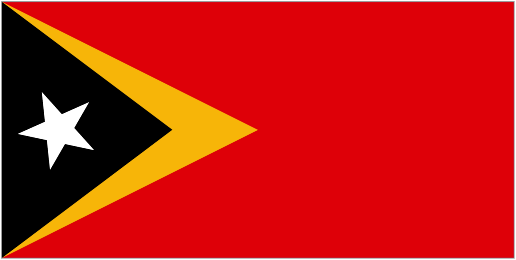
East Timor (now Timor-Leste) is the eastern half of a small island–conveniently named ‘Timor’–southeast of Indonesia. ‘Timor’ actually means East, or Rising Sun, so technically it’s ‘East East’.

Timor-Leste is one of two Catholic countries in Asia, the other being the Philippines; and the only Asian country where Portuguese is a second language.

For over 400 years the Portuguese ruled East Timor as a colony, until a 1975 coup d’etat in Portugal ushered in an era of de-colonialization. With a destabilized government, fighting broke out between two Timorese political parties, one of which allied themselves with Indonesia. (Indonesia occupied the western half of Timor.) The other party, FRETILIN, unilaterally declared East Timor an independent nation on November 28, 1975.

That independence was short lived.

The following week the Indonesian military, under President Suharto, began one of the most brutal, and one of the most ignored, invasions and occupations of the second half of the 20th century.

The United Nations condemned the invasion, but took no further action. Indonesia justified the invasion by claiming that the artificial border that split the island was the result of European imperialism and political oppression. (The Dutch had once occupied West Timor.)

Constancio was a young boy at the time of the invasion. Like many others, he and his family fled to the jungle, where he witnessed friends and family die from illness and starvation. All the while the Indonesian air force continued bombing from above. After several months he was captured and interred in a make-shift concentration camp that was worse than the mountainous jungle.

“There were thousands of people in a small area that was infested by mosquitoes and with no running water, no food. At least 15 people died every day.”

The island was effectively cut off from the rest of the world; it is estimated that of a population of 700,000, up to 100,000 Timorese died in the first 5 years of occupation.

After being released, Constancio became a servant to an Indonesian police officer in Dili. He gained entrance to a private school and became active in a students’ movement for an independent East Timor.

In 1991 Constancio helped organize a demonstration protesting the murder of Sebastiao Gomes, a 22 year-old killed in a church the month before. As over 3,000 unarmed demonstrators converged on the cemetery where Gomes was buried, Indonesian troops opened fire using American-made M16s. He recalled…

“We didn’t think they would open fire with United Nations observers and journalists being there.

Over 250 Timorese were killed; 200 more ‘disappeared’ in the following military crackdown. What separated the massacre of Santa Cruz from previous atrocities was that it was documented by Australian media, one of the few events on the otherwise isolated island to be so. The massacre at Santa Cruz became a rallying point for supporters of Timorese independence.

With a little less luck, Constancio might have been one of the disappeared, but he was tipped off by an inside friend who warned him not to go home that night when the secret police were waiting for him.

Constancio escaped to the western half of the island with the aid of friends, false papers, and money to bribe an Indonesian official to issue him a passport to Singapore.

He never took a moment of his freedom for granted. Traveling to Portugal and the U.S., he spread awareness of the situation in East Timor. In 1993 he matriculated to Brown University and he continued speaking across the U.S. about his life, the East Timor people, and the horrors he had seen.

In 1996, two of his countrymen Jose Ramos-Horta and Bishop Ximenes Belo, won the Nobel Peace Prize for their efforts at ending the violence in East Timor, bringing international attention to the fate of the small island.

In the late 1990s the determination of Timorese like Pinto, Ramos-Horta, and Ximenes Belo, as well Australian journalists like Allan Naird, met with help from an unlikely source. The crash of the Asian markets in 1997 destabilized Indonesia, and the ensuing recession forced President Suharto to call an end to his 30-year reign in May 1998. Dependent on foreign support during the financial crisis, the new President gave in to the international community’s demands for an election in East Timor.

On August 30, 1999, East Timor voted overwhelmingly for independence from Indonesia. But even after the election, paramilitary groups continued attacks on unarmed civilians in an attempt to provoke widespread violence and justify the need for Indonesian peacekeepers. Despite provocation, the Timorese kept their side of the peace.

Under international pressure, the last Indonesian troops left East Timor on October 31, 1999.

On this day in 2002 Timor-Leste became the first newly-independent nation of the 21st century.

Timor Com Dor e Com Amor

Flight from East Timor: Student works from Brown base toward freedom for his homeland – Richard Morin

East Timor and the International Community – Heike Krieger

The Future of East Timor

The Path out of Poverty

Instability Sours Timor Celebration

I have come a long way, but East Timor has come further