Saints Cyril & Methodius – Slovakia

July 5

St. Cyril and St. Methodius, the two missionary brothers who gave birth to the written Slovak language, are celebrated by the Eastern Catholic Church in May. (The exploits of the Brothers are detailed here.) But in the early 20th century the Roman Catholic feast day for the saints, held on July 5, took on a new importance.

After the formation of Czechoslovakia in 1918, Slovaks around the world struggled to defend their national identity. When the Czechs declared July 6 a public holiday, in honor of 15th century Protestant forerunner Jan Hus, Slovaks pushed for the feast day of Sts. Cyril and Methodius, July 5, as a national celebration as well as religious one. Today it’s celebrated in both Slovakia and the Czech Republic.

Gettin’ Glagolitic with Cyril & Methodius

St. Peter & St. Paul

June 29

In a word,
Never let go on these three things:
Faith, hope and love.
And know that the greatest of these
Will always be love

I Corinthians 13:13

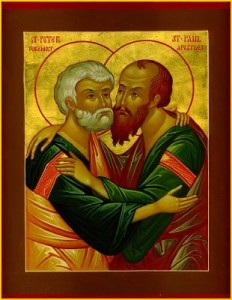
June 29 is the Feast Day of St. Peter and St. Paul. Each gets his own saint day, but in the Venn diagram of the Catholic Church, June 29 marks the intersection of the two.

The two Apostles couldn’t have been more different. St. Peter was Christ’s most devoted follower and leader of the Apostles. A simple fisherman, he was born as Simon. His name Peter comes from Petros for ‘rock’. Jesus referred to Simon as his rock, saying “Upon this Rock I will build my church.”

Paul was born Saul, a wrathful and often vicious persecutor of the early Christians, who never encountered Jesus outside his visions. It wasn’t until his vision on the road to Damascus that he was “blinded by the light”. Following his conversion, Paul became the most prolific converter of non-Christians to the faith the world has ever known.

The scriptures don’t detail the death of either saint. It’s believed St. Peter was crucified upside-down. As a Roman citizen, Paul was very likely beheaded. The saints are remembered jointly today because their remains were temporarily moved on June 29, around the year 258 AD to prevent their desecration during the Valerian persecution.

St. Peter & St. Paul

Leaders of the Apostles

Pauline Chronology

Isra wal Miraj – the Night Journey

27th of Rajab

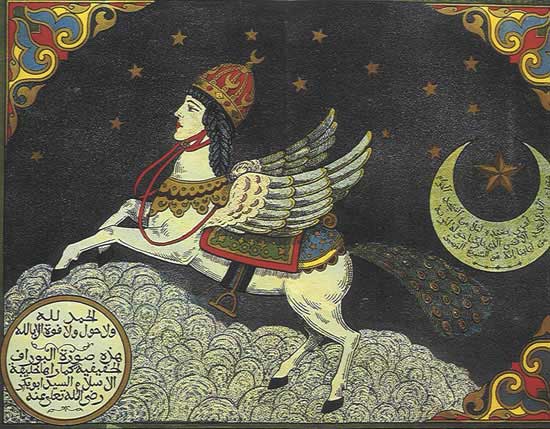
On the 27th day of the month of Rajab, the Prophet Mohammad was resting after evening prayers near the Kaaba in the city of Mecca when he was awoken by the angel Gabriel (Jibril). Gabriel had with him a white, winged horse-like creature named Buraq.

Buraq
Buraq

Gabriel then did a curious thing. He cut open the Prophet’s chest from throat to navel, removed his heart and cleansed it with Zamzam water, and poured into it a substance that fortified Muhammad’s wisdom and faith. Gabriel next asked Muhammad to mount Burak, and they began what is known in the Islamic faith as “the Night Journey”.

A single stride from Buraq measured as far as the eye could see, Muhammad later retold. Before much time passed the trio touched down in a land of palm trees, Medina. There Muhammad performed a prayer at Gabriel behest, and they were off again. Only this time they arrived at a much more distant location. The Masjid-al-Aqsa, meaning “the farthest mosque” in all of Islam. The city of Jerusalem. Along the way he saw many sights, including the birthplace of the Prophet Jesus in Bethlehem. Gathered together in one place at the mosque in Jerusalem were the prophets from Adam to Jesus, and Muhammad led them all in prayer.

From there Muhammad and Gabriel began the final leg of their journey, up to the heavens. This is know as the Ascension of the Prophet.

In the first heaven Muhammad saw Adam, the father of all mankind, surrounded by souls. If Adam looked to his left he cried, and if he looked to the right he laughed. For the souls on the left were his descendants who would die as non-believers; to his right, those who would die believers.

In the second heaven he came across the Prophets Jesus (Isa) and John the Baptist (Yahya).

In the third heaven was Joseph (Yusuf).

In the fourth, Enoch (Idris).

In the fifth, Aaron (Harun), brother of Moses, and in the sixth was Moses (Musa) himself.

Finally Muhammad reached the seventh heaven where stood the patriarch Abraham (Ibrahim), the holiest prophet in Islam next to Muhammad.

There Muhammad saw a sidr (lote) tree with fruit the size of the large jars and leaves the size of elephant ears. The sidr tree was said to be the tree Adam ate from before being banished.

He ascended past the branches of the sidr tree, into Paradise, where he witnessed the many rewards that awaited the faithful. And when he had passed beyond Paradise, he heard the ‘Kalam’ (word) of Allah.

The Kalam is likened to the language of Allah, but a language that doesn’t come word by word or letter by letter. Rather, it is one whole, eternal thing, without interruption.

The Kalam instilled in Muhammad many things, including the importance and power of good deeds. God told Muhammad that his followers must pray fifty times a day. With that, Muhammad descended.

But on the way down Moses asked him about what transpired. Moses said there was no way Muhammad’s followers would pray 50 times a day, and encouraged Muhammad to talk God down. Muhammad did this, and eventually talked God down to five times a day.

Muhammad returned to Mecca that same evening not far from where he had begun his journey. Only, in this age prior to supersonic jets, some of the townspeople didn’t believe he could have gone all the way to Jerusalem in one night. Muhammad described the Jerusalem mosque and its surroundings in perfect detail. And then told them of an event he had seen on the way back to Mecca, shepherds searching for a lost camel far away. When those shepherds reached town, they verified Muhammad’s story.

Today Muslims remember a key date in the history of Islam, the Isra and the Miraj, the Journey and the Ascension.

Isra and Mi’raj: The Details

UAE – July 31 declared Isra and Mi’raj Holiday

Miracle of Al-Isra and Al-Miraj


Bookmark and Share

Declaration of the Báb

May 23

This holiday remembers neither a war, nor the death of a martyr, nor a seasonal change, nor a leader’s birthday nor any event commonly called upon as the origin of a holiday.

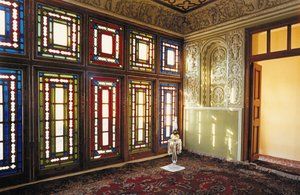
Today followers of the Bahai Faith celebrate a simple conversation between two men in a quiet house in Shiraz, Persia, on the evening of May 23, 1844.

Depiction of the room in which the Declaration occurred

The two men were Mulla Husayn and Siyyad Ali Muhammad, and the date is considered to be the foundation of the Bahai religion and the beginning of its ‘Badi’ calendar.

Mulla Husayn, was traveling through Persia with two companions. They had been informed by their teacher Siyyid Kazin just before he died that the Qa’im–the Promised One of Shi’a Islam–was about to make his presence known. Kazin ordered his students to set out and find this long-awaited Qa’im and with him the fulfillment of the prophecies of their sect.

Siyyid Kazin passed on to Mulla Husayn some indicators of the coming Qa’im. He would be of pure lineage, of noble descent (of Muhammad’s daughter Fatimah), of medium height and build, endowed with innate spiritual and philosophical knowledge, free from bodily deficiency, and he would be a non-smoker.

In addition Kazim offered specific tests of wisdom that would be posed to any claiming to be the Qa’im, and he further predicted that the true Qa’im, upon answering the preceding tests would immediately and of his own volition launch into the deepest and most revealing commentary of the Qur’an’s Sura of Yusuf (Joseph) the world had never known.

After traveling for many months, Mulla Husayn and his companions reached Shiraz in what is now Iran. Just before evening they separated with plans to meet up later that night.

On the streets of Shiraz, Mulla Husayn encountered a gentle young man with a soothing voice and a strange yet penetrating demeanor. The stranger introduced himself as Siyyad Ali Muhammad and invited Husayn back to his house. Despite Husayn’s protests that his friends were waiting for him, the young man assured him, “Commit them to the care of God, He will surely protect and watch over them.


At the house the two men talked over tea. Husayn recalled:

His dignity and self-assurance silenced me. I renewed my ablutions and prepared for prayer…It was about an hour after sunset when my youthful Host began to converse with me: “Whom, after Siyyid Kazin, do you regard as his successor and your leader?” asked Siyyad Ali Muhammad.

Mulla Husayn replied: “At the hour of his death, our departed teacher insistently exhorted us to forsake our homes, to scatter far and wide, in quest of the promised Beloved.”

Husayn told the young man all the features Kazin predicted the the Qa’im would have, whereupon the young man replied, “Behold, all these signs are manifest in Me!

Shocked at the man’s audacity, Husayn proceeded to grill the impostor with tests based on the teachings of his teacher Kazin and Kazin’s teacher Shaykh Ahmad.

“Within a few minutes He had, with characteristic vigour and charm, unravelled all its mysteries and resolved all its problems…He further expounded to me certain truths which could be found neither in the reported sayings of the Imams of the Faith, nor in the writings of Shaykh Ahmad and Siyyid Kazin.”

Finally, the moment of truth: Without provocation, the man took pen to paper and wrote, without hesitation, the first chapter in the beginning of what would be his great commentary on the Sirah of Joseph.

When Husayn accepted the veracity of the man’s claim, Siyyad Ali Muhammad announced the name he would be known as for the rest of his life and for generations after: the Báb, or “the Gate”.

See Martyrdom of the Báb

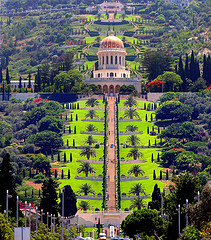
Shrine of the Báb

The Bab is one of the two divine messengers of God of the Baha’i Faith. He foretold the coming of the religion’s great prophet Baha’u’llah.

Vesak – Buddha’s Birthday

May 10/17, 2011

It’s often called Buddha Day, or Buddha’s Birthday, but it’s far more than that. Vesak is a celebration of Buddha’s birth, his life, his path to Enlightenment, and his final reaching of Nirvana.

Around 563 BC, in the foothills the Himalaya, the pregnant wife of a wealthy prince left her home to deliver her baby in her father’s kingdom, as was the tradition. But along the way she stopped in a garden and beneath the shade of a sal tree, she gave birth to the boy Siddhartha. This park, on what is now the border of India and Nepal, is called Lumbini, Sanskrit for “the lovely”.


His mother died immediately after his birth. Despite the loss of his mother, his father the prince went to great trouble to shield him from all human misery and ugliness. He was given everything he could want, and was kept a safe distance from the suffering of the outside world.

“I was delicate, most delicate, supremely delicate. Lotus pools were made for me at my father’s house solely for my use; in one blue lotuses flowered, in another white, and in another red…My turban, tunic, lower garments and cloak were all of Benares cloth. A white sunshade was held over me day and night so that I would not be troubled by cold or heat, dust or grit or dew.”

At age 29 Siddhartha chose to venture outside the castle property to meet his subjects beyond. Before the excursion his father secretly ordered every sick, homeless, and old person in the village to be removed from his son’s view. But on his journey, Siddhartha chanced upon an elderly man–the first of Siddhartha’s Four Encounters.
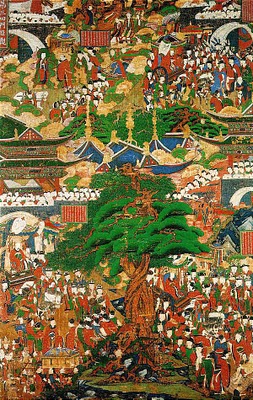
Intrigued and disturbed by the sight of the old man, he planned subsequent trips to explore life outside the carefully-orchestrated castle. For the first time, Siddhartha witnessed disease in the form of a severely ill man. On his third trip he saw death in the form of a corpse. His charioteer gave him a crash-course in life’s harsh reality: all grow older, grow sicker, and die.

Trying to make sense of the desperation, Siddhartha made his fourth encounter–with a man who at once seemed to have the answers of the world and yet owns nothing. He’s an ascetic.

Siddhartha chose to flee from his father’s kingdom. He renounced his father’s materialism and his worldly connections–leaving his wife and their newborn son–to learn the ways of asceticism.

Siddhartha became a common street beggar for his sustenance, but he was easily recognized as the wealthy prince. He traveled further, studying under two ascetic masters, one after the other, but was ultimately unfulfilled with each of their teachings.

With five companions he took asceticism to a new level, reducing his food intake to little more a nut or leaf per day. For six years he lived the life of an ascetic.
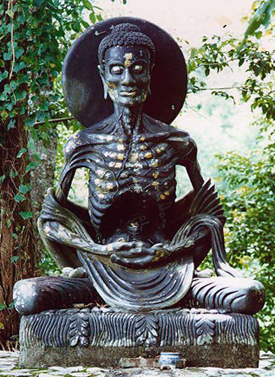
“My body reached a state of extreme emaciation. Because of eating so little my limbs became like the jointed stems of creepers or bamboo; my backside became like a buffalo’s hoof…”

In the end, he was so weak, he nearly drowned in a river while trying to wash.

Lying there he heard a boat pass, with two musicians on board. One told another, inspecting his instrument, “If you tighten the string too tight it will snap, but if it is too loose, it will not play.”

Siddhartha realized that neither extreme asceticism nor materialism is the path to enlightenment. He recalled falling into a meditative state as a child, as close as he’d ever been to Enlightenment. In order for his mind to reach such a state again, he must nourish the body. His five companions desert him, convinced that Siddhartha has lost his willpower. But at that moment a young girl named Sujata arrived and offers him milk-rice.

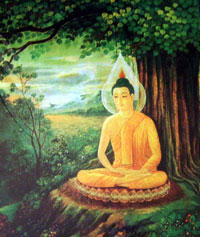
Sitting beneath a pipal tree, Siddhartha made a solemn vow:

Let only skin, sinew and bone remain, let the flesh and blood dry in my body, but I will not give up this seat without attaining complete awakening.

After 49 days of meditation Siddhartha reached Englightenment. From that moment on he became Buddha, or the ‘Awakened One’.

Buddha spent the rest of his forty-five years passing on wisdom to his disciples, including the Noble Truths and the 5 Precepts, before reaching the final state of Nirvana, when his soul left his body.

Buddha’s 5 Just Say No’s

Just Say No to:

Killing
Stealing
Sexual misconduct
Lying
Drugs (intoxicants)

Buddha also rejected the ways of the caste system, as well as religious ritual for ritual’s sake.

Vesak comes from the word Vaishakha, the second month of the Hindu calendar. Buddha’s ‘Birthday’ is celebrated on the full moon of Vesak, usually in May.

It is not a holiday of wild abandon, but of joy, introspection, and spiritual exploration.

“The Buddha showed us that advancement in this world and the next could be achieved by appreciating what is good. The policy of the government is to steer the country to the correct path by adhering to the Dhamma. In doing so our responsibility is to tolerate other opinions and act with loving kindness.

As the Buddha has taught: “Be alert; do not idle. Follow the law of virtue. He who is virtuous lives happily both in this world and the next

— President of Sri Lanka, Vesak Day message, 2008

In the Buddha’s footsteps…

http://orias.berkeley.edu/visuals/buddha/LIFE.html#garden%20of

http://www.festivalsofindia.in/budhpurnima/

http://www.colombopage.com/archive_08/May18154105JV.html
 

San Isidro – Spain

May 15


Just when Madrid sobers up from back-to-back celebrations of Labor Day and Dos de Mayo, it pulls out all the stops for the week-long celebration of San Isidro.

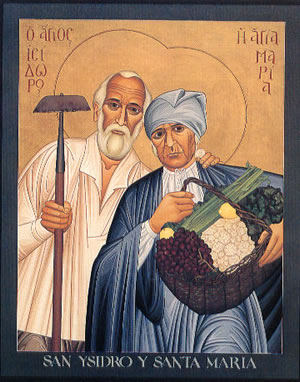
San Isidro (1070-1130) is Madrid’s patron saint, whose feast day falls on May 15.

A simple farm worker, Isidro never had much money, never led a diocese or congregation, never fought in a war, and was not martyred or notably persecuted for his faith. Nor was his wife Santa Maria de la Cabeza (Saint Mary of the Head). And yet Maria and Isidro are among the few husband-and-wife teams to be canonized in 2000 years of Christendom. (Though it did take 500 years for the Pope to do so.)

[Iberian Gothic? 12th century saints Ysidro & Maria reincarnated]

The couple lived in poverty for most of their lives, but they were known for their generosity, giving more to the poor than they kept for themselves. Stories of Isidro’s miracles, like the materialization of food and water for the hungry, are reminiscent of Jesus feeding the masses with a single loaf of bread. According to legend, one day Isidro’s scythe struck the earth, and a spring burst forth with enough water to sustain the whole city.

In the 900 years since Isidro and Maria walked the earth, farmers have called on them for relief in times of drought.

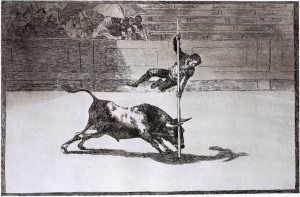
The holiday also marks the beginning of bullfighting season. Spanish bullfighting traces its roots back to Mithras, imported from the Middle East either through Rome or North Africa.

“The killing of the sacred bull (tauromachy) is the essential central iconic act of Mithras, which was commemorated in the mithraeum wherever Roman soldiers were stationed. Many of the oldest bullrings in Spain are located on the sites of, or adjacent to the locations of temples to Mithras.”

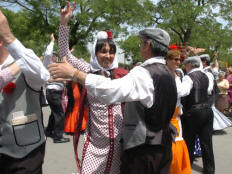
If you’re with PETA, and bullfighting doesn’t do it for you, concerts and dancing fill the streets the whole week. Parks are converted into open-air verbenas, where celebrants wear traditional attire: chulos and majos for the guys, chulapas and majas for the ladies.

Chulo is a derogatory term sometimes applied by other Spaniards to the inhabitants of Madrid. It means arrogant. But the Madrilenos take it in stride. Dressed in chulo and chulapa costumes, performers live up to their name in a stylized dance of exaggerated arrogance.

Strange that a holiday in honor of a man so down-to-earth would be celebrated by imbibing vast quantities of alcohol and performing dances that exude arrogance.  But as the Spanish say…

Cada uno en su casa, y Dios en la de todos.

San Isidro and Santa Maria

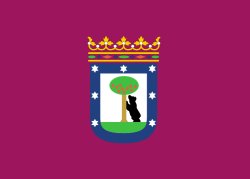
San Isidro in Madrid

San Isidro the Laborer: A Worker’s Life Anchored in Christ

Madrid’s Festival of San Isidro

St. Isidore: the Patron Saint of Farmers

Lemuralia: Malicious Girls Marry in May

May 13

When midnight comes and drops silence for sleep,
and dogs and dappled birds are hushed,
The man who remembers the ancient rite
and fears the gods, rises up (barefoot)
And makes a thumb sign between his closed fingers
to avoid some ghostly wraith in the quiet.
When he has washed his hands clean with fountain water,
he turns around after taking black beans,
Glances away and throws, saying: ‘These I release;
I redeem me and mine with these beans.’

— Ovid’s Fasti

The head of the Roman household would, according to Ovid, perform this rite nine times and then, after rinsing his hands, would shout, “Leave, ancestral spirits!” another nine times, purifying his house of those departed whose souls refuse to rest. (The Japanese still observe a similar bean-throwing tradition during the Shinto lunar new year, Setsubun.)

The Roman superstition that Ovid describes was once a public festival known as the Feast of Lemuria, or Lemuralia, decreed by Rome’s co-founder Romulus.

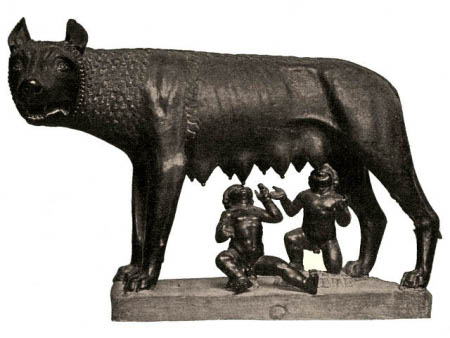
She-wolf suckles Romulus & Remus

Romulus and Remus were twin sons of Mars, god of war, who were nursed by a she-wolf in the wild. They wanted to build a great city, but couldn’t agree on the location. Romulus preferred Palatine Hill, Remus preferred Aventine Hill. They each built their own city. When Remus mocked Romulus by jumping over the wall meant to protect his, Romulus slew Remus in a fit of rage.

Guilt-ridden, Romulus was haunted by Remus’s ghost, who asked to be remembered on this day.

Lemuralia, says Ovid, is a corruption of Remus (Maybe Remuralia was too hard to pronounce?):

Over a long time the rough letter became smooth
at the beginning of the whole name.
Soon they also called the silent souls lemures…
The ancients shut temples on those days, as you now
see them closed in the season of the dead.
The same times are unfit for a widow’s marriage
or virgin’s. No girls who wed then live long…
Folk say: “Malicious girls marry in May.”

Around 610, Pope Boniface IV declared May 13 “All Saints Day”, in honor of all martyred. All Saints Day was later moved to November 1, coinciding with regional harvest festivals remembering the spirits of the dead.

Our Lady of Fátima – Portugal

May 13

Our Lady of Fatima

Sightings of the Virgin Mary date all the way back to 40 AD when the Virgin Mary first appeared to the Apostle James in Spain. They’ve occurred all over the world, in communities big and small, and the sightings continue to this day. In fact…

“Just last week, the Virgin Mary appeared in the form of a stain on a griddle at Las Palmas restaurant in Calexico, California. More than 100 people have come to gaze upon it, manager Brenda Martinez told the Imperial Valley Press…” — The Standard – May 13, 2009

But the most famous sighting in modern times may be the one that took place on this day (May 13) in 1917 in Fátima, Portugal. As the World War raged throughout Europe, three Portuguese children—Francisco and Jacinta Marto, ages 9 and 7, and their cousin Lucia Dos Santos, age 10—were building a wall in the fields when their play was interrupted by a flash of lightning.

“They thought that a storm was brewing and herded the sheep together to take them home. They once again saw a flash of lightening and shortly afterwards they saw above a small holm oak tree a Lady dressed entirely in white and shining more brilliantly than the sun.”
http://www.marypages.eu/fatimaEng.htm

The apparition answered the children’s questions on heaven, and entreated them to return on the 13th of each month thereafter. At subsequent encounters she told them about heaven, hell, and God’s message. Over the next 5 months, word spread of the children’s encounters. By October 13, 70,000 people gathered in the field hoping to catch a glimpse of “Our Lady of Fátima” (now also known as “Our Lady of the Rosary”).

“After the long extensive rains, the sky became blue, people could easily look into the sun, which started to spin round like a wheel of fire which radiated wonderful shafts of light in all sorts of colours. The people, the hills, the trees and everything in Fatima seemed to radiate these marvellous colours.

Then the sun stood still for a moment then the wonderful thing that had happened reoccurred. It was repeated for a third time. But now the sun broke loose from the heavens and came down to earth with a zigzagging movement. It became bigger and bigger and looked as though it would fall on the people and flatten them. All were frightened and fell to the ground while they prayed for mercy and forgiveness.” —  http://www.marypages.eu/fatimaEng.htm

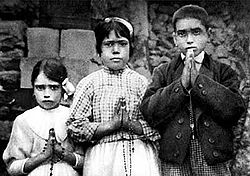
Jacinta, Lucia, & Francisco

Sadly, Francisco died only 2 years later and Jacinta the year after that.  Pope John Paul II beatified Francisco and Jacinta on May 13, 2000. Lucia lived to the ripe old age of 97. She died in 2005.

May 13 is celebrated in Portugal and by many Portuguese Catholics in other parts of the world. On May 13, 2009, “The 13th Day”, about the miracle of Fátima, premiered at the Cannes Film Festival in France.