Grandparents Day

2nd Sunday in September

You are the product of four people. You may not have met all of them, you may not have met any of them, but if just one of them hadn’t existed, well, you wouldn’t be here either.

They’re your Grandfolks. They grew up in a very different world from you, two generations removed.

Grandparents Day is a relatively new creation, compared to Mother’s and Father’s Day. Like those two, we have a West Virginian to thank for its inception. Marian Lucille Herndon McQuade lobbied throughout the 1970’s for a holiday that would recognize the contributions of older adults, namely grandparents. In 1979, President Jimmy Carter proclaimed the second Sunday in September “Grandparents Day”.

Unlike Mother’s Day and Father’s Day, Grandparents Day has no apostrophe…

“But it’s an oversight that serves the holiday well. Mrs. McQuade did not envision the holiday as “belonging” to grandparents. Instead, she saw it as a day of celebration involving the whole family, a day to connect the generations.”

The History of Grandparents Day

The September date was chosen to symbolize the autumnal season of life. The Chinese also hold a festival in the ninth month to celebrate and respect their elders. It’s known as Chong Yang, or Double Ninth (9-9). While Grandparents Day in the United States is a minor holiday, largely overlooked in a youth-obsessed culture, holidays that honor elders in Eastern and African cultures have been celebrated for centuries, possibly millennia.

Both in the U.S. and overseas, the roles of grandparents are changing. Many grandparents find themselves as primary caregivers for their grandchildren.

“The number of grandparents raising grandchildren increased by 40% from 1980 to 1990 (National Center for Health Statistics, 1998). In 1996 the NCHS reported that one million American children, lived in a grandparent’s home without a parent present.”

— Access to Academics for All Students

But grandparents are also more athletic and productive than ever before. As one quote goes, “Some of our modern grandparents are so young and spry they help Boy Scouts across the street.

Ellen DeGeneres confirms: “My grandmother started walking five miles a day when she was sixty. She’s ninety-seven now, and we don’t know where the hell she is.

Henry Youngman tells another success story: “My grandmother is over eighty and still doesn’t need glasses.  Drinks right out of the bottle.

One thing hasn’t changed. There is a special relationship between grandparents and their children’s children. Sam Levenson theorized, “The reason grandchildren and grandparents get along so well is that they have a common enemy.

But perhaps as the the truth is less cynical. As anxiety of child-rearing fades and the end seems nearer than the beginning, grandparents are left with a greater appreciation of what truly matters than anyone else on the planet. They respect the purity and simplicity only children possess—or “borrow” really.

“Grandmothers hold our tiny hands for just a little while… but our hearts forever.”

+ + +

Grandmother’s house (It was always “grandmother’s house”, even though it was just as much grandfather’s) was a treasure trove of goodies: “Junkios”—cereals our parents would never allow—chocolate pudding, jell-o, and every type of candy. Afternoons were spent enjoying the Family Film Festival, where we were introduced to the strange, wonderful cinematic magic of our forefathers.

Nothing could compare to the safety and security of grandmother’s house. Grandparents were all-knowing when we were ignorant. As they age and dip into the irretrievable world of Alzheimers’, it’s sad to watch our roles reverse. Not that we’re wise now, we just know what they taught us.

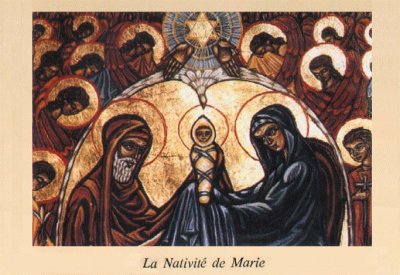
Nativity of the Virgin Mary

September 8

Happy Birthday Madonna!

No, not that one.

On September 8, the Catholic world celebrates the birth of the Virgin Mary.

Nativity of Mary

Little is know of Mary’s birth from the Bible. The Gospel of James (which didn’t make the final cut) list her folks as Joachim and Anne (Hannah). The couple was childless until they were visited by an angel who informed them a child was forthcoming. Anne promised the child would be brought up to serve the Lord.

Mary would have been born “Mariam” or מרים

For two-thousand years, the Virgin Mary has been the symbol of feminine spirituality in Christian culture. While Eve was unfairly vilified as the bringer of original sin throughout the Middle Ages, Mary represented the opposite, the ultimate purity and the the bringer of God.

Pope John Paul ll in his 2000 millennium message elevates the status of both Eve and Mary. He describes Eve as the original symbol of Humanity, the mother who gave birth to Cain and Abel, and Mary, who gave birth to Jesus, as a symbol of the New Humanity; one in which All Humanity is One in Spirit with God. This statement changes the context which the Christian doctrine has relegated to women; that the Spirit of God resides equally in male and female.

Contemplation of Mary – St. Mary’s at Penn

Visions of the Virgin Mary have been spotted by worshippers throughout the Christian world. One of the most famous of these was witnessed initially by three children in Fatima, Portugal in 1917.

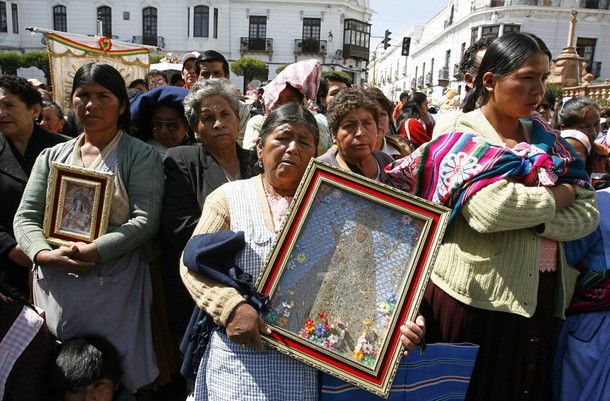
On the Nativity of the Virgin Mary, many Mediterranean and Latin-American villages carry her statue from local churches through the streets. Local Spanish processions are known as Virgin de la Pena, Virgin de la Fuesanta, and Virgin de la Cinta. Peru has the Virgin of Cocharcas, and in Bolivia it’s the Virgin of Guadalupe.

Virgin of Guadalupe procession in Bolivia (c) Reuters
Virgin of Guadalupe procession in Bolivia © Reuters

And it may not be Madonna (Madonna Louise “Like A Virgin” Ciccone)’s birthday, but singer-songwriter Aimee Mann turns 51 today…and rumor has it she’s still a Virginian.

Easter comes and goes
Maybe Jesus knows…

Aimee Mann, “Thirty One Today”

Feast of the Nativity of the Blessed Virgin Mary

La Tomatina

Last Wednesday in August
August 31, 2011
August 29, 2012

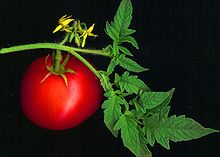
364 days out of the year, Buñol is a quiet, ordinary Spanish town country nestled in the foothills of the Valencia mountains about 40 kilometers from the Mediterranean coast; its population is just shy of 10,000.

But if you happen to visit Buñol on the last Wednesday of August, don’t wear your finest. You will notice that the population has tripled in size, the bulk of these tens of thousands have amassed along a few narrow streets, and they’re all engaged in a peculiar activity: throwing tomatoes.

Lots of tomatoes.

Over a hundred TONS of tomatoes.

La Tomatina is essentially the world’s largest food fight. (Although the Great Kettering Elementary School Food Fight of 1986 comes close.)

We wish we could say La Tomatina originates from an ancient pagan fertility rite, but it’s only 60 or so years old. Stories of the festival’s origin vary. Combining them would sound like this:

During a Gigantes y Cabezudos festival (the kind with the really big heads as featured in Borat) some rowdy spectators attempted to become participants, knocking over a big-head-carrying procession member in the process. A scuffled ensued among the hot-tempered youths.

Now, the people of Buñol had always enjoyed throwing things at each other. And fortunately for posterity, a truck or cartload of tomatoes had overturned just prior this auspicious occasion, providing the feuding parties with the perfect ammunition.

The following year authorities hoped to stem a repeat of the disaster, but the veterans of the previous year had some unfinished business to attend to.

The activity was first sanctioned by Town Hall in 1950. It was permitted and prohibited intermittently over the next few years. It got out of hand in 1956, townspeople got hurt, and it was canceled the following year. Some folks held a Tomatina Funeral instead. The festival was brought back by popular demand in 1959–but with regulations*–and they’ve been throwing tomatoes ever since.

Yes, La Tomatina started out as a Buñol style gang war. Perhaps in the States, if we armed our inner-city youths with tomatoes (in LA, avocados) we would attract tourists instead of violence.

As it is, in Buñol tens of thousands of tourists flock to La Tomatina each year. The festivities begin with the scaling of the “soap pole”. A ham is stuck atop a tall greased pole, and the tomato throwing can’t begin until a brave crowd member retrieves it.

*If you go, it’s considered proper Tomatina etiquette to squish your tomato before hurling it. Don’t bring bottles or anything that could cause injury, and be careful not to rip other people’s clothes. And it doesn’t matter if you’re wearing red or not. You will be.

La Tomatina

WARNING: NOT FOR THE TOMATO-PHOBIC!

One writer’s horrifying story:

“Our red tornado became an inexorable hurricane. It was becoming difficult to stand upright in so much slush and with so many wet missiles impacting from every possible direction. We blotted out the sun and sky…I had become one vast squelching mound of pulped tomato…

Seeing Red — Louis de Bernieres

What To Do With Your Extra Tomatoes

Victory Day – Turkey – Zafer Bayrami

August 30

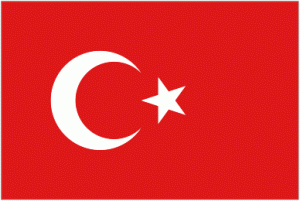
flag_turkey

Today (August 30) Turkey celebrates Victory Day. The day honors those who have served in Turkey’s military and who fought heroically in the nation’s battles. Throughout the past two millennia, some of history’s greatest battles have been fought on what is now Turkish soil, but of all these, the Battle of Dumlipinar, fought in August 1922, was singled out to serve as the country’s Victory Day.

The Battle of Dumlipinar was the last major battle of the Greek campaign of the Turkish War for Independence (1919-1923).

After World War I, the Ottoman Empire found itself, along with Germany and the Austro-Hungarian Empire, at the losing end of an Armistice. The Treaty of Mudros didn’t reflect the reality of a war that in many ways was a stalemate. Western powers seized Ottoman towns and territory in the coming years…

“Greece, in a wild imperial venture supported by Britain, had invaded western Anatolia, hoping to make itself an Aegean ‘great power’ and to construct a ‘greater Greece’ out of the ruins of the Ottoman Empire. But the invasion ended not simply in Greece’s defeat at the battle of Dumlupinar in 1922, but in a calamitous rout and slaughter which drove not only the Greek armies but much of the Greek civilian population of Anatolia into the sea.”

— Neal Ascherson, Black Sea

As part of the treaty following the Greco-Turkish War, Turks and Greeks engaged in a population exchange, whereby Greek Muslims moved to Turkey and Turkish Christians moved to Greece. (Population Exchange Commission, 1923)

During these same years, Turkish revolutionaries under Mustafa Kemal simultaneously defeated the French and the Armenians in separate campaigns, forcing the Allies to revisit earlier treaties. The Turks dissolved the Sultanate of the Ottoman Empire, and a new Turkish Republic was established, with Mustafa Kemal as its leader.

The Turkish Nation consists of the valiant descendants of a people that has lived independently and has considered independence the sole condition of existence. This nation has never lived without freedom, cannot and never will.

— Mustafa Kemal Ataturk

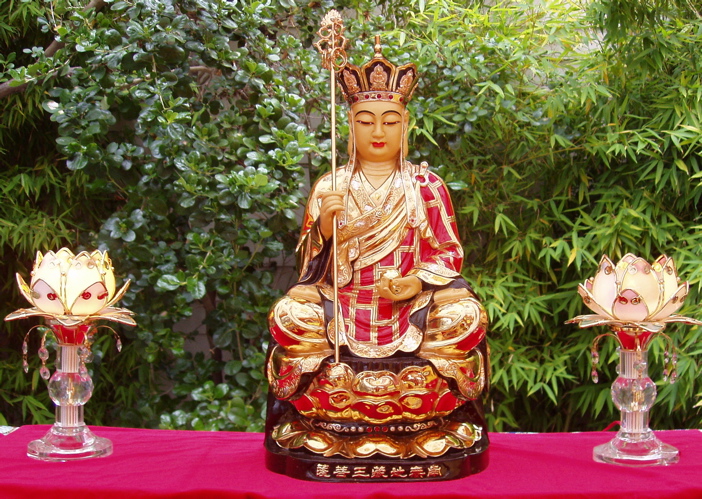
Ksitigarbha Bodhisattva

30th day of 7th lunar month

Where are you going
My beautiful friend
Is this the road that
You take to the end
And if we break down
All we left behind
Is this the highway
Of all mankind?

Axis spins so round and round we go
Where we’re going no one really knows
Here we here we here we here go
Feel the fire
Way down below…

That’s from Big Audio Dynamite’s spiritual hymn, “The Globe“, but it could very well be the theme for today’s holiday, celebrating the birthday of Ksitigarbha Bodhisattva in Mahayana Buddhism–or as he’s sometimes known: the Buddha of Hell…

What does Ksitigarbha Bodhisattva mean? Well, in the immortal words of Big Audio Dynamite, let’s

Break it on down (bless you)” :

Bodhi means enlightened, wakefulness, absolute consciousness, perhaps even superconsciousness, and refers specifically to the state achieved by Gautama Buddha and his disciples. It’s similar to Nirvana, and indeed, Nirvana and Bodhi used to be used synonymously. But in Mahayana Buddhism, Bodhi is a notch up from Nirvana (No offense to Kurt).

Anyone can attain nirvana (okay, maybe not anybody) while only Buddha can attain Bodhi. In fact, “Buddha” means one who has attained Bodhi.

Now Sattva can mean many things: purity, harmony, truth, goodness, but it basically means “the essence of being”.

The Bodhisattva are those rare beings who can attain complete and pure wakefulness, the most enlightened state.

Ksitigarbha was a special Bodhisattva. Ksiti means “womb” or “matrix”. Garbha means “earth”. His name literally translates to “Womb of the Earth,” “Treasury of the Earth” or, “Earth Store”.

Though capable of achieving Bodhi, Ksitigarbha refused to do, as he considered it his duty to help others. Ksitigarbha vowed not to achieve Bodhi until “all the hells are empty.”

Put it all together and you have the Buddha of Hell. That’s his nickname, since he aimed to vacate the Hells on earth. He’s also called Dizang in China, Jizo in Japan.

This year Ksitigarbha’s birthday falls one day after the remembrance of the beheading of St. John the Baptist in the Christian religion. John the Baptist was believed to have gone to hell after the beheading, where he preached to the inhabitants there that the Messiah had arrived on earth.

Women’s Equality Day

August 26

“Susan B. Anthony is not on trial; the United States is on trial.”

— Matilda Joslyn Gage

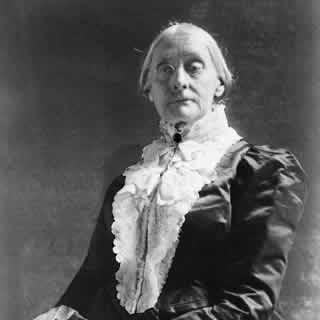
Susan B. Anthony

Women’s Equality Day celebrates the anniversary of the passage of the 19th Amendment on August 26, 1920. The amendment gave American women the long-fought-for right to vote. One of the most vocal and influential activists for women’s suffrage was Susan B. Anthony. In fact, in Massachusetts it’s Susan B. Anthony Day today, in honor of the famed activist, human rights defender, and convicted felon.

That’s right. Susan B. Anthony was arrested on November 18, 1872 for voting in the November 5 presidential election, “without having a lawful right to vote and in violation of section 19 of an act of Congress.”

In order to prevent damage to her reputation, Commissioner Storrs sent word to Anthony, requesting that she come down to his office. Anthony responded saying she “had no social acquaintance with him and didn’t wish to call on him.” The Commissioner was forced to send a deputy marshal to Anthony’s residence in Rochester, New York. She later recalled:

“He sat down. He said it was pleasant weather. He hemmed and hawed and finally said Mr. Storrs wanted to see me… ‘what for?’ I asked. ‘To arrest you.’ said he. ‘Is that the way you arrest men?’ ‘No.’ Then I demanded that I should be arrested properly.”

Anthony refused to pay bail. The case made national headlines, and letters flooded in. To her dismay, Anthony’s lawyer did pay her bail without her knowledge, explaining “I could not see a lady I respected put in jail.” (This however, later ruined her chance of bringing the case to the Supreme Court.)

Anthony’s lawyer argued—as Anthony had done herself outside of court—that the wording of the 14th Amendment gave all citizens of the United States the right to vote. After a lengthy trial, covered daily in the national press, and at which Anthony herself was not allowed to testify, the judge announced: “The Fourteenth Amendment gives no right to a woman to vote, and the voting by Miss Anthony was in violation of the law…Upon this evidence I supposed there is no question for the jury and the jury should be directed to find a verdict of guilty.”

The judge pronounced her guilty without ever calling on the jury to deliberate.

Before sentencing, the judge asked Anthony: “Has the prisoner anything to say why sentence shall not be pronounced?”

Not one to make waves, Anthony told the judge:

“Yes, your honor, I have many things to say; for in your ordered verdict of guilty, you have trampled under foot every vital principle of our government…May it please the Court to remember that since the day of my arrest last November, this is the first time that either myself or any person of my disfranchised class has been allowed a word of defense before judge or jury…All of my prosecutors, from the eighth ward corner grocery politician who entered the complaint, to the United States Marshal, Commissioner, District Attorney, District Judge, your honor on the bench, not one is my peer, but each and all are my political sovereigns; and had your honor submitted my case to the jury, as was clearly your duty, even then I should have had just cause of protest, for not one of those men was peer; but, native or foreign born, white or black, rich or poor, educated or ignorant, awake or asleep, sober or drunk, each and every man of them was my political superior; hence in no sense, my peer.”

Anthony continued for some time, ignoring the judge’s orders for silence. Finally the judge ordered Anthony to pay $100 and the costs of prosecution. Anthony simply said:

May it please your honor, I shall never pay a dollar of your unjust penalty. All the stock in trade I possess is a $10,000 debt, incurred by publishing my paper–The Revolution–four years ago, the sole object of which was to educate all women to do precisely as I have done, rebel against your manmade, unjust, unconstitutional forms of law, that tax, fine, imprison and hang women, while they deny them the right of representation in the government…And I shall earnestly and persistently continue to urge all women to the practical recognition of the old revolutionary maxim, that ‘Resistance to tyranny is obedience to God.’

She never paid the fine.

Oh, and in case you were wondering, she voted Republican.

Liberation of Paris

August 25, 1944

Is Paris Burning?

The above line was supposedly uttered by Adolf Hitler to his chief of staff Alfred Jodl, referring to his order to General Dietrich von Choltitz, military governor of Paris during the German occupation, not to let majestic city of Paris fall back into Allied hands, except as complete rubble.

In August 1944, General Eisenhower originally refused to divert troops to help the liberate Paris on the Allies’ way to Berlin; however, Charles de Gaulle threatened to take his own Free French forces anyway, alone if need be.

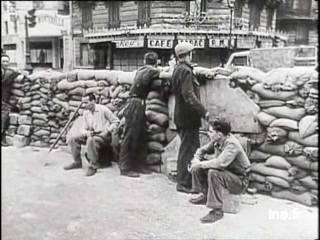
As Free French forces neared, the Parisians launched a massive strike and mobilized for an all-out war with the German occupying forces. The French Resistance and Free French battled the German occupying force for nearly a week in late August 1944, until Choltitz surrendered on August 25, 1944.

August 20, 1944
August 20, 1944

Choltitz is one of the most controversial figures of the Vichy France. He is seen as a hero to some for refusing to obey HItler’s orders to destroy one of the greatest cities in the world. However, in addition to having served Hitler and the Nazis faithfully during the war, he ordered the executions of numerous French Resistance fighters and destroyed Paris’s Grand Palais in the final days before the Liberation. His motivations may never be fully known, but fortunately for us, centuries-old Parisian landmarks survived the war and the battle for liberation with minimal physical damage.

Free French forces on the Champs Elysees, August 25

On this day in 1944, Charles de Gaulle, leader of the Free French, addressed his newly liberated countrymen from the Hotel de Ville:

We will not hide this deep and sacred emotion. These are minutes which go beyond each of our poor lives. Paris! Outraged Paris! Broken Paris! Martyred Paris! But liberated Paris! Liberated by itself, liberated by its people with the help of the French armies, with the support and the help of the whole France, of the fighting France, of the only France, of the real France, of the eternal France…

We, who have lived the greatest hours of our History, we have nothing else to wish than to show ourselves, up to the end, worthy of France.

Vive la France!

Liberation Day is not a national holiday in France. Rather, the French celebrate Victory Day 1945 on May 8, the anniversary of the official end of hostilities in Europe the day after the surrender of German forces in Rheims, France.

Russian Apple Spas

August 19

Before you grab your towel and get undressed, no, this has nothing to do saunas or back rubs, so put your pants back on. This is a family blog.

No. Spas in Russian means “savior”. The ‘Spases‘ are three folk holidays celebrated in August, that bring the Russian summer season to a close with style. And food.

August 14 (Gregorian) is mokryi Spas, or “Wet Savior”, but is more commonly referred to as Honey Spas (medovyi Spas), so named because it coincides with the late-summer gathering of honey.

The second, and most important of the three takes place today. Spas na gore/iablochnyi Spas, aka, “Savior on the Hill”/”Apple Spas”.

apples

Apple Spas falls during the Feast of the Transfiguration in the Eastern Orthodox Calendar (August 19, Gregorian; August 6, Julian). Fruits and veggies from orchards and gardens are blessed today, and it’s considered bad luck to eat apples until now. More specifically, children in heaven are said to receive apples to eat this day, only if their living parents have not done so before Apple Spas.

The third Spas is orekhovyi Spas–Nut Savior–which once coincided with–you guessed it–the gathering of nuts at month’s end (August 29, Gregorian; August 16, Julian).

The Spas developed out of agrarian festivals during which the first spoils of the harvest were consecrated in honor of nature deities, in the hopes of a bountiful harvest and mild winter. Over the centuries the folk festivals became inextricably intertwined with Christian traditions.

The Apples Spas coincidentally falls on the anniversary of the start of the 1991 coup in which Soviet leader Mikhail Gorbachev was kidnapped by hard-liners who disagreed with his reformist policies. The coup failed, and within days, five Soviet republics had declared their independence. By the year’s end, the 75 year-old Soviet Union had ceased to exist.

This is not Russian Spas but it looks like theyre having fun.
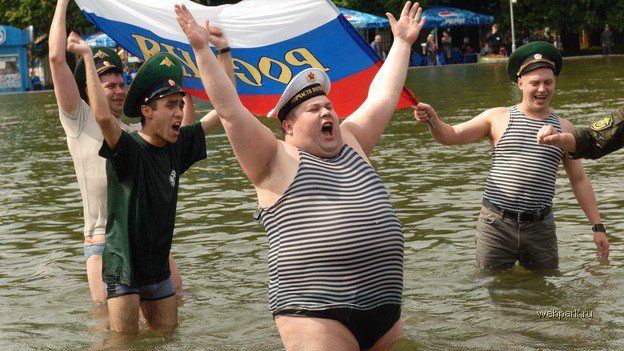
This is not Russian Spas but it looks like fun.