“To host your own Michael Jackson birthday party is fairly simple. Michael Jackson’s favorite colors are red and black, he loved Mexican food, and the movies E.T. and Star Wars….” — How to Host Your Own Michael Jackson Birthday Party
Google has even made an icon of the pop icon on its homepage for the day. It features his famous shoes in moonwalk pose. As we all know, Michael Jackson was not only a singer, dancer and entertainer, but also an inventor. He held a partial patent for the aforementioned “moonwalk shoes”, or more specifically, the…
“Method and means for creating anti-gravity illusion…A system for engaging shoes with a hitch mans to permit a person standing on a stage surface to lean forwardly beyond his or her center of gravity…” — full patent at Google patents
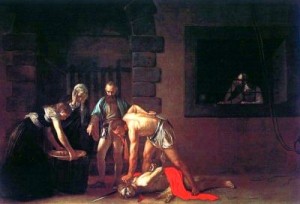
August 29 is also the anniversary of the Beheading of Saint John in the Catholic Church. In Russia, August 29 is Nut Spas, a traditional day for gathering nuts.
August 29 is the remembrance of the beheading of St. John the Baptist in the Catholic calendar.
John was the revolutionary religious leader foretold the coming of Christ and who baptized Christ in the Jordan River.
St. John enraged King Herod’s wife, Queen Herodias. Herodias was the widow of Philip, King Herod’s brother. St. John publicly expressed his contempt at the union. The Queen wanted St. John executed, but Herod refused. St. John’s popularity in Judea was too great. Instead King Herod threw him in prison.
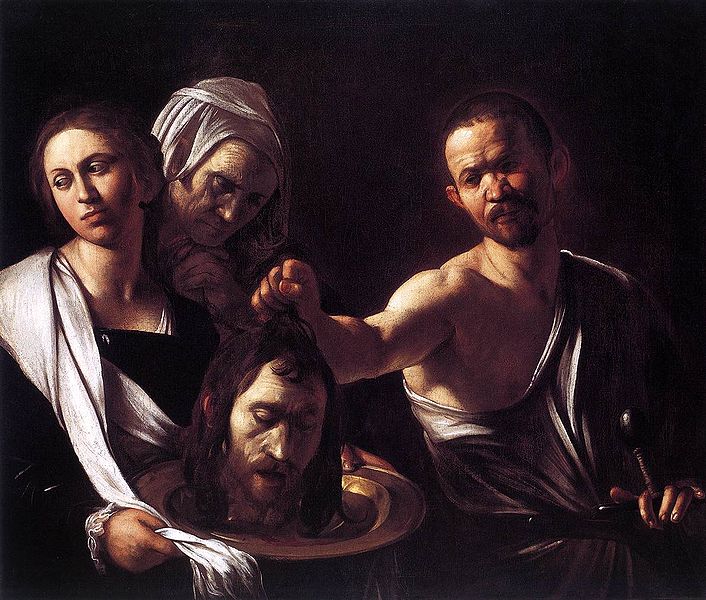
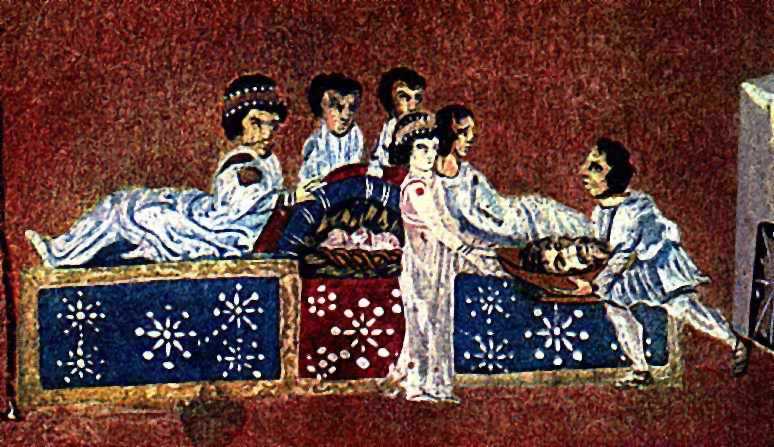
At King Herod’s birthday celebration, his step-daughter danced for him and his guests…
…and pleased Herod so much that he promised with an oath to give her whatever she asked. Prompted by her mother, she said, “Give me here on a platter the head of John the Baptist.” The king was distressed, but because of his oaths and his dinner guests, he ordered that her request be granted and had John beheaded in the prison.
Matthew 14:6
Said Jesus of John:
I tell you the truth: Among those born of women there has not risen anyone greater than John the Baptist; yet he who is least in the kingdom of heaven is greater than he.
The word “carnival” comes from the Latin carne vale meaning “farewell to the flesh”. It originally referred to festivals that fell just before Lent, when eating meat was forbidden. Famous pre-lenten carnivals include Rio de Janeiro, New Orleans, Nice, and Trinidad.
Inspired by the world-famous Trinidad Carnival, Notting Hill takes place in August, because you’d have to be nuts to wear a thong in England in February.
The ‘Mother of Notting Hill Carnival’ is Claudia Jones, a native of Trinidad who spent almost her entire life on three vastly different islands: Trinidad, Manhattan, and England.
Born in Trinidad in 1915, Jones immigrated to Harlem, New York with her family at age 7. As a teen, she took part in a protest against the trial and prosecution of the Scottsboro Nine, and she spent much of the next 20 years fighting the inequalities of the U.S. justice system. She became a vocal supporter of the Communist League and a prominent writer for the Daily Worker.
Claudia Jones
As a reward for her outspokenness, Jones was arrested in 1948 on immigration charges and nearly deported, despite having lived in the U.S. for 26 years. She was arrested a few years later, along with other Communist Party leaders, for supposedly violating of the Smith Act during the height of the McCarthy era frenzy. While in prison the 40 year-old Jones suffered a heart attack. This and a bout of tuberculosis she contracted in her youth would plague her health for her remaining years.
In October 1955 she was deported from the U.S., and was granted asylum in what would be her final island: England.
As temperatures rose in Notting Hill in August 1958, the city erupted in race riots, in which hundreds of whites attacked the neighborhood’s West Indian residents. In addition to speaking out against the riots, Jones decided to create an event that would promote racial harmony while celebrating the music and talent of England’s West Indian heritage. This forerunner of the Carnival was held indoors in its first years, starting in 1959.
Unfortunately Jones wouldn’t live to see the first official Notting Hill Carnival and street festival in 1965. She died on Christmas Eve, 1964.
Today the Notting Hill Carnival is London’s largest annual public event, and at over a million people, it’s one of the largest street festivals in the world.
Jones would probably be delighted to know that an estimated 1.5 million people of all faiths and races attended the 2000 Notting Hill Carnival—more than the entire population of her homeland of Trinidad.
Today, the State (and former Republic) of Texas celebrates Lyndon Johnson Day, in honor of the 36th President of the United States.
Johnson’s five-year presidency was one of the most controversial and emotionally charged periods in American history—from the assassination of predecessor John F. Kennedy to the escalation of the Vietnam War to the Civil Rights movement. But what you may not know about the 36th President is that before entering politics, Johnson was a teacher.
Johnson graduated from Southwest Texas State Teacher’s College. He found he preferred high school to grade school, teaching debate at the former:
“I felt about my students very much like I feel about my staff. I associated with them a lot socially. I would go into their homes and I would be with their family and would take them into my home, particularly the leading debaters and the ones that were on the teams. If they would take one side of a question I would take the other… I developed several better speakers—much better—than I was.”
LBJ worked in the Texas legislature during the 1930’s, and was elected to the U.S. House of Representatives during a special election in 1937. He won his Senate seat in 1948 and was elected as John F. Kennedy’s Vice-President in the 1960 election.
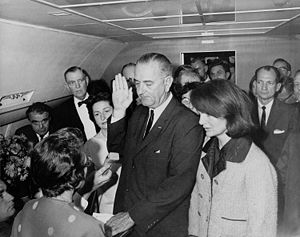
Three years later LBJ became the first and only President ever sworn in on Texas soil when Kennedy was assassinated in Dallas.
LBJ sworn in as 36th President on Air Force One, beside Kennedy's widow, Jacqueline.
Johnson led the United States through one of the country’s most turbulent decades.
During his Presidency, Johnson strived to create a “Great Society” through such legislation as the Civil Rights Act of 1964 and the Voting Rights Act. He appointed the first African-American Supreme Court Justice, Thurgood Marshall. A social democrat, he pushed for a “War on Poverty”, but it was the War in Vietnam that would be his legacy.
In the Democratic New Hampshire primary in 1968, Johnson’s anti-War opponent won 42% of the vote, only slightly less than Johnson himself. Later that month, Johnson announced he would not run for another term.
Johnson returned to his ranch in Johnson City, Texas, where he died on January 22, 1973 just miles from where he was born, outside Stonewall, Texas.
The people of Texas celebrate the life of President Johnson every year on his birthday, August 27th.
2008 marked his 100th birthday.
“When I leave this job, I want to go back to right where I started in some college classroom and walk in at five minutes of eight and wait for the students to march in and sit down, and then start challenging them and provoking them and stimulating them and getting the best out of them for an hour. And then I am going to be sorry when the bell rings.”
There is no more pathetic story in the annals of the Saints than that of Monica…
The Catholic Encyclopedia
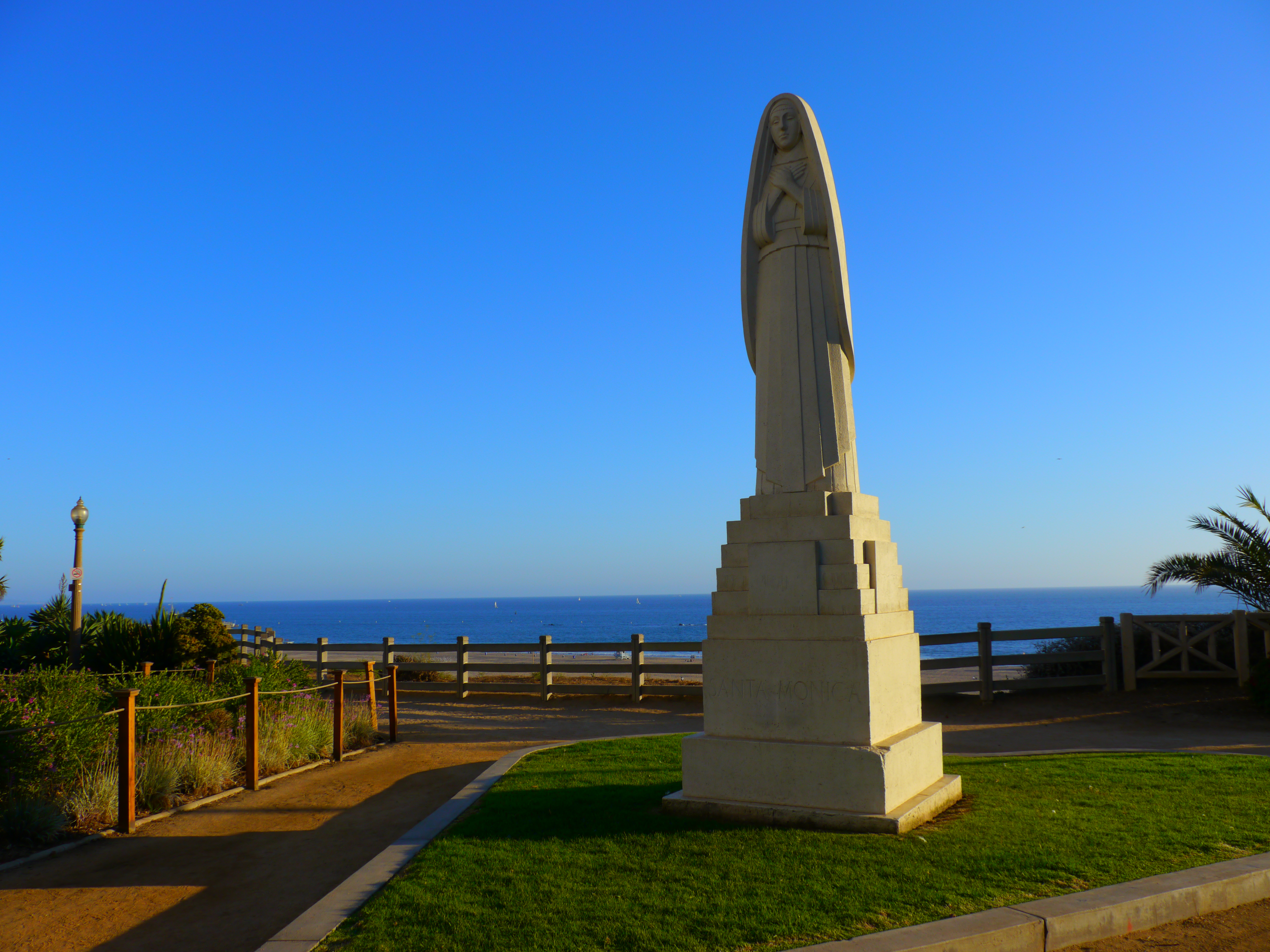
Take Wilshire Blvd west all the way to the Pacific Ocean, and just before you crash over the cliff above PCH, you will have run over a white statue that serenely overlooks the bay that bears her name.
Saint Monica statue, Santa Monica, CA
Monica of Hippo was born in Tagaste (present-day Algeria) around 332 AD. She is the mother of St. Augustine, who despite his blessed prefix, lived a life of debauchery and licentiousness almost up until his poor mother’s death.
After her husband died, Monica traveled from Africa to Rome to pay her son a visit.
There is no more pathetic story in the annals of the Saints than that of Monica pursuing her wayward son to Rome, whither he had gone by stealth; when she arrived he had already gone to Milan, but she followed him. Here she found St. Ambrose and through him she ultimately had the joy of seeing Augustine yield, after seventeen years of resistance.
At age 33, Augustine converted to Christianity, renounced his sinful ways, and went on to become one of the most influential Christian philosophers of all time. Having fulfilled her greatest hope, Monica began a journey back home to Africa with Augustine. She died on the way, in the town of Ostis. She was in her mid-50s.
On Saint Monica’s Day in 1769, Spanish explorers encountered a Native American village right around the area of today’s Wilshire Blvd, and gave the name to a nearby spring. Or, as a more romantic story goes, the spring’s water reminded them of the tears she shed for her son.
Saint Monica statue from above
Today in California, Monica’s image watches over wayward children, including those souls who wander just left of the City of Angeles.
(Monica’s feast day was May 4 up until 1969, when the Vatican decided she was more of a summer gal and changed her feast to August 27. St. Augustine’s Day is August 28.)
Today is the sixtieth birthday of Ukrainian activist, writer, agitator and politician Levko Lukyanenko. But Ukrainians aren’t celebrating the man, they’re celebrating the document he wrote on this day in 1991, Ukraine’s Declaration of Indpendence:
In view of the mortal danger surrounding Ukraine in connection with the state coup in the USSR on August 19, 1991,
Continuing the thousand-year tradition of state development in Ukraine,
Proceeding from the right of a nation to self-determination in accordance with the Charter of the United Nations and other international legal documents, and
Implementing the Declaration of State Sovereignty of Ukraine,
the Verkhovna Rada of the Ukrainian Soviet Socialist Republic solemnly declares Independence of Ukraine…
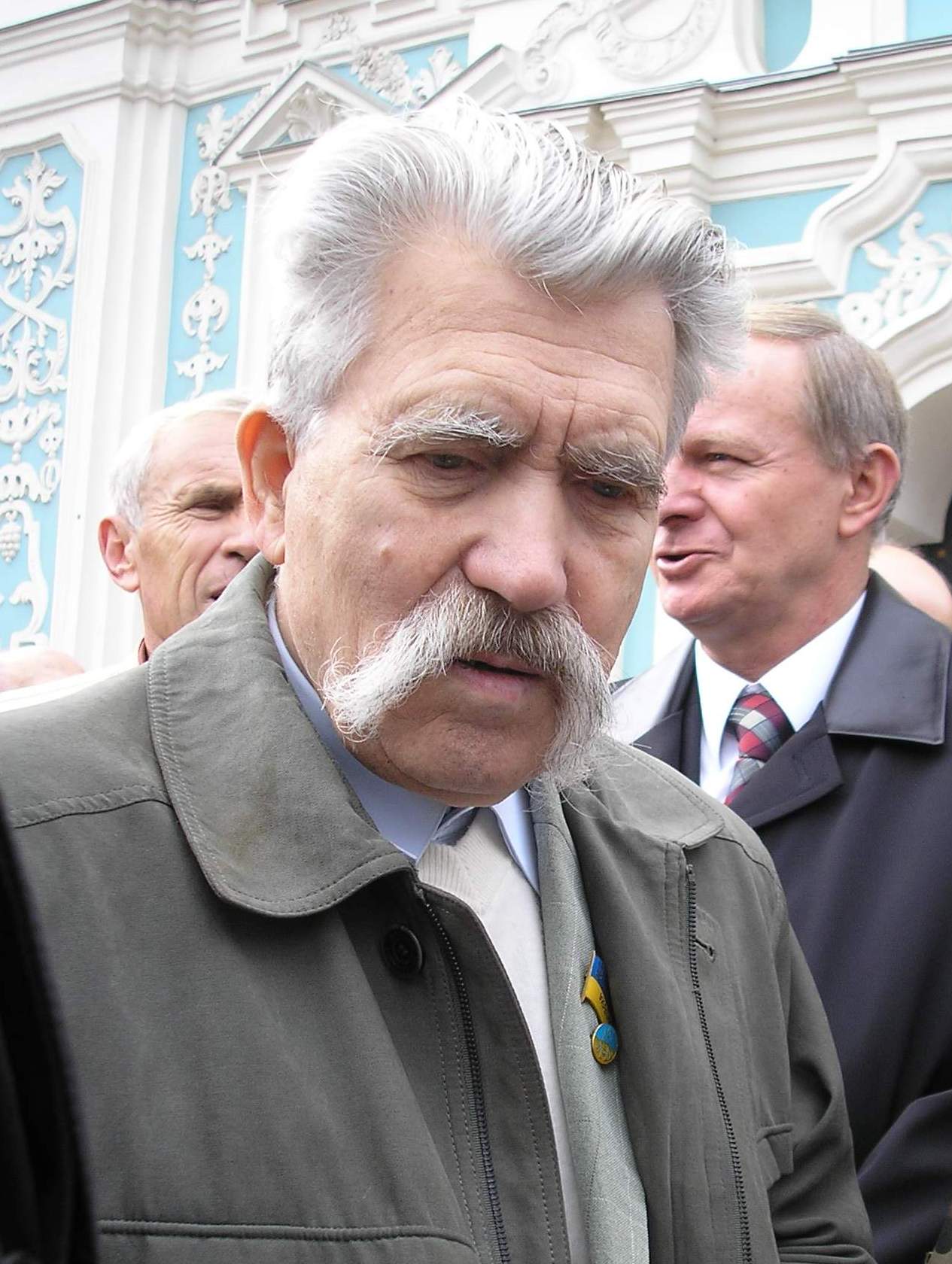
Levko Lukyanenko
Back in 1959 Lukyanenko had helped to form the underground organization “Ukrainian Workers and Peasants Society”, for which he wrote the party program. For his involvement, he was sentenced to execution, a sentence that was later mitigated to fifteen years hard labor in the Gulag. His time didn’t dim his revolutionary fervor, but cemented it. After his release, he helped found the Ukrainian Helsinki Human Rights Group.
“All in all, Levko Lukyanenko spent twenty five years in prison and concentration camps and five years in exile, his crime being not murder or armed assault, or robbery but something the soviet regime considered to be the most grievous offence–having views and ideas inconsistent with the soviet ideology.”
Lukyanenko was released during the Soviet prestroika reforms of the 1980s. In 1990 the former enemy of the state was elected to the Ukrainian parliament.
Oh, and it’s Ukraine, not The Ukraine. It means “Borderland”.
Ukraine also gave us St. Nestor the Chronicler (c. 1056 – c. 1114), the monk who spent twenty years writing the great Russian and Ukrainian history “The Tale of Bygone Years”, or “The Chronicle”.
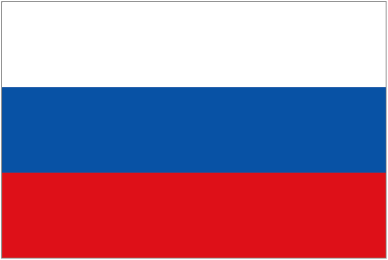
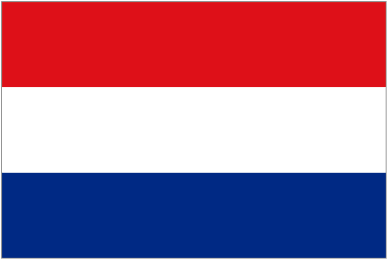
They’re waving the red, white and blue over in Russia today, though not necessarily in that order. The white-blue-red Russian tri-color flag dates back to the 1660s when Czar Alexei Mikhailovich ordered ships to fly a similar banner for identification. Historians speculate it may have been inspired by the Dutch flag, the oldest remaining tri-color national flag.
Dutch flag
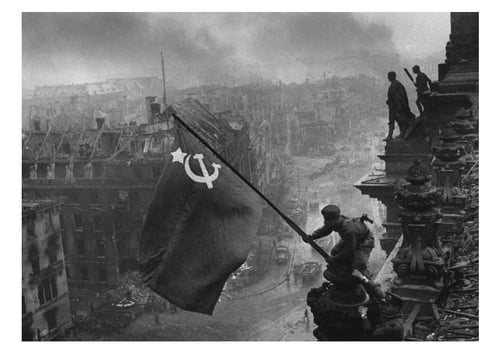
In the 1880s Czar Alexander III declared the tri-color flag the official flag of Russia. After the October Revolution of 1917, the tri-color was replaced by the red Soviet hammer-and-sickle flag.
The Soviet flag flies over the Berlin Reichstag at the end of WWII
Flag Day marks the anniversary of the end of the failed 1991 “August Putsch”, a coup which attempted to stem Soviet president Mikhail Gorbachev’s reformist policies of the 1980s, but which led to the disintegration of the Soviet Union instead.
Subject 110 and The Gang of Eight
In early to mid-1991, Gorbachev–one of the two most powerful men in the world–was placed under surveillance, not by a foreign power, but by his own KGB.
The head of the KGB, Vladimir Kryuchkov, was fearful of the liberal Russian president’s attempts to modernize the country through the decentralization of power. Gorby was working with leaders of the separate Soviet republics on a treaty that would increase the sovereignty of the republics, a move he deemed necessary to sustain the unity of the whole. Hard-liners opposed the treaty.
In July, Khryuchkov overheard a conversation between Subject #110 (Gorbachev) and Russian President Boris Yeltsin in which it was suggested that they replace old school party members like Kryuchnov and his cronies with more liberal ones.
Kryuchkov was not down with this. Nor were his seven cronies, henceforth know as the “Gang of Eight.”
On August 18, some of the Gang of Eight paid Gorbachev a friendly visit while he vacationed at his dacha in the Crimea, during which the concerned visitors ensured the Soviet leader’s rest and privacy by cutting off all channels of communication and placing him under house arrest. The following day they attempted to assume control of the country, due to Gorbachev’s “illness”.
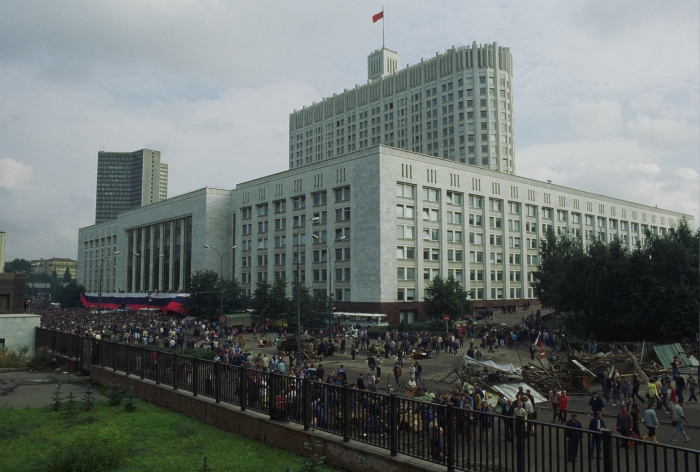
A quarter million handcuffs and arrest forms had been ordered. Prisons were emptied to make room for agitators. Independent newspapers were shut down, and tanks prepared to roll into the capital to seize control of the Russia’s parliament building, the “White House”.
The Russian "White House" (note the barricades)
Boris Yeltsin and other leaders urged the military not to support the coup. They called for a general strike and demanded that Gorbachev be allowed to address the nation. Citizens surrounded the White House and barricaded it with whatever they could — trolleys, street sweepers, homemade barriers — to prevent the military from attacking.
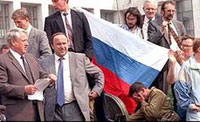
Boris Yeltsin (left) during the coup
On August 21, at 1 AM, tanks and army vehicles moved in. A pivotal moment was when Spetsgruppa A (Alfa Group), the military unit entrusted with entering the White House and killing Boris Yeltsin and company, analyzed the number of civilian deaths such an action would require, and refused to carry out their mission.
The hard-liners knew they were in deep. They attempted to strike a deal with Gorbachev. He refused to meet with them. That evening communications were restored at the dacha; Gorbachev denounced the actions of the Gang of Eight, ordered their dismissals, and resumed control of the country.
The following day, August 22, the Russian legislature chose to fly Russia’s historic tri-color flag rather than the hammer-and-sickle flag of the Soviet Union.
It was only a piece of cloth, but the symbolic gesture of raising the pre-Soviet flag was tantamount to Russia declaring its own independence from the Soviet Union. And without Russia, there could be no Soviet Union.
Between August 20 and August 30, Estonia, Kyrgyztan, Belarus, Moldova, Azerbaijan declared independence. In September, Uzbekistan, Latvia, Tajikstan, and Armenia did the same.
Ten years later…
“A poll released in July said only 10 percent regarded [August 1991] as a democratic revolution that ended Communist power. Twenty-five percent look back at August 1991 as a tragic event whose aftermath was disastrous for the country.” — NewsHour, August 22, 2001
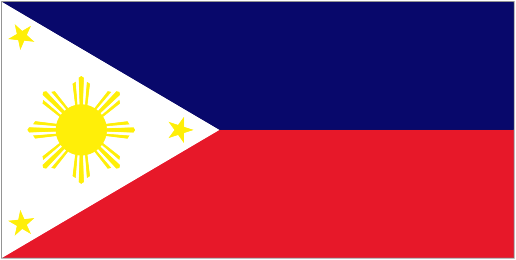
Twenty-seven years ago today a shot rang out in a Manila airport.
Returning to the Philippines after three years in exile, Benigno Aquino, leader of the Liberal Party and the most vocal opponent of President Ferdinand Marcos, was struck dead by an assassin’s bullet.
Twelve years to the day prior to his death, Aquino had escaped another attack. He was not present at a Liberal Party rally where two fragmentation grenades were thrown on stage, killing 9 and injuring almost 100 Liberal Party members and supporters. In response to the bombing, President Marcos suspended habeas corpus and arrested scores of Maoists.
The following year he declared martial law, and had Aquino, his #1 opponent, arrested. Although no evidence connected Aquino to the crime, a military tribunal found Aquino guilty and sentenced him to death by firing squad. The sentence was later mitigated, but Aqunio remained in prison for seven years. In jail Aquino suffered a heart attack and was granted leave to receive surgery in the United States.
Aquino and his wife Corazon did not return to the Philippines for 3 years. In that time both were active speakers against the Marcos government, which had amended the Constitution in the 1970s and 80s to extend martial law, increase the scope of Marcos’s power and the length of his term.
Benigno Aquino returned to Manila on August 21, 1983, knowing full well the many dangers that awaited him. Below is the beginning of the address he was set to give upon his return.
“I have returned on my free will to join the ranks of those struggling to resolve our rights and freedoms through non-violence. I seek no confrontation. I only pray and will strive for a genuine national reconciliation founded on justice. I am prepared for the worst, and have decided against the advice of my mother, my spiritual adviser, many of my tested friends, and a few of my most valued political mentors.
“A death sentence awaits me. Two more subversion charges, both calling for death penalties, have been filed since I left three years ago and are pending with the courts. I could have opted to seek political asylum in America, but I feel it is my duty, as it is the duty of every Filipino, to suffer with his people especially in time of crisis.
“I never sought nor have I been given any assurances or promise of leniency by the regime. I return voluntarily, armed only with a clear conscience and fortified in the faith that in the end, justice will emerge triumphant.”
Aquino never had a chance to deliver the speech. He was assassinated “by a lone gunman” according to the government, the moment he stepped off the airplane.
Ninoy Aquino
He was reportedly called “The Greatest President we never had,” by Liberal Party leader Jovito Salonga.
There was never proved any direct evidence linking Marcos to the assassination, but it sparked widespread discontent with the Marcos administration. In November 1985 Marcos announced Presidential elections to take place in February. Benigno Aquino’s widow Corazon ran against Marcos. The Marcos government claimed to have won the election, but accusations of extreme voter fraud and massive public demonstrations against his rule combined with military opposition and U.S. pressure forced Marcos to resign on February 25, 1986.
Beningo Aquino’s widow Corazon Aquino became the first female President of the Philippines. She passed away on August 1, 2009.