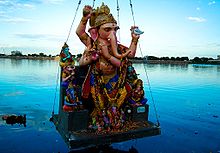
Ganesh Chaturthi

September 1, 2011
September 19, 2012
September 9, 2013

Today Hindus celebrate the birthday of the Colossus with the Proboscis, Lord Ganesh, aka Gajanana (Elephant-Faced Lord), aka Devendrashika (Protector of All Gods), aka Kaveesha (Master of Poets), aka Lambodara (Huge Bellied Lord) aka Vignavinashanaya (Destroyer of All Obstacles and Impediments) aka Akhurath (One who has Mouse as His Charioteer) or any of the other 101 names he goes by.

Ganesh: Colossus with the Proboscis

Ganesh is perhaps the most distinctive-looking deity of the Hindu pantheon. His birth was as unconventional as his profile.

While Lord Shiva was away at war, his wife Parvati sought to bathe herself, but feared someone might enter while she was vulnerable. To guard her door, she fashioned the model of a son out of clay or sandalwood paste, breathed life into him, and placed him outside with instructions not to let anyone in.

It just so happened that Lord Shiva came back from the battlefront while Pavarti was bathing. Ganesh didn’t know who he was and prevented Shiva from entering. Shiva, after a hard day of battling demons, was not in the mood to be stopped in his own house. With his sword he sliced Ganesh’s head clean off.

Needless to say, when Parvati came out of the bath to find her new son decapitated, she was quite perturbed with Shiva, and threatened to destroy the three worlds of Earth, Heaven, and Hell.

Like any good husband, Shiva instructed his men to go out and bring back the head of the first living creature they found. They came back with the head of an elephant, which Shiva placed atop Ganesh’s decapitated body and with a sacred breath, made him whole.

Ganesh became the great Protector, and also the bringer of good fortune and prosperity.

People celebrate Ganesh Chaturthi with a festival lasting ten to twelve days. Large and small clay and metal models of Genash are created for the festival, sometimes 20 feet tall. Sacred traditional foods are offered to the god, including lotus flowers, fruits, sweets, and prasadam. At the end of the ten days, Ganesh’s likenesses are taken in a procession to the nearest body of water and submerged.
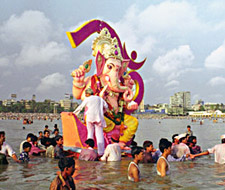
Submersion of Lord Ganesh

These days most idols of Lord Ganesh are made with Plaster of Paris rather than clay. Unfortunately, this  creates a toxic hazard when thousands of idols are submerged in local rivers and lakes on the final day of celebration. Indian activists try to combat, or at least mitigate the pollution by encouraging observers to perform short, symbolic submersions, or to return to tradition, natural materials like clay.

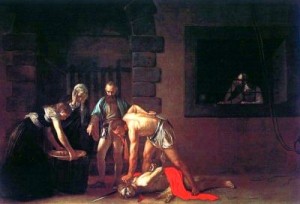
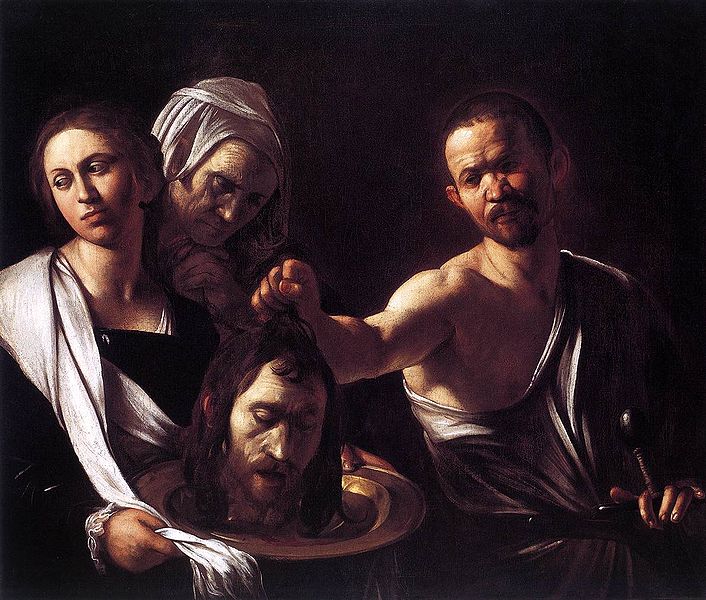
Beheading of St. John

August 29

August 29 is the remembrance of the beheading of St. John the Baptist in the Catholic calendar.

John was the revolutionary religious leader foretold the coming of Christ and who baptized Christ in the Jordan River.

St. John enraged King Herod’s wife, Queen Herodias. Herodias was the widow of Philip, King Herod’s brother. St. John publicly expressed his contempt at the union. The Queen wanted St. John executed, but Herod refused. St. John’s popularity in Judea was too great. Instead King Herod threw him in prison.

caravaggio

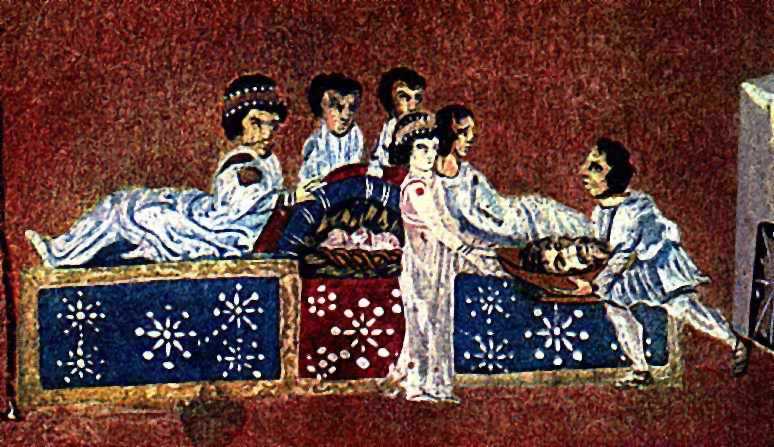
At King Herod’s birthday celebration, his step-daughter danced for him and his guests…

…and pleased Herod so much that he promised with an oath to give her whatever she asked. Prompted by her mother, she said, “Give me here on a platter the head of John the Baptist.” The king was distressed, but because of his oaths and his dinner guests, he ordered that her request be granted and had John beheaded in the prison.

Matthew 14:6

Said Jesus of John:

I tell you the truth: Among those born of women there has not risen anyone greater than John the Baptist; yet he who is least in the kingdom of heaven is greater than he.

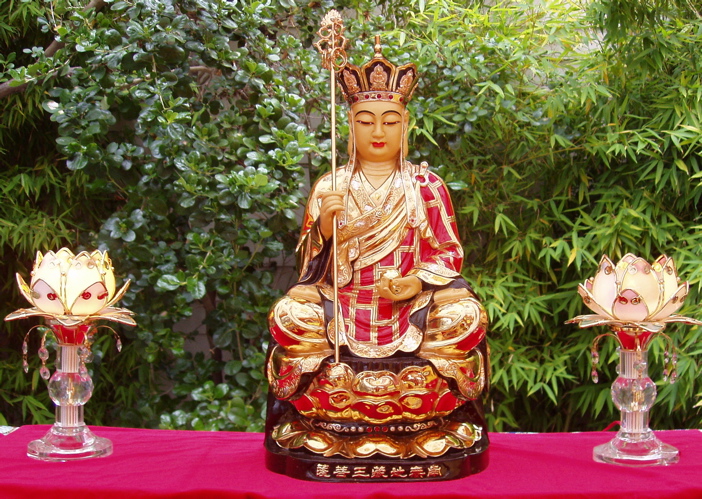
Ksitigarbha Bodhisattva

30th day of 7th lunar month

Where are you going
My beautiful friend
Is this the road that
You take to the end
And if we break down
All we left behind
Is this the highway
Of all mankind?

Axis spins so round and round we go
Where we’re going no one really knows
Here we here we here we here go
Feel the fire
Way down below…

That’s from Big Audio Dynamite’s spiritual hymn, “The Globe“, but it could very well be the theme for today’s holiday, celebrating the birthday of Ksitigarbha Bodhisattva in Mahayana Buddhism–or as he’s sometimes known: the Buddha of Hell…

What does Ksitigarbha Bodhisattva mean? Well, in the immortal words of Big Audio Dynamite, let’s

Break it on down (bless you)” :

Bodhi means enlightened, wakefulness, absolute consciousness, perhaps even superconsciousness, and refers specifically to the state achieved by Gautama Buddha and his disciples. It’s similar to Nirvana, and indeed, Nirvana and Bodhi used to be used synonymously. But in Mahayana Buddhism, Bodhi is a notch up from Nirvana (No offense to Kurt).

Anyone can attain nirvana (okay, maybe not anybody) while only Buddha can attain Bodhi. In fact, “Buddha” means one who has attained Bodhi.

Now Sattva can mean many things: purity, harmony, truth, goodness, but it basically means “the essence of being”.

The Bodhisattva are those rare beings who can attain complete and pure wakefulness, the most enlightened state.

Ksitigarbha was a special Bodhisattva. Ksiti means “womb” or “matrix”. Garbha means “earth”. His name literally translates to “Womb of the Earth,” “Treasury of the Earth” or, “Earth Store”.

Though capable of achieving Bodhi, Ksitigarbha refused to do, as he considered it his duty to help others. Ksitigarbha vowed not to achieve Bodhi until “all the hells are empty.”

Put it all together and you have the Buddha of Hell. That’s his nickname, since he aimed to vacate the Hells on earth. He’s also called Dizang in China, Jizo in Japan.

This year Ksitigarbha’s birthday falls one day after the remembrance of the beheading of St. John the Baptist in the Christian religion. John the Baptist was believed to have gone to hell after the beheading, where he preached to the inhabitants there that the Messiah had arrived on earth.

Feast of the Dormition of Theotokos

August 28

Dance with joy, O peoples!
Clap your hands with gladness!
Gather today with fervor and jubilation;
Sing with exultation.
The Mother of God is about to rise in glory,
Ascending from earth to heaven.

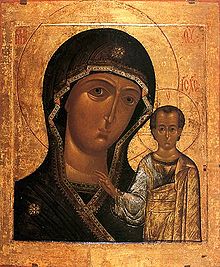
Theotokos of Kazan
Theotokos of Kazan

It’s called the Dormition, or the “falling asleep”. On its own, falling asleep might not sound like ample reason for a feast, no matter how much you like to sleep, but it’s a very big deal in the Orthodox Church. That’s because Dormition in this case refers to the departure from earth and subsequent ascension of Theotokos, ie. “god-bearer”, the Virgin Mary.

In Roman Catholicism, it’s known as the Assumption of the Virgin Mary. Although the Assumption is celebrated on August 15, in the Eastern Orthodox Calendar that equates to today, August 28th.

The Dormition is a major feast in Eastern Christianity, so major it’s preceded by a strict two-week fasting period. During the fast Orthodox Christians refrain from eating red meat, fish, poultry, and dairy products. The Feast of the Transfiguration falls right in the middle of the fast (How’s that for confusion?) during which time fasters are allowed to go wild and eat fish.

In early Christendom, the stories of life of the Virgin Mary after the crucifixion received far less play than those preceding the Annunciation…

Already by the second century, Christians had begun to circulate stories of the Virgin’s life before the Annunciation, but evidence of a similar concern with the details of her life after her son’s ascension does not emerge for several more centuries.

Stephen Shoemaker, Ancient Traditions of the Virgin Mary’s Dormition and Assumption

As the 4th century author Epiphanius writes:

“The holy virgin may have died and been buried…Or she may have been put to death—as the scripture says, ‘And a sword shall pierce through her soul’…Or she may have remained alive, for God is not incapable of doing whatever he wills. No one knows her end.”

But by the eighth century monk John of Damascus wrote:

If her childbearing was remarkable and of saving worth for the world, surely her falling asleep was glorious, too—truly sacred and wholly worthy of praise. (Daley, 1998)

Between those epochs we have the foundation of the written history of the Dormition. According to Orthodox tradition, Mary died a natural death, the same as any mortal. Her soul was received by Christ. All the Apostles except Thomas were present at her death. Three days later, Thomas (always the odd man out) finally arrived and pleaded with his fellow Apostles to see her once more.

“We are all servants of the one Lord, Jesus Christ. How, then, is it that ye were counted worthy to behold the repose of His Mother, and I was not?…I beseech you, my fellow disciples: open the tomb, that I also may look upon her remains, and embrace them, and bid her farewell!”

But when they opened her tomb, her body had disappeared. “All that remained were her burial clothes, which emitted a wonderful unearthly fragrance.”

Like Son, like Mother. Mary’s body was resurrected and ascended into heaven on the third day after her death.

“Neither the tomb nor death had power over the Theotokos, who is ever watchful in her prayers and in whose intercessions lies unfailing hope. For as the Mother of Life she has been translated unto life by Him Who dwelt in her ever-virgin womb.”

— Feast of the Dormition

Night of Destiny, Night of Power

August 27, 2011

For Muslims across the world, tonight is a night “better than a thousand months.”

photograph courtesy of www.sacredsites.com, © Martin Gray

On this night, the 27th of Ramadan, in 610 CE, the 40 year-old future Prophet Muhammad was meditating in a cave outside Mecca. The Angel Gabriel/Jibril appeared to Muhammad and commanded him to recite. Muhammad twice refused, explaining he did not know how. After the third command, Muhammad found himself reciting what would become the first verses of the 96th chapter of the Qur’an.

‘Read, in the name of thy Lord Who createth everything.
Created man from a clot of blood.
Read, for thy Lord is Most Beneficent,
Who teacheth by the pen,
Teacheth man that which he knew not.’

The last ten days of the month of Ramadan are considered the most sacred. While fasting and sacrifice is required throughout the month, Muslims strive to follow and understand the teachings of the Qur’an most stridently during these days.

Many Muslims, notably Shi’a Muslims, observe Lailatul-Qadr (Night of Power) on the 23rd of the month. Some also point to the Qur’an as expressing that the night may fall on any odd-numbered night in the last third of the month.

Laylat al-Qadr is also known, perhaps more accurately, as Night of Predestination, or Night of Measure.

This year, the 27th day of the ninth month of the Islamic calendar coincides with the 27th day of the ninth month of the Gregorian calendar. An event that (depending on moon sightings) may not happen again for 200 years. However, since the “day” officially begins the evening before, the 27th night of Ramadan actually falls on the 26th night of September this year.

The end of Ramadan is marked with the festival Eid-al-Fitr.

16 Things You Can Do on the Night of Power

Saint Monica

August 27
There is no more pathetic story in the annals of the Saints than that of Monica…
The Catholic Encyclopedia
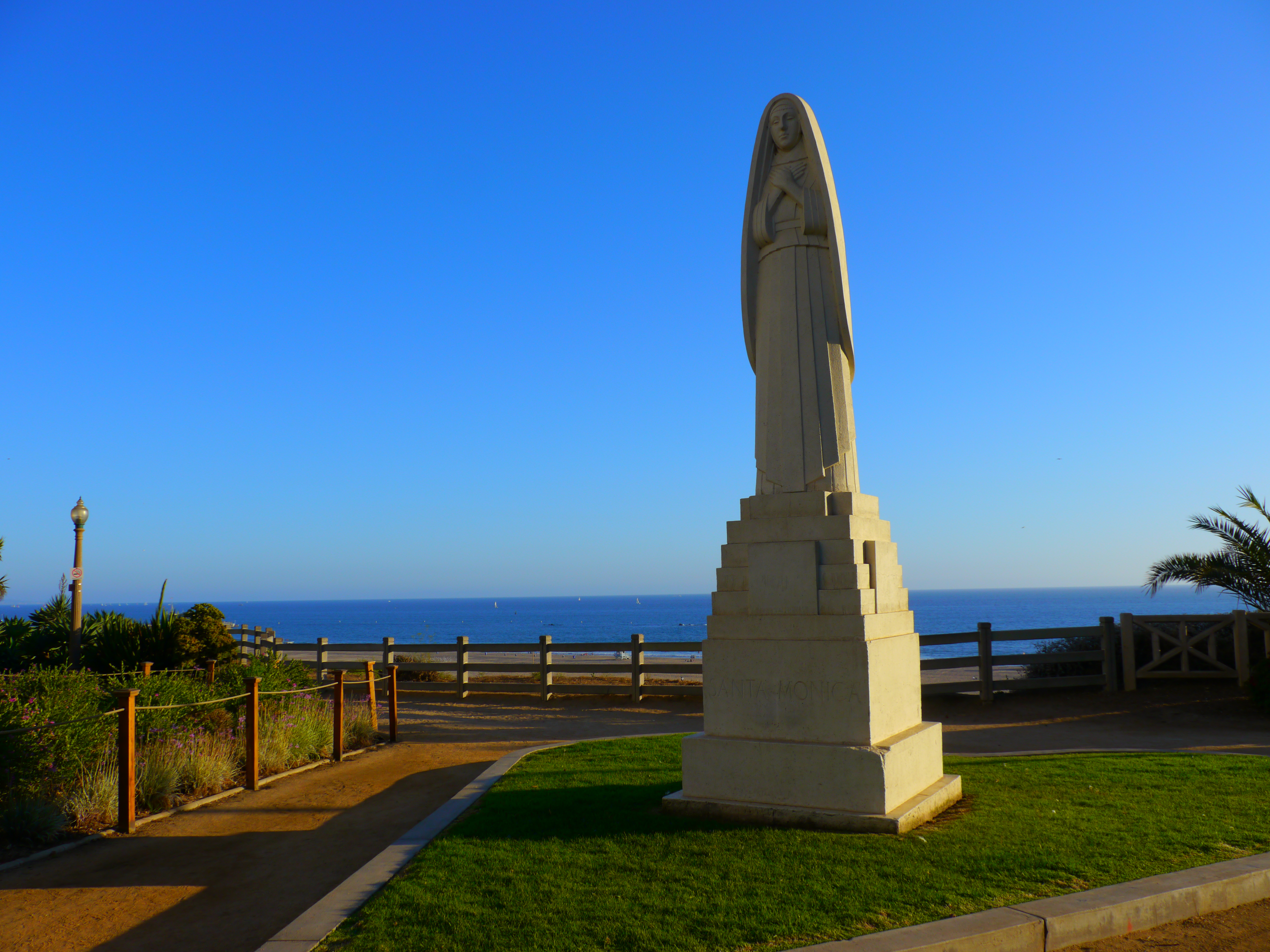
Take Wilshire Blvd west all the way to the Pacific Ocean, and just before you crash over the cliff above PCH, you will have run over a white statue that serenely overlooks the bay that bears her name.
Saint Monica statue, Santa Monica, CA

Monica of Hippo was born in Tagaste (present-day Algeria) around 332 AD. She is the mother of St. Augustine, who despite his blessed prefix, lived a life of debauchery and licentiousness almost up until his poor mother’s death.

After her husband died, Monica traveled from Africa to Rome to pay her son a visit.

There is no more pathetic story in the annals of the Saints than that of Monica pursuing her wayward son to Rome, whither he had gone by stealth; when she arrived he had already gone to Milan, but she followed him. Here she found St. Ambrose and through him she ultimately had the joy of seeing Augustine yield, after seventeen years of resistance.

The Catholic Encyclopedia

At age 33, Augustine converted to Christianity, renounced his sinful ways, and went on to become one of the most influential Christian philosophers of all time. Having fulfilled her greatest hope, Monica began a journey back home to Africa with Augustine. She died on the way, in the town of Ostis. She was in her mid-50s.

On Saint Monica’s Day in 1769, Spanish explorers encountered a Native American village right around the area of today’s Wilshire Blvd, and gave the name to a nearby spring. Or, as a more romantic story goes, the spring’s water reminded them of the tears she shed for her son.

Saint Monica's Statue from above
Saint Monica statue from above

Today in California, Monica’s image watches over wayward children, including those souls who wander just left of the City of Angeles.

(Monica’s feast day was May 4 up until 1969, when the Vatican decided she was more of a summer gal and changed her feast to August 27. St. Augustine’s Day is August 28.)

Santa Monica: A History

Paryushana – Jainism

August 26-September 1, 2011

Talk to the hand.

But not just any hand. The hand above symbolizes the concept of Ahimsa, the central component of the Jain religion. It means the practice of non-violence, but far beyond our common perception of it. Ahimsa is the absence of harm toward any living being, human or animal. For this reason vegetarianism is a essential part of Jainism. In fact, during special festivals, such as Paryushana, some Jains restrict themselves to eating those parts of plants that do not endanger the plant itself. (However, “fruitarian” diets are not necessarily practiced throughout the year.)

Ahimsa also means practicing the self-discipline not to cause harm to one’s own soul. And that means no sin. States the Puruṣārthasiddhyupāya 4.42:

All sins like falsehood, theft, attachment and immorality are forms of violence which destroy the purity of the soul. They have been separately enumerated only to facilitate their understanding.

The circle in the palm of the Jain hand represents the cycle of reincarnation, and the 24 spokes are the 24 Tirthankars, great prophets of Jain, the last of whom, Mahavira, lived over 2500 years ago.

The name of this week’s festivities, Paryushana, literally means to close in, to remain near to one’s self and soul. Paryushana stems from the tradition of monks to stay in one place, in the towns, during the rainy season. The rainy season could last four months, but the minimum duration for Paryushana was 70 days.

The period of Paryushana commences by Bhadrapada Shukla panchami, the fifth day (panchami) of the bright/full moon (Shukla) of the month of Bhadrapada (August/September).

During this time people replenish their faith through meditation, self-control, and through the wisdom of the Dharma.

There are two sects of Jainism. Digambara and Svwetambara (pardon my pronunciation.)

The Digambaras observe a 10-day festival starting on today (although the date can vary slightly by sect and location). Digambara Jains use this time to focus upon the Dashalakshana vrata—the 10 components of the Dharma:

Forbearance – Kshama
Gentleness – Mardava
Uprightness – Arjava
Purity – Shaucha
Truth – Satya
Restraint – Sanyam
Austerity – Tapa
Renunciation – Tyaga
Lack of possession – Akinchanya
and Chastity – Brahmcharya

The Svwetambara Jains celebrate an 8-day festival which ends today. During this time the Kalpa Sutra is recited. The Kalpa Sutra recalls the birth, life, and journey toward Nirvana of Mahariva.

The holy festival closes with participants seeking forgiveness for their sins of the last year.

I grant forgiveness to all living beings
May all living beings grant me forgiveness
My friendship is with all living beings
My enmity is totally non-existent
Let there be peace, harmony, and prosperity for all

Living Jain: Daily

Pluralism.org – Jain

The Significance of Paryushana Mahaparva

The Paryushana Parva

Krishna Janmashtami

August 21-22, 2011

In the house of Vasudeva will the Supreme Lord, the original transcendental person, personally appear…

Bhagavata Purana, 1:23

After midnight, we’re gonna let it all hang down.

Eric Clapton, After Midnight

Though worshipped differently across many Hindu sects, Krishna is one of the holiest figures–if not the holiest–in the Hindu religion. He was born at midnight on this, the eighth day after the full moon of Bhadrapada/Shravan, in the year–well, before you were born.

In 2010 Sri Krishna Jayanti, or Krishna Janmashtami, falls on September 1 or 2, depending on location.

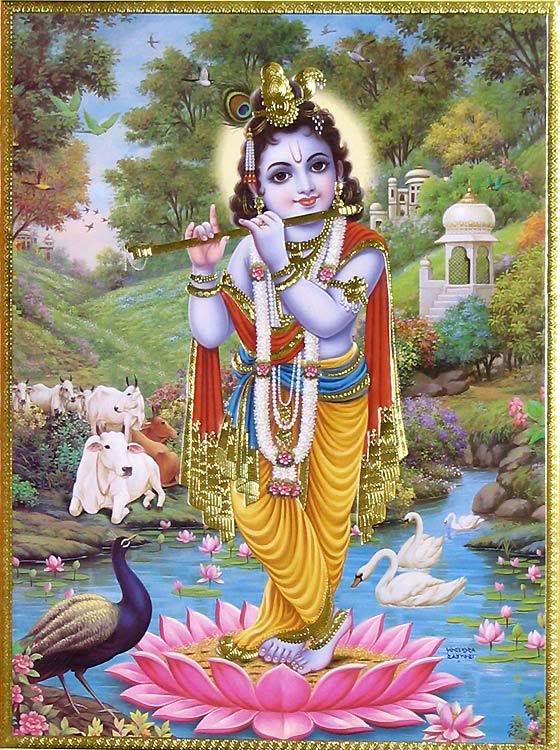
Krishna is considered the eighth and greatest incarnation of the god Vishnu. In art, he’s commonly pictured as a baby or as a youngster playing the flute. Krishna means “black”, but he’s more often depicted as blue.

Before Krishna was born, a prophecy was told to the King Kamsa. That he–the king–would be killed by his cousin’s son. Kamsa placed his cousin Devaki and her husband Vasudeva in prison. Every son that Devaki bore, Kamsa had killed. Six children in all. The seventh boy, Balarama, was magically transfered to the womb of another woman. The eighth child Vasudeva managed to sneak out of the prison. The boy was Krishna. Vasudeva encountered a cow-herding couple who had just given birth to a daughter. They switched babies and Vasudeva returned to the prison, showing Kamsa that the child was a girl, not a boy.

Krishna grew up with the humble cow-herding family. He was a mischievous kid, known for playing pranks and for seducing women with the romantic music of his flute.

When the King heard of Krishna’s existence he invited Krishna to a wrestling match, set up to trap and kill Krishna and his elder brother Balarama. The brothers foiled King Kamsa’s plans, defeating first a mighty demon elephant and the King’s best wrestlers.

When the King drew his sword, Krishna grabbed him by the hair and crushed him to death, fulfilling the prophecy.

The holiday comes to a climax at midnight tonight, when Krishna was said to have been born. Krishna is worshipped through the chanting of Vedic hymns, and mantapam structures built in his honor are decorated with thindis snacks and fruits…

After midnight, it’s all gonna be peaches and cream.

— Eric Clapton