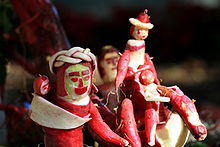
Night of the Radishes is one of the most unique holidays in the Western hemisphere. It has been celebrated in Oaxaca for hundreds of years, but only became an official holiday in 1897.
Radishes are actually native to China, and were brought to the New World by Spanish explorers in the 1500’s. Two friars encouraged the the townspeople of Oaxaca to cultivate the radishes, and it is believed one of the friars suggested they carve and display the radishes to encourage the locals to buy their produce.
On December 18, 1997 Frank Costanza (Jerry Stiller) introduced the TV-watching world to a new holiday tradition. In the Seinfeld episode “The Strike” George’s father explains to Cosmo Kramer how years earlier, fed up with the commercialization of Christmas, he conceived of the new holiday:
“Many Christmases ago, I went to buy a doll for my son. I reached for the last one they had, but so did another man. As I rained blows upon him, I realized there had to be another way.”
Frank summed up the holiday in a simple catch-phrase: “A Festivus…for the rest of us.”
Over a decade later Festivus has exploded into an international–well, okay, national–phenomenon. According to the Big Book of Girl Stuff:
“Festivus was intended to be a holiday that required no shopping. The only Festivus decoration is a bare metal pole, which can be stuck in a pot or hung from the ceiling.”
Festivus Poles
Another Festivus tradition is the “Airing of Grievances” during which family members announce how disappointed they have been in one another over the past year.
As far as cultural anthropologists have deduced, the holiday was invented by the father of Seinfeld screenwriter Dan O’Keefe in the 1960s, although the younger O’Keefe altered the holiday for the Seinfeld version. The original Festivus for example was held anytime from December to May. The modern incarnation is celebrated on December 23, halfway between Winter Solstice and Christmas.
But these days Festivus has competition for the December 23 spot. A holiday known as HumanLight is also celebrated on the 23rd. HumanLight is a non-denominational festival that makes no reference to the divine or supernatural. It was started by a Humanist organization in Verona, New Jersey in 2001. Its purpose: to provide a non-religious alternative to Christmas, Hanukkah, and other December celebrations.
It’s unlikely the December 23rd date was chosen to oust Festivus, but Festivus participants will gladly take on the challenge. You see, the final activity of Festivus is known as “Feats of Strength”:no Festivus party is declared over until someone can successfully pin the host’s head to the ground.
So have a great Festivus, and if you’re throwing a party, consider plush carpeting.
The Spanish Christmas Lottery isn’t officially a holiday, but it’s an inseparable part of the holiday season in Spain, dating back to 1812. Each December 22, the entire nation waits on the edge of their seats for the winning numbers to be announced on TV, in a program that takes several hours. It’s estimated that 98% of Spanish residents take part in this lottery. It’s the largest lottery in the world in terms of payout.
“Spain spends more per head on gambling than anywhere else in the world…not because they are habitual gamblers but simply that the christmas lottery is a tradition in which the whole nation partakes!”
The first prize, aka El Gordo (“the fat one”), is 3 million Euros. May not sound like much, but the 3 million isn’t split up. Rather, there are close to 200 winning tickets, and each winner gets 3 million Euros! When you take into account that’s just one of the 1770+ prizes, the pot is well over 2 billion Euros.
Second prize is 1 million Euros. Third prize is 500,000 Euros.
The lottery tickets are more like raffle tickets on which the numbers are already printed—ie., you don’t choose your own. This enables the government to control the maximum number of winning tickets: 195. There are 195 “series” of tickets, each containing tickets with numbers ranging from 00001 to 85000. So if the winning El Gordo number is 78,294—as it was in 2009—there are a maximum of 195 winning tickets. [OK, apparently it’s more complicated than that, as participants can choose to purchase “one-tenth” of a ticket for one-tenth the price, in which case they could claim only one-tenth of the prize should they win.]
The big winner in the Christmas lottery is the same each year: the Spanish government pockets 30% of the gross, not to mention any unclaimed prizes. Close to a billion Euros!
Anyway, the point is, Christmas is a special time. A time of giving and of gambling.
But if you get an email informing you you’ve won the Spanish Lottery, as many people do, there’s a 100% chance it’s a scam. According to the U.S. State Department:
“To enter and win “El Gordo,” you must be a resident of Spain and purchase your ticket within the country. Keep in mind YOU CANNOT WIN IF YOU DID NOT BUY A TICKET! … It is against U.S. federal law to play a foreign lottery through the mail or over the phone.”
And if you did happen to win the Spanish Christmas Lottery this year, don’t forget “Every Day’s a Holiday” on your Christmas list!
Creation! Before the light of creation dazzled chaos,
Love was created — that set creation on fire…
— Hafez
On the longest night of the year Iranians around the world celebrate Yalda. It means “rebirth”, referring to the rebirth of the sun. Today is also the first day of the month of Dey.
The history of this celebration goes back almost to the dawn of civilization itself, when the ancient Aryan tribes of the central Asian steppes worshipped the sun as the source of life.
As these tribes migrated to Persia–as well as to parts of India, Europe and the Far East–they took their traditions to a new latitude. The sun-as-benefactor was a notably different view than those held by cultures of the Arabian desert, who were bombarded with the sun’s heat and thus envisioned hell to be a place of fire and flame.
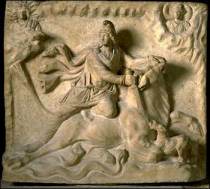
The concept of the sun god Mithra solidified in what is now Iran. Thousands of years before Christ and Mohammad, Persians worshipped Mithra and held fire in great esteem as a representation of the sun’s incarnation on earth. Many Iranians still celebrate Nooruz (the Spring equinox) by jumping over fire, a practice that caused religious leaders to arrest hundreds of participants as recently as 2001. According to scholar Esmail Nooriala:
It is not an act of worshipping fire. You make a fire from bundles of thistles and thorns, then jump over them with joy and enthusiasm. You become mixed with an element of nature, dance with its flames and absorb its kind of warmth. You do not think of an abstract God who is sitting on a thrown somewhere in Heaven and expects you to suppress your joy and behave in his ever lasting and expanding presence.
As Rome moved eastward to Persia, and as Persian soldiers were captured and brought back to Rome, a curious cultural exchange occurred. The Roman army–and with it a good segment of the Roman population–were exposed to and absorbed the ideas of Persian Mithriasm. At one point the worship of Mithra reached all the way from Spain to India, although the practices in the Roman Mithraism, such as bull-related rituals and imagery, bore little in common with the Mithraism of Persia.
Persia experienced a long, slow conversion from natural pantheistic religion to abstract monotheism.
Followers of Zoroaster, believed to be the first monotheistic religion, exalted Ahura Mazda as the one true divinity. Mithraism and Zoroastrianism coexisted in Persia for over a millennia, often melding and merging. It wasn’t until Roman Empire adopted Christianity as the official religion that the Persian Empire–which had rejected the idea of a state religion for over a thousand years–sought to increase its power by institutionalizing Zoroastrianism.
During the Arab invasion from the West 1400 years ago, Islam replaced Zoroastrianism as the religion of Persia. But Persians maintained their local languages, customs and many of their traditions.
The reemergence of Yalda is a relatively recent phenomenon. It has occurred mostly in the past 25 years, since the Iranian Revolution of 1979. Many Iranians, both in Iran and abroad, seek to reconnect with thousands of years of tradition and history.
These traditions include the celebration of the birth of Mithra, observed on the winter solstice. Just as the darkest hour is before dawn, the sun god is reborn precisely during the year’s longest night.
On this night many Iranians gather together, enjoy nuts and fruits of the season–pomegranate chief among them–and recite the poems of great Iranian writers like Hafez…
At dusk I woke with all my cares vanished:
in that pitch black of night I drank from the water of life.
Enraptured with the glow of the inner light:
I drank of that cup of light, glorified in nature.
What a glorious morning, what a glorious night!
— Hafez
Everyone
whether he be drunk or sober
seeks the beloved.
Every place
whether it be mosque or synagogue
is the house of love.
And of all the annual celebrations on earth there is none older and more universal than the celebration of the Winter Solstice.
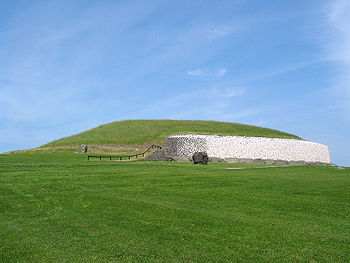
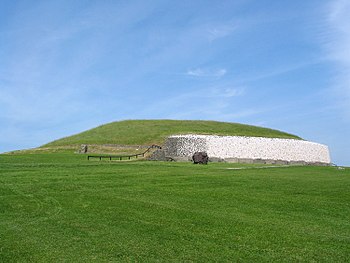
Many of the world’s oldest monuments, which for years baffled anthropologists and archeologists, are now believed to have functioned as massive calendars that predicted the winter and summer solstices with astonishing accuracy. From Newgrange in Ireland and Stonehenge in England, both of which predate the Druids, to the Chankillo towers in Peru built 1700 years before the Incas, to the 365-day calendar used by the ancient Egyptians. All of these calendars were used to make sense of and to find meaning and patterns in an otherwise mysterious and unpredictable world.
Newgrange, Ireland
The word “Yule” used in Germanic and Norse countries comes from “yula” meaning wheel, referring to the cycling of the seasons and the wheel of time. The term predates Christianity, but today yule-tide greetings are synonymous with the Christmas season.
The word Solstice comes from the Latin words “sol”, or “sun,” and “sistere”, meaning “to stand still.” The Solstice is the moment at which the sun stands still. Winter Solstice marks the longest night and shortest day of the year, and it usually falls on December 21 or 22. From that night on forward the ancients knew–or prayed–that the days would grow longer and warmer, providing for sufficient harvest and plenitude the following year.
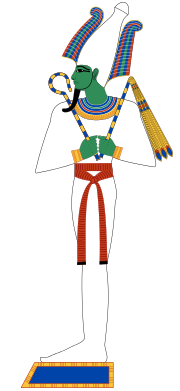
As early as 2400 BC the ancient Egyptians worshipped Osiris, the god of death, life and fertility Osiris during the solstice. It was the day on which he was said to have been entombed and reborn. This tradition was echoed in later Greek ceremonies paying homage to Dionysus.
Osiris
The ancient Romans celebrated the solstice with a week-long festival called Saturnalia, honoring Saturn, the god of agriculture. The symbols they used included holly and wreaths, and it was a time of exchanging gifts.
The Druids called this time Alban Arthan, the Light of Winter. Although it has also gained the interpretation Light of Arthur by the poets, harkening to the legendary king who was associated with the sun and believed to have been born on the Winter Solstice.
In the Norse lands on Yule’s Eve a boar was sacrificed and its meat used for the holy feast. Those who could not afford to do so, broke a boar-shaped loaf of bread in its place.
December 20, 2011 December 8, 2012 November 27, 2013
Hanukkah, or “Chanukkah” as those in the know call it, is one of the most misunderstood Jewish holidays. In fact, we don’t even know what “Hanukkah” means. Many believe it means “dedication”; others say it’s an acronym for “They rested on the 25th”. (Hanukkah starts on the 25th of Kislev.)
Hanukkah is a minor holiday in Judaism–in theory if not in practice–and isn’t mentioned anywhere in the Hebrew Bible.
That’s not to say Talmudic scholars haven’t argued about Hanukkah’s customs for ages (Whether, for example, celebrants should light one extra candle per night, or light eight on the first night and take one away each night). But the absence of holiday regulations in the Jewish Scriptures may have contributed to Hanukkah’s ability to adapt to various cultures of the Jewish diaspora.
Hanukkah History
After the death of Alexander the Great in 323 BC, the land around Jerusalem came under the power of the Seleucid Empire.
By the 2nd century BC, the Jews of and around Jerusalem were in the midst an identity crisis: whether to maintain their own religious traditions or to assimilate into Hellenistic culture. Many Jews in the cities were willing to adopt Greek ways. According to 1 Maccabees:
In those days there appeared in Israel men who were breakers of the law, and they seduced many people, saying “Let us go and make an alliance with the Gentiles all around us…Thereupon they built a gymnasium in Jerusalem according to the Gentile custom. They covered over the mark of their circumcision and abandoned the holy covenant…
Now back then the gym wasn’t Bally’s. It was the center of Greek social life, where men discussed topics of the day in the nude, a practice which went against Jewish law, and a place where Jewish men could not easily hide the 8th-day snip.
The Seleucid Emperor Antiochus set forth increasingly harsher restrictions on Jewish rituals, including the killing of newly-circumsized babies. He replaced the Jewish High Priest with his own puppet priest, turned Jewish temples into pagan ones, and eventually forbade the practice of Judaism altogether.
One religious leader known as Mattathias refused to make a sacrifice to a pagan god in the temple. When a Hellenized Jew attempted to make the sacrifice in his name, Mattathias killed the Jew as well as one of the king’s messengers. Mattathias then fled to the countryside with his 5 sons, and recruited traditionalist Jews to join his cause.
After Mattathias’ death, his son Judas “the Hammer” Maccabee (Maccabee means hammer) led a revolt against the Greek establishment. According to 1 Maccabees, despite being greatly outnumbered, Maccabee’s rag-tag crew defeated the opposing forces and re-consecrated the temple.
What’s up with the candles?
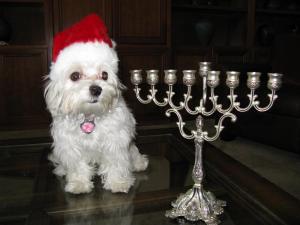
The miracle of the “Festival of Lights” was that the Jews only had enough oil to keep the temple’s sacred flame alight for one night. However, the flame stayed alight for eight days. For this reason, Jews continue to light an eight-candle “menorah” every year. The great Jewish philosopher Hillel won out on the menorah debate: Jews light one candle on the first night, and one more candle every night thereafter.
[One Jewish-Persian custom is to light eight candles the first night of Hanukah and eight more candles each additional night for a total of 64 on the eighth night, although we suspect this tradition was started by the Jewish-Persian candle-makers union.]
Hanukkah Ironica
Hanukkah originally represented a victory of Jewish culture over assimilation into Greek culture. However, much of the importance that Hanukkah has today is the direct result of assimilation.
The observance of Chanukkah grew in importance during the 19th and 20th centuries in predominantly Christian nations such as the United States, as Jewish culture sought to adapt to the growing influence of of Christmas. Modern Hanukkah traditions such as gift-giving are borrowed straight from Christmas, which is of course celebrated around the same time of year, and which owes many of its own traditions to solstice festivals of the Greco-Romans. So in a sense, over 2000 years later, Greek influence is still going strong.
Ilse, the spiritually-confused Maltese
Hanukkah is a modern example of how holidays continuously change by synthesizing attributes of merging cultures. It’s the type of transition that took place countless times in ancient and medieval history, though detailed records of such transitions have all too often been lost to time or intentionally obscured.
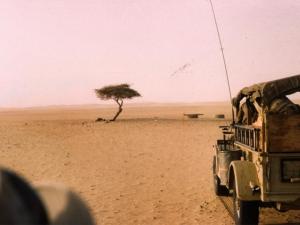
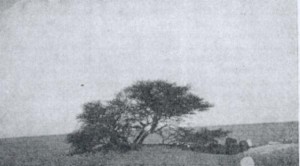
Standly quietly in the desert, L’Abre du Ténére was the only tree for 400 kilometers in any direction, earning the reputation as the most isolated tree in the world. It served as a natural lighthouse for travelers and traders crossing the Sahara.
In 1939 a team dug a neaby well to find out where the tree got its water. It determined the trees roots had to descend 35 meters to reach the source.
The Tree of Ténére was the sole survivor of a forest than once dominated the region. In fact this part of the Sahara was a fertile grassland, which ancient artworks depict supporting a multitude of animals. Ten thousand years of “global warming” entirely dried up the grassland.
Giraffes of the Sahara, (c) 2006 Marc Faucher
Today 80% of Niger is covered by the Sahara desert. Most Nigeriens live in the southwest corner of the country, where a small stretch of the Niger River flows in from Mali on the west and out through Nigeria to the south.
For centuries the unusual path of the Niger River baffled European explorers, who assumed its source was an unchartered snow-topped mountain rather than from storm run-off.
“Age after age the lordly stream hath run,
From secret source which mortal ne’er hath seen,
Deep-hidd’n perchance, where never sound hath been
Or sign of life–where tropic summers glow
On silent peaks of everlasting snow;”
Because of its remoteness, the Niger region–ancient domain of the Songhai–was one of the last casualties of colonization. The French, intent on linking their holdings from the Niger River to the Nile, subdued Tuareg resistance and confiscated tribal lands in 1922.
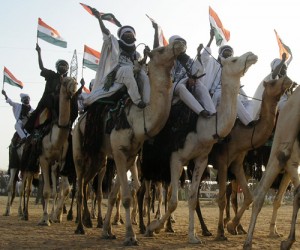
During WWII, the French found themselves similarly occupied, and the Vichy government gave Nigeriens the right to vote. On December 18, 1958, Nigeriens voted to become an autonomous nation within the French commonwealth. Full independence came two years later. December 18 is celebrated as Niger’s National Day.
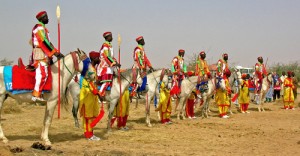
Niger National Day (c) 2006 Esther GarviNiger National Day (c) 2008 Esther Garvi
Watching Nigeriens celebrate National Day, you’d hardly believe the title that the UN Human Development Index bestowed upon the nation in 2006: “Least Livable Country in the World.” Nigeriens are among the most resourceful and spirited people in the world. The nation has navigated for centuries though colonialism, coups, drought, famine and war for centuries.
It has few precious natural resources. No oil like its neighbor to the south, Nigeria. No diamonds like Sierra Leone. No ocean access. A new gold mine started production in 2007, which may help raise Niger’s GDP. The land-locked nation gained notoriety in 2003 for something it didn’t do with its most highly-safe-guarded natural resource: it didn’t sell yellow-caked uranium to Iraq, as U.S. intelligence once suspected.
As for the Tree of Ténéré, it stands no more. According to Henri Lhote, who observed the tree in 1934 and again in 1959:
“Before, this tree was green and with flowers; now it is a colourless thorn tree and naked. I cannot recognise it—it had two very distinct trunks. Now there is only one, with a stump on the side, slashed, rather than cut a metre from the soil. What has happened to this unhappy tree? Simply, a lorry going to Bilma has struck it… but it has enough space to avoid it… the taboo, sacred tree, the one which no nomad here would have dared to have hurt with his hand… this tree has been the victim of a mechanic…’
After hundreds of years of surviving the harshest desert conditions, the lone survivor of the Ténéré forest succumbed 14 years later, not to nature, but to the bumper of a reportedly drunk driver.
Everything you see has its roots in the unseen world.
The forms may change, yet the essence remains the same.
Every wonderful sight will vanish, every sweet word will fade,
But do not be disheartened,
The source they come from is eternal, growing,
Branching out, giving new life and new joy.
Why do you weep?
The source is within you
And this whole world is springing up from it.”
December 17 is the Urs of Mawlana Jalal ad-Din Muhammad Balhi, or as he’s known affectionately in the West, Rumi, master Persian poet and proto-founder of the Sufi Order of the Whirling Dervishes.
Rumi
Urs refers to the death of a Sufi saint, but it comes from the Arabic word for “wedding” and literally means “nuptial” or “bride’s night”. In Sufism, death is viewed not as a tragedy but as a joyous union of the soul with God.
Thus, rather than mourn the anniversary of Rumi’s death, his followers celebrate jubilantly.
Rumi was born in what is now Afghanistan in 1207 AD. When he was a boy, his family headed west during the Mongol invasions. He spent much of his life in the Rum area of Asia Minor (now Turkey) which is how he earned his nickname Rumi. At age 25, he became head of a madrasah, inheriting the post from his father.
Rumi’s poems speak to the oneness of the universe, a central component of Sufism, although they touch on many topics…
Once you think of me
Dead and gone
You will make up with me
You will miss me
You may even adore me
Why be a worshiper of the dead
Think of me as a goner
Come and make up now…
Rumi’s works and philosophy were spread by his followers and his son Sultan Walad, who founded the Order of Mawlawi Sufis, aka the Whirling Dervishes, the order that brought new meaning to the term “poetry in motion”
In Sufism, a branch of spiritual philosophy stemming from the Sunni tradition, one does not learn the deeper truths of God from books but from direct experience. To become a dervish, one must train for years under a master, then spend years humbly serving society.
The goal is to reach a state of fitra: separation from one’s ego to become one with Divine Unity.
Mawlana Jalal ad-Din Muhammad Balhi finally reached that long-awaited union 801 years ago today. Today his Urs is celebrated not just in Persia but by Sufis and poetry-lovers around the world.
If you bake bread with the wheat that grows on my grave
you’ll become drunk with joy and
even the oven will recite ecstatic poems.
If you come to pay your respects
even my gravestone will invite you to dance
so don’t come without your drum.
Don’t be sad. You have come to Gods feast.
Even death cannot stop my yearning
for the sweet kiss of my love.
Tear my shroud and wear it as a shirt,
the door will open and you’ll hear
the music of your soul fill the air.
I am created from the ecstasy of love and
when I die, my essence will be released
like the scent of crushed rose petals.
My soul wants to leap and join
the towering soul of Shams.
– Ghazal (Ode) 683
Translated by Azima Melita Kolin
and Maryam Mafi
“Rumi: Hidden Music”
HarperCollins Publishers Ltd, 2001